Mount Etna: Where Living Fire Meets Ancient Slopes
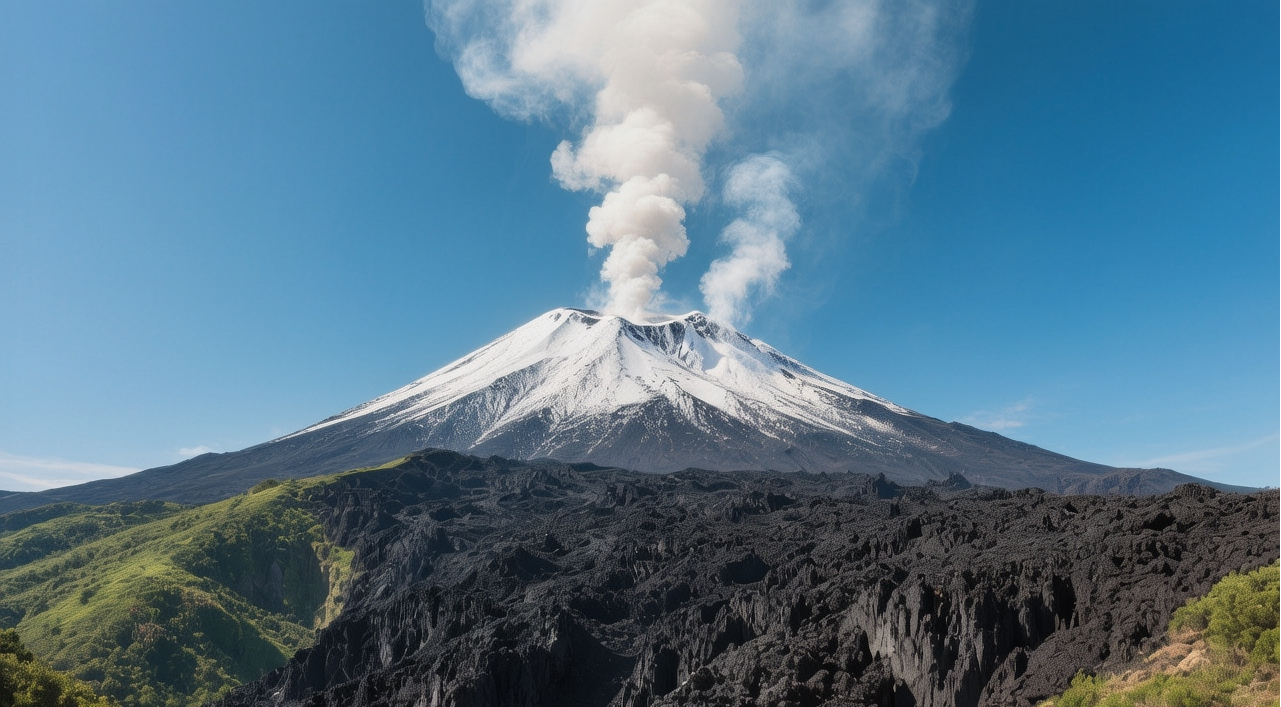
I stand on a solidified lava flow at 8:00 on a June morning. The rock still holds a faint chill beneath the surface. An espresso costs one euro fifty at the mountain refuge just above the road. I look upward — the great cone rises broad and powerful, thin plumes of vapour drifting from the summit craters, dark grey-black lava fields stretching down past forests of pine and chestnut, and far below the coast glimmers pale blue. Mount Etna dominates eastern Sicily, the highest active volcano in Europe. It rumbles, shifts, and reshapes itself still. People come for the fire. They find a living, breathing force — beautiful, dangerous, and entirely beyond control.
Why Mount Etna Matters
Etna has erupted on and off for half a million years. It has shaped the land, enriched the soil, fed rivers, and settled communities here since prehistory. Greeks, Romans, and later peoples all saw it as a place of power — sometimes frightening, always generous. Villages cling to its lower slopes, their houses built from dark local stone, their fields thick with vines, olives, and fruit trees fed by volcanic soil. Today it stands as both UNESCO World Heritage site and active geological laboratory. That status brings real pressure. Some routes close without warning. Unregulated guides lead groups into unsafe zones. Car parks fill fast. The mountain welcomes visitors but sets its own rules — and respecting them is not optional.
The Best Time to Experience Mount Etna
Late May through June brings clear skies, fresh green forests, and thin crowds. Temperatures sit between 10°C and 20°C (50°F–68°F) at the main visitor areas — noticeably cooler than the coast below. July and August warm to 14°C and 26°C (57°F–79°F). The summit zones stay cold — 5°C to 12°C — even in summer. September offers golden light and clearer air — 12°C to 22°C (54°F–72°F). Harvest season colours the lower slopes. October remains mild — 9°C to 18°C (48°F–64°F) — but mist and fog become more frequent. Winter holds crisp, quiet days: -2°C to 8°C (28°F–46°F). Snow covers upper levels and some roads close. Arrive before 9:00 AM any time of year — clouds often build by midday.
Approximate Budget for a 7-Day Trip
Prices below are per person, in euros, based on staying in Nicolosi, Zafferana, or nearby coast.
- Accommodation: 7 nights in a mountain guesthouse or apartment — €70–145 per night. Total: €490–1,015. Staying in Catania costs 25–35% less; driving up takes 30–40 minutes longer.
- Food & Drink: Breakfast, two meals daily — €32–55 daily. Total: €224–385. Restaurants directly at main tourist hubs charge premium prices; drive 5 minutes to nearby villages for home-made pasta, grilled local pork, and Etna-grown honey at fairer rates.
- Transport & Access: Cable car to upper slopes — €30–50 return; authorized 4x4 summit tour — €45–75; local bus from Catania — €3–5 one way. Private vehicles cannot go above certain altitudes — use official services.
- Activities: Lava flow walk, forest nature trail, wine tasting on lower slopes — €25–60.
- Miscellaneous: Warm layers, sturdy boots, water, hat — €15–25.
Total estimated 7-day cost: €819–1,590
Independent "secret summit" guides are often overpriced and may operate outside safety boundaries. Official cable car and 4x4 services are safer, fully insured, and cost less. Stick to designated providers.
Essential Mount Etna Experiences
- Silvestri Craters Morning Walk — Wander the lower extinct cones near the main road. Dark craters, solidified lava tongues, and views across the eastern slope unfold easily. No special gear needed — sturdy shoes and a warm layer suffice. Skip if you have breathing difficulties; altitude makes every step feel harder.
- Cable Car & Authorised Summit View — Ride upward across recent lava fields. At the top, with an official guide, you stand near the active craters. Steam rises from fissures, the ground feels warm beneath, and the scale of the mountain becomes clear. Never go beyond marked paths alone — the ground shifts without warning.
- Valle del Bove Overlook — Stand at the edge of the great horseshoe-shaped depression on the eastern side. Lava flows stretch for miles below, ancient and new, forested and bare. It shows the mountain’s full power — and the slow pace of recovery.
- Chestnut Forest & Cool Stream — Walk the shaded lower slopes. Ancient trees, mossy rocks, and clear running water feel worlds away from the ash above. This is where the mountain feeds and shelters — gentle, green, and alive.
- Etna Wine Tasting — Sample wine grown on volcanic soil. It tastes bright, mineral-rich, and distinct — nothing like wine from anywhere else. The mountain flavours the grapes directly.
- Sunset Over Lower Slopes — Watch the cone turn deep red as the sun dips low. Villages glow below and the sea catches the last light. Most visitors have left — the mountain feels quiet and vast.
Hidden Gems Most Travelers Miss
- The northern side near Linguaglossa has quieter lava fields, old chestnut groves, and fewer crowds. The views stretch across to the Aeolian Islands. Very few first-time visitors come this way.
- The old mule trail between Nicolosi and the upper refuges winds through woods and past small farmsteads. It takes longer than the road but shows the mountain as locals have known it for centuries.
- The western slope near Bronte has dark lava boulders, pistachio groves, and wide open skies. It feels wilder and less developed — bring water and a map.
- The "Exclusive Private Summit Access & Secret Crater" is overpriced and often unsafe. Every accessible viewpoint is open via official ticket. The real secret is simple: arrive early, stay on marked paths, and respect the mountain.
Cultural & Practical Tips
- Dress in layers. It can be 25°C at the coast and 10°C at the summit — sometimes colder with wind. A waterproof jacket and warm hat are essential year-round.
- Wear sturdy closed shoes with good grip. Lava rock is sharp, loose, and slippery. Trainers with smooth soles are dangerous.
- Never stray from marked paths. Craters collapse, fissures open, and gas accumulates unexpectedly. What looks safe can change overnight.
- Check official updates before setting out. Access changes daily — sometimes hourly — based on activity. Do not rely on social media or old advice.
- Respect local closures. Roads and trails are blocked for your safety, not for convenience. Turning barriers aside puts you and rescue teams at risk.
- Support local villages. The mountain feeds these communities. Eating and shopping in the towns below keeps the area alive and welcoming.
- Book official tours 1–2 days ahead in summer. Morning slots sell out fastest. Same-day availability is limited.
Essential Visitor Information
Location & Access: Mount Etna, Eastern Sicily, Italy. Coordinates roughly 37.75° N, 15.00° E. Three ways to arrive: drive from Catania — 30–40 mins; bus from Catania to Nicolosi/Rifugio Sapienza — 45–60 mins; guided 4x4 from Taormina — 1 hour.
Tickets & Booking: Lower zones free. Cable car — €30–35 return; guided summit 4x4 — €45–75; combined packages available. Book ahead in peak season.
Operating Hours: Mountain always accessible below safety limits. Cable car runs roughly 9:00 AM to 5:00 PM in summer; shorter hours off-season. Some areas close temporarily during increased activity.
Visit Duration: Minimum 1 full day. Recommended 2 days to explore both upper and lower slopes, forests, and wine routes without rushing.
Family Suitability: Good for older children. Upper zones demand stamina and warm clothing. Strollers work on paved paths but struggle on lava rock. Forest trails are gentler and very child-friendly.
Timing: Best seasons are late May–June and September. Best time of day is before 9:00 AM — clouds often build by early afternoon.
Highlights: Silvestri Craters, authorised summit views, Valle del Bove, chestnut forest, Etna wine, sunset from lower slopes.
Nearby & Day Trip: Catania — 30–40 mins. Taormina — 1 hour. Alcantara Gorge — 45 mins. Aeolian Islands — 2 hours then ferry.
Conclusion: Travel with Humility, Not Just Adventure
Mount Etna gives you power that no human can control. You can see the smoke and leave. Or you can dress warmly, stay on the path, check daily updates, and remember — this mountain does not exist for your visit. It burns, builds, and breathes on its own timescale. Honouring that independence is the finest gift you can give. What is the one living, wild place you would visit promising to follow its rules?
Comments
Post a Comment