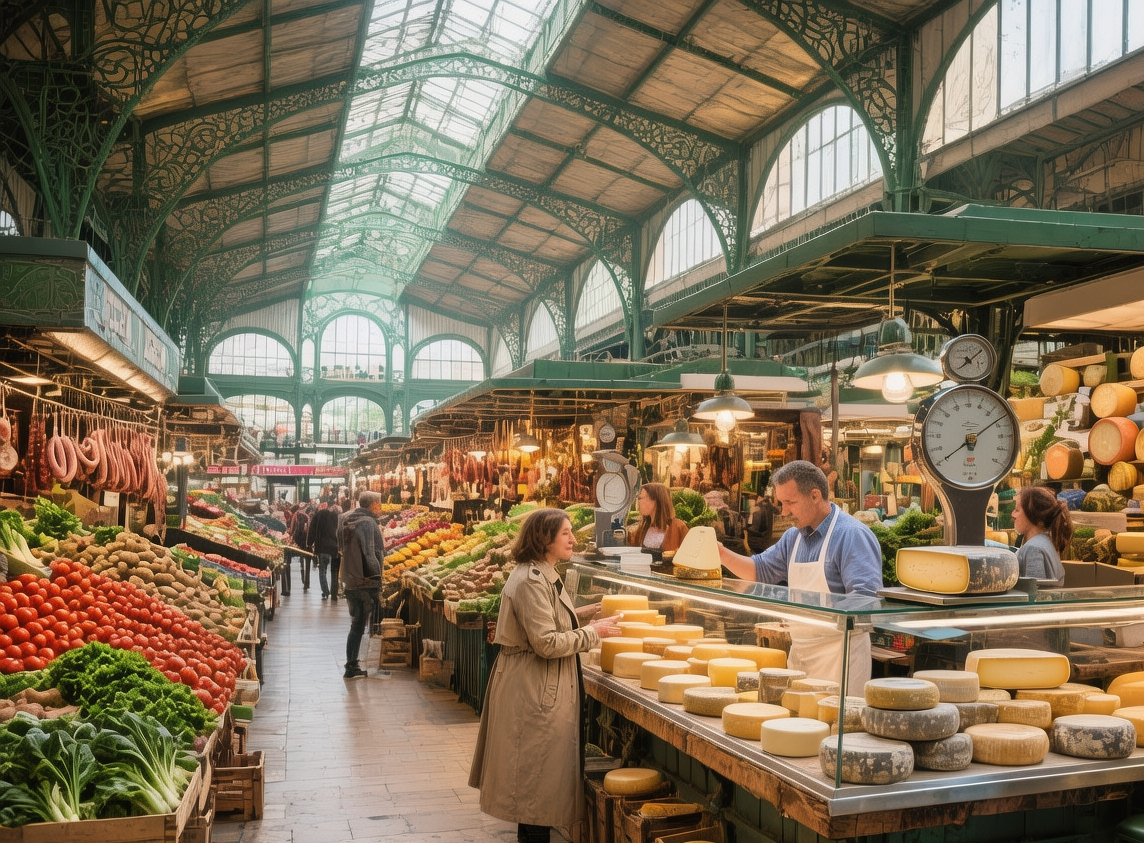
Narbonne Market Halls: Where Iron Roof Meets Local Flavour
I stepped through the arched entrance at 9:15 on a Saturday morning. Light filtered through glass panels set in a sweeping iron roof. The air smelled of ripe peaches, fresh herbs, melting cheese, and warm bread. Voices rose and fell — quick exchanges, laughter, offers of samples. I paid nothing to enter. A warm savoury pastry filled with spinach and local cheese cost 3.20 euros from a stall near the north door. Row after row of stalls stretched ahead — vivid piles of vegetables, glistening olives, whole wheels of cheese, hams hanging in neat rows. It feels less like a market and more like the living heart of the town — where everyone comes together over food.
Why Narbonne Market Halls Matters
The halls were built in 1901 — a masterpiece of iron, glass, and stone designed to centralise trade that had spilled across medieval streets for centuries. Narbonne sits at the crossroads of Mediterranean and inland France, and the market reflects that mix — produce from the coastal plain, sheep’s cheese from the hills, wine from nearby vineyards, seafood from the coast. Generations of families have tended stalls here. Today the building remains largely unchanged — a protected landmark that still serves its original purpose. Popularity brings strain. By mid-morning on Saturdays, aisles crowd shoulder to shoulder. Some stalls focus more on visitors than locals. Prices vary from fair to inflated. You must look past the busiest spots to find where residents actually shop.
The Best Time to Experience Narbonne Market Halls
Late May through June offers fresh produce and pleasant temperatures — 14°C (57°F) to 24°C (75°F). The building stays cooler than outside. July and August reach 19°C (66°F) to 30°C (86°F), but crowds peak early. Arrive before 9:30 AM then. September holds steady at 16°C (61°F) to 26°C (79°F). Crowds thin and autumn produce arrives — figs, grapes, mushrooms. October through April runs quieter and cooler — 8°C (46°F) to 16°C (61°F). Some stalls close on quiet weekdays. Visit Saturday morning for full atmosphere, or Tuesday through Thursday to browse calmly. Sunday offers a smaller outdoor market around the building.
Approximate Budget for a 7-Day Trip
- Accommodation: 7 nights in a guesthouse ten minutes’ walk away — 532 euros. Staying directly beside the halls costs roughly 145 euros extra and stays noisy until late morning.
- Food: Daily breakfast, market lunches, evening meals — 413 euros. Prepared meals from stalls right at the entrance charge premium prices. A cooked plate costs nearly double what buying ingredients and eating elsewhere does. They are overpriced.
- Transport: TGV from Paris to Narbonne — 138 euros. The station is ten minutes’ walk from the halls. Buses serve surrounding areas. Taxis are overpriced — walking covers the centre easily.
- Attractions: Market halls free. Narbonne Cathedral — 7 euros. Roman Horreum underground site — 6 euros. Canal and boat walks — free.
- Miscellaneous: Fruit, cheese, wine, postcards, sun protection — 87 euros.
Total estimated cost: 1,170 euros per person
Skip the souvenir stalls near the entrance. The small delicatessen at the far end sells identical local produce at lower prices.
Essential Narbonne Market Halls Experiences
- Walk every aisle first — Take a slow turn around the whole hall before buying anything. You see what is available, compare prices, and spot where locals queue. The best stalls often sit at the far ends. Go early — by 10:30 AM, movement slows to a shuffle.
- Taste the local cheeses — Sheep’s and goat’s milk varieties dominate — soft, creamy, distinctively tangy. Vendors offer small samples. You can buy just enough to eat there with bread and fruit. Skip if strong dairy flavours do not appeal — fresh fruit stalls make a perfect alternative.
- Pick up fresh produce for a picnic — Ripe tomatoes, golden peaches, bunches of herbs, crusty bread, and a bottle of regional wine. Everything tastes better eaten outdoors beside the canal. It costs less and feels more authentic than a sit-down meal.
- Watch the bakers at work — One stall kneads and bakes bread right inside the hall. The scent drifts everywhere. Loaves come out warm throughout the morning. You see the craft, not just the finished product.
- Explore the outdoor market — On Sundays, stalls spread onto surrounding streets. Clothing, plants, household goods, and extra food appear. It feels broader and more varied than the indoor hall alone.
- Talk to the vendors — Most have tended their stalls for years. They know exactly where every item comes from. Ask which cheese is best today, which fish is freshest, which wine pairs well. Their answers are honest and helpful.
- Visit the covered stalls on weekdays — Tuesday through Thursday mornings keep a smaller core of traders. It feels calmer, more personal. You can take your time and chat without rushing.
Hidden Gems Most Travelers Miss
- The cheese stall at the far northern end sells direct from family farms. No fancy packaging, just excellent produce at fair prices. Locals queue here — always a good sign.
- The olive stall tucked beside the back entrance offers free samples and lets you mix varieties. The food counters right inside the main doors are overrated — queues stay long and prices run high.
- The bakery midway down the east aisle makes small sweet pastries using local honey. They stay fresh all morning and cost less than the display items near the entrance.
- The flower stall near the south door fills the air with scent. It marks the quietest corner of the hall — a good place to pause before leaving.
Cultural & Practical Tips
- Arrive before 9:30 AM on Saturdays. By mid-morning, aisles crowd and popular items sell out. Come early for the best selection and calmest atmosphere.
- Carry a reusable bag. Most vendors do not provide plastic bags. Bringing your own is expected and easier to manage.
- Have small change ready. Many stalls prefer cash for small purchases. Cards are accepted but queues move faster with coins and notes.
- Step aside to choose. Narrow aisles fill quickly. Pick your spot then move to the side to decide or pay. It keeps everyone moving smoothly.
- Respect produce. Do not squeeze or handle fruit and vegetables without asking. Point to what you want — vendors will select and hand it to you.
- Do not block stall fronts. Others are waiting. Order, pay, and step away. You can eat or browse further down the aisle.
- Try something new. Ask the vendor to recommend one local speciality you have never had. It is the best way to bring home a genuine taste of Narbonne.
Essential Visitor Information
Location & Access: Les Halles de Narbonne, Narbonne, Aude, Occitanie. GPS coordinates 43.18, 2.99. Three options: TGV from Paris directly to Narbonne (4 hours 15 minutes); drive via A9 (4.5 hours from Paris); train from Montpellier then bus 45 minutes.
Tickets & Booking: Entry free. Individual items priced per stall. No booking required.
Operating Hours: Indoor hall: Tuesday–Sunday 7:00–13:30; closed Monday. Outdoor market: Sunday mornings. Some stalls reduce hours July–August.
Visit Duration: Minimum 1 hour. Recommended 2–3 hours including browsing, eating, and a walk along the canal.
Family Suitability: Fully accessible and stroller-friendly. Wide aisles — though crowded on Saturdays. Public restrooms at the building entrance.
Timing: Best season: May–June or September. Best time: before 9:30 AM. Widest selection, shortest waits, freshest produce.
Highlights: Full Saturday morning tour, cheese and wine tasting, picnic beside the canal, weekday quiet browse, Sunday outdoor market, warm bread straight from the oven.
Nearby & Day Trip: Three nearby stops: Narbonne Cathedral and Roman ruins (5 minutes walk), Canal du Midi tree-lined paths (10 minutes), Mediterranean beaches at Gruissan (20 minutes drive). Carcassonne walled city makes a rewarding full-day trip 45 minutes away.
Conclusion: Travel with Taste, Not Just Photos
Narbonne Market Halls have fed this town for more than a century. Some spots feel crowded. Some prices run too high. Those things do not change what matters. You do not need to know every ingredient to feel it. Follow your nose. Taste something new. Remember — the best souvenirs do not come wrapped in plastic. They come from a stall, handed over with a smile. What flavour will you carry home?
Comments
Post a Comment