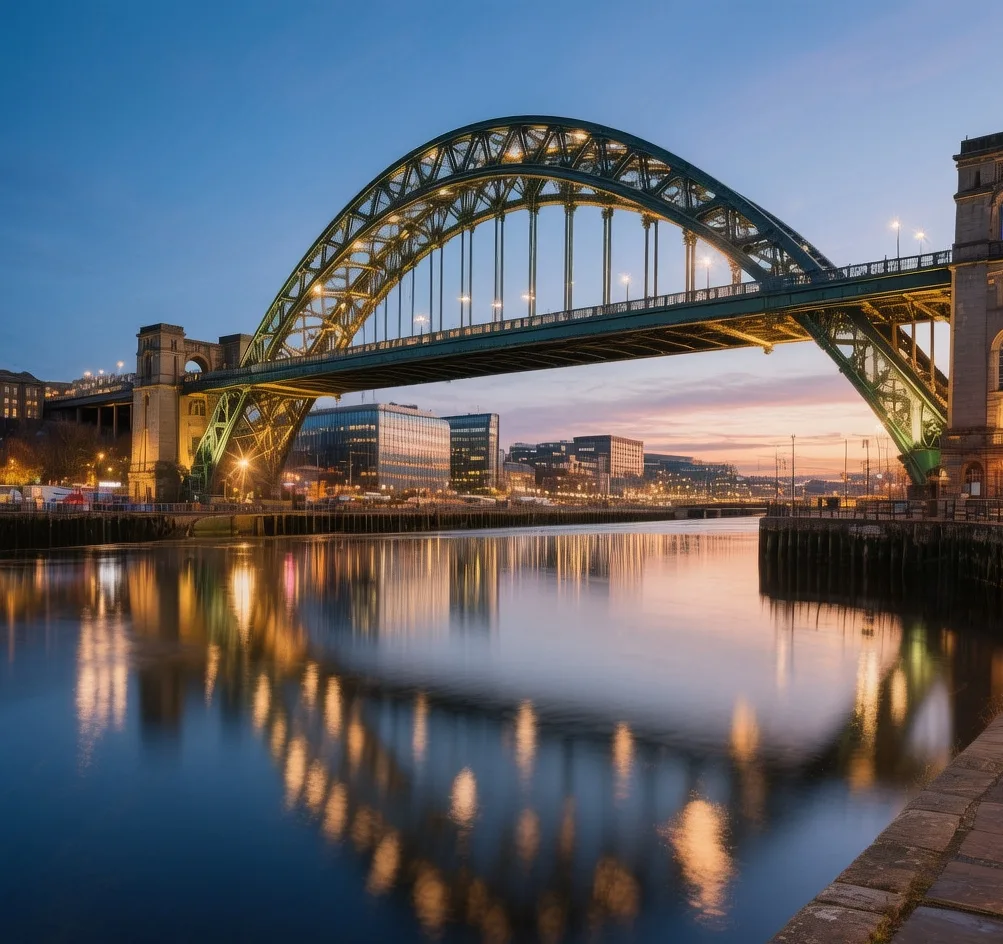
Newcastle Quayside: Where River Trade Meets Modern City
I walk along the paved river edge at ten past nine on a bright morning in early September. The River Tyne flows wide and fast below the stone parapet, pale blue and silver under clear sky. A row of tall stone warehouses lines the far bank — warm red sandstone, tall arched windows, sloping roofs — now converted into bars and offices. Bridges span the water ahead, one low and iron, one high and modern, their shapes distinct against the horizon. A few people sit on the steps leading down to the water, drinking coffee, watching a passenger boat glide slowly upstream. The place feels alive but not crowded. It carries layers of time — old stone, new steel, constant flowing water.
Why Newcastle Quayside Matters
For centuries this stretch of the Tyne was the beating heart of trade and shipbuilding. Ships loaded coal, iron, and goods bound for ports across the world; dockers, merchants, and shipwrights lived and worked in narrow streets behind the waterfront. The river defined the city’s identity and built its wealth. By the late 20th century, industry had moved away, leaving empty warehouses and derelict wharves. Regeneration transformed the area into the public space you see today — open promenades, restored buildings, pedestrian bridges connecting Newcastle and Gateshead. That change brings real tension. Some long-time residents feel priced out, and the quayside now feels designed more for visitors than locals. The area closes down early on quiet nights, and behind the waterfront streets remain untouched. The beauty is genuine, but it is a polished version of what stood here before.
The Best Time to Experience Newcastle Quayside
Late April through May brings fresh green foliage along the riverbanks and thinner crowds, temperatures between 7°C and 14°C (45°F to 57°F). Daylight lengthens fast, and evenings stay bright until nearly 9 p.m. June and July offer the longest days — sky stays light until 10 p.m. — and temperatures rise to 10°C and 18°C (50°F to 64°F). This is peak season; outdoor seating fills by early evening and events draw large numbers. August stays mild at 11°C to 19°C (52°F to 66°F), but rain falls frequently and river breezes make it feel cooler. September holds steady at 9°C to 16°C (48°F to 61°F), crowds thin noticeably, and golden light hits the sandstone buildings perfectly from late afternoon onward. This is arguably the best month to visit. October cools to 6°C and 12°C (43°F to 54°F), days shorten fast, and waterfront terraces empty by early evening. November through February the quayside feels quieter. Temperatures sit 3°C to 8°C (37°F to 46°F), wind blows along the river, and outdoor spaces stay largely empty. March and April lengthen again, 5°C to 11°C (41°F to 52°F), and daffodils appear in planters, though the wind can still feel sharp.
Approximate Budget for a 7-Day Trip
These figures assume a base in central Newcastle, exploring the quayside alongside city and regional sights.
- Accommodation: £55–£90 nightly. Shared hostel room or clean city guesthouse room. £385–£630 for 7 nights.
- Food & Drink: £18–£28 daily for breakfasts and lunches. Evening meal out £22–£40. £280–£476 total.
- Transport: Walking is best for the quayside. Local bus or metro £3–£5 daily. Day trips by car or train £40–£70. £45–£490 total.
- Attractions: Quayside access free. Museums, art gallery, castle £0–£12. Day trip to coast or historic site £10–£30. £40–£100 total.
- Miscellaneous: £10–£18 daily for drinks, snacks, and supplies. £70–£126 total.
Total estimated 7-day cost: £820 to £1,822
Bars and restaurants directly on the waterfront charge premium prices. Walk five minutes into the side streets; you will find independent cafes and traditional pubs with fairer prices and more character.
Essential Newcastle Quayside Experiences
- Walk the full riverside loop — Cross the Millennium Bridge into Gateshead then return via the Tyne Bridge. You see the waterfront from both sides, each bend revealing a different view. Skip this if wind is very strong; the open riverfront offers no shelter.
- Watch the Millennium Bridge tilt — The pedestrian bridge rotates upward to let tall boats pass. It happens once or twice most days; check posted times and arrive ten minutes early. It draws small crowds and feels like a gentle local event.
- Stand beneath the Tyne Bridge — The massive steel arch carries the main road high overhead. From the river path you see its full scale and how it frames the skyline. It looks different close up than from a distance.
- Visit at sunset — Low light hits the red sandstone warehouses and turns them warm gold. The bridges stand dark against orange and purple sky, and streetlights begin to glow along both banks. Arrive 30 minutes before sunset for the best light.
- Walk up to the Castle Keep — A short steep climb from the river leads to the oldest part of the city. From the ancient walls you look straight down on the quayside and across the Tyne valley. It connects the waterfront to the city’s earlier history.
- Explore the Sunday market — Stalls line the promenade selling food, crafts, and vintage goods. It runs weekly morning through early afternoon. Go before 11 a.m. to avoid the largest crowds.
Hidden Gems Most Travelers Miss
- Close Quayside steps — A narrow stone stairway descends from the upper street level down to the water. It feels quiet and old, with a sudden view of the river opening at the bottom. Very few visitors find it.
- Gateshead riverside west — Beyond the Baltic art gallery, the path continues past converted warehouses and quiet benches. You look back at Newcastle without crowds blocking the view. The surface is smooth and accessible for most visitors.
- Customs House quiet terrace — On the lower floor of the restored sandstone building, an open terrace faces the river. This spot is widely shared online now and has become overrated. Go early morning if you want it empty.
- Staithes heritage path — Further east along the river, short wooden platforms mark where old shipping wharves once stood. Information panels explain the river’s industrial past. It feels peaceful and deeply informative.
Cultural & Practical Tips
- Wear comfortable walking shoes. The quayside slopes and includes stone steps, cobblestones, and uneven paving. Trainers work best.
- Do not rely solely on waterfront venues. Prices drop noticeably and quality improves when you walk two or three streets back from the river.
- Check bridge opening times online. The Millennium Bridge tilts only when needed; do not wait hoping it will happen without checking first.
- Stay on lit paths after dark. The main promenade stays bright and busy, but quieter side paths can feel isolated. Stick to the well-used route.
- Respect the river edge. There is no continuous railing along the water. Stay well back, especially when taking photos.
- Combine your visit with a short walk up into the city centre. The quayside is beautiful, but the wider area holds historic streets, markets, and architecture most visitors miss.
Essential Visitor Information
Location & Access: Newcastle upon Tyne NE1 3BU — riverfront between Tyne Bridge and Millennium Bridge. Three transport options: train to Newcastle Central then 10-minute walk; metro to Gateshead then cross the bridge; bus to Quayside stops directly.
Tickets & Booking: Riverside paths and bridges free. No booking needed. Events and tours may charge separately.
Operating Hours: Public access year-round at all times. Individual venues vary — most open 10 a.m. to late evening.
Visit Duration: Minimum 1 hour for main stretch and photos. 2 to 3 hours including crossing bridges, sitting at a cafe, and reading history displays.
Family Suitability: Level paths suit strollers; some side steps have no ramp access. Keep children back from unrailed water edges. Public toilets available at both ends of the promenade.
Timing: Best season May or September. Late afternoon one hour before sunset offers warm light and fewer crowds.
Highlights: Sunset sandstone glow, bridge-to-bridge walk, Millennium Bridge tilt, Castle Keep river view, Sunday market.
Nearby & Day Trip: Newcastle city centre — 10 minutes; Angel of the North — 15 minutes; Durham Cathedral — 30 minutes; Northumberland Coast — 1 hour; Hadrian’s Wall — 45 minutes.
Conclusion: Travel with Perspective, Not Just a View
Newcastle Quayside is not just a row of bars and bridges. It is where ships sailed, where goods changed hands, where families earned livings from the river. The buildings have changed purpose, but the water remains the same. When you walk here, look beyond the lights and crowds. Imagine the noise and energy of the working waterfront that once stood here. What will you remember — the photos, or the story of the river itself?
Comments
Post a Comment