Notting Hill: Where Pastel Facades Meet Neighbourhood Life
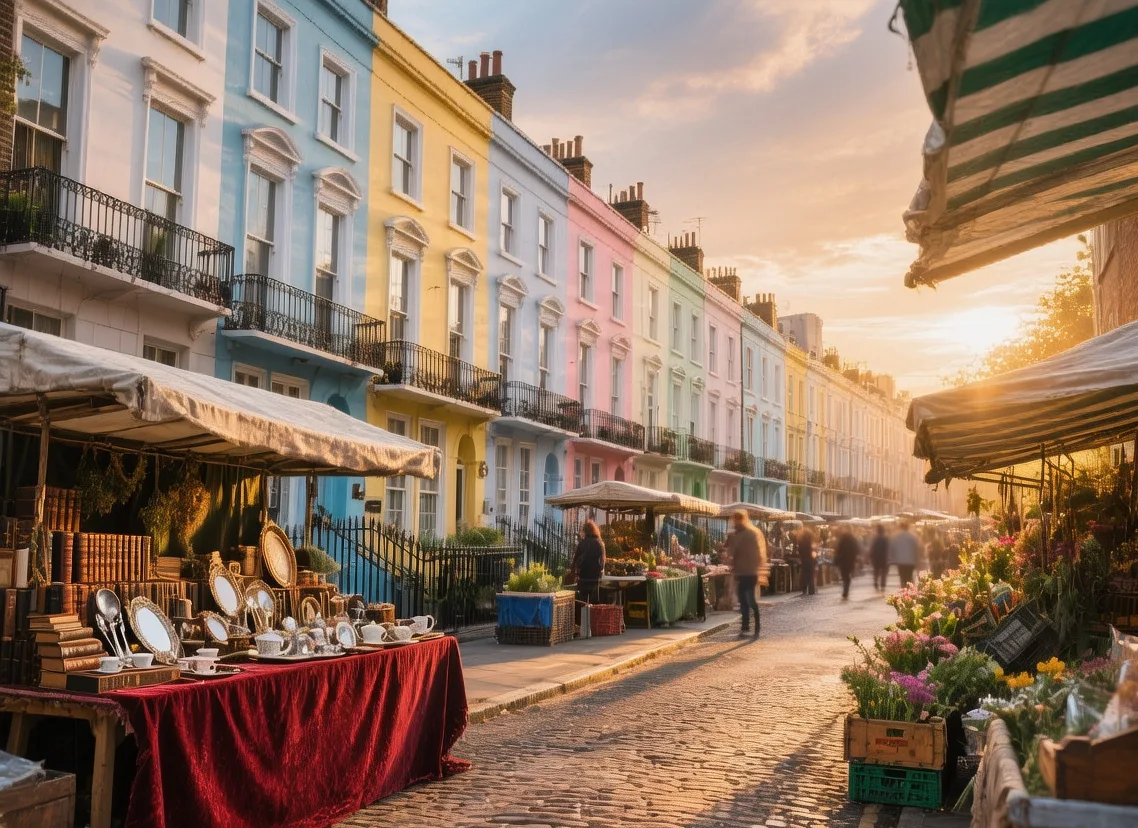
I walk up Lancaster Road at 10:00 on a sunny Saturday in late September. The doors and window frames glow soft pink, blue, and cream against pale brick. Portobello Market stalls are just opening; a coffee cart charges four pounds for a latte. Cars park tight against the kerb and locals carry bags home from the baker. This is not a film set frozen in time. People live behind these bright doors—curtains drawn, bicycles propped, post waiting on doormats. The colours catch the eye, but the life behind them gives the place its warmth.
Why Notting Hill Matters
Once open countryside, then a Victorian suburb built for expanding London, Notting Hill drew successive waves of newcomers—Caribbean families arriving after 1948, artists, musicians, and traders from every corner. Tensions turned to celebration in the Notting Hill Carnival, now one of the largest street festivals in the world. The pastel terraces date mostly from the 19th century; bright paint was applied from the 1960s onward as residents reclaimed and personalised their streets. That said, fame has reshaped the area. Rent and prices have risen sharply. Long-term residents have moved away. Some streets feel more like a backdrop than a living neighbourhood. Visitors photograph doorways without noticing the people who live behind them.
The Best Time to Experience Notting Hill
Late April through June brings soft light and blooming window boxes—10°C (50°F) to 18°C (64°F). The colours look fresh and bright. July and August reach 14°C (57°F) to 22°C (72°F); Carnival weekend at the end of August brings crowds and road closures but also music and energy. September and early October offer the sweetest balance—12°C (54°F) to 19°C (66°F), golden light across the facades, and thinner crowds. November through February sees quieter streets—5°C (41°F) to 9°C (48°F)—and rain can dull the paintwork. Arrive before 10:00 a.m. to photograph the terraces without crowds in your frame.
Approximate Budget for a 7-Day Trip
These figures cover one person staying in or visiting the area:
- Accommodation: £595 – £980 for a room within walking distance. Stay one Underground stop away to save roughly one third.
- Food & Drink: £225 – £330. Cafés and restaurants along Portobello and Westbourne Grove charge premium rates; better value exists on side streets.
- Local Transport: £35 – £65. Underground to Notting Hill Gate, Ladbroke Grove, or Holland Park; buses run along every main road; walking works perfectly here.
- Attractions & Entry Fees: £0 – £45. Street viewing is free; museum and gallery visits cost £8–£15 each.
- Miscellaneous: £45 – £100. Market purchases, vintage finds, and refreshments.
Total estimated budget: £900 – £1,520
The branded café right beside the most photographed terrace charges high prices for basic drinks. Skip the five-pound coffee there. Walk three minutes to a neighbourhood spot, pay half as much, and sit where locals gather.
Essential Notting Hill Experiences
- Walk the pastel terraces of Hillgate Place. Rows of houses painted soft blue, yellow, and pink line the sloping street. The full effect unfolds as you climb. Skip this on Saturday afternoons; groups gather and you may wait for a clear view.
- Explore Portobello Road Market. Antiques, fruit, vintage clothes, and street food stretch over a mile. Saturday is busiest; Friday and Sunday feel calmer. Go beyond the first few blocks—real bargains and quieter stalls appear farther north.
- Visit Kensington Park Gardens. Tall white and cream stucco houses stand grand and symmetrical. The scale feels different from the pastel lanes—calm, orderly, and impressive. Arrive early; the light hits the facades best before midday.
- Walk Westbourne Grove. Independent shops, bakeries, and cafés line the wide street. It feels lived-in and busy, not just for visitors. Stop at a bakery and see the neighbourhood come and go.
- Explore Ladbroke Grove quiet streets. Tree-lined avenues, varied architecture, and fewer cameras. The true character of the area shows here—diverse, relaxed, unpolished.
- Feel Carnival energy in late August. Steelpan, sound systems, and food stalls fill the streets. It is loud, colourful, and inclusive. Check road closures in advance; transport becomes difficult and crowds are very large.
Hidden Gems Most Travelers Miss
- St Luke’s Church gardens sit behind the main lanes. A small green space with benches and mature trees. Almost no visitors find it; locals use it daily.
- Colville Place runs parallel to the busiest stretch. It holds pastel facades and quiet doorways with almost no foot traffic. The same colours, the same style, entirely free of crowds.
- The Notting Hill Bookshop sits on the corner of Blenheim Crescent. Shelves run wall to wall; it feels warm and independent. Most people walk past the doorway without going inside.
- The most famous house frontage draws constant crowds and feels overrated on weekends. Walk one street over; the same soft colours and neat doors appear with space to see them clearly.
Cultural & Practical Tips
- Respect privacy. People live in these houses; do not linger on doorsteps, lean on gates, or photograph windows directly.
- Watch traffic. Narrow lanes have parked cars on both sides; vehicles pass close and fast. Stay on pavements.
- Check market days. Portobello operates at full strength only on Saturdays; other days some stalls stay closed.
- Do not block doorways or driveways. Residents need access; keep paths clear even when stopping to take photos.
- Bring a reusable water bottle. Few public fountains exist; bottled drinks cost several pounds each.
- Wear comfortable shoes. The area slopes gently everywhere; cobblestones and uneven flagstones appear on older lanes.
Essential Visitor Information
Location & Access: West London W10, W11. Underground to Notting Hill Gate (Central, District, Circle lines), Ladbroke Grove (Hammersmith & City), or Holland Park (Central); buses 7, 23, 52, 295 serve the area; limited parking—public transport recommended.
Tickets & Booking. Street viewing and markets are free year-round. Special events and exhibitions charge separately; Carnival is free but arrive early to avoid crowds.
Operating Hours: Streets accessible always; Portobello Market generally 09:00 to 18:00 Saturday, shorter hours weekdays, limited Sunday; individual shops and cafés vary.
Visit Duration: Minimum three hours for a relaxed walk. A full day lets you explore markets, side streets, and nearby parks without rushing.
Family Suitability: Very family-friendly. Flat pavements, playgrounds, and cafés everywhere. Pushchairs work well; Saturday crowds make movement slower.
Timing: Before 10:00 offers quietest streets and best light. Late afternoon golden hour makes the pastel shades glow softest.
Highlights: Hillgate Place terraces, Portobello Market, Kensington Park Gardens, Westbourne Grove, and Colville Place.
Nearby & Day Trip: Hyde Park is 15 minutes’ walk southeast. Kensington Palace is 20 minutes away. Central London museums are 20–30 minutes by Underground.
Conclusion: Travel with Respect, Not Just Cameras
These bright facades are beautiful, yes. But they are also homes. People sleep, eat, and raise families behind these doors. The true magic of Notting Hill lies not in a photo, but in the life that unfolds here every day. Walk gently. Keep moving. Smile if someone passes by. What will you remember—the perfect shot, or the quiet feeling of a neighbourhood that welcomes you even as it goes about its own life?
Comments
Post a Comment