
Nuremberg Christmas Markets Medieval Tradition Meets Festive Light
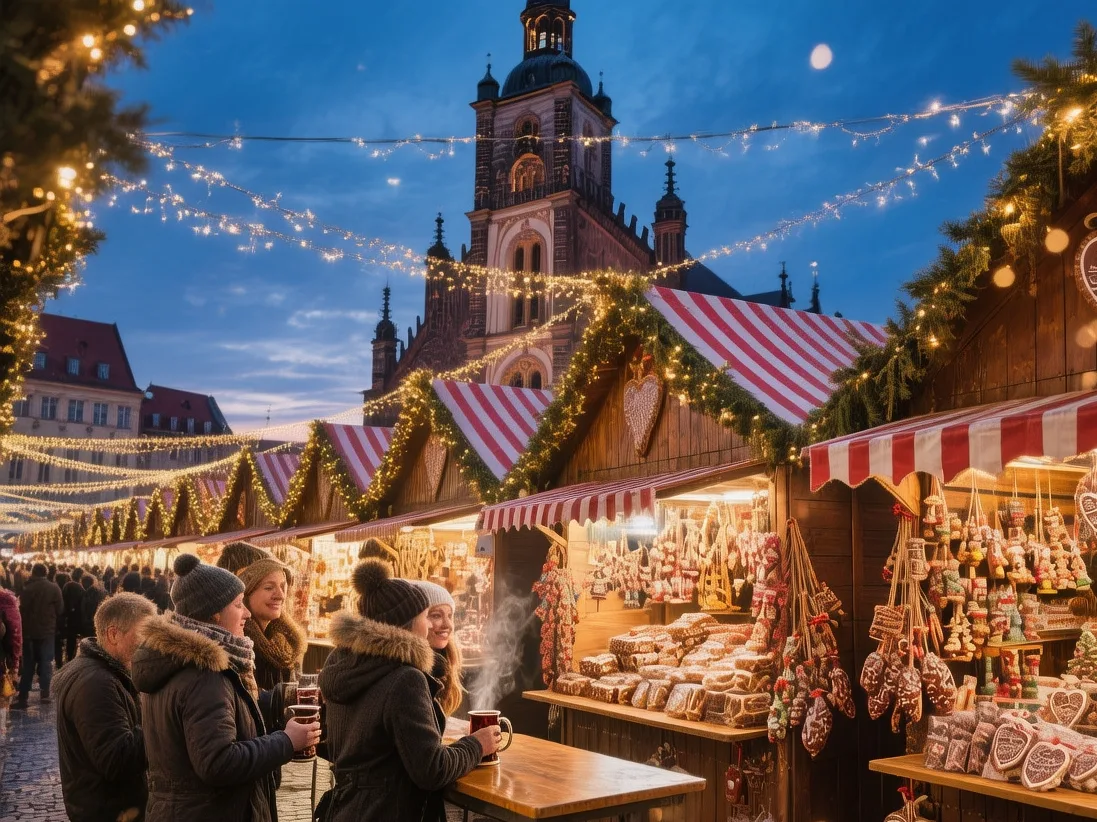
4:00 PM breaks over the Hauptmarkt—a cobblestone square measuring 3,600 square meters in the heart of Nuremberg's Old Town. The air bites at 2°C (36°F), sharp with the scent of burning pine, spiced wine, and the earthy perfume of gingerbread waking from the ovens. Twilight light spills over the 180 wooden stalls of the Nuremberg Christmas markets, illuminating the red-and-white striped canopies that have stood sentinel over the city since 1628. This is not merely a fair; it is a living museum of Yuletide custom rising from the shadow of the Frauenkirche, standing guard over the Franconian winter since the Thirty Years' War. You hear the chime of the Glockenspiel; the mist lifts 50 meters from the Pegnitz River, exposing the half-timbered facades that have survived bombing and reconstruction. In 2026, as commercialization threatens holiday spirit globally, the Nuremberg Christmas markets matter now more than ever. They remain a tactile connection to tradition—a place where you walk the same flags as medieval merchants, where the past isn't behind glass but steaming in the mugs, and where the rhythm of life follows the Christkind's schedule rather than the clock. This is why you visit.
Why Nuremberg Christmas Markets Embodies Festive Heritage
The Nuremberg Christmas markets aren't merely a seasonal attraction—they're a testament to civic pride and cultural resilience spanning four centuries. First documented in 1628, the Christkindlesmarkt was designed to provide a winter market for children, distinct from the summer fairs. The market solved a fundamental social need: to foster community and trade during the darkest days of the year. The engineering is remarkable: the 180 stalls (Hütten) are constructed from wood with red-and-white cloth roofs, adhering to strict size regulations (2x2x2.5 meters) established to preserve the square's aesthetics. The Christkind, a golden-haired angel figure played by a local young woman, opens the market with a prologue from the Frauenkirche balcony, a tradition revived in 1933 after a hiatus. In 2026, the market welcomes over 2 million visitors annually, making it one of the most famous Christmas markets in the world. The City of Nuremberg manages the site, maintaining the structural integrity of the stalls against snow loads and wind. When you walk these lanes, you traverse a layered history: Imperial free city in 1628, Post-war reconstruction in 1948, and a contemporary commitment to authenticity that defines the future of European festivals. The wood doesn't care about your schedule; it demands you respect its craft.
The Best Time to Experience Nuremberg Christmas Markets
The Nuremberg Christmas markets reveal their true character during specific windows, though they operate only during the Advent season. The definitive experience occurs between November 28 and December 22, 2026. During this window, you'll experience average temperatures of 0–5°C (32–41°F), with daylight fading by 4:30 PM—ample time for evening photography when the lights glow brightest. The pre-Christmas light filters beautifully through the stall canopies, creating dramatic contrasts between shadow and illumination on the snow. The peak tourist hordes haven't yet descended. For those seeking quieter contemplation, weekday mornings (10:00–11:30 AM) offer a more intimate atmosphere with significantly fewer tour groups at the Glühwein stands.
However, avoid December 23–24 unless you enjoy navigating crowds: this final period sees visitor numbers swell to 100,000 daily, with the Hauptmarkt congested and accommodation prices inflating by 100%. The market closes at 2:00 PM on Christmas Eve. Winter (December) brings its own magic but limited services—some stalls close early, and daylight shrinks to 8:00 AM–4:30 PM. For real-time opening hours and event schedules, verify current information at www.christkindlesmarkt.de before your visit. Always check the Christkind's schedule; the opening ceremony draws massive crowds.
Approximate Budget for a 7-Day Trip (2026)
Nuremberg accommodates various budgets, though 2026 prices reflect post-pandemic tourism recovery and 3.5% German inflation. The following breakdown assumes mid-range travel with comfortable accommodations, local dining, and comprehensive exploration including public transport. Prices are listed in Euros (€), the local currency.
- Accommodation: €120–€180 per night for a double room in a traditional guesthouse or boutique hotel in Altstadt or St. Johannis. Luxury properties command premium rates (€350–€600), while hostels offer better value (€40–€60 per bed).
- Food: €50–€75 per day. Breakfast (€12–€18) typically includes bread rolls, cold cuts, and local cheese. Lunch (€15–€25) at market stalls: Bratwurst im Brötchen, or a Schnitzel. Dinner (€30–€50) featuring regional specialties: Sauerbraten, fresh river fish, or Lebkuchen.
- Transportation: Nuremberg Airport U-Bahn to city: €3.50 single. VGN day pass (Zone 1): €11.50. Taxi from airport to center: €45. Car rental not recommended due to environmental zones and parking costs.
- Attractions: Christmas Market entry: Free. Imperial Castle: €11. Albrecht Dürer House: €10. Germanisches Nationalmuseum: €12. Night Watchman Tour: €15.
- Miscellaneous: City map: €5. Local wool scarf: €50–€100. Souvenir mug deposit: €3. Travel insurance: €40–€60 for the week.
Total estimated cost for 7 days: €1,500–€2,100 per person (based on double occupancy)
Seven Essential Nuremberg Christmas Markets Experiences
- Watch the Christkind Prologue: Arrive at the Frauenkirche at 5:30 PM (Opening Day). The angel speaks from the balcony. The crowd is massive and lively. The voice is amplified and clear. The tradition dates to 1933. Allow 60 minutes for the ceremony. It is the definitive cultural connection.
- Drink Glühwein: Visit a stall at 6:00 PM. The wine is mulled and hot. The mug is ceramic and collectible. The temperature is warming at 70°C (158°F). The scent of cinnamon is overwhelming. Allow 30 minutes for the drink. It contextualizes the market within social tradition.
- Eat Nuremberg Bratwurst: Order the sausages at 7:00 PM. Three small sausages come in a bun. The meat is marjoram-spiced. The grill smoke is distinct. The price is fair at €5. Allow 20 minutes for the meal. It offers the definitive culinary connection.
- Visit the Children's Market: Explore the Karolinenplatz at 11:00 AM. The rides are historic and wooden. The carousel dates to 1900. The atmosphere is family-friendly and quiet. The lights are colorful and bright. Allow 60 minutes for browsing. It is a tangible connection to childhood.
- Climb the Imperial Castle: Hike to the fortress at 2:00 PM. The view over the red roofs is stunning. The wind is strong on the ramparts. The light here is cooler, more subdued. It offers a contrast to the market view. Allow 90 minutes for the tour. It is physically demanding but offers the definitive perspective.
- Buy Handmade Ornaments: Shop at the stalls at 4:00 PM. The decorations are wood and glass. The price ranges from €5 to €50. The craftsmanship is intricate and traditional. The sellers are local artisans. Allow 60 minutes for selection. It is a tangible connection to local craft.
- Watch the Lights: Return to the square at 8:00 PM (winter closing varies). The stalls glow orange under the evening light. The shadows of the church stretch across the square. You can hear the carols from the choir. The city noise diminishes. It is the best time for exterior photography. The market frames the sky perfectly. Allow 30 minutes for a full circuit.
Three Hidden Gems Most Travelers Miss
- The Hans Sachs Market: While most visitors focus on the Hauptmarkt, this artisan market sits at Hans-Sachs-Platz. Access: Walk 5 minutes from the main square (open 10:00 AM–9:00 PM). It is overlooked because it is smaller, but the crafts are authentic. Best visited: Afternoon for the light. No facilities; bring food. It offers a perspective on high-quality craftsmanship.
- The Engelmarkt: Located in the Frauenkirche courtyard, this charity market dates to 1990. Access: Enter from the square. Open during daylight hours. It's overlooked because it is hidden, but the atmosphere is peaceful. Insider tip: Look for the angel wings. Benches available for rest. It provides context for community support.
- The St. Lawrence Church: Beneath the snow lies a Gothic masterpiece from 1300. Access: Enter from the Königstraße. Open 10:00 AM–5:00 PM. It is overlooked because it is a church. The tabernacle is intricate. It's special because you see the medieval art. Best visited: Morning for the quiet. A unique cultural heritage experience.
Cultural & Practical Tips
- Respect the Queues: Do not cut in line at the stalls. This is not just etiquette; it is rule. Leave no trace; take all litter home. Keep voices moderate in the residential lanes.
- Photography Guidelines: Photography is permitted in the public square. Tripods are allowed but cannot obstruct paths. Do not use flash inside the stalls. Respect vendors; no photography of proprietary recipes. Silence your phone completely.
- Booking Strategy: Hotel rooms sell out during Advent. Book online at least 90 days in advance. Arrive 15 minutes before your tour slot. Late arrival may result in denied entry without refund. Print your ticket or save it to your phone wallet.
- Learn these Local Terms: "Grüß Gott" (Hello), "Bratwurst" (Sausage), and "Glühwein" (Mulled Wine). Locals appreciate the correct terminology. When ordering, say "Eine Maß Glühwein" rather than "A wine." It shows respect for German heritage.
- Weather Preparation: Nuremberg is cold in December. Even on sunny days, carry a heavy coat. The temperature drops 1°C for every 100 meters of elevation. Dress in layers. Check the forecast; snow is common.
- Accessibility Information: The square is mostly flat and cobblestoned. Some stalls have steps. Virtual tours are available online. Contact the visitor team at +49 911 23360 for specific access queries before traveling.
- Support Conservation: Consider donating to the "Nuremberg Heritage Fund" upon exit. Maintenance costs €5 million annually. Purchase souvenirs from the stall rather than online to support the local revenue stream. Membership offers free entry to other sites.
Conclusion: Travel with Tradition, Not Just Consumption
The Nuremberg Christmas markets in 2026 ask something different of you than mere shopping. This market—wood, light, resilient—has witnessed centuries of trade, war, peace, and celebration. But it also sustains a living memory of community that keeps the culture alive. To travel here responsibly means understanding that you're not just visiting a fair but entering a sanctuary maintained by strict authenticity protocols. Walk softly on these cobblestones; they've carried merchants, soldiers, tourists, and locals for generations. Choose the quiet morning visit over the crowded afternoon. Listen to the carols, not just the noise. Donate to the conservation fund, not just the gift shop. Let the Nuremberg Christmas markets change you, not just entertain you. In an age of mass tourism and digital detachment, this is how we ensure that 2026's visitors don't become the generation that loved this place to death. The market will still be here in 2126—if we treat it not as a backdrop to consume but as a legacy to protect.