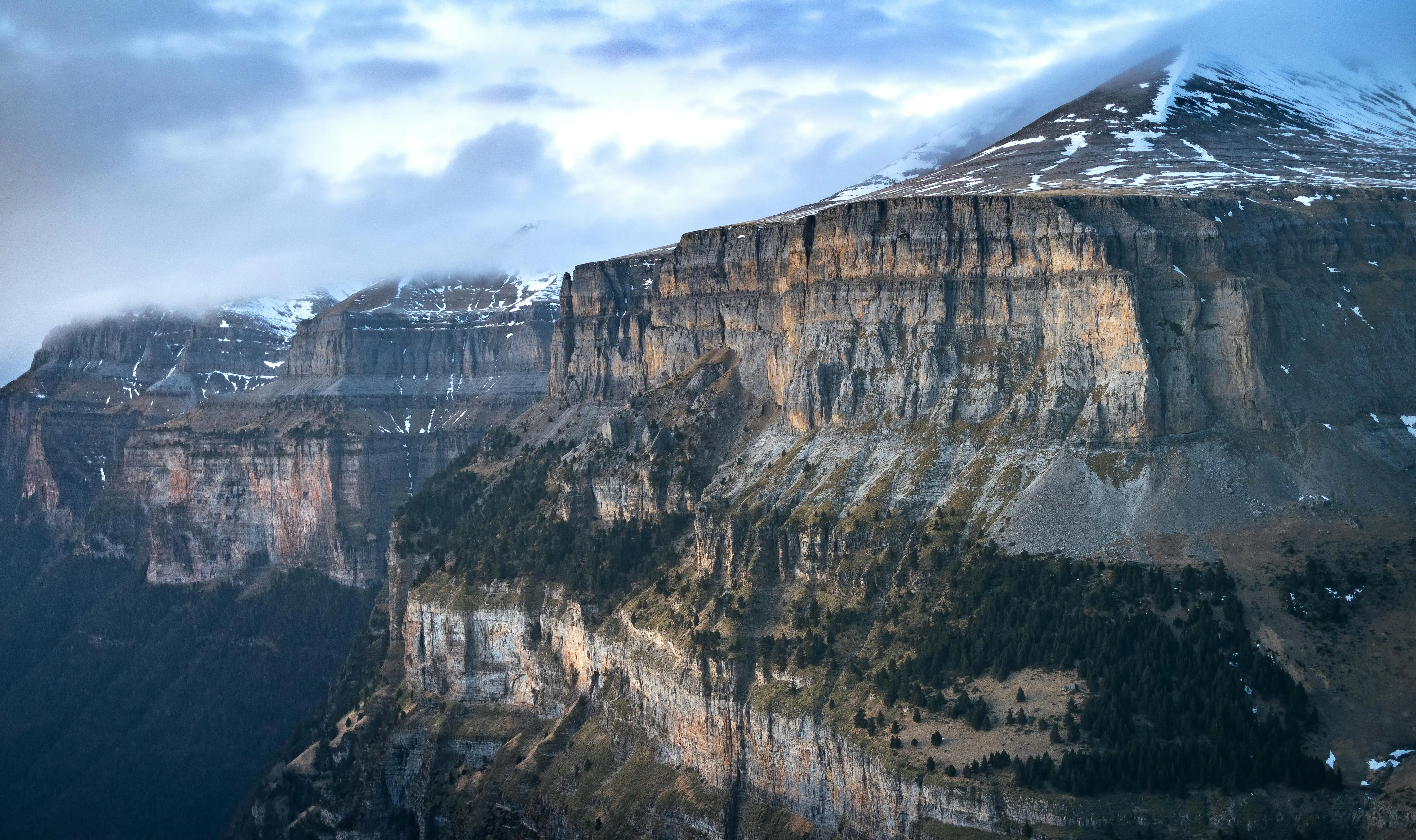
Ordesa y Monte Perdido National Park: Where Limestone Giants Meet Ancient Forest
I stand at the viewpoint above the waterfall at ten in the morning. Water drops two hundred metres straight down. Mist rises and cools the air. Entry to the park is free. The bus from Torla costs five euros. I lean on the stone railing. The valley stretches deep and wide. Pine trees cover the lower slopes. Limestone walls rise sheer above them. A griffon vulture glides slow and silent along the cliff edge. Not everything stays quiet. The bus fills fast by mid-morning. Popular viewpoints crowd with cameras. Some paths show clear erosion. Yet the scale humbles you. This valley was carved by ice and water long before people walked here.
Why Ordesa y Monte Perdido Matters
Ordesa sits in the central Spanish Pyrenees. Monte Perdido — Lost Mountain — rises 3,355 metres, third highest peak in the range. The park protects deep canyons, ancient forests, high meadows, and one of Europe’s largest limestone massifs. Designated in 1918, it was Spain’s first national park. UNESCO listed the area as a World Heritage site in 1997. The landscape holds glacial cirques, cascading rivers, and rare species — bearded vultures, lammergeiers, chamois, and brown bears. Human history runs deep too: shepherds, hunters, and mountaineers have moved through these valleys for centuries. Today the park balances protection with heavy visitation. That balance feels strained. Summer queues stretch long. Trails wear thin. Some areas close to recover. Still, Ordesa remains one of the most spectacular protected landscapes anywhere.
The Best Time to Experience Ordesa
Late May through June brings melting snow and peak waterfalls. Days sit between 12°C and 20°C (54°F–68°F). Wildflowers carpet the meadows. Higher trails remain closed until June. July and August are warmest and busiest — 15°C–24°C (59°F–75°F). The valley fills completely. September and October offer golden light, thinner crowds, and autumn colour — 10°C–18°C (50°F–64°F). Winter from December to April closes most access roads. Only snowshoe or ski entry is permitted. Weekdays beat weekends. Saturday and Sunday visitors arrive from Zaragoza and beyond. Arrive before 9:00 to ride the first bus up.
Approximate Budget for a 7-Day Trip
- Accommodation: Guesthouse in Torla — 50–80 euros per night. Apartment in Broto — 55–90 euros per night. Mountain refuge — 35–55 euros half-board. Campsite — 12–20 euros per person.
- Food: Lunch at village restaurant — 12–18 euros. Dinner with local wine — 20–32 euros. Self-catered meal — 6–10 euros per person. Hot chocolate — 3–4 euros.
- Transport: Park bus return — 5 euros. Car rental — 35–55 euros per day. Parking in Torla — 6–10 euros daily. Zaragoza airport transfer — 50–80 euros one way.
- Attractions: Park entry — free. Guided high-mountain walk — 15–22 euros. Information centre — free.
- Miscellaneous: Water, snacks, sunscreen — 8–14 euros daily.
Total estimated for one person, 7 days: 400–680 euros
Meals at the mountain refuges cost far more than in the villages below. Everything must be carried uphill. Pack a lunch from Torla or Broto. It saves money and lets you stop wherever the view looks best.
Essential Ordesa Experiences
- Walk to the Cola de Caballo waterfall. The trail winds up through forest beside the river. Water spreads wide and gentle at the bottom. The path feels accessible and rewarding. Skip this on summer afternoons — it becomes crowded and slow.
- Climb to the Senda de los Cazadores. A narrow path carved into the cliff face high above the valley. The view drops straight down to the forest floor. It feels dramatic and unforgettable. Do not take this if heights unsettle you — there are no railings.
- See Monte Perdido from the Circo de Soaso. The peak rises above a horseshoe of rock and snow. Glacial green water sits in the lake below. The scale feels immense. Arrive early to sit quietly before crowds gather.
- Follow the Faja de Pelay traverse. A high-level shelf path running beneath the cliffs. Vistas stretch across the whole valley. It feels wild and exposed. The return climb is steep — allow extra time.
- Spot griffon and bearded vultures. They ride updrafts along the rock faces early and late in the day. Binoculars help — they soar high and far. Keep voices low so you do not disturb them.
- Walk the lower valley at sunset. Light turns golden and soft. Most visitors have left. The forest falls quiet. The atmosphere changes completely.
Hidden Gems Most Travelers Miss
- Valle de la Pineta. A quieter side valley reached from Bielsa. Waterfalls, pine forest, and fewer people. The view toward Monte Perdido from the upper meadow feels perfect.
- The old shepherd’s trail to Brecha de Rolando. An ancient pass crossing into France. It climbs through meadows and past stone ruins. The gradient feels kind and the history tangible.
- The so-called "secret pool" marked on social media. It sits close to the main path and often fills with people. In summer the water warms but stays crowded. If you want quiet, keep walking higher.
Cultural & Practical Tips
- Do not drive private cars into the park core. Roads are restricted. You must take the official bus from Torla. It runs frequently but fills fast. Arrive before 9:00 to secure a seat.
- Check trail status daily. Some paths close to recover from erosion. Others shut due to rockfall. The visitor centre posts clear updates — respect them.
- Carry at least two litres of water. There are no shops or taps along the trails. The sun reflects off rock and stays intense. Dehydration creeps up fast.
- Wear sturdy non-slip shoes. Limestone becomes treacherous when damp. Gravel and loose rock cover higher paths. Ankle support matters.
- Do not leave the marked paths. Alpine meadows take decades to regrow. Cutting corners damages fragile ground. Stay on the trail to protect what you came to see.
- Book accommodation months ahead for July and August. Prices rise and places sell out. Early June or September offer better value and thinner trails.
Essential Visitor Information
Location & Access: Ordesa y Monte Perdido National Park, Huesca province, Aragon, Spain. Main entry: Torla village. Western access: Broto. Eastern access: Bielsa. From Zaragoza — 2.5 hours by car. From Pamplona — 2 hours. From Toulouse — 2.5 hours. Nearest train: Zaragoza, then bus or rental onward.
Tickets & Booking: Park entry — free. Bus return — 5 euros. No reservation needed for individuals. Refuge accommodation — book weeks ahead in summer.
Operating Hours: Park — open 24 hours daily. Bus service — May to Oct roughly. Winter access limited. Information centres — 9:00 to 17:00, shorter hours winter.
Visit Duration: Minimum 2 days. 3–4 days lets you explore the main valley, a side trail, and one high route without rushing.
Family Suitability: Good for children on lower forest trails. Higher routes are steep and exposed. Strollers work on paved paths but not on mountain trails. Restrooms at main viewpoints.
Timing: Best season — late May–June and September. Best time of day — first bus at 9:00 or afternoon return after 16:00.
Highlights: Cola de Caballo waterfall, Senda de los Cazadores cliff path, Circo de Soaso and Monte Perdido, Faja de Pelay traverse, sunset valley walk.
Nearby & Day Trip: Aigüestortes National Park — 1.5 hours. Pyrenees ski resorts — 45–60 minutes. Torla and Broto villages — base. Zaragoza — 2.5 hours.
Conclusion: Travel with Respect, Not Just Photos
Ordesa does not exist to fit inside a frame. It is a living, breathing mountain system that wears down and rebuilds over centuries. Before you leave, stand still where the forest meets the rock. What will you protect so this valley stays wild for the people who come after you?
Comments
Post a Comment