Oristano Sartiglia Festival: Where Ancient Rite Meets Coastal Town
I stand at the edge of Piazza Eleonora at 9:00 on a February morning. The air smells of roasted chestnuts and damp stone. A hot wine costs two euros from a street stall draped in red and gold cloth. I watch riders in flowing white robes and carved wooden masks adjust reins before the procession begins. Sartiglia fills Oristano on the last Sunday and Tuesday of Carnival. It is not a performance staged for visitors alone. It is a living tradition rooted in agriculture, faith, and community — one that locals have kept alive across centuries. People come for the colour and the spectacle. They find something deeper: a rite that binds the town to its past and to the land it depends on.
Why Sartiglia Matters
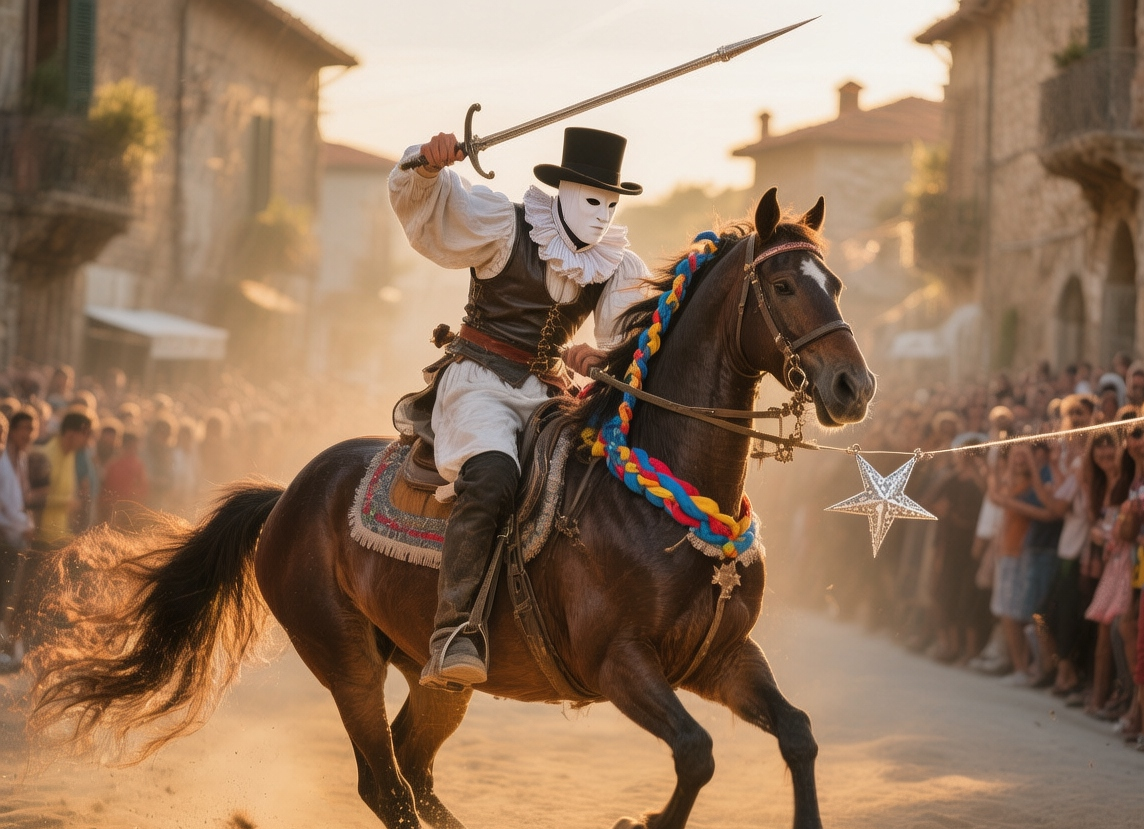
The origins stretch back beyond written records — blending ancient harvest rites, medieval knightly competitions, and Catholic observance. The core ritual — riders charging at a suspended silver star with a sword — asks for abundance and protection for the coming year. The masked figures, the leader known as Su Componidori, and the procession through the city gates all carry layers of meaning passed down through families. Today Sartiglia remains one of the most intact traditional festivals in the Mediterranean. That visibility brings real trade-offs. Crowds pack the historic centre from early morning. Streets narrow and spaces fill fast. Viewing spots are limited and many are unmarked. The event belongs first to the people of Oristano — visitors are welcome, but they are guests.
The Best Time to Experience Sartiglia
Festival days fall in late February or early March. Temperatures sit between 7°C and 15°C (45°F–59°F). Days can feel crisp and bright, or damp and breezy — bring layers and waterproofs. Sunday is the main public procession and competition day; crowds are largest and most colourful. Tuesday feels quieter and more intimate — the blessing, shorter route, and family atmosphere. The week leading up includes smaller events, bonfires, and rehearsals. Visit three days before the main weekend if you prefer space and local warmth. Arrive before 8:30 AM on festival days. By 9:30 AM the best viewing spots are taken and the crowd presses tight.
Approximate Budget for a 7-Day Trip
Prices below are per person, in euros, based on staying in Oristano during festival week.
- Accommodation: 7 nights in a central guesthouse or apartment — €75–140 per night. Total: €525–980. Staying nearby in Cabras or Oristano outskirts costs 25–35% less; buses run frequently and take 10–15 minutes into the centre.
- Food & Drink: Breakfast, two meals daily including street food and festival stalls — €32–55 daily. Total: €224–385. Vendors along the route charge premium prices; walk two lanes back for standard local prices and larger portions.
- Transport & Access: Train or bus to Oristano — fares vary by origin; local bus pass €12–18; parking €4–7 daily. Driving downtown on festival days is possible but slow and parking fills very early. Public transport is strongly recommended.
- Activities: Pre-festival events, museum entry, nearby day trips — €35–75.
- Miscellaneous: Festival treats, small souvenirs, warm drinks — €15–30.
Total estimated 7-day cost: €790–1,545
Rooms with direct balcony views over the main squares carry a very large premium. Similar accommodation one street away costs 40–50% less and you can still reach the best public viewing spots in minutes. The "Sartiglia VIP Balcony & Priority Viewing" package is overpriced; excellent spots are free and accessible if you arrive early.
Essential Sartiglia Experiences
- The Star Charge — Watch riders gallop down the main street aiming their sword at a small silver star suspended high above the crowd. Catching it means good fortune for the year ahead. The crowd erupts when the blade connects. Skip if you dislike tight crowds; you will be shoulder to shoulder with people throughout.
- Masked Procession — Walk alongside the riders in white robes and carved wooden masks. They move with steady, deliberate grace. The masks give them an air of something ancient and unchanging. It feels less like a parade and more like a sacred progress.
- Su Componidori Blessing — Stand near the leader as he rides through the streets sprinkling blessed water over the crowd. People lean forward eagerly to receive it. This is the heart of the festival — a moment of renewal and shared hope. Keep your voice low and your posture respectful.
- Bonfire Night Before — Join the smaller gathering on the eve of the main festival. Fires burn in neighbourhood squares. People gather to eat, talk, and watch the flames. It feels genuine and unpolished — mostly locals, few visitors.
- Historic Centre Atmosphere — Wander the streets between events. Banners hang from medieval facades. The whole city feels transformed. Every doorway seems to hold a story. You do not need to be at the main spectacle to feel part of it.
- Post-Festival Quiet Walk — Return to the main streets the morning after. The banners remain but the crowds have gone. You see the route in daylight and absorb what happened. It gives the festival space to settle in your mind.
Hidden Gems Most Travelers Miss
- The side streets near the cathedral offer elevated kerbs and clearer views without the crush. Locals gather here with chairs and families. You will see the same procession but with room to breathe.
- The church square where riders gather before setting out stays quiet until the moment they emerge. Standing there ten minutes before departure gives you a close view of preparations — quiet, focused, full of anticipation.
- Tuesday’s procession follows a shorter route and draws far fewer visitors. The atmosphere feels warmer and more personal. Many locals say this is the true heart of the festival.
- The "Official Sartiglia Guided Walk" is overpriced. The route is clearly marked and easy to follow. You will hear more genuine stories standing quietly beside locals than you will from a scripted commentary.
Cultural & Practical Tips
- Arrive early. The best free spots are occupied by 8:30 AM on Sunday. After 9:00 AM you will see mostly shoulders and hats. Early arrival is the only reliable way to get a clear view.
- Dress warmly and comfortably. You will stand for hours. The ground can be damp and the wind cold. Waterproof shoes and layers are essential — umbrellas block views so wear a coat instead.
- Respect the event. This is not street entertainment. It is a serious, beloved tradition. Keep voices down during the blessing. Do not push forward or block locals who have waited all year for this.
- Do not touch or adjust the riders or their costumes. Everything they wear and carry is part of the rite. They are focused and moving quickly — give them space.
- Carry cash. Many stalls and small eateries do not take cards. Change is also easier to manage in the crowd.
- Stay for the whole procession. It feels incomplete if you leave early. The closing moments carry special meaning — the crowd lingers, sharing the feeling of having witnessed something important together.
- Book accommodation 3–6 months ahead. Oristano is small and rooms fill completely. Prices rise sharply as the date approaches. Secure your place early.
Essential Visitor Information
Location & Access: Oristano, Sardinia, Italy. Coordinates roughly 39.9100° N, 8.5900° E. Three ways to arrive: train from Cagliari — 2 hours; train from Alghero via Sassari — 2 hours 15 minutes; or drive from ferry port at Porto Torres — 2 hours.
Tickets & Booking: All procession and viewing areas are free. Some pre-festival dinners and events sell tickets separately — book early. No ticket is required for the main days.
Operating Hours: Main procession Sunday roughly 10:00 AM to 1:00 PM; shorter blessing procession Tuesday roughly 10:30 AM to 12:00 PM. Times shift slightly each year — confirm locally.
Visit Duration: Minimum 1 full festival day. Recommended 3–4 days to include pre-festival events, both Sunday and Tuesday, and nearby Cabras, Tharros, and the Sinis Peninsula.
Family Suitability: Good for families. Children are welcome and often participate. Crowds are dense so keep younger children close or carry them high. Strollers are difficult to manoeuvre — use a sling or backpack carrier.
Timing: Held late February or early March — exact dates change annually. Best time of day is before 8:30 AM to claim a spot.
Highlights: Silver star charge, masked procession, Su Componidori blessing, bonfire eve, Tuesday quiet procession, historic centre atmosphere.
Nearby & Day Trip: Cabras and Sinis Peninsula beaches are 15–20 minutes by car. Tharros ruins are 20 minutes. Giovanni Marongiu Museum is 20 minutes. Cagliari is 2 hours by train.
Conclusion: Travel as Guest, Not Just Spectator
Sartiglia gives you something rare — a festival that has not been reshaped to suit visitors. It remains itself, on its own terms. You can take photos and leave with striking images. Or you can stand quietly, respect the rhythm, and understand that this belongs to the people who live here year after year. The best souvenir is not something you buy. It is the feeling of having stood respectfully beside them as they welcomed the new season. What is the one tradition you would attend as a guest, not just an observer?
Comments
Post a Comment