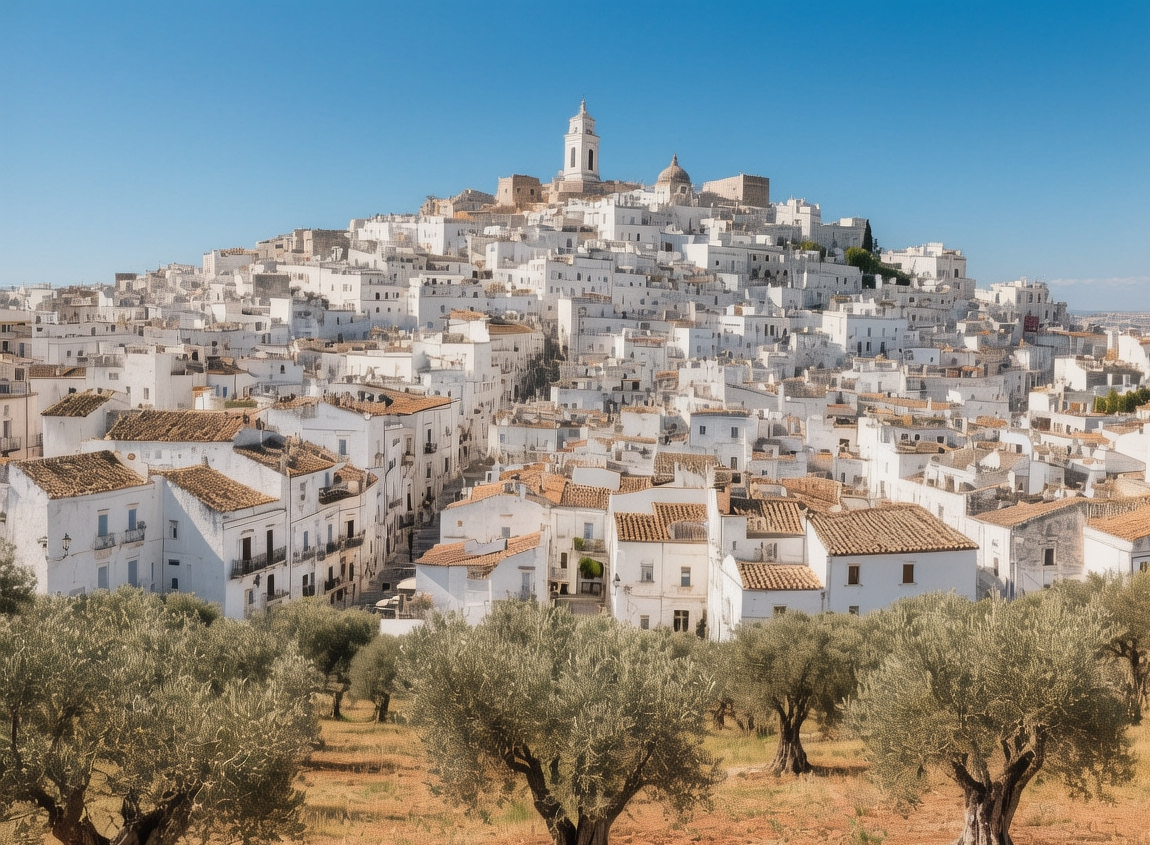
Ostuni: Where White Hill Meets Ancient Grove
I stand at the lower gateway at 8:00 on a June morning. The white walls glow soft in early sunlight. An espresso costs one euro fifteen at a tiny bar tucked beside an arched passage. I look upward — the town climbs the hill in brilliant white layers, narrow lanes winding steeply toward the summit, the cathedral’s pale facade rising above terracotta rooftops, and beyond the edge endless olive groves stretch toward a distant shimmer of blue. Ostuni sits atop three hills in central Puglia, its whitewashed architecture earning it the name La Città Bianca. People come for the brightness. They find a settlement shaped by ancient tradition, painted lime, and a quiet endurance that has lasted thousands of years.
Why Ostuni Matters
This high ground has been inhabited since prehistory. Greek settlers, Roman traders, and later communities all valued its defensive position and fertile land. In the Middle Ages the town clustered on the highest hill, protected by walls and gates. Whitewashing became both tradition and practicality — lime paint reflected the sun, kept interiors cooler, and helped homes remain visible from great distances. The cathedral, built in the 15th century, stands as the town’s spiritual and architectural heart — Romanesque-Gothic stone solid and enduring. Today Ostuni is one of the most recognisable towns in southern Italy. That fame brings real pressure. The main lanes fill fast by mid-morning. Some quiet corners feel overexposed. Restoration balances preservation with growing attention — and that balance is delicate.
The Best Time to Experience Ostuni
Late April through June brings fresh green groves, blooming jasmine, and thin crowds. Temperatures sit between 13°C and 25°C (55°F–77°F). Morning light makes the white stone glow beautifully and walking feels comfortable. July and August warm to 21°C and 32°C (70°F–90°F). Sunlight becomes harsh by midday and the historic centre feels crowded from morning until late. September offers golden light and softer days — 17°C to 28°C (63°F–82°F). The air stays clear and visitors thin out. Early October remains mild — 14°C to 23°C (57°F–73°F) — but evenings cool fast. Winter holds quiet, bright days: 7°C to 15°C (45°F–59°F). You may have the highest lanes almost to yourself. Arrive before 9:00 AM any time of year — that is when Ostuni shines most purely.
Approximate Budget for a 7-Day Trip
Prices below are per person, in euros, based on staying in Ostuni or nearby.
- Accommodation: 7 nights in the historic centre — €70–155 per night. Total: €490–1,085. Staying in the countryside or nearby village costs 35–45% less; driving or taking a bus in takes 10–15 minutes longer.
- Food & Drink: Breakfast, two meals daily — €28–52 daily. Total: €196–364. Restaurants right on the busiest squares charge premium prices; walk one lane back for home-made orecchiette, grilled lamb, and crisp local white wine at fair rates.
- Transport & Tickets: Local bus — €1.50 per ride; train from Brindisi — €5–10 return; olive oil tour — €15–28. Parking inside the historic centre is restricted — use designated outer zones and walk in.
- Activities: Valle d’Itria villages, nearby coast, farm visits — €25–55.
- Miscellaneous: Water, hat, sturdy walking shoes — €12–22.
Total estimated 7-day cost: €723–1,548
Guided "secret Ostuni" walking tours are often overpriced. Every lane, viewpoint, and church is open to everyone. Wandering slowly without a schedule shows you far more than keeping up with a group.
Essential Ostuni Experiences
- Cathedral Quarter Dawn Stroll — Climb to the summit before crowds build. The pale stone facade glows in early light, quiet lanes radiate outward, and the view stretches across rooftops to the sea. It feels pure, calm, and unforgettable. Skip if you sleep late; after 10:30 AM the atmosphere shifts noticeably.
- Medieval Walls Circuit — Walk the surviving perimeter. Sections of ancient fortification frame sudden views down the hill and across the plain. You understand how this place once stood guard over the land — strong, high, and bright.
- Olive Grove Visit — Wander or drive into the surrounding countryside. Gnarled centuries-old trees line stone-lined paths. This is the true foundation of Ostuni — ancient, quiet, and deeply productive. The oil pressed here tastes bright, grassy, and entirely unlike anything else.
- Sunset from the Belvedere — Sit on the western terrace as the sun dips low. The white town turns warm gold and the distant Adriatic glimmers blue. Most day-trippers have left. Ostuni feels peaceful, beautiful, and entirely yours.
- Cobbled Lane Meander — Lose yourself in the lower quarter. Arched doorways, flower-draped balconies, and small courtyards appear around every turn. No map guides you best — just walk upward and toward the light.
- Local Dish at Dusk — Eat in a family-run place. Fresh pasta, seasonal vegetables, and extra-virgin olive oil at every meal. Simple, honest food — nothing fancy, just the pure taste of this land.
Hidden Gems Most Travelers Miss
- The eastern rampart path stays quiet all morning. Wide views stretch across the valley and toward the coast. Very few visitors walk this way — just locals heading about their day.
- The small church of San Giacomo sits tucked down a side lane. Simple white interior, soft light, and stone arches. It feels peaceful and almost empty — a perfect pause amid the bustle.
- The lower olive grove path, just outside the town gate, winds past ancient trees and stone walls. Quiet, shaded, and entirely free. It connects the white town to the green land that sustains it.
- The "Ostuni VIP Private Lane & Exclusive View Tour" is overpriced. Every view and quiet corner is open to everyone. Arrive early, walk slowly, and get lost — that is how you truly discover it.
Cultural & Practical Tips
- Arrive before 9:00 AM. The best light, quietest lanes, and genuine atmosphere happen early. After 10:30 AM the dynamic shifts noticeably.
- Wear sturdy shoes. Lanes are steep, cobbled, and worn smooth in places. You will walk 5–8 kilometres a day — sturdy soles matter.
- Respect sacred spaces. Many churches are active places of worship. Keep voices low and dress modestly — shoulders and knees covered earns you welcome everywhere.
- Do not block doorways. People live and work here. Step aside after pausing — leave space for daily life to pass.
- Buy oil directly from small producers. It costs less and tastes far better than souvenir-shop versions. Ask locally — the best places are often unmarked.
- Book accommodation 2–3 months ahead in July and August. Ostuni is popular and rooms sell out fast.
- Walk upward first. Save the descent for late afternoon when your legs are warmed up and the light is golden.
Essential Visitor Information
Location & Access: Ostuni, Puglia, Italy. Coordinates roughly 40.74° N, 17.58° E. Three ways to arrive: train from Brindisi — 30 mins; train from Bari — 1 hour; drive from Brindisi — 30 mins.
Tickets & Booking: Town and lanes free. Cathedral — donation; museums €4–8. No booking needed for individuals; reserve accommodation ahead.
Operating Hours: Town always accessible. Cathedral roughly 9:30 AM to 12:30 PM and 4:30 PM to 7:00 PM; closed one day weekly — typically Monday.
Visit Duration: Minimum 2 full days. Recommended 3–4 days to explore hilltop, groves, nearby coast, and white villages without rushing.
Family Suitability: Good overall. Wide views appeal to all ages. Steep cobbled lanes make strollers difficult — carriers are better.
Timing: Best seasons are late April–June and September. Best time of day is before 9:00 AM or late afternoon.
Highlights: Cathedral at dawn, medieval walls circuit, sunset belvedere, ancient olive groves, quiet eastern path, home-made pasta.
Nearby & Day Trip: Alberobello — 30 mins. Polignano a Mare — 30 mins. Martina Franca — 25 mins. Brindisi — 30 mins.
Conclusion: Travel with Lightness, Not Just Rush
Ostuni gives you brightness that has been tended for centuries — whitewashed, renewed, passed down. You can photograph the white walls and leave. Or you can walk slowly, keep your voice low, taste the oil, and remember — this is not just a postcard. It is a living town where families climb these same lanes every day. Honouring that gentle daily life is the finest compliment you can pay. What is the one bright, quiet hilltop place you would visit promising to leave it as white and peaceful as you found it?
Comments
Post a Comment