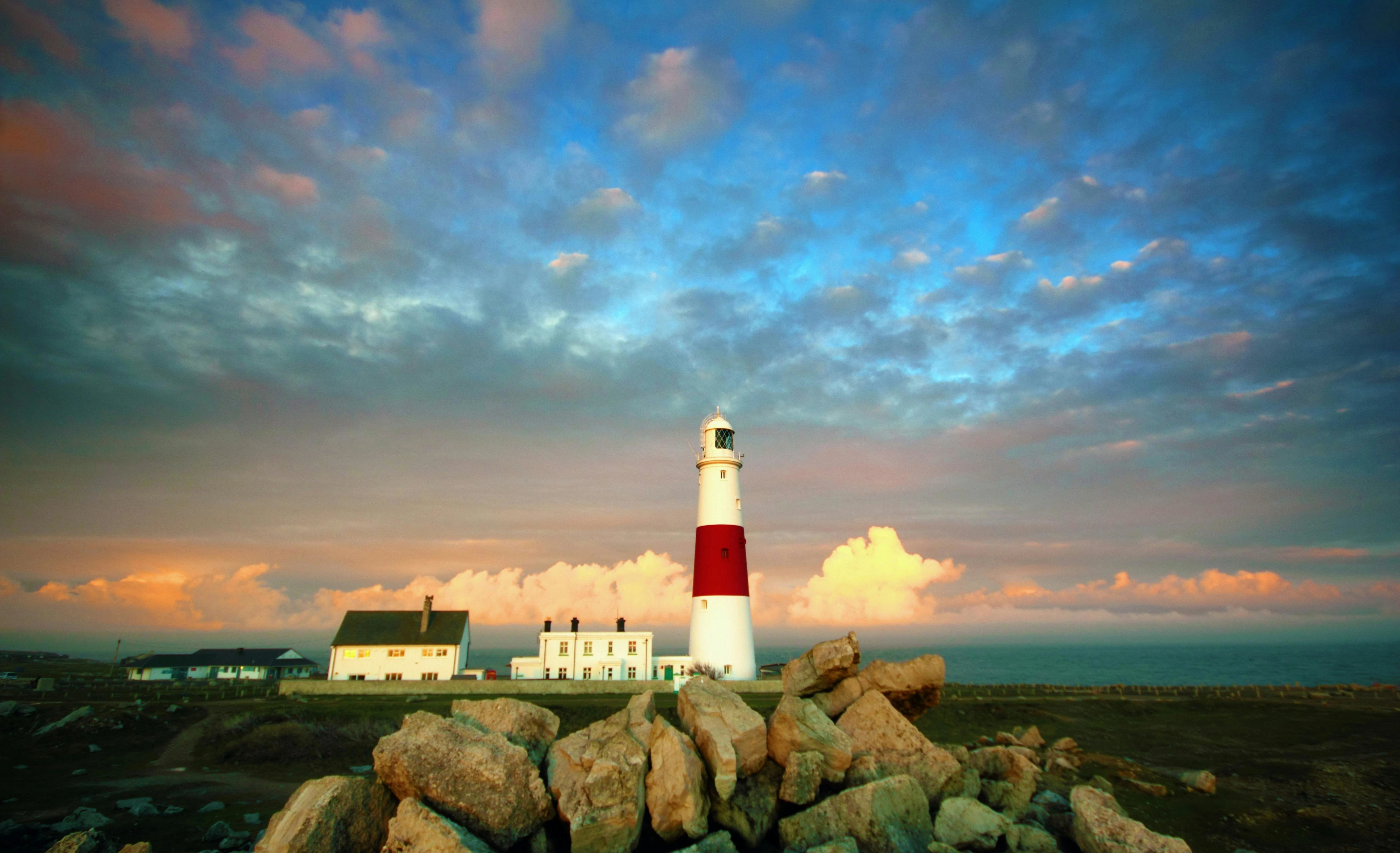
Portland Bill Lighthouse: Where Stone Coast Meets Living Maritime History
I stand at the very southern tip of the Isle of Portland at 10:15 on a bright May morning. The wind carries salt spray and the sharp, earthy scent of quarried stone. Waves crash against dark rock that drops away sharply to the sea. Admission to the lighthouse tower costs six pounds fifty. The light itself no longer needs a keeper, yet it still cuts through the dark for ships passing below. This place feels quiet, solid, and fully itself—no performance for visitors, just a working structure on a stubborn stretch of coast.
Why Portland Bill Lighthouse Matters
For more than a century and a half, this lighthouse has marked one of the most hazardous stretches of water in the English Channel. Shifting sandbanks and submerged rocks have claimed vessels here for centuries. Built from the same Portland stone shipped to build major landmarks in London, the tower rises 35 metres from base to lantern room. It replaced an earlier structure that proved too short and too easily obscured by fog. The lighthouse also stands as a marker for local identity. Stone quarrying and maritime trade shaped every generation here. That said, some will find the surrounding area plain. You will not find neatly manicured gardens or picturesque cottages clustered nearby. Much of the land is working quarry or exposed grassland, and the industrial scarring is visible from many viewpoints. It does not pretend to be something it is not.
The Best Time to Experience Portland Bill
Late May through early September brings the mildest weather and longest days. Average temperatures sit between 13°C (55°F) and 20°C (68°F). Even in summer, prepare for wind; exposed cliff tops feel several degrees cooler than inland areas. July and August are drier but also busier. Spring—April and May—offers bright gorse blooms and fewer people. Autumn, from mid-September to late October, sees temperatures drop to 10°C (50°F) to 16°C (61°F), but the light turns golden and the coast quiets again. Winter brings storms and dramatic seas, though opening hours shorten sharply and some facilities close entirely. Avoid visiting on a bank holiday Monday if you dislike crowds.
Approximate Budget for a 7-Day Trip
Here is what you might spend for one person over seven days staying locally:
- Accommodation: £315 – £450 for a clean room in a guesthouse or self-catering cottage. Book early in summer.
- Food & Drink: £175 – £245. Eat at the smaller cafés; they serve better portions at lower prices.
- Local Transport: £42 – £70 using buses and occasional taxi rides.
- Attractions & Entry Fees: £35 – £55. This includes the lighthouse tower and a few other paid sites.
- Miscellaneous: £50 – £85 for drinks, snacks, and small purchases.
Total estimated budget: £617 – £905
The souvenir shop near the lighthouse charges high prices for branded items. Skip the £18 branded sweatshirts. Visit a small independent shop in Fortuneswell instead for quality knitwear at half the cost.
Essential Portland Bill Experiences
- Climb the lighthouse tower. The 153 steps take you to the lantern gallery with unobstructed sea views. The spiral staircase is narrow and there is no lift. Skip this if you have limited mobility or dislike enclosed spaces.
- Walk the cliff path south from the lighthouse. The easy, flat route passes rock pools and leads to the tip of the headland. Go at low tide to see more marine life.
- Visit the nearby bird observatory. Migrants rest here during spring and autumn. Even if you do not know a tern from a gull, the sight of flocks moving low over the water is worth your time.
- Stop at the Pulpit Rock viewpoint. This weathered stone arch sits just offshore. Stay behind safety railings; waves can sweep over the ledge without warning.
- Explore the lighthouse visitor centre. Displays explain how the light works and what keepers did before automation. It feels dated in places, but the stories are genuine.
- Watch the sunset from the western headland. The sun dips directly into the sea on clear evenings. Arrive early to claim a spot away from the car park.
Hidden Gems Most Travelers Miss
- The old low lighthouse, now a private residence, stands back from the shore. It looks different from its taller neighbour and rarely draws crowds.
- Quarry trails north of the Bill wind through abandoned stone workings. You will see how the rock was cut and carted away. Wear sturdy shoes; loose stone covers the ground.
- Church Ope Cove lies a short walk east. Its sheltered water looks inviting for swimming, but currents are strong and the seabed drops off quickly. Many people overrate it as a safe swimming spot; treat it with caution.
- Portland’s inland villages hold quiet streets and stone-built pubs. Fortuneswell and Castletown feel more real than the area right by the lighthouse.
Cultural & Practical Tips
- Respect private land. Much of the surrounding area is not public access. Stick to marked paths.
- Do not ignore warning signs on cliff edges. Several people have needed rescue after straying off-trail for a photo.
- Bring layers. You can feel warm in direct sun and shiver in the shade within minutes.
- Local buses run infrequently on Sundays. Plan your return trip before you set out.
- Do not feed seagulls. They grow bolder and more aggressive when fed, and they leave waste on walkways and walls.
- Carry cash. A few smaller cafés and stalls do not accept cards.
- Allow extra time in summer. The narrow road to the Bill can back up when visitors leave all at once.
Essential Visitor Information
Location & Access: Portland Bill, Isle of Portland, Dorset. Approximately 13 kilometres south of Weymouth. Reach it by car via the A354 then the B3157; by bus from Weymouth; or by taxi from Weymouth station. Parking is available near the site but fills fast in July and August.
Tickets & Booking: Tower entry is £6.50 for adults, reduced rates for children and seniors. Booking is recommended in peak season but not always required. Grounds and shore access remain free.
Operating Hours: Open daily from 10:00 to 17:00 from April through October. Winter hours shorten to 10:30 to 15:00 on fewer days; some weeks close entirely. Check before travelling between November and March.
Visit Duration: Spend a minimum of one and a half hours. Three hours lets you take in the tower, visitor centre, and a short coastal walk without rushing.
Family Suitability: Children are welcome. The tower climb is not suitable for strollers. Restrooms and a small café sit near the car park.
Timing: Visit in late afternoon for softer light and thinner crowds. Midday brings the brightest views but also the most people.
Highlights: The lantern gallery, the southernmost tip viewpoint, Pulpit Rock, the cliff-edge path, and the old lighthouse keepers’ cottages.
Nearby & Day Trip: Weymouth town and beach lie 20 minutes away by car. Abbotsbury with its subtropical gardens and swannery is 30 minutes west. Corfe Castle and Studland are reachable as a half-day trip.
Conclusion: Travel with Awareness, Not Just Sightseeing
Portland Bill Lighthouse does not dazzle. It does not need to. It stands because it serves a purpose, and that plain, steady utility is what makes it stay with you. You will find cleaner beaches elsewhere and grander historic buildings farther inland. Few places feel so rooted in their own story. Walk slowly. Look closely at the stone. Notice how the light changes over the water. What will you watch for first when you arrive?
Comments
Post a Comment