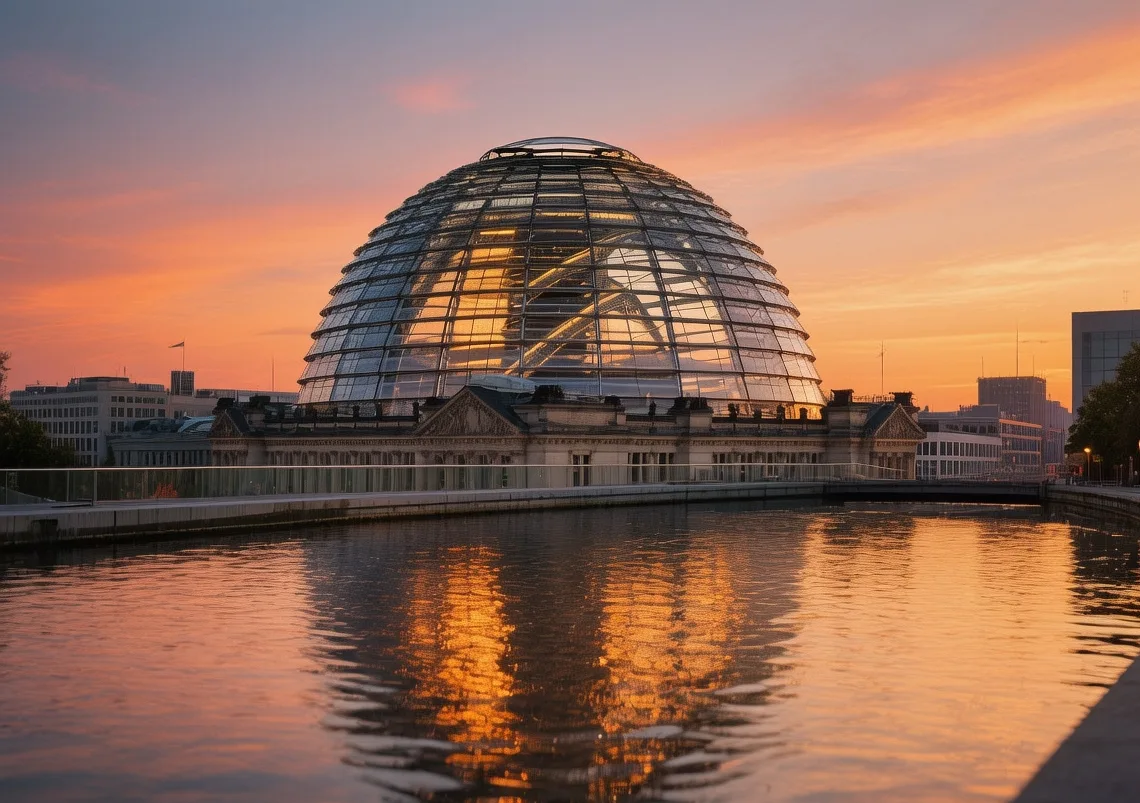
Reichstag Dome: Where Transparency Meets Governance
I stand at the base of the glass dome just before nine in the morning. Sunlight streams through clear panels, reflecting down polished mirrored surfaces. Two spiralling ramps curve upward, meeting high above the central hall. I look straight down through the floor into the debating chamber where elected representatives sit. The air feels open and bright. It feels like a promise — that government belongs to the people below. But by eleven queues stretch long outside. Security checks move slow. The rooftop cafe charges steep prices for simple sandwiches and drinks.
Why Reichstag Dome Matters
The original Reichstag building opened in 1894 as the home of German parliament. A fire in 1933 damaged it severely. War and division left it scarred and unused. After reunification, the building was fully restored and the glass dome added in 1999. Designed by Norman Foster, it sits directly above the historic hall — a visible symbol of transparency and democracy. The dome’s light spirals draw energy from sunlight and return heat to the building below. It stands as both architectural statement and environmental experiment. Yet popularity brings real strain. Same-day slots rarely exist. Security procedures feel thorough and slow. You see the masterpiece, but not the quiet work that keeps it running.
The Best Time to Experience Reichstag Dome
Late April through June brings longer days and softer light. Temperatures sit between 9°C and 20°C (48°F–68°F). Morning slots stay calmest. July and August see 14°C to 25°C (57°F–77°F). Summer evenings are magical — the dome glows against darkening sky — but demand peaks. September and early October offer 10°C to 19°C (50°F–66°F). Golden light falls across rooftops and visitor numbers thin slightly. November through March runs -1°C to 7°C (30°F–45°F). The interior feels warm and bright on grey days. Winter sunset comes early — book late afternoon slots for artificial and city lights combined.
Approximate Budget for a 7-Day Trip
Prices below are per person in euros, mid-range spending.
- Accommodation: Within 15 minutes walk costs €110–€230 per night. Guesthouses in Mitte run €70–€145. Apartments in Friedrichshain or Kreuzberg drop to €55–€105.
- Food & Drink: Expect €32–€52 daily. The rooftop cafe is overpriced — coffee costs €3 more than places five minutes away. Eat before you arrive or walk to nearby government district cafes for fair rates and wider choice.
- Transport: Most central sights stay within walking distance. Day pass €9.50 covers all public transport. S-Bahn to Brandenburger Tor station steps from the building.
- Attractions: Dome and roof terrace free. Advance registration mandatory. Guided building tour €10–€12. Special exhibition halls €4–€6.
- Miscellaneous: Books and souvenirs average €12–€30. Items at the on-site shop carry premium pricing. Bookshops nearby stock similar titles at comparable rates.
Total estimated for 7 days: €400–€900 per person. The dome itself costs nothing — the real expense is planning ahead.
Essential Reichstag Dome Experiences
- Walk the spiralling ramps. One leads up, one leads down. You circle the dome, city views unfolding slowly. Notice how light reaches deep into the building below. Go early; it fills tight and slows to a crawl. Skip it if you dislike enclosed spaces or heights — the curve steepens near the top.
- Stand at the central opening. Look straight down into the parliament chamber. It feels powerful — citizens above, representatives below. This is the core idea made visible. Pause and let it sink in.
- Step out onto the roof terrace. Broad open platform wraps around the dome. Panoramic views stretch across Brandenburg Gate, Tiergarten park, and distant city spires. It feels expansive and real.
- Visit at sunset. Book a late slot. Watch the city light up from above. The dome glows warm from within. Day visitors drift away and the atmosphere softens. This is the most memorable time to be there.
- Walk the surrounding paths. The building sits within quiet grounds. Old stone facades meet modern glass. Plaques explain the fire, war, and reunification story. It adds depth to what you see inside.
- Notice the environmental design. Sunlight powers the building. Shields move automatically to track glare. It works quietly all around you. Read the small signs — this innovation matters as much as the view.
Hidden Gems Most Travelers Miss
- The quiet side terrace facing the Tiergarten. Few people stand here. The park stretches green and endless. It feels peaceful and wide open.
- The lower level exhibition hall. Photos and models show the building’s full history — from imperial era through war, division, and reunification. Most people rush straight to the dome. Allocate 20 minutes here.
- The view from the river path across the Spree. The dome rises bright above the trees. It looks complete and whole from outside. Free and rarely crowded.
- The main ramp viewpoint at the top is overrated. Everyone lines up there. Step back along the curve ten meters and you get the same framed view without being jostled.
Cultural & Practical Tips
- Register online weeks ahead. Same-day slots almost never exist. Bring your passport or official ID — they check every name against the list.
- Arrive 30 minutes early. Security lines move slow. Bags pass through scanners and pockets empty. No large luggage allowed — leave it at your accommodation.
- Do not touch mirrored surfaces. Fingerprints damage the finish. Staff remind visitors often and firmly.
- Respect quiet zones. The building is an active workplace. Voices carry in the open spaces — keep yours low.
- Wear comfortable shoes. You walk upward continuously. The spiral feels gentle but adds up.
- Check closure dates. The dome closes occasionally for official events. Confirm your slot the day before travelling.
Essential Visitor Information
Location & Access: Reichstag, Platz der Republik 1, 11011 Berlin, Germany. Central Berlin. From Brandenburg Gate 5 minutes walk. From Alexanderplatz 20 minutes. Three options: S-Bahn S1/S2/S25 to Brandenburger Tor then walk 5 minutes; U-Bahn U5 to Brandenburger Tor; tram M4 to Platz der Republik.
Tickets & Booking: Dome and roof terrace free. Online registration mandatory. Guided tour €10–€12. No booking without valid ID.
Operating Hours: Daily 08:00–24:00, last entry 22:00. Closed rare official dates.
Visit Duration: Minimum one hour for dome and roof. Two hours lets you see exhibitions and walk slowly without rushing.
Family Suitability: Welcomes children of all ages. Wide ramps suit strollers well. The central opening has high secure railings. IDs required for every adult — children listed on accompanying adult’s form.
Timing: Best seasons May–June and September. Arrive before 09:30 or book 18:00+ sunset slot for thinner crowds and softer light.
Highlights: Spiralling ramps, central downward view, roof terrace panorama, sunset city lights, environmental design.
Nearby & Day Trip: Brandenburg Gate 5 minutes; Tiergarten park 2 minutes; Holocaust Memorial 10 minutes; Museum Island 20 minutes. All make comfortable half-day or full-day outings.
Conclusion: Travel with Vision, Not Just Sight
The Reichstag dome was built to turn a powerful idea into something you can walk on. Light above, people above, government below. Do not just take photos. Look down and think about what transparency means in real life. What building or place in your own city stands for something bigger than itself?
Comments
Post a Comment