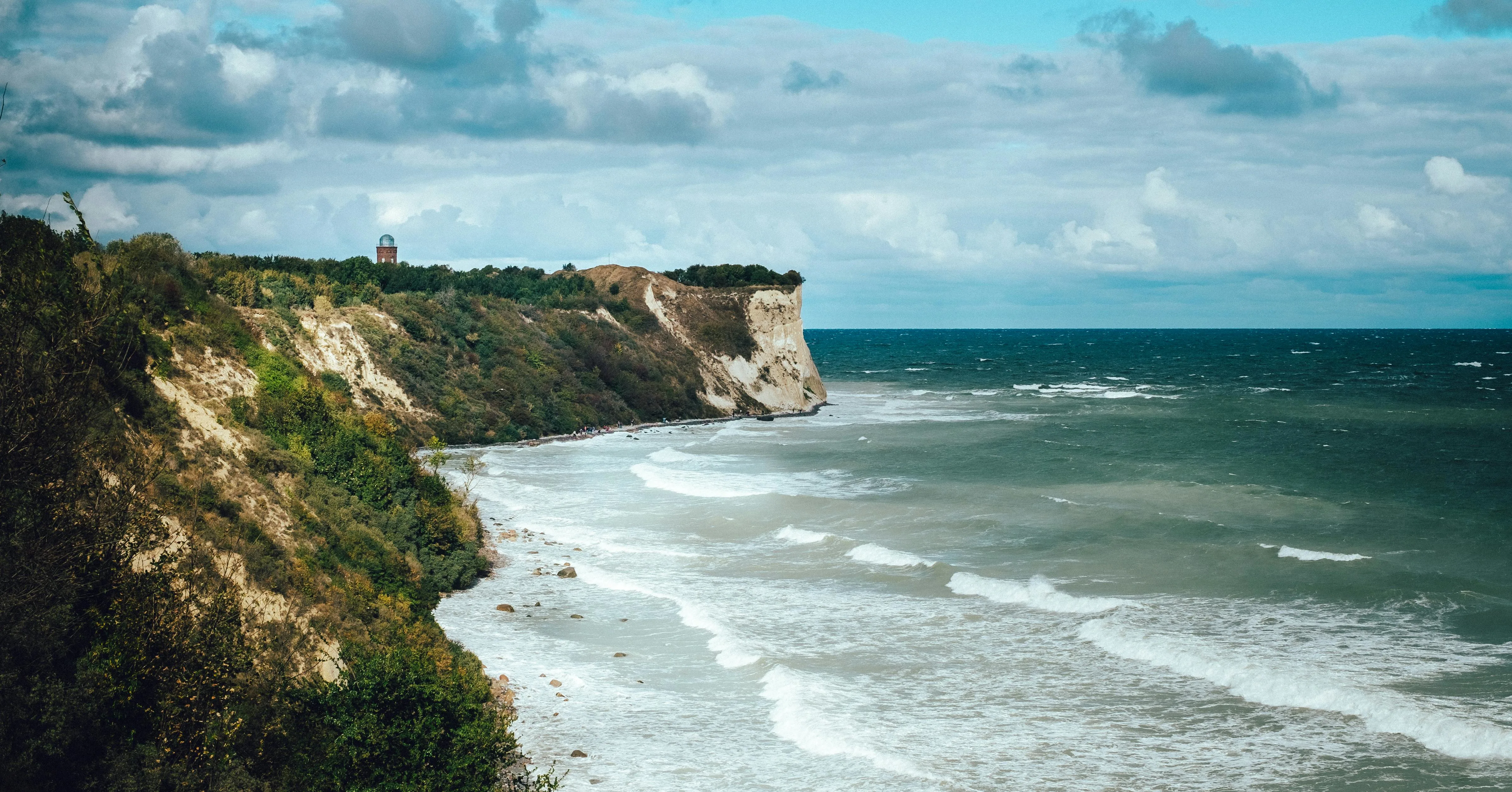
Königsstuhl Kreidefelsen: Where White Cliffs Meet Deep Blue Sea
I stepped onto the viewing platform at ten o'clock on a Tuesday morning. The cliff edge fell away straight down to the water. I paid ten euros at the park entrance. Sunlight hit the pale chalk face and turned it bright against the deep blue below. I expected a dramatic view. What I found feels ancient and powerful — layers of rock laid down millions of years ago, now exposed where land meets sea. Not every section stays white and clean. Rain and wind darken parts of the stone. Some faces show grey and brown streaks. That weathering feels honest; it shows the cliffs are still changing, still being shaped.
Why Königsstuhl Kreidefelsen Matters
These famous chalk cliffs stand on the island of Rügen, Germany's largest island. The formation stretches for several kilometres along the Baltic coast. The Königsstuhl itself — King's Chair — rises 118 metres above sea level. The area forms part of a national park and carries UNESCO recognition. It preserves one of the most complete chalk formations in Europe, rich with fossils and geological history. Forests of beech and oak grow right up to the cliff edge, creating a rare combination of ancient woodland and sheer white rock. One honest criticism: the main viewpoint stays fenced and crowded. You cannot walk right to the edge. On summer mornings groups gather early and finding space to stand takes patience. Paths between viewpoints climb steeply and do not suit everyone.
The Best Time to Experience Königsstuhl Kreidefelsen
May through June brings 10°C to 19°C / 50°F to 66°F. Beech trees stand full and green, framing the white rock beautifully. Arrive before 09:30 to see the cliffs with few people and soft morning light. July and August warm to 15°C to 22°C / 59°F to 72°F. The sea often stays calm and blue. Crowds arrive from mid-morning onward. September holds 11°C to 18°C / 52°F to 64°F. Leaves turn gold and the light warms the chalk to cream. October through March brings 0°C to 7°C / 32°F to 45°F. The cliffs feel stark and quiet. Ice and wind can close some paths; check conditions before setting out.
Approximate Budget for a 7-Day Trip
Costs below are per person based on staying on Rügen Island.
- Accommodation: 462 euros — Clean room in a guesthouse or apartment nearby. Places directly beside the main entrance charge 220 euros or more per night and feel overpriced; stay in Sassnitz or Putgarten ten minutes away for fairer rates and genuine local atmosphere.
- Food: 280 euros — Fresh fish, hearty regional meals, and bakery lunches.
- Transport: 98 euros — Island bus pass plus train connections from the mainland. Bicycle rental suits the flatter coastal paths well.
- Attractions: 70 euros — National park entry plus nearby museum and coastal walks.
- Miscellaneous: 63 euros — Drinks, snacks, and small purchases.
Total: 973 euros. The cafe right beside the main viewpoint marks up every item heavily. Pack a small meal and eat at one of the picnic areas just outside the park boundary.
Essential Königsstuhl Kreidefelsen Experiences
- Königsstuhl Viewpoint — The famous platform looks straight down the sheer cliff face. The sea appears far below. Layers of chalk show clearly. Arrive early; this spot fills fastest. Skip if you dislike heights; the drop is large and fully visible.
- Coastal Forest Walk — Wide paths wind through old beech trees that grow right to the cliff edge. The canopy filters light and softens wind. Different trees and plants appear at every turn. This is where the landscape feels most whole.
- Victoria View — A second platform offers a different angle across the cliff line. The full stretch of white rock unfolds. It often feels less crowded than the main viewpoint. Return at different times; light changes the appearance completely.
- Shore Level Path — Steps lead down toward the water. You see the cliffs rise from below. The scale feels different — taller and more imposing. Some sections are narrow and uneven. Wear sturdy shoes.
- Sunrise Over Sea and Cliffs — The sun rises from the water and hits the white face first. The rock glows pale gold. Most visitors arrive much later; you may have the viewpoints nearly to yourself.
- National Park Centre — Exhibits explain how the cliffs formed, how fast they erode, and what lives in the forest and sea. It adds context to what you see outside. Allot thirty minutes minimum.
Hidden Gems Most Travelers Miss
- North Edge Bench — Beyond the main platforms, a narrow trail leads to a shaded bench. It faces along the coast. Almost no one walks this far. The so-called "famous panorama spot" nearby is often overrated; it sits right beside the main path and stays busy.
- Old Forest Path — A wider loop branches off the main trail. It winds through taller, older trees. Moss covers fallen trunks. It feels quiet and ancient. No crowds come here.
- Downward Glimpse — Beside one less-frequented path, a small opening frames a section of cliff face not visible from the main platforms. Weathering patterns show clearly. It feels like a secret view.
- Coastal Meadow Edge — At the park boundary, open grassland slopes toward the sea. Wild flowers grow in summer. Bees and butterflies appear here. It offers soft green contrast to the stark white rock.
Cultural & Practical Tips
- Stay on marked paths. The chalk is soft and unstable. Stepping off can trigger falls or damage fragile vegetation. Erosion is real and ongoing.
- Arrive early. Same-day entry can slow down significantly after 11:00. In peak season consider buying tickets online ahead.
- Wear sturdy shoes. Paths include steps, slopes, and uneven ground. Surfaces stay damp even when it does not rain.
- Bring layers. Wind speed increases at height and beside open water. It can feel several degrees cooler than in the forest or inland.
- Do not climb the rock faces. Chalk crumbles easily. Every year people require rescue. It is dangerous and forbidden.
- Check closing times. The park gates close at dusk. Some paths take longer than you expect to walk back.
Essential Visitor Information
Location & Access: Königsstuhl Kreidefelsen, Jasmund National Park, Rügen, Germany. Nearest town: Sassnitz. GPS 54.5233, 13.6633. Train from Berlin to Sassnitz roughly 3 hours. Stralsund 45 minutes by train. Bus from Sassnitz to the park entrance 15 minutes. On-site parking available but fills fast.
Tickets & Booking: Adult entry roughly 10 euros. Reduced rates available. Family ticket offered. Booking recommended online weekends, holidays, and July–August.
Operating Hours: Park grounds open daily dawn to dusk. Visitor centre generally March–October 09:00 to 18:00; shorter hours winter. Last entry roughly one hour before closing.
Visit Duration: Minimum 2 hours. Half day lets you walk several loops, visit both main viewpoints, and sit undisturbed.
Family Suitability: Children welcome. Stroller access is limited; many paths have steps and slopes. Restrooms at main entrance. Hold hands near all edges and fences.
Timing: May, June, September best. Arrive before 09:30. Early morning light suits the white cliffs best.
Highlights: Königsstuhl viewpoint, coastal forest, Victoria view, shore level steps, sunrise, national park centre.
Nearby & Day Trip: Sassnitz harbour 15 minutes drive. Binz seaside resort 30 minutes. Cape Arkona 45 minutes. Stralsund historic old town 45 minutes; makes a rewarding half-day trip.
Conclusion: Travel with Time, Not Just Sight
Königsstuhl will not stay the same forever. Wind, rain, and waves wear it away. Pieces fall into the sea. What looks solid today will look different in a hundred years. That is part of its truth — nothing remains fixed forever. Great beauty does not need to last forever to be real. What will you value while you can?
Comments
Post a Comment