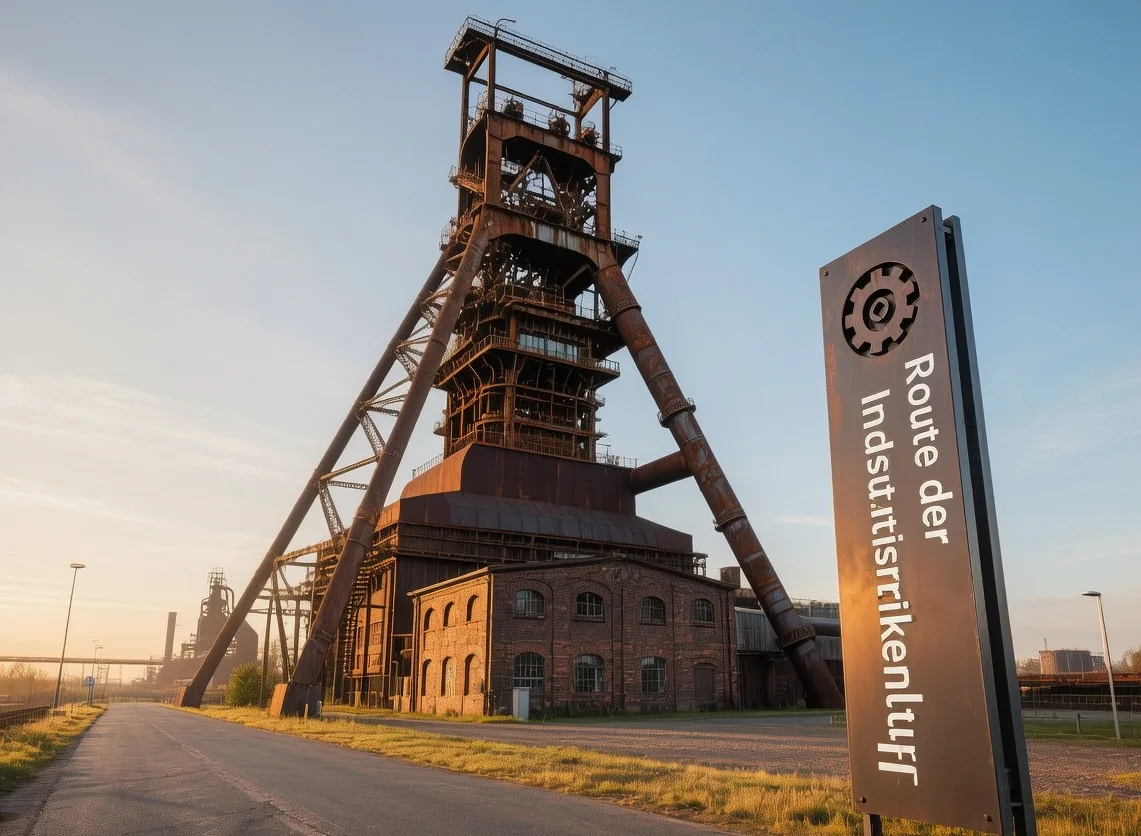
Ruhrgebiet: Where Industrial Heritage Meets Modern Green Space
I walked through the gates of Zollverein at ten on a Tuesday morning. The scale hit me first — tall brick buildings and winding towers stretching toward pale sky. I paid twelve euros for entry. Sunlight filtered through steel structures that once belched smoke and heat. I expected heavy grey and decay. What I found felt alive and green. Grass grows where coal piles stood. Art fills former machine halls. Not everything has been polished. Some corners still show grime. That gives the region its honest, unvarnished character.
Why Ruhrgebiet Matters
This was Europe's coal and steel heartland. For more than a century it powered German industry. Mines closed one by one from the 1960s onward. People feared decline. Instead, communities remade the region. Blast furnaces became viewing platforms. Gasometers turned into exhibition halls. Pit heaps grew into wooded hills. Today the Ruhrgebiet holds UNESCO-listed sites, over 500 industrial monuments, and one of Germany's densest networks of urban parks. The transition is not complete. Some neighbourhoods still struggle with unemployment and outdated infrastructure. Public transport connections between smaller towns can feel slow. Major sites spread across 50 kilometres; getting from one to another takes planning. That said, no other region has turned industrial decline into culture and green space on this scale.
The Best Time to Experience Ruhrgebiet
May through September brings 12°C to 24°C / 54°F to 75°F. Outdoor sites and landscape parks stay open late. Festivals and open-air events run across the region. July and August draw largest crowds. Arrive early at popular sites like Landschaftspark Duisburg-Nord. October holds 8°C to 16°C / 46°F to 61°F. Days shorten but light warms brick and steel beautifully. November through March brings 1°C to 7°C / 34°F to 45°F. Many outdoor platforms close or have limited hours. Museums and indoor exhibitions remain accessible and quiet. Weekdays year-round offer space to explore without crowds. Sunday schedules run thinner; check timetables ahead.
Approximate Budget for a 7-Day Trip
Costs below are per person based on staying in Essen or central Bochum.
- Accommodation: 420 euros — Clean room in a guesthouse or business hotel. Hotels right beside Zollverein or main stations charge 180 euros or more per night and feel overpriced; stay one tram stop away for identical comfort and lower noise.
- Food: 266 euros — Local brewery meals, market lunches, and street food including currywurst and schnitzel.
- Transport: 112 euros — Regional weekly pass covering trains, trams, and buses across the whole area. Single tickets cost far more.
- Attractions: 84 euros — Zollverein, Gasometer, Landschaftspark, museum entries. Many pit heap walks and parks cost nothing.
- Miscellaneous: 63 euros — Drinks, small purchases, and occasional taxi.
Total: 945 euros. Branded souvenirs at major sites carry high markup. Buy local beer or mustard instead. They cost less and come from the same communities.
Essential Ruhrgebiet Experiences
- Zollverein Coal Mine Complex — UNESCO site in Essen. Shaft XII with its iconic red frame stands above beautifully preserved buildings. The museum explains mining life clearly and respectfully. Skip if you have limited time; focus on the exterior grounds rather than every indoor exhibit.
- Landschaftspark Duisburg-Nord — A working blast furnace turned public park. Walk the platforms, climb the stairs, stand inside cooling tanks. Lighting transforms the space after dark. Go in late afternoon to see day and night views.
- Gasometer Oberhausen — Europe's largest disc gas holder. It holds massive temporary exhibitions. The view platform at the top opens across the whole region. It feels enclosed and can trigger claustrophobia; stay near the exit if you feel uneasy.
- Dortmunder U — Former brewery tower turned art and creativity centre. The circle on top glows at night. Exhibitions cover modern art and digital culture. The roof terrace offers broad city views.
- Tetraeder Bottrop — Four steel beams forming a giant tetrahedron atop a reclaimed pit heap. The climb up takes effort. The view stretches to the horizon on clear days. Wind blows strong at the top; bring a jacket even in summer.
- Eisenheim Workers' Settlement — Oldest preserved mining estate in Oberhausen. Narrow streets and identical brick houses show how thousands lived. It feels quiet and unchanged. The so-called "model quarter" nearby is often overrated; it has been heavily restored and lacks genuine atmosphere.
Hidden Gems Most Travelers Miss
- Halde Haniel — One of the largest reclaimed waste piles. Wooded slopes and an open-air amphitheatre sit at the top. Benches face sunset. Few visitors walk the full loop.
- Henrichenburg Ship Lift — In Waltrop, a preserved canal lift that moved barges between water levels. It sits quietly beside the water. The museum explains inland navigation simply and well.
- Margarethenhöhe Garden City — Planned housing estate built for mine managers and workers. Tree-lined streets and consistent architecture form a complete district. It feels peaceful and residential. The nearby shopping arcade is often overrated; it has been modernised and lost its original character.
- Route of Industrial Heritage Sections — The full 400-kilometre trail connects 54 sites. Most visitors see only the famous ones. Stretches through Bochum and Gelsenkirchen pass smaller, quieter monuments that tell equally powerful stories.
Cultural & Practical Tips
- Buy a regional weekly pass. It covers every site and every town. Buying separate tickets costs double or more.
- Respect local neighbourhoods. Many former workers' districts remain residential. Keep voices low and do not block driveways.
- Wear sturdy shoes. Gravel paths, uneven steps, and industrial surfaces appear everywhere. Smooth soles slip easily.
- Carry water. Pit heap climbs and park walks offer few refreshment spots. Heat reflects off steel and brick in summer.
- Check opening times individually. Some sites close Mondays. Others run shorter hours winter. Arriving to find doors shut happens often.
- Do not enter fenced areas. Many structures remain unstable. Safety barriers protect you as much as the site.
Essential Visitor Information
Location & Access: Ruhrgebiet spans central western Germany between the Rhine and Sauerland. Main hubs: Essen, Dortmund, Duisburg, Bochum. Major airports: Düsseldorf 20 minutes by train; Cologne/Bonn 45 minutes. ICE trains serve Essen and Dortmund directly. Local S-Bahn connects all towns. Driving from Amsterdam takes 2 hours 30 minutes; from Brussels 2 hours 45 minutes.
Tickets & Booking: Regional weekly pass roughly 35 euros. Zollverein adult 12 euros. Gasometer 14 euros. Landschaftspark grounds free; guided tours and furnace access cost extra. Booking recommended for Gasometer special exhibitions.
Operating Hours: Outdoor sites and parks open year-round dawn to dusk. Museums and indoor sites: Tuesday–Sunday 10:00 to 18:00. Many close Mondays. Some industrial platforms close in icy weather.
Visit Duration: Minimum 3 days. 7 days lets you see major sites, climb heaps, and explore towns without rushing.
Family Suitability: Children welcome. Stroller access varies; some sites have stairs and rough ground. Restrooms at main sites. Heights and enclosed spaces at Gasometer may unsettle sensitive children.
Timing: May, June, September best. Arrive before 11:00. Late afternoon light suits photography. Summer evening lighting at Landschaftspark runs Thursday to Sunday.
Highlights: Zollverein, Landschaftspark Duisburg-Nord, Gasometer Oberhausen, Dortmunder U, Tetraeder Bottrop.
Nearby & Day Trip: Düsseldorf Old Town 20 minutes by train. Cologne Cathedral 45 minutes. Bergisches Land hiking 30 minutes drive. Lower Rhine historic towns 40 minutes; makes a relaxed half-day trip.
Conclusion: Travel with Respect, Not Just Wonder
Ruhrgebiet will not feel polished or postcard-perfect everywhere. It carries scars as well as triumphs. People lived and worked through hard times here. The transformation happened slowly, with struggle and debate. Look beyond the landmarks. Notice the communities that stayed and rebuilt. Every tower and heap tells a human story. What will you build from what you leave behind?
Comments
Post a Comment