Nationalpark Sächsische Schweiz: Where Stone Peaks Meet Wild River
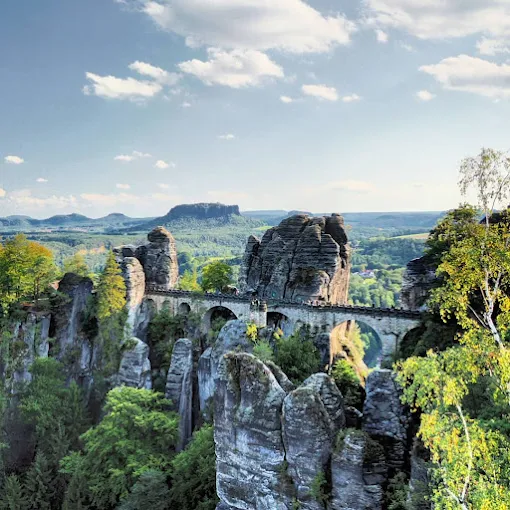
I stepped onto the high trail at ten past nine on a Friday morning. Pine scent rose warm and sharp from the forest floor. I paid nothing to walk the main paths. Sandstone spires rose ahead, layered and worn, standing like ancient sentinels above the Elbe River. I expected a collection of good viewpoints. What I found feels like a world apart — carved by water and time, shaped by wind and ice, still wild despite being visited by millions. Not every section feels untouched. Popular routes show worn soil and exposed roots. Boardwalks protect fragile ground but also channel movement. That balance feels honest — people love this place, and their presence shows.
Why Nationalpark Sächsische Schweiz Matters
This landscape lies east of Dresden, where the Elbe cuts through sandstone hills to form a region unlike anywhere else in Europe. More than 700 rock formations rise from deep forest, some shaped like towers, others like walls or broken ridges. The area became Germany's first national park in 1990, building on more than a century of protection and early conservation efforts. It sits at the border with the Czech Republic, forming a shared protected landscape across two nations. One honest criticism: the network of marked trails is dense and can feel confusing. Paths converge and diverge without clear warning. In summer, the most popular routes fill early and stay crowded all day. Finding quiet takes effort and walking farther than most visitors choose to go.
The Best Time to Experience Nationalpark Sächsische Schweiz
April through June brings 7°C to 17°C / 45°F to 63°F. Forests turn fresh green and wild flowers carpet the valley floors. Mist often lingers along the river at dawn. Arrive before 07:30 for clear views and empty trails. July and August warm to 12°C to 23°C / 54°F to 73°F. Days stay long but temperatures rise in exposed areas; seek shade by early afternoon. September holds 9°C to 18°C / 48°F to 64°F. Beech woods turn gold and amber; this is the most beautiful season. October through March the park feels quiet and crisp. Frost clings to sandstone and snow can cover higher ground. Trails remain open but some steep sections become slippery. Mondays visitor information centres close; the landscape stays accessible always.
Approximate Budget for a 7-Day Trip
Costs below are per person based on staying in a village such as Rathen, Königstein, or Sebnitz.
- Accommodation: 448 euros — Clean room in a guesthouse or holiday apartment. Properties directly beside the Bastei or main trailheads charge 210 euros or more per night and feel overpriced; stay one valley away for half the cost and equal peace.
- Food: 280 euros — Hearty mountain soups, dumplings, fresh river fish, and apple cake.
- Transport: 98 euros — Regional train and bus pass plus local ferry crossings. Many trails start a short walk from stations.
- Attractions: 63 euros — Bastei entry, fortress ticket, and guided walk donation. Most trails and viewpoints cost nothing.
- Miscellaneous: 63 euros — Drinks, snacks, and small purchases.
Total: 952 euros. Meals at cliff-top cafes carry a clear location premium. Packing food and water saves money and lets you stop wherever feels right.
Essential Nationalpark Sächsische Schweiz Experiences
- Bastei Bridge and View — The stone arch spans between jagged rocks above a deep gorge. The view opens across forested peaks and far down the Elbe valley. Visit early; after 10:00 groups gather and space feels tight. Skip if you dislike exposed heights; railings are low and the drop is steep.
- Elbe River Trail — A flat path follows the water through the heart of the park. You see formations from below, rising high above the treetops. The pace feels gentle and calm. This is the best route for all fitness levels.
- Pravčická Gate Crossing — The largest natural sandstone arch in Europe sits just across the border. The approach winds through forest and the view from beneath feels grand. Carry your passport; the crossing is open but the location belongs to the Czech park. Skip if you dislike narrow steep paths; the final climb is short but sharp.
- Königstein Fortress Approach — A massive rock plateau holds a centuries-old fortress rising straight from the valley floor. The walk up winds through forest and offers changing views back across the park. The scale of the rock becomes clearer with every step.
- Schrammsteine Ridge Walk — A high trail follows a jagged chain of rocks. Views stretch across endless forest and distant peaks. Some sections are narrow and exposed. The effort rewards with wide open scenery few visitors fully explore.
- Sunrise from Lilienstein — A solitary flat-topped mountain rises above the surrounding landscape. The climb is steady and the summit offers 360-degree views across the whole region. Start well before dawn; the first light across the valley stays with you long after you leave.
Hidden Gems Most Travelers Miss
- Lower Amselsee Path — Beside a small still lake, a level trail circles through trees. The water mirrors the rocks above. Almost no one walks the full loop. The so-called "famous lake viewpoint" nearby is often overrated; it sits right beside the main road and crowds gather constantly.
- Silent Forest Bench — Halfway up a less-travelled slope, a wooden bench faces a wall of sandstone. No sign marks it. You hear wind in pines and birdsong, nothing more. It feels completely private.
- River Bend Glimpse — Off the main riverside trail, a short spur leads to a grassy bank. The Elbe curves slow and wide below. You watch boats pass without seeing any other people. Most walk straight past the turn-off.
- Evening Ridge Glow — On a secondary trail below the main Schrammsteine crest, you see the rocks catch golden light as the sun dips low. The main viewpoint empties fast; this spot stays quiet long after the crowds leave.
Cultural & Practical Tips
- Stay on marked paths. Shortcuts erode ancient sandstone and damage fragile plant life. The landscape takes centuries to form; it can be destroyed in moments.
- Carry enough water. Shaded trails stay cool but exposed ridges offer no shelter. Dehydration arrives faster than you notice.
- Respect the border. Two national parks share this landscape. Follow rules on both sides; they exist to protect the land for everyone.
- Wear sturdy non-slip shoes. Sandstone becomes dangerously slippery when damp. Roots and loose stone add to the risk.
- Do not climb unmarked rocks. Free climbing is restricted across most of the park. Designated areas exist elsewhere; respect where they apply here.
- Start early. The best conditions — light, quiet, clear air — happen before 09:00. Arriving early changes the whole experience.
Essential Visitor Information
Location & Access: Nationalpark Sächsische Schweiz, Saxony, Germany. GPS 50.9167, 14.1333. Train from Dresden 40 minutes to stations including Rathen, Königstein, and Schmilka. Berlin 2.5 hours. Prague 2 hours. Ferries cross the Elbe at several points; they connect trails and villages.
Tickets & Booking: Park entry free. Bastei Bridge roughly 4 euros. Königstein Fortress roughly 12 euros. Combined passes available. Most trails and viewpoints require no ticket at all.
Operating Hours: Landscape open daily year-round, dawn to dusk. Visitor centres generally 09:00 to 17:00; closed Mondays. Some steep paths may close in icy conditions.
Visit Duration: Minimum two full days. Three to four days lets you explore popular sites and quieter valleys without rushing.
Family Suitability: Children welcome. Riverside and lower trails suit strollers; ridge paths are too steep and exposed. Restrooms at main trailheads and villages. Hold hands near open edges and drops.
Timing: September offers best balance of weather, colour, and thinner crowds. Arrive before 08:00.
Highlights: Bastei Bridge, Elbe riverside trail, Pravčická Gate, Königstein forest approach, Schrammsteine ridge, Lilienstein sunrise.
Nearby & Day Trip: Dresden 40 minutes by train. Leipzig 1.5 hours. Prague 2 hours; makes a rewarding cross-border full-day trip.
Conclusion: Travel with Care, Not Just Footsteps
This national park will not stay empty when you visit. Some paths will feel worn, some views will feel shared. But that is its true purpose — to be loved without being ruined. Great landscapes do not exist just to be seen. They exist to be protected, walked gently, and passed on unchanged. What will you leave as you walk away?
Comments
Post a Comment