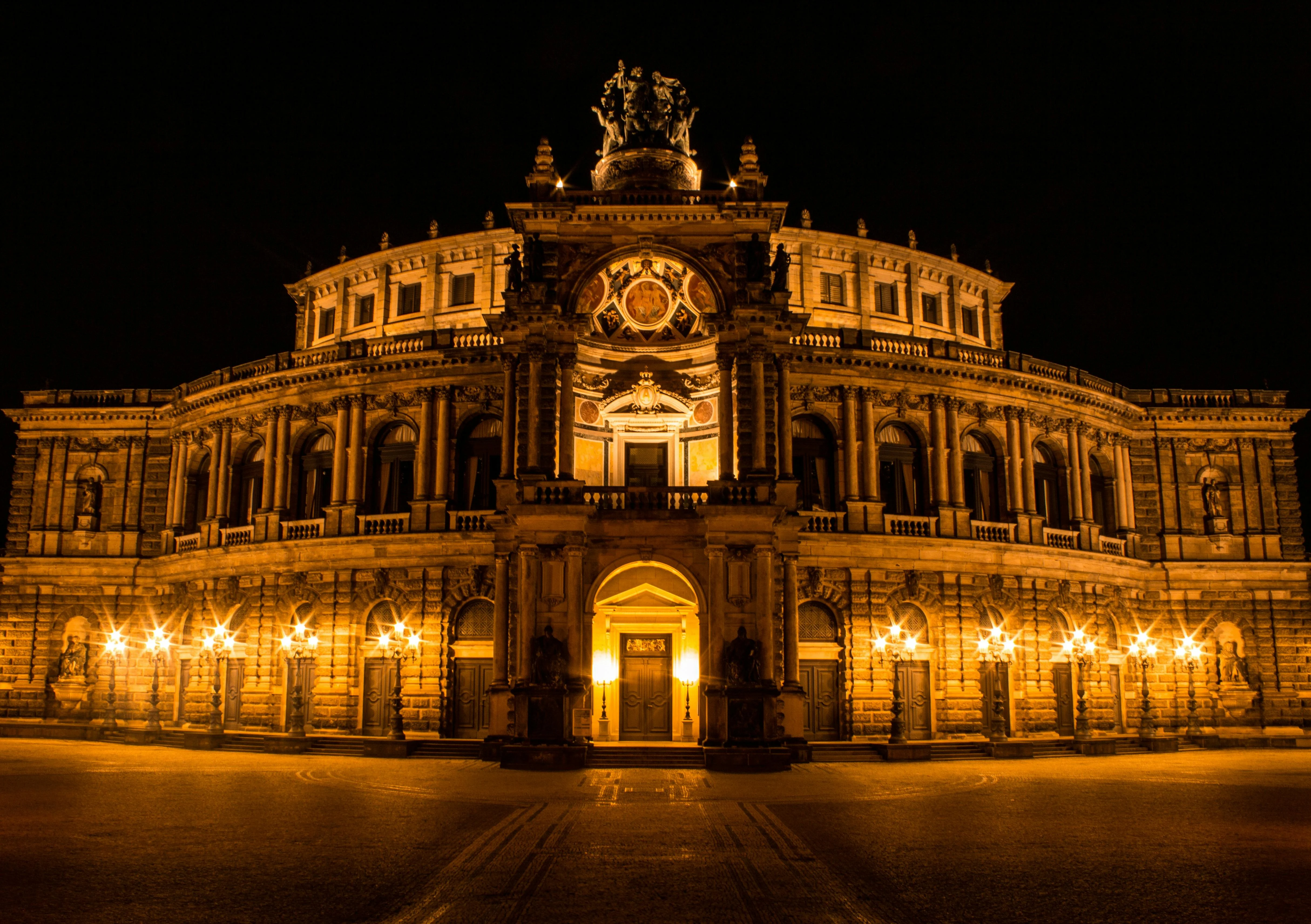
Semperoper Opera House: Where Sound Meets Stone and Second Chance
I stood on the wide pavement at ten past eleven on a Tuesday morning. Sunlight caught the rounded dome and gilded figures above the entrance. I paid nothing to admire the facade. Carved stone faces looked down across the square — calm, watchful, enduring. I expected a grand building meant only for performances. What I found feels like something deeper: a house of music that rose twice from ruin, rebuilt not as a copy but as the same living heart of the city. Not every detail is identical to the first version. Modern spaces sit hidden behind historic walls. The stage area is entirely new. That blend of old and new feels right — this place carries its past forward rather than freezing it.
Why Semperoper Opera House Matters
Gottfried Semper designed the first building in the mid-19th century. It became one of Europe's leading opera venues, premiering works by Wagner, Strauss, and others. Destroyed by fire in 1869, it was rebuilt and stood proudly until the second world war. Bombing reduced it to rubble in 1945. Reconstruction took forty years; the Semperoper reopened exactly on its original anniversary in 1985. Today it stands as both architectural masterpiece and symbol of resilience. One honest criticism: guided tours sell out days ahead. Walk-up spots are extremely rare. The exterior square feels open and grand but offers little shade; midday sun reflects strongly from pale stone and can feel harsh.
The Best Time to Experience Semperoper Opera House
April through June brings 8°C to 18°C / 46°F to 64°F. Evening performances finish in lingering twilight. Arrive early; sit on the steps and watch the building light up gradually. July and August warm to 13°C to 23°C / 55°F to 73°F. The main season pauses but special concerts and open-air events happen nearby. September holds 10°C to 19°C / 50°F to 66°F. The new season begins and crowds remain manageable. October through March the building feels warm and sheltered inside. Evening performances feel extra special against dark skies. Mondays tours rarely run; the exterior remains visible always.
Approximate Budget for a 7-Day Trip
Costs below are per person based on staying in central Dresden.
- Accommodation: 497 euros — Clean room within walking distance. Hotels directly facing the opera house charge 250 euros or more per night and feel overpriced; stay one street back for half the cost and equal quiet.
- Food: 294 euros — Pre-theatre meals, hearty Saxon dishes, and local pastries.
- Transport: 91 euros — City tram pass. The opera house sits right in the historic centre; most sites are walkable.
- Attractions: 112 euros — Guided tour plus one standard performance ticket. Prices vary widely by seat and production.
- Miscellaneous: 70 euros — Drinks, interval refreshments, and small purchases.
Total: 1064 euros. Interval drinks and snacks inside carry a clear premium. Step outside to a nearby cafe; the same coffee costs nearly half as much.
Essential Semperoper Opera House Experiences
- Facade and Forecourt View — Stand centrally and look upward. Columns, sculptures, and the dome compose into one balanced whole. The architect intended this view to impress before a single note sounds. Visit in late afternoon; golden light softens every line. Skip if you dislike bright open space; bring sun protection.
- Guided Tour — Walk through the grand entrance, main lobby, and auditorium. Guides share stories of fires, destruction, and rebuilding. You see where audiences sat in 1841, 1878, and today. Book weeks ahead; same-day tickets almost never exist.
- Performance Evening — Arrive an hour early. Walk the lobby, see the chandelier, and watch the house fill. The velvet, wood, and gold feel rich and welcoming. Even modest seats offer excellent sightlines. Skip if you prefer casual clothes; many guests dress smartly and the atmosphere feels formal.
- Stage and History Exhibition — Displays trace every era: first building, fire, second building, wartime loss, and modern rebirth. Original sketches, photos, and models show how the design evolved. It adds depth to every stone you see.
- Twilight Approach — Walk from the river as lamps come on. The building glows against deepening blue. Most people head home after dinner; the square feels quiet and calm. This is when the opera house looks most alive.
- Balcony Interval Glance — If you attend a show, step out during the break. The view across the illuminated square and river is unforgettable. It feels like watching the city breathe.
Hidden Gems Most Travelers Miss
- Side Street View — From a quiet lane around the corner, the dome appears framed between rooftops. Almost no one photographs here. The so-called "famous front viewpoint" nearby is often overrated; tripods block the pavement and crowds cluster constantly.
- Riverbank Bench — Across the water, a stone bench faces the full profile of the building. You see how it sits within the city skyline, balanced and graceful. Most people stay on the same side and never see this angle.
- Lower Lobby Detail — Beneath the main staircase, carved panels show scenes from famous operas. They sit low and easy to miss. Slow down and look; the craftsmanship is delicate and precise.
- Evening Exit Moment — After the performance, linger briefly on the steps. The building glows from within and the sound of music lingers in the air. It feels peaceful and complete.
Cultural & Practical Tips
- Book tours and tickets early. Popular dates sell out 4–6 weeks ahead. Same-day availability is extremely rare.
- Dress comfortably but respectfully. There is no strict code but shorts and sportswear may feel out of place in the auditorium.
- Arrive early. Finding your seat, reading the programme, and settling in takes time. Latecomers may be held outside until the first break.
- Check tour languages. Some days offer only German commentary. Confirm details when booking so you are not disappointed.
- Respect photography rules. No photos inside the auditorium during tours or performances. Flashes disturb others and damage soft furnishings.
- Carry a light jacket. Even in summer, the auditorium stays cool and air circulation is steady.
Essential Visitor Information
Location & Access: Semperoper Opera House, Theaterplatz 2, 01067 Dresden, Germany. GPS 51.0545, 13.7383. Train from Berlin 1 hour 45 minutes. Leipzig 1 hour 45 minutes. Prague 2 hours. Walk from Dresden main station 15 minutes; trams stop directly outside.
Tickets & Booking: Guided tour roughly 12 euros adult. Performance tickets from 25 euros to well over 100 euros. Booking essential online well in advance. Very limited availability on the day.
Operating Hours: Exterior always visible. Tours generally 11:00 to 16:00 on non-performance days. Performances usually begin 19:00 or 19:30. Box office closed Mondays.
Visit Duration: Tour 1 hour minimum. Performance 2.5 to 3 hours including intervals. Allow extra time to admire the exterior before or after.
Family Suitability: Children welcome at selected performances; age recommendations apply. Stroller access is available but limited; check in advance. Restrooms at ground level.
Timing: September offers best combination of new season and thinner crowds. Arrive 45 minutes early for evening events.
Highlights: Forecourt view, guided tour, evening performance, twilight river view, lower lobby details, balcony interval glance.
Nearby & Day Trip: Zwinger Palace 5 minutes walk. Brühl's Terrace 10 minutes. Saxon Switzerland National Park 40 minutes by train. Meissen 30 minutes; makes a rewarding half-day trip.
Conclusion: Travel with Rebirth, Not Just Glory
The Semperoper will not feel like a single untouched era. It carries marks of every generation that built, lost, and rebuilt it. But that is its true gift — it shows that beauty can return. Great things do not last by standing still. They last because people care enough to rebuild them, again and again. What will you help rebuild in your own life?
Comments
Post a Comment