
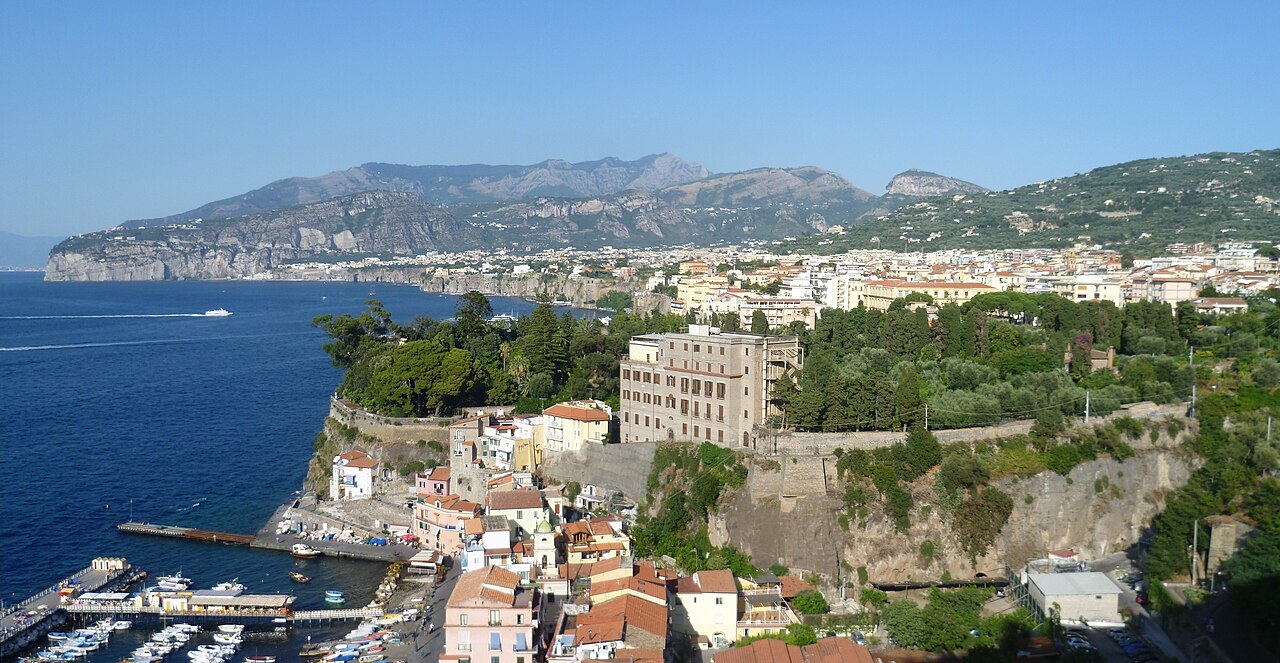
Sorrento Cliffs Limestone Heights Meet Tyrrhenian Blue
The morning sun glints off the turquoise waters of the Tyrrhenian Sea as a gentle breeze carries the scent of lemon blossoms from the terraced gardens above. You hear the distant chime of boat bells in the harbor, the soft crash of waves against the base of the cliffs, and the low murmur of conversation from a café perched on the very edge of the precipice. This is the dramatic coastline of Sorrento—a town built on a 50-meter (164-foot) high tuff cliff that has been a strategic maritime outpost since Roman times [[26]]. The cliffs are not just a backdrop; they are the very foundation of the town, its identity, and its breathtaking beauty. From this vantage point, you can see the entire sweep of the Bay of Naples, with Mount Vesuvius smoldering in the distance and the island of Capri shimmering on the horizon. In an age of predictable coastlines, the Sorrento cliffs matter now more than ever—they are a powerful reminder of nature’s grandeur and humanity’s audacious will to build a life on the very edge of the world.
Why Sorrento Cliffs Embodies Dramatic Harmony
The Sorrento cliffs are a masterpiece of geological drama and human adaptation. Formed from volcanic tuff—a soft, porous rock created by ancient eruptions—the cliffs have been shaped over millennia by wind and sea into a series of dramatic headlands and hidden coves. This geology presented both a challenge and an opportunity for early settlers. The height provided a natural defense against pirate raids, which plagued the coast for centuries, while the soft rock was easily excavated to create the famous underground lemon gardens (giardini di limoni) that became the town’s economic lifeblood. These terraced gardens, supported by stone walls and shaded by bamboo canopies, allowed for the cultivation of the prized Sfusato Amalfitano lemon, essential for making limoncello and perfumes. The “problem” the cliffs solved was profound: how to create a safe, prosperous community on a seemingly inhospitable edge. Today, this harmony between nature and culture fulfills a modern need—for a place where beauty is not passive, but dynamic; where every view is a postcard, and every street leads to a precipice that takes your breath away.
The Best Time to Experience Sorrento Cliffs
To experience the cliffs in their most comfortable and uncrowded state, plan your visit for the specific windows of April 20–May 25 or September 10–October 15, 2026. During these periods, the weather on the Amalfi Coast is ideal, with daytime temperatures ranging from a pleasant 21–26°C (70–79°F) and clear skies that make the sea a vivid turquoise [[11]]. The best time of day to explore is in the early morning, between 8:00 AM and 10:30 AM, when the light is soft, the paths are quiet, and you can enjoy the panoramic views without the crowds. It is strongly advised to avoid the peak summer months of July and August, when temperatures can soar above 32°C (90°F), the narrow streets become uncomfortably hot, and the popular viewpoints are packed with tourists [[44]]. For the most current information on ferry schedules, walking path conditions, and local events, always consult the official tourism portal: sorrentotourism.com.
Approximate Budget for a 7-Day Trip (2026)
This budget is calculated for a solo traveler seeking a comfortable, culturally rich experience in Sorrento in 2026, based on current inflation trends and average regional costs for the Amalfi Coast.
- Accommodation: €120–€200 per night. Staying in a hotel with a sea-view terrace on the cliff edge offers an unforgettable experience. Options in the historic center are slightly more affordable.
- Food: €55 per day. Breakfast (€8): a cappuccino and cornetto at a local bar. Lunch (€20): a plate of gnocchi alla sorrentina at a trattoria. Dinner (€27): a main course like grilled fish with a glass of local Falanghina wine.
- Transportation: €180 total. A regional train ticket from Naples to Sorrento (€5). A weekly pass for SITA buses to explore the Amalfi Coast (€25). Ferry to Capri or Ischia (€20 one-way).
- Attractions: Guided walk along the Via dei Mulini (€15). Entry to the Correale Museum (€8). Cooking class featuring limoncello and local recipes (€45).
- Miscellaneous: €120. This covers a bottle of artisanal limoncello (€25), several gelato stops (€4 each), a private boat tour of the coastline (€60), and souvenirs.
Total Estimated Cost: €1,078–€1,198
6 Essential Sorrento Cliffs Experiences
- Walk the Via dei Mulini: This ancient path, once used by millers, winds along the cliff face behind the town. The 45-minute walk offers stunning, unobstructed views of the sea and the coastline, far from the tourist crowds.
- Dine on a Cliff-Edge Terrace: Reserve a table at a restaurant like Ristorante Bagni Delfino. Savor fresh seafood as you look directly down at the waves crashing against the rocks below.
- Take a Boat Tour of the Coastline: Book a small-group tour to see the cliffs from the water. Glide through the famous Bagni della Regina Giovanna (Queen Joan’s Baths), a secluded cove accessible only by sea.
- Visit a Lemon Grove: Tour a traditional giardino di limoni to learn about the cultivation of the Sfusato Amalfitano lemon. Taste fresh lemon granita and watch the process of making limoncello.
- Explore the Marina Grande: Descend the steep steps to this charming fishing village at the base of the cliffs. Its colorful houses and small beach offer a peaceful contrast to the bustling town above.
- Watch the Sunset from Punta del Capo: Head to this western tip of Sorrento for the most dramatic sunset views. As the sun dips below the horizon, the cliffs turn a deep orange, and the sea shimmers in the twilight.
3 Hidden Gems Most Travelers Miss
- The Ruins of the Ancient Roman Villa at Capo di Sorrento: At the very tip of the peninsula, the remains of a 1st-century BC villa offer a quiet, historical spot with panoramic views. It’s a short walk from the lighthouse and rarely crowded.
- The Secret Staircase to Cala di Francia: Near the Hotel Bellevue Syrene, a hidden public staircase leads down to a tiny, pebble beach. It’s a favorite local spot for a quick swim, away from the main beaches.
- The View from the Convent of San Francesco: This 14th-century convent has a cloister with a stunning view over the cliffs. It’s often overlooked for the more famous Piazza Tasso, but offers a peaceful, spiritual perspective.
Cultural & Practical Tips
- Wear sturdy shoes with grip: The paths along the cliffs and the steps to the marina are steep and can be slippery. Sandals are not recommended.
- Carry cash for small vendors: Many lemon grove tours, small cafes, and boat operators operate on a cash-only basis.
- Learn a few key phrases: “Dov’è il belvedere?” (DOH-veh eel bel-veh-DEH-reh?) for “Where is the viewpoint?”, and “Un limoncello, per favore” (oon lee-mon-CHEL-loh).
- Beware of the midday sun: The white stone reflects intense heat. Wear a hat, sunglasses, and high-SPF sunscreen, especially between 11:00 AM and 3:00 PM.
- Respect private property: Many of the most beautiful cliff-edge homes are private. Do not trespass or climb fences for a photo.
- Tipping is appreciated but not expected: Rounding up the bill or leaving €1–€2 for exceptional service is a kind gesture.
Conclusion: Travel with Presence, Not Just a Lens
The Sorrento cliffs are not a static backdrop for your vacation photos; they are a living, breathing entity that demands your full attention. In 2026, as we seek travel experiences that are both beautiful and meaningful, these heights offer a profound lesson in presence. Your journey here should be one of mindful engagement—not just capturing the view, but feeling the sea breeze on your skin, listening to the rhythm of the waves, and understanding the centuries of human ingenuity that have made life possible on this dramatic edge. By traveling with this deep attention, you honor the spirit of Sorrento and help preserve its fragile beauty. Slow down. Sit on a wall and watch the light change on the water. In that quiet moment of connection, you don’t just visit Sorrento—you become part of its enduring, cliff-hugging story.