Spreewald: Where Water Channels Meet Ancient Forest
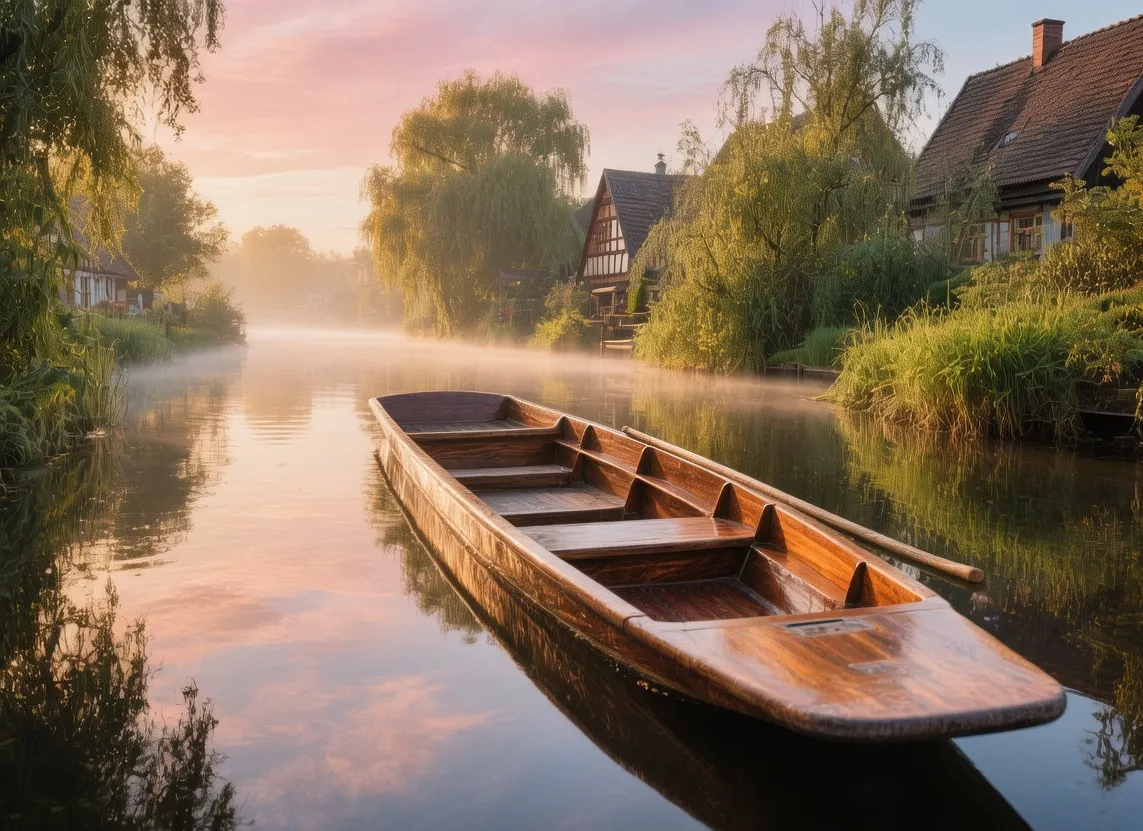
I stepped into a wooden boat at ten past nine on a Thursday morning. The water sat perfectly still, reflecting branches and sky. I paid eighteen euros at the landing stage. The boatman pushed off with a long pole. We glided silently between reeds and overhanging trees. I expected a pleasant day out. What I found feels like another world — slow, green, and shaped entirely by water. Not every channel stays quiet. Busy routes fill with boats on warm afternoons. Some sections feel managed rather than wild. That does not lessen the magic of drifting through deep shade.
Why Spreewald Matters
This unique landscape forms where the Spree River spreads across flat land into hundreds of narrow channels. For centuries people have lived here, travelling by boat, fishing, and harvesting reeds and wood. The region carries UNESCO recognition as a biosphere reserve. Traditional villages sit beside waterways so narrow only small boats can pass. The area preserves both nature and a distinct way of life. One honest criticism: popular routes become crowded in summer. Queues form at narrow crossings and progress slows to a crawl. Boardwalks can feel slippery and uneven; sturdy footwear is essential. Public transport connections from Berlin are good but some remote corners remain hard to reach without a car.
The Best Time to Experience Spreewald
May through June brings 10°C to 20°C / 50°F to 68°F. Trees leaf out fully and wild flowers line the banks. Weekday mornings before 10:00 offer quietest waterways. July and August see 14°C to 24°C / 57°F to 75°F. Water stays warm enough for swimming in designated spots. Crowds arrive from midday onward. September holds 9°C to 17°C / 48°F to 63°F. Forests turn gold and amber; light filters through the canopy beautifully. October through March brings cold and often ice. Some channels close to boats. Winter silence appeals to hardy visitors but many services shut down.
Approximate Budget for a 7-Day Trip
Costs below are per person based on staying in Lübbenau or nearby villages.
- Accommodation: 455 euros — Clean room in a village guesthouse or apartment. Places directly beside the main landing stage charge 210 euros or more per night and feel overpriced; stay one street back for quieter nights and fairer rates.
- Food: 273 euros — Fish dishes, hearty soups, and local pickles. Freshly baked bread and fruit from roadside stalls.
- Transport: 91 euros — Regional train and bus pass from Berlin. Bicycle rental for exploring forest paths.
- Attractions: 77 euros — Boat tours, museum entry, and forest trail access. Many paths and quiet channels cost nothing.
- Miscellaneous: 56 euros — Drinks, snacks, and small purchases.
Total: 952 euros. Boat tours at the main tourist pier carry premium rates. Walk five minutes to the smaller landing stage; shorter routes cost half as much and follow equally beautiful channels.
Essential Spreewald Experiences
- Poled Boat Tour — Traditional wooden boats glide silently where motorised vessels cannot go. The boatman navigates tight bends and low branches. It feels gentle and timeless. Skip if you dislike confined spaces; some channels are barely wider than the boat itself.
- Forest Boardwalk and River Paths — Elevated and waterside trails wind through ancient woodland. Moss-covered trunks stand beside dark still water. Different routes suit different energy levels; ask at the information desk for quieter alternatives.
- Spreewald Pickle and Farm Visit — Local families have preserved vegetables in brine for generations. Small farm shops sell jars alongside honey, bread, and fruit. Tasting samples are often offered. This is genuine local life, not staged entertainment.
- Evening Paddle — As day visitors leave, the water returns to glassy calm. Rent a canoe or kayak after 17:00. The forest feels different — birds settle, light softens, and reflections sharpen. Book ahead; evening slots are limited.
- Bicycle Ride Between Villages — Flat paved paths connect hamlets, farmhouses, and water meadows. You travel at your own pace and stop wherever looks good. Distances between settlements are manageable; 10 to 15 kilometres makes a relaxed day.
- Island Church and Quiet Hamlet — A small settlement sits on an island reachable only by boat or footbridge. Its chapel dates back centuries. The surrounding lanes have changed little in living memory. It feels far removed from the busy piers.
Hidden Gems Most Travelers Miss
- Northern Canal Loop — A shorter, quieter route branches off the main waterway. Reeds tower above the boat and almost no one travels this way. It loops back to the same landing stage.
- Old Mill Path — A level trail follows a narrow stream past a restored watermill. No crowds come here. Benches sit under ancient willows. The so-called "famous mill restaurant" nearby is often overrated; prices are high and views are blocked by new buildings.
- Forest Floor Spring — Beside a lesser-used path, clear water bubbles up from the earth. It stays cool even in summer. Fill your bottle here; it tastes fresh and clean.
- Fruit Orchard Lane — A narrow road lined with old apple and pear trees. Local families sell produce from garden gates. It feels like a secret shared only with neighbours.
Cultural & Practical Tips
- Respect quiet zones. Motorboats are banned from many channels. Keep noise low; wildlife and nesting birds are easily disturbed.
- Book boat tours ahead. In summer same-day tickets often sell out by mid-morning. Evening slots fill fastest.
- Wear waterproof footwear. Boardwalks stay damp and grassy paths hold dew long after sunrise.
- Do not swim in shallow or marked zones. Underwater vegetation is thick and strong currents exist where water appears still. Swim only at designated lakes or beaches.
- Carry small change. Many farm stalls operate on an honesty box system. Coins are preferred over notes.
- Check opening days. Village museums and bakeries often close Mondays or Tuesdays. Plan accordingly.
Essential Visitor Information
Location & Access: Spreewald, eastern Germany. Main gateway Lübbenau. GPS 51.8667, 13.9000. Train from Berlin Ostbahnhof to Lübbenau roughly 1 hour. Dresden 1 hour 30 minutes. Leipzig 2 hours. Car parking available at main villages; some remote sites have limited space.
Tickets & Booking: Standard boat tour roughly 18–24 euros adult. Shorter routes cost less. Canoe rental from 12 euros per hour. Booking recommended online weekends and holidays.
Operating Hours: Waterways open year-round. Boat tours generally April–October 09:00 to 18:00. Winter services limited or closed. Shops and attractions vary by season.
Visit Duration: Minimum 1 day. 2 to 3 days lets you explore waterways, forest paths, and villages without rushing.
Family Suitability: Children welcome. Life vests are provided on boats. Hold hands on narrow boardwalks. Strollers suit paved paths but not forest trails.
Timing: May, June, September best. Arrive before 10:00. Late afternoon offers calmest water and best reflections.
Highlights: Poled boat tour, forest boardwalk, evening paddle, farm shop visits, bicycle loops, island hamlet.
Nearby & Day Trip: Tropical Islands Resort 40 minutes drive. Dresden 1 hour 30 minutes. Berlin 1 hour. Cottbus and surrounding parks 30 minutes; makes a relaxed half-day trip.
Conclusion: Travel with Slowness, Not Just Speed
Spreewald will not entertain you with rides or loud shows. It moves at the pace of water and wind. People have lived here gently for centuries, taking only what they need. That is the real lesson — how to live in harmony with a fragile place. Go slowly. Watch the water. What small beauty will you protect where you live?
Comments
Post a Comment