Tarragona Roman Ruins: Where Imperial Stone Meets Mediterranean Shore
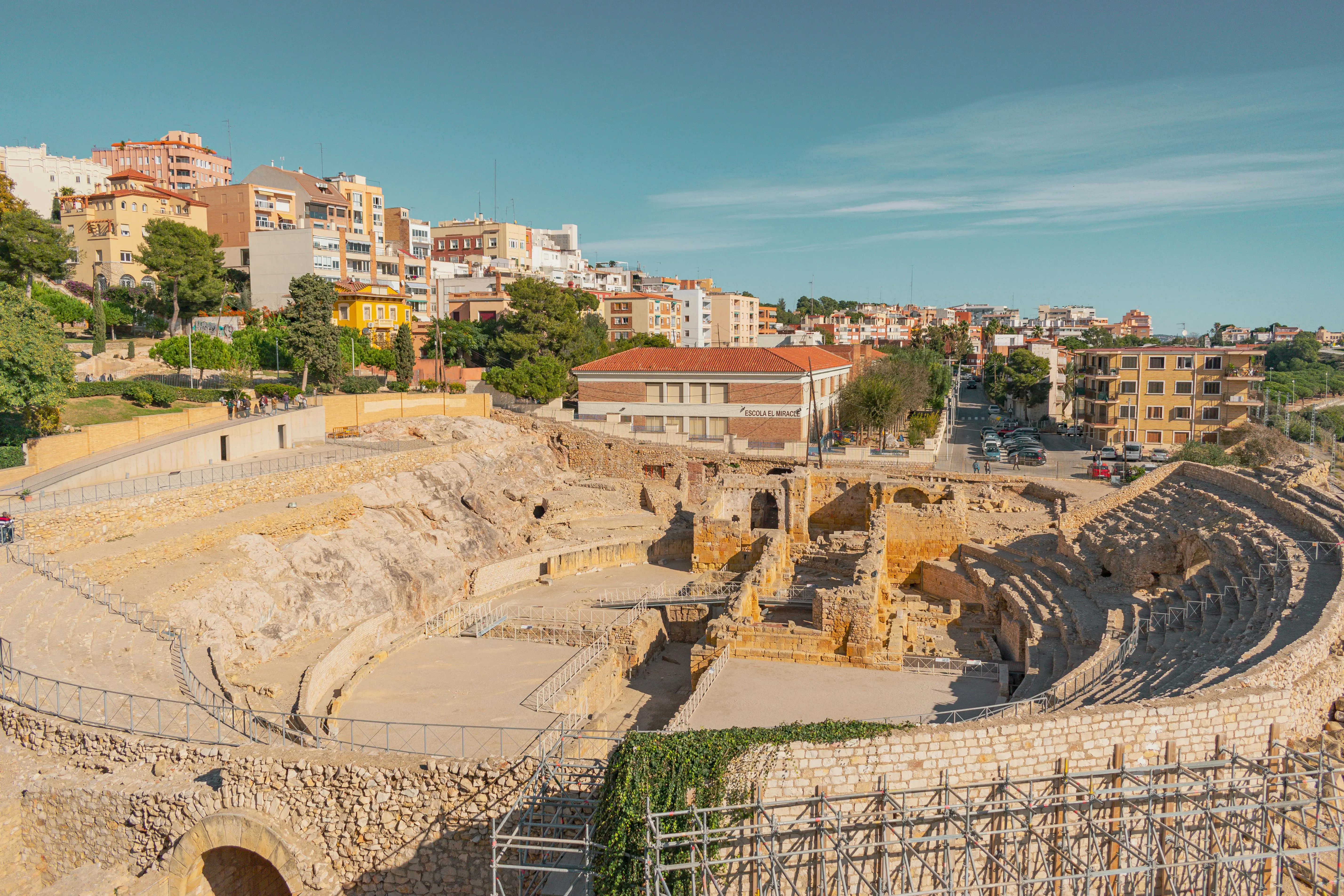
I step onto the amphitheater sand at ten in the morning. Sun already warms the arena floor. Combined site entry costs twelve euros. I run a hand over tiered stone. The surface feels worn smooth by two thousand years of hands and feet. Below, the sea stretches bright and blue. Waves break against the base of the walls. A group of students sits quietly on the lowest steps. They sketch the arches. Not everything stands intact. Some sections show jagged breaks. Modern buildings press close on every side. Apartment balconies overlook ancient walls. That contrast feels jarring at first. Then it settles — this place was never abandoned. It was absorbed, lived in, built around.
Why Tarragona Roman Ruins Matter
Tarragona began as Tarraco, founded around 218 BCE. It became the first Roman capital outside Italy. Augustus wintered here. The city ruled over the entire northeast of the peninsula. Aqueducts, temples, forums, and amphitheater rose to serve a population of roughly thirty thousand. By the third century the capital moved elsewhere. Tarragona shrank but never vanished. Stones were reused in walls, houses, and churches. In the 19th and 20th centuries, excavations uncovered what remained. Today the site holds UNESCO World Heritage status. Yet preservation remains uneven. Some ruins sit exposed and unprotected. Rain and wind wear them down. Signage can be hard to find or faded. You may stumble across fragments with no explanation. Still, Tarraco survives as one of the most complete Roman provincial capitals you can walk.
The Best Time to Experience Tarragona Roman Ruins
April through June brings the kindest conditions. Days sit between 17°C and 24°C (63°F–75°F). Stone surfaces stay comfortable underfoot. September and October run similarly — 19°C–26°C (66°F–79°F). Summer from July to August feels intense. Highs reach 28°C–34°C (82°F–93°F). Most ruins stand fully exposed. No shade covers the amphitheater or forum. Visit before 10:30 or after 17:00. Winter from November to February stays mild — 9°C–16°C (48°F–61°F). The site falls quiet. You will often have large areas to yourself. Rain can limit access to open sections. Weekday mornings mean fewer crowds. Sunday afternoons draw large local groups.
Approximate Budget for a 7-Day Trip
- Accommodation: Guesthouse in old quarter — 55–80 euros per night. Mid-range hotel near amphitheater — 85–130 euros per night. Apartment rental — 65–95 euros per night.
- Food: Lunch at central tapas bar — 12–16 euros. Dinner with local wine — 20–32 euros. Market sandwich or bakery meal — 5–9 euros.
- Transport: Train from Barcelona — 10–16 euros one way. Local bus — 1.50 euros per ride. Walking covers almost everything in the historic centre.
- Attractions: Combined Roman sites ticket — 12 euros adults. Circus underground access — 4 euros extra. Cathedral — 6 euros. Provincial forum — free.
- Miscellaneous: Water, snacks, small purchases — 8–12 euros daily.
Total estimated for one person, 7 days: 440–700 euros
Drinks at the terrace cafe beside the amphitheater cost nearly double what you pay two streets away. Step five minutes into the old town. You will find authentic places serving fresh food at fair prices.
Essential Tarragona Roman Ruins Experiences
- Stand in the centre of the amphitheater. Seating curves upward toward the sea. You can hear waves clearly from the arena floor. Imagine crowds of twelve thousand roaring here. Skip this if midday sun beats directly down — there is no shelter.
- Walk the underground gallery of the circus. Vaulted passages once held chariots, horses, and waiting crowds. The scale surprises you — wide, high, dark, and cool. Most people never find this level.
- Climb the steps of the provincial forum. Massive foundations and column bases survive beneath modern streets. The sheer size tells you how much power this city held. Remnants sit beside apartment blocks — it feels raw and unpolished.
- Touch the original Roman wall near the cathedral. Stones laid two millennia ago still form part of the city’s defence. You see where medieval work was added on top. The layers show every era.
- Visit the National Archaeological Museum. Objects recovered from across the site sit here — statues, coins, everyday tools. The building itself feels dated. Displays lack modern context but the pieces speak for themselves.
- Walk the coastal path between amphitheater and port. Ancient walls run beside the sea. You see how the city connected to trade and travel. The route feels peaceful and open.
Hidden Gems Most Travelers Miss
- The Roman theatre remains behind the post office. It sits partially buried, overshadowed by later buildings. You can walk onto the original stage foundations. Few visitors pause here. It feels quiet and close.
- Les Ferreres Aqueduct, four kilometres north. Two tiers of arches stretch across a wooded valley. It carried water to the city from distant hills. A short walk from the road brings you to its base.
- The so-called "secret tunnel" connecting forum to circus. Online lists talk it up as a major find. It is narrow, dark, and offers limited passage. If you are short on time, give it a pass.
Cultural & Practical Tips
- Do not rely on finding explanations on site. Many ruins have no plaques or maps. Download the official city guide before you arrive or pick up a paper map at the tourist office.
- Carry water and a hat. Shade is scarce. You will walk exposed stone for hours. Dehydration happens fast.
- Do not climb on unstable walls. Some sections are propped up or fenced off. The barriers exist for a reason — loose stone shifts easily.
- Do not visit on a Monday. The museum and some underground sections close. Outdoor ruins stay accessible but key parts remain shut.
- Respect residential areas beside ruins. People live in these apartments. Keep noise low and do not photograph private balconies.
- Buy the combined ticket. It covers all major sites and saves you money compared to separate entry fees. It remains valid for 48 hours.
Essential Visitor Information
Location & Access: Tarragona, Catalonia, Spain. 100 km southwest of Barcelona — 1 hour 15 minutes by train. 60 km south of Penedès — 45 minutes by car. Amphitheater: Avenida de l’Amfiteatre. Circus: Plaça del Rei. Provincial forum: Plaça de la Font. Walking connects all major sites in 15–20 minutes.
Tickets & Booking: Combined Roman sites — 12 euros adults. Under 16s free. Purchase on-site or at the tourist office. Reservation not required for individuals. Valid for 48 hours.
Operating Hours: Apr–Sep: 10:00–20:00. Oct–Mar: 10:00–18:00. Closed 1 Jan, 25–26 Dec. Museum closes Mondays. Outdoor sections stay accessible longer but have no lighting after dark.
Visit Duration: Minimum 3 hours. 5–6 hours lets you explore every major site plus the museum without rushing.
Family Suitability: Good for children. Wide open spaces to move. Strollers work on paved paths but struggle on uneven ruins. Restrooms near amphitheater and museum.
Timing: Best season — April–June and September–October. Best time of day — before 10:30 or after 17:00 in summer.
Highlights: Sea-facing amphitheater, circus underground galleries, provincial forum foundations, original Roman walls, Les Ferreres Aqueduct.
Nearby & Day Trip: Poblet Monastery — 45 minutes inland. Penedès wine region — 45 minutes north. Sitges beaches — 40 minutes along the coast. Barcelona — 1 hour 15 minutes by train.
Conclusion: Travel with Perspective, Not Just Ruins
Tarragona does not look like other Roman sites. It was never abandoned or forgotten. It was built over, lived in, and changed. That makes it messy and real. Walls sit beside balconies. Column fragments line pedestrian streets. Before you leave, find one stone that shows two eras. What does it mean to carry the past forward?
Comments
Post a Comment