Tiscali Village: Where Ancient Settlement Meets Hidden Sinkhole
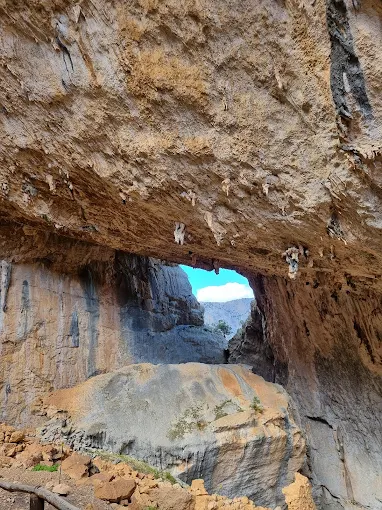
I stand at the rim of the great hollow at 8:20 on a July morning. The air feels noticeably cooler here, held still between high limestone walls. An espresso costs one euro fifty at the small bar down in the valley before the trailhead. I look down into the sinkhole — the remains of stone huts follow the curve of the basin, half-buried in grass and shadow. Tiscali sits deep in the Supramonte mountains of central-eastern Sardinia, one of the island’s most remarkable ancient sites. It was built inside a vast natural cavern whose roof collapsed centuries ago, leaving a sheltered bowl hidden from the world above. People come for the mystery. They find a place that protected its people for millennia — and still guards its secrets.
Why Tiscali Matters
This village was occupied from the late Bronze Age through the Nuragic period and into Roman times, built where a massive underground chamber collapsed to form a secluded, defensible hollow. The settlement grew to include stone dwellings, meeting spaces, and water cisterns, all arranged along the basin floor. It is one of the best-preserved examples in Europe of a community built entirely within a natural sinkhole — a place chosen not just for shelter, but for spiritual significance too. Today Tiscali stands remote and fragile. That isolation brings real trade-offs. The hike is steep and unshaded in sections. There are no facilities at the top — no water, no restrooms, no shelter. Signage is minimal. The site itself is slowly eroding — rain, wind, and footfall wear the ancient walls. Visiting demands care and respect.
The Best Time to Experience Tiscali
Late April through June brings fresh green foliage, blooming wildflowers, and comfortable temperatures. Temperatures sit between 12°C and 23°C (54°F–73°F). The hike uphill feels pleasant and the hollow stays cool. July and August warm to 18°C and 30°C (64°F–86°F). The exposed sections of trail feel hot and direct — start very early. September offers golden light and thinner crowds — 15°C to 26°C (59°F–79°F). The air stays clear and the path remains dry. October remains mild — 12°C to 22°C (54°F–72°F) — but mist can settle quickly in the mountains. Winter holds cool, damp days: 6°C to 14°C (43°F–57°F). Some sections become slippery and the trail may be closed temporarily. Arrive before 8:30 AM any time of year to beat the heat and have the site to yourself.
Approximate Budget for a 7-Day Trip
Prices below are per person, in euros, based on staying in Dorgali or nearby Oliena.
- Accommodation: 7 nights in a guesthouse or apartment — €65–120 per night. Total: €455–840. Staying further inland costs 25–35% less; driving to the trailhead takes 20–30 minutes.
- Food & Drink: Breakfast, two meals daily — €28–48 daily. Total: €196–336. The small bar at the trailhead charges premium prices; eat in Dorgali or Oliena for authentic meals at fairer rates.
- Transport & Tickets: Site entry €4–6; local guide if hired €35–50 per group; car rental €35–55 daily. Parking at the trailhead is free but limited — arrive early or use the designated shuttle from the main road in peak season.
- Activities: Nearby gorge hike, mountain walk, coastal day trip — €30–65.
- Miscellaneous: Extra water, sturdy hiking shoes, sun protection — €15–25.
Total estimated 7-day cost: €690–1,395
Rooms with mountain views in Oliena carry a large premium. Similar accommodation one street back costs 35–45% less and the trailhead is still a short drive away. The "Tiscali Exclusive Guided Trek & Private Access" is overpriced; the site is open to everyone and the trail is clearly marked for independent hikers.
Essential Tiscali Experiences
- Rim View & First Look — Stand at the highest point of the trail and look down into the sinkhole. The ruins curve along the floor like a half-closed eye. Trees grow among the walls and silence fills the space. Skip if you dislike enclosed or deep places; the drop is steep and the walls feel close.
- Descent & Village Walk — Follow the path down into the basin. Step among the low stone walls that once divided homes and courtyards. You see how the settlement was laid out — compact, communal, built to fit the land rather than reshape it. Walk gently and stay on marked paths.
- Central Cistern & Quiet — Sit near the largest remaining structure, believed to be a communal water cistern or meeting place. The acoustics are striking — voices carry softly but fade quickly. Imagine this hollow filled with life, firelight, and conversation thousands of years ago.
- Slow Return Through Forest — Hike back via the shaded upper trail. Ancient holm oak trees line the route. The light filters through the canopy in shifting patches. It gives you time to process what you have seen before returning to the modern world.
- Valley Floor Perspective — Stop on the drive back and look up at the mountain ridge. You realise how completely hidden the village is from below. That invisibility was its greatest strength — it could not be seen from any approaching path.
- Late Afternoon Light — Remain until the sun dips low. Shadows stretch across the ruins and the stone glows warm gold. Day-trippers have left and the hollow feels entirely yours. This is the most magical time of day.
Hidden Gems Most Travelers Miss
- The small spring just off the upper trail runs clear and cold year-round. It is shaded and quiet — a perfect rest spot before the final climb. Very few visitors pause here.
- The faint ridge trail west of the site offers a wide panorama across the Supramonte massif. You see layers of limestone peaks stretching far into the distance. It takes ten extra minutes to reach and rewards you with silence and space.
- The old shepherds’ path looping below the main trail runs through scrub and wildflowers. It connects back to the lower access road. The walk feels unhurried and entirely free of crowds.
- The "Tiscali VIP Historical & Photographic Tour" is overpriced. The site is best experienced quietly and on your own schedule. Save the money and arrive early when the light is best anyway.
Cultural & Practical Tips
- Carry enough water. There is no drinking water at the site. The hike takes 2–3 hours round trip and sections are fully exposed. Bring more than you think you need — dehydration comes fast.
- Wear proper hiking shoes. The trail is rocky, uneven, and loose in places. Slippery sections exist even when dry. Sturdy soles with good grip are essential.
- Stay on marked paths. Shortcuts erode the ancient walls and damage fragile vegetation. Once stone is dislodged it rarely goes back. Protect what you came to see.
- Do not touch or move stones. Even small shifts weaken the structures. Leave everything exactly as you found it. Future visitors deserve to see the village as you found it.
- Check conditions ahead. Mist can rise in minutes and obscure the trail entirely. Confirm weather and accessibility locally before setting out. Turn back if visibility drops — the mountains demand respect.
- Respect silence. This place was a community, a sanctuary, and a burial ground. Keep voices low and move gently. You are walking through someone’s ancient home.
- Book accommodation 2–3 months ahead in July and August. The Supramonte region is popular and rooms sell out quickly.
Essential Visitor Information
Location & Access: Tiscali Village, Supramonte, Central-Eastern Sardinia, Italy. Coordinates roughly 40.2500° N, 9.5800° E. Three ways to arrive: drive from Dorgali to trailhead — 25 mins then 1–1.5 hrs hike; drive from Oliena — 20 mins then 1–1.5 hrs hike; guided trek from Nuoro — 1 hour drive then trail. No direct road access to the site.
Tickets & Booking: Site entry €4–6. No advance booking needed for individuals. Group visits and guided treks may be pre-booked. Reserve accommodation well ahead in summer.
Operating Hours: Trail open dawn to dusk. No artificial lighting — visit during daylight hours only. Site may close temporarily in severe weather.
Visit Duration: Minimum 2.5 hours round trip including time at the ruins. Recommended half day to walk slowly, rest, and absorb the atmosphere without rushing.
Family Suitability: Moderately suitable for older children. The hike is physically demanding and uneven — not recommended for strollers or very young ones. Carry plenty of water and snacks.
Timing: Best seasons are late April to June and September. Best time of day is before 8:30 AM or late afternoon.
Highlights: Rim panorama, descent into sinkhole, village ruins, central cistern, forest return, late afternoon light.
Nearby & Day Trip: Gole Su Gorropu gorge — 30 mins. Cala Luna & Gulf of Orosei — 35 mins. Dorgali — 25 mins. Oliena — 20 mins. Nuoro — 45 mins.
Conclusion: Travel with Reverence, Not Just Curiosity
Tiscali gives you something rare — a place that was chosen for its hiddenness and has kept that gift across millennia. You can take photos and leave. Or you can walk gently, carry your own water, touch nothing, and remember that people lived, loved, and died here. The ruins do not need your admiration. They need your care. What is the one ancient place you would visit promising to leave it untouched for those who come after?
Comments
Post a Comment