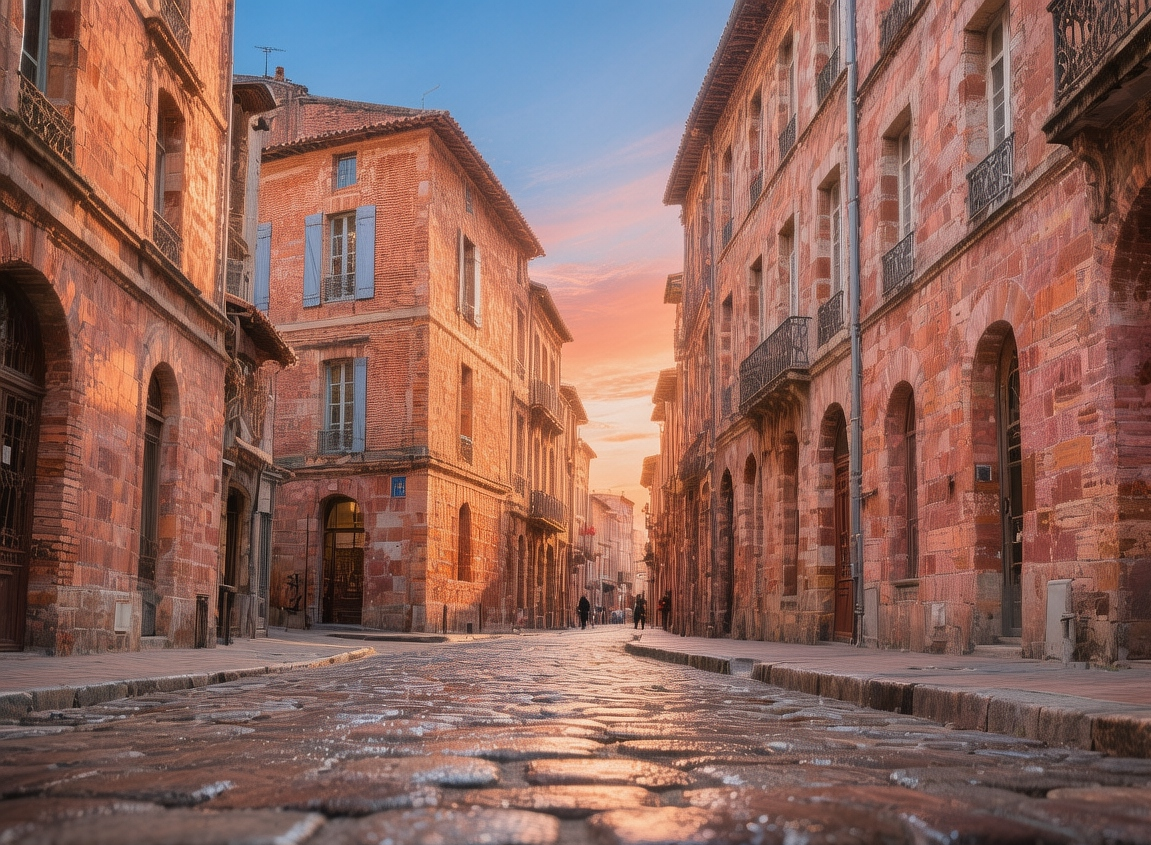
Toulouse: Where Pink Stone Meets River of History
I stood on the Pont Neuf at 9:20 on a Thursday morning. Sunlight turned the river Garonne deep blue and the city’s buildings soft rose. Stone arches spanned the water; slate rooftops stretched in every direction. I paid nothing to cross. A warm almond croissant cost 3.40 euros from a bakery tucked beside the Place du Capitole. Toulouse glows with a unique hue — local terracotta gives it the nickname La Ville Rose. Every lane curves and climbs between ancient walls. It feels like a city that has grown slowly, gracefully, never rushing — yet always moving forward.
Why Toulouse Matters
Toulouse began as a riverside settlement, grew into a medieval capital, and emerged as Europe’s aerospace hub. For centuries it stood apart — wealthy, independent, proudly southern. The old town preserves hundreds of half-timbered and pink-stone buildings, narrow lanes, and hidden courtyards. The Garonne flows swift and wide through its heart, fed by canals that once linked the Atlantic to the Mediterranean. Today it balances deep history with modern ambition — students, engineers, and artisans fill the same streets where merchants traded eight hundred years ago. That energy brings pressure. The historic centre fills by midday. Parking vanishes fast. Some charming squares feel lined with tourist menus rather than local tables. You must wander a few lanes back to find the genuine city.
The Best Time to Experience Toulouse
Late May through June offers long evenings and blooming trees — 13°C (55°F) to 23°C (73°F). The stone stays warm well after sunset. July and August reach 17°C (63°F) to 28°C (82°F), but locals leave on holiday. Some smaller shops close. Arrive before 10:00 AM then. September holds steady at 15°C (59°F) to 24°C (75°F). Crowds thin, light turns golden, and the city feels fully alive again. October through April runs quieter and cooler — 7°C (45°F) to 15°C (59°F). Rain falls occasionally but rarely ruins a day. Visit midweek. Tuesday through Thursday offers the best balance of open shops and quiet lanes. Early morning or late afternoon makes the stone glow most beautifully.
Approximate Budget for a 7-Day Trip
- Accommodation: 7 nights in a guesthouse in a quieter neighbourhood — 616 euros. Staying right beside Place du Capitole costs roughly 210 euros extra and stays noisy late into the evening.
- Food: Daily breakfast, lunches, evening meals — 455 euros. Restaurants facing the main square charge premium prices. Cassoulet costs nearly double what places in Saint-Cyprien ask. They are overpriced.
- Transport: TGV from Paris Montparnasse to Toulouse — 148 euros. The metro and tram cover the whole city well. Walking works perfectly for the centre. Taxis are overpriced — public transport costs a fraction and runs frequently.
- Attractions: City walks free. Basilique Saint-Sernin tower — 6 euros. Musée des Augustins — 8 euros. Aerospace museum — 12 euros.
- Miscellaneous: Drinks, violet sweets, postcards, sun protection — 94 euros.
Total estimated cost: 1,329 euros per person
Skip the souvenir kiosk near the cathedral. The independent bookshop on Rue des Arts sells identical guides and gifts at lower prices.
Essential Toulouse Experiences
- Walk the Garonne from Pont Neuf to Pont Saint-Pierre — Quays curve beneath bridges and past old waterfront buildings. The river flows fast and clear. You see the city rise from the water — domes, spires, pink walls. Go early — by midday, crowds gather on the quays.
- Explore Place du Capitole and surrounding lanes — The grand arcaded square sits at the historic heart. Side streets wind away past half-timbered houses, hidden courtyards, and small squares. No map needed — just follow what catches your eye. Skip if crowded squares feel overwhelming — return late afternoon when day-trippers leave.
- Visit Basilique Saint-Sernin — One of Europe’s finest Romanesque churches. Five naves, towering bell tower, and stone carved with quiet detail. It feels solid, ancient, and deeply peaceful. Climb the tower for rooftop views across the pink city — worth every step.
- Cross to Saint-Cyprien — The quieter west bank. Tree-lined avenues, independent cafés, and a slower pace. This is where locals live and eat. The food feels more authentic and prices stay fair. It shows you the everyday Toulouse most visitors miss.
- See the Musée des Augustins — Housed in a former monastery, the collection spans medieval to early modern art. Cloisters and quiet gardens offer calm between rooms. It connects the city’s artistic past to its present.
- Walk the Canal du Midi paths — Tree-shaded towpaths run beside the historic waterway. Barges drift slowly past. It stretches for kilometres — peaceful, green, and completely different from the busy centre. You can walk or cycle as far as you like.
- Watch sunset from the Pont Neuf — The oldest bridge in the city offers the perfect vantage. Stone turns rose-gold; the river reflects the fading light. Day-trippers leave before this — stay and watch the city light up.
Hidden Gems Most Travelers Miss
- The lane behind Saint-Sernin runs past old cloisters and quiet squares. Almost no one walks beyond the main entrance. The basilica looks different from here — softer, less polished, truly ancient.
- The covered market at Saint-Cyprien fills with locals on weekend mornings. The terrace cafés on Place du Capitole are overrated — queues stay long and tables feel cramped.
- The hidden courtyards off Rue Saint-Rome hold fountains, old stone staircases, and quiet gardens. Most pass straight through the arched gateways without noticing.
- The riverside path south of the city centre runs past old warehouses and quiet quays. It stretches empty even in summer. Toulouse opens from this side — less polished, equally beautiful.
Cultural & Practical Tips
- Arrive before 10:30 AM on weekends. By mid-morning, the best spots vanish and parking disappears. Come early for quiet lanes and clear photos.
- Wear comfortable shoes. Cobblestones are uneven and sloped. You will walk kilometres — the city rewards slow exploration.
- Respect quiet lanes. Narrow streets are shared by pedestrians and delivery vehicles. Step aside and keep to the right.
- Try cassoulet at a neighbourhood bistro. This rich bean-and-meat stew is the city’s signature dish. It tastes best where locals eat — not where menus are printed in four languages.
- Buy a violet treat from a confectioner. The flower is Toulouse’s symbol — candied, in syrup, or as sweet pastries. It makes a gentle, genuine souvenir.
- Carry small change. Public restrooms and some parking meters require coins. Not every small café takes cards.
- Walk across the river. The real Toulouse lives on both banks. Saint-Cyprien offers the truer taste — slower, friendlier, more real.
Essential Visitor Information
Location & Access: Toulouse, Haute-Garonne, Occitanie. GPS coordinates 43.60, 1.44. Three options: TGV from Paris Montparnasse directly to Toulouse Matabiau (6.5 hours); drive via A20 and A61 (6.5 hours from Paris); train from Bordeaux then bus 45 minutes.
Tickets & Booking: City walks and most historic streets free. Saint-Sernin tower — 6 euros adults. Musée des Augustins — 8 euros. Aerospace museum — 12 euros. No booking required except groups.
Operating Hours: City open year-round. Churches daily 9:00–19:00; museums generally closed Mondays; some smaller shops close Sundays and Mondays.
Visit Duration: Minimum 2 days. Recommended 3–4 days to explore both banks, museums, and canal paths without rushing.
Family Suitability: Mostly flat and accessible. Centre lanes narrow — keep children close. Public restrooms near main squares and stations.
Timing: Best season: May–June or September. Best time: before 10:00 AM or late afternoon. Softest light, quietest lanes, freshest air.
Highlights: Garonne river walk, Saint-Sernin basilica and tower, Place du Capitole, Saint-Cyprien district, Musée des Augustins, Canal du Midi, sunset from Pont Neuf.
Nearby & Day Trip: Three nearby stops: Cité de l'Espace aerospace park (tram 20 minutes), Carcassonne fortified city (1 hour by train), Albi cathedral and Toulouse-Lautrec museum (1 hour). Pyrenean foothills and villages make a rewarding full-day trip 1.5 hours south.
Conclusion: Travel with Rose Light, Not Just Landmarks
Toulouse has grown from river settlement to European hub. Some corners feel crowded. Some prices run too high. Those things do not dim its glow. You do not need to know every brick’s story to feel it. Stand where stone meets water. Watch light turn the city pink. Remember — this place has welcomed travellers for two thousand years. What hue will you carry away?
Comments
Post a Comment