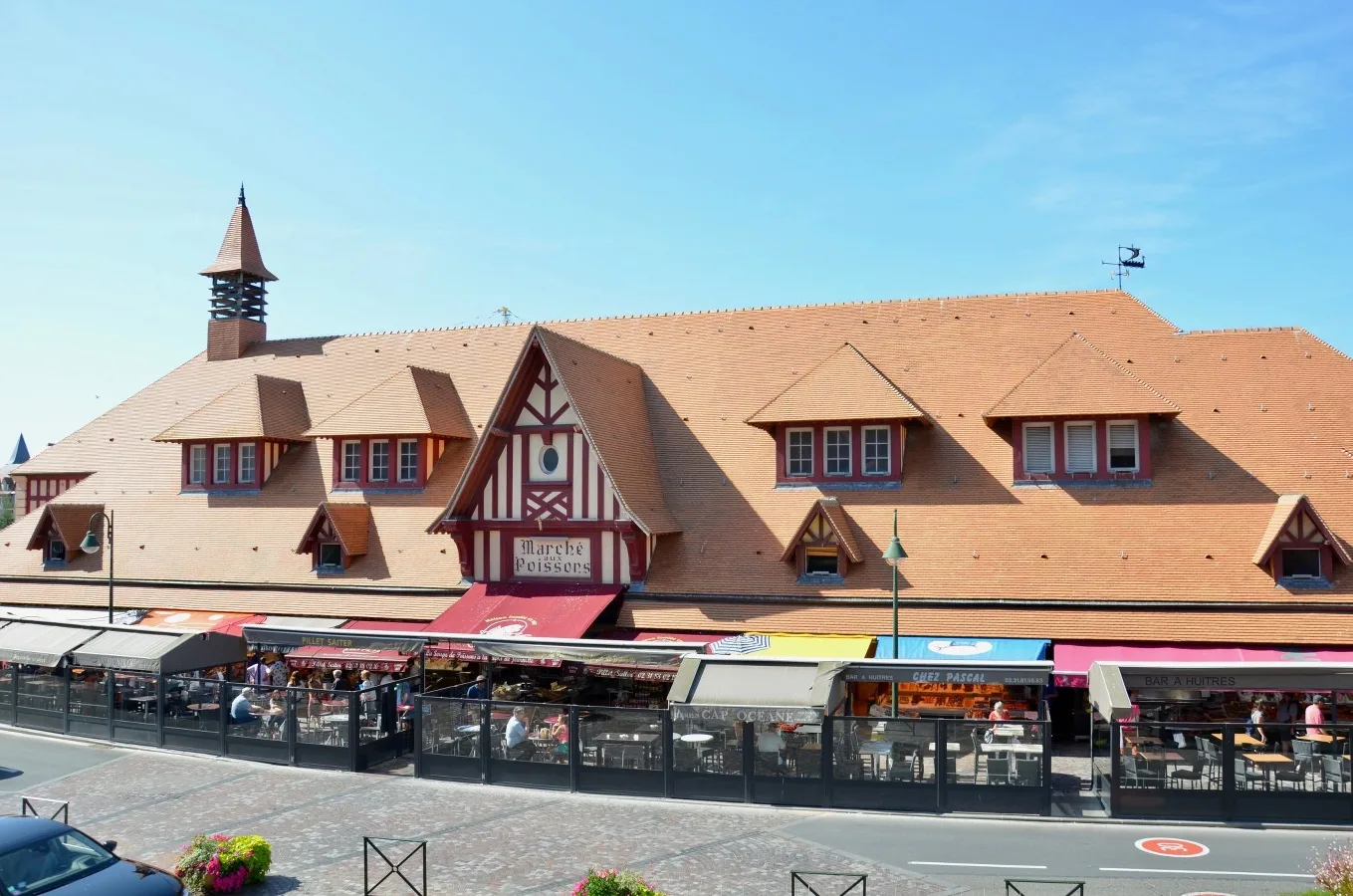
Trouville Fish Market: Where Daily Catch Meets Norman Heritage
I step under the covered hall at 9:15 on a Thursday morning. Salt air mixes with oyster brine and damp wood. A fishmonger calls out prices in rapid Norman French. I pay nothing to enter. A dozen oysters on ice cost 10 euros. I eat them standing at a narrow wooden counter. The shellfish taste clean and bright. Cold wind blows through the open sides of the building. I pull my jacket tighter. Behind the stalls, fishing boats bob in the harbour. This place does not feel like a tourist show. It feels like work, carried on day after day.
Why Trouville Fish Market Matters
The market hall has stood here since 1936, built in traditional Norman style. It earned listing as a historic monument in 1991. For generations, local fishermen have sold their catch directly beneath its roof. The market ties the town to the sea in ways the beachfront promenade does not. Sole, sea bass, mackerel, and scallops appear as the season allows. Many fish carry the official "Trouville-sur-Mer Mackerel" label, confirming they come from small-scale boats working close to shore. That authenticity carries real weight. Still, the space feels cramped on busy mornings. Stalls crowd close together. Tourists and locals jostle for room. Some stalls charge higher prices than fish shops deeper in town. You pay for location as much as freshness.
The Best Time to Experience Trouville Fish Market
May through September brings the mildest conditions. Temperatures sit between 11°C (52°F) and 20°C (68°F). Days stretch longer and sunlight reaches the harbour. Crowds swell mid-July through August. Arrive before 9:00 AM then. October through April sees fewer visitors. Scallops come into season from October onward. Air chills to 4°C (39°F) to 10°C (50°F). Dress warmly — the hall stays open-sided and wind cuts through easily. The market runs daily year-round, but Wednesday and Sunday mornings feel most active. On other days, fewer stalls open and choice narrows. Saturday draws largest numbers. Avoid late afternoon; stock runs low and selection shrinks.
Approximate Budget for a 7-Day Trip
- Accommodation: 7 nights in a modest guesthouse within walking distance — 525 euros. Staying across the river in Deauville adds roughly 210 euros total for similar comfort.
- Food: Daily breakfast, market lunches, simple dinners — 420 euros. Seafood platters at the most visible harbour-front restaurants cost nearly double what you pay two streets back. They are overpriced.
- Transport: Train from Paris Saint-Lazare plus local walks or short bus — 78 euros. Taxis between station and market charge a premium. The walk takes 12 minutes and costs nothing.
- Attractions & Tastings: Oysters, smoked fish samples, museum entry — 65 euros. Market entry stays free.
- Miscellaneous: Bread, cider, butter, souvenirs — 70 euros.
Total estimated cost: 1,158 euros per person
Skip the pre-packed souvenir bags of smoked fish at the main market entrance. Buy directly from the smoking stall at the back. Same product, lower markup.
Essential Trouville Fish Market Experiences
- Eat oysters at the standing counter — Shucked right in front of you. Served on ice with lemon and rye bread. A dozen costs 8 to 12 euros depending on size. Eat them immediately. Freshness matters above all else.
- Walk the full length of the stalls — Prices and choice differ. Compare what looks good rather than buying from the first vendor. Mackerel from local boats carries a special label. Look for it.
- Watch the harbour from the hall edge — Boats unload crates directly onto the quay. Fishermen in waterproof gear carry boxes. This connection between boat and stall defines the place. It moves fast. Keep clear of working areas.
- Try Trouville smoked fish — Mackerel and herring smoke over local wood. Rich, oily texture. Sold in slices or whole fillets. Great for lunch later. Skip if you do not eat fish — few alternatives exist here.
- Talk to the fishmongers — Most speak basic English. They know exactly where the catch came from and how it was taken. Ask what looks best that morning. They will guide you honestly.
- Buy ingredients and cook yourself — If your accommodation has a kitchen, this works beautifully. Fresh sole, scallops, or sea bass need little preparation. It costs far less than eating out for every meal.
- Return at quiet time — Mid-afternoon on a weekday feels calm. Crowds thin completely. You can see the building and its rhythm without pushing through people. The catch will be smaller though.
Hidden Gems Most Travelers Miss
- The small smoked-fish stall tucked at the far rear corner of the hall cures its own catch on site. The flavour tastes deeper and cleaner than pre-packed versions. Prices sit lower too.
- Rue des Bains runs uphill behind the market. It holds old-fashioned fish shops serving locals daily. Quality matches the hall. Prices run lower. No crowds press in.
- The morning fish auction happens at the harbour before stalls open. It starts early, around 7:30 AM. You can watch from the quay. It moves fast and stays mostly in French. Arrive quietly.
- The covered market building itself carries quiet architectural detail — carved wood beams and Norman roof patterns. Most people never look up. Do not expect grand spectacle though; the design stays functional and plain.
Cultural & Practical Tips
- Carry small change. Some stalls prefer cash for small orders. Cards work everywhere, but coins keep transactions moving fast.
- Do not block the quay edge. Fishermen unload boats through the morning. They need clear space. Step back when you see them approach.
- Go early for best selection. By mid-afternoon, many stalls close or show limited stock. The freshest items sell first.
- Respect local buying habits. People here come for daily meals. They know the vendors. Do not linger indefinitely at a stall when others wait behind you.
- Dress for sea weather. The hall offers roof shelter but no walls. Rain and wind reach every corner. Waterproof layers make a big difference.
- Do not treat stalls like photo sets. Ask before snapping close pictures of vendors or their display. Most agree willingly. Some prefer not to be photographed.
- Watch your footing. The floor stays wet and slippery. Fish water and seawater splash constantly. Rubber-soled shoes help.
Essential Visitor Information
Location & Access: 152 Boulevard Fernand Moureaux, Trouville-sur-Mer, 14360. GPS coordinates 49.3649, 0.0818. Three ways to arrive: train from Paris Saint-Lazare to Deauville-Trouville station (about 2 hours), then walk 12 minutes or take short local bus; drive via A13 motorway (2–2.5 hours from Paris); or take the pedestrian ferry across the Touques river from Deauville (5 minutes, inexpensive).
Tickets & Booking: Entry free. No booking required. Oysters and prepared food paid directly at stalls. Combine with a guided market walk from the tourist office if you want structured context.
Operating Hours: Daily roughly 9:00 to 19:00. Full market strength Wednesday and Sunday mornings. Other days fewer stalls operate. Some vendors close as early as 17:00 in quieter seasons.
Visit Duration: Minimum 45 minutes to walk through and sample. Recommended 1.5 to 2 hours to eat, watch harbour activity, and browse at relaxed pace.
Family Suitability: Children welcome. Stroller access works but stays tight on busy mornings. Public restrooms nearby. No high chairs inside the hall. Seafood-focused — limited options for those with allergies.
Timing: Best season: May to June or September to early October. Best time: 9:00–10:30 AM. Fresh arrival, good light, manageable crowds.
Highlights: Oyster counter, harbour view from hall edge, smoked fish stall, traditional Norman roof structure, direct-from-boat atmosphere.
Nearby & Day Trip: Three nearby stops: Trouville beach and promenade (5 minutes walk), Villa Montebello museum (10 minutes walk), Deauville across the river (5 minutes by ferry). Longer outing: Honfleur with its historic harbour (30 minutes drive). All make comfortable half-day or full-day excursions.
Conclusion: Travel with Appetite, Not Just Camera
Trouville Fish Market does not exist for visitors alone. It feeds a town. That honesty sets it apart. Some corners feel crowded. Some prices run high. Those imperfections are part of what makes it real. You do not need to photograph every stall to take something away. Taste an oyster. Watch a boat unload. Notice how the place works. What flavour will you remember longest when you go home?
Comments
Post a Comment