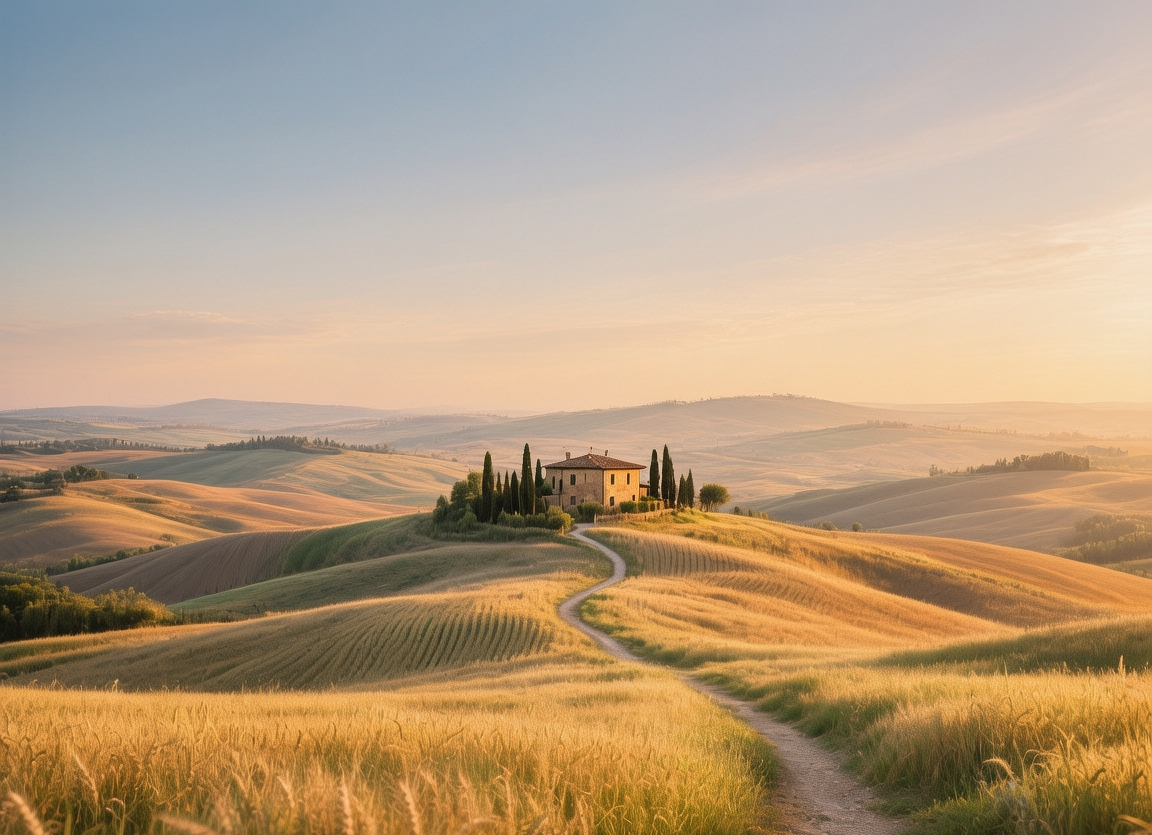
Val d'Orcia: Where Shaped Landscape Meets Living Tradition
I pull over beside the cypress-lined road just after seven in the morning. The air carries damp earth and cut grass. A small coffee at a roadside bar costs one euro fifty. The sun rises slow and spills soft light across the slopes. No other cars pass for ten minutes. Fields stretch out in broad, gentle curves — wheat, vines, olive groves — laid out over centuries to follow the land itself. Farmhouses sit alone on crests, built from stone quarried right where they stand. This is not untouched wilderness. Every line you see was chosen. Every tree planted with intent. The view has changed little since Renaissance painters stood here and sketched what they saw.
Why Val d'Orcia Matters
This valley lies south of Siena, bounded by the Orcia River and the slopes of Monte Amiata. Pilgrims traveling the Via Francigena once walked these roads between Northern Europe and Rome. Villages grew up to shelter them. In the 15th century, Pienza was rebuilt from scratch as an ideal city, a physical statement of Renaissance order and harmony. Over time, farmers and landowners shaped the wider landscape — terracing fields, planting cypress along property lines and roads, siting farmhouses to frame the view. In 2004 UNESCO listed the area as a World Heritage Site, recognising it as a designed landscape that influenced centuries of art.
It is not immune to strain. Modern agriculture has made some larger fields look uniform and less distinct. Wildflowers vanish where chemical treatments replace traditional methods. Summer crowds jam the narrowest roads and turn the most photographed stretches into parking lots. You will not find the whole valley quiet and untouched. The most famous spots feel crowded by midday.
The Best Time to Experience Val d'Orcia
Late April through mid-June works best. Days range from 14°C to 24°C (57°F–75°F). Hills stay green and wildflowers dot the fields. Wheat turns golden in late June, before harvest strips the hills bare. September and early October run a close second. Temperatures hold at 16°C to 25°C (61°F–77°F). Grape harvest fills the air with activity and morning fog drifts along the valley floor.
July and August bring heat past 32°C (90°F) most afternoons. The landscape looks parched and brown. Traffic slows main roads to a crawl. Winter offers quiet — 4°C to 12°C (39°F–54°F). Many small eateries and family-run wineries close for weeks. Light falls differently then, sharp and clear on bare slopes, but you must plan ahead to find places open.
Approximate Budget for a 7-Day Trip
Prices are per person in euros. Sharing accommodation cuts costs significantly.
- Accommodation: 50–90 per night. A simple room in a village guesthouse sits near the lower end. An agriturismo with views and home-cooked meals runs higher. Lodging right beside the most photographed cypress avenues costs double what similar quality does one kilometre away. Drive a short distance. The view from your room changes very little.
- Food & Drink: 30–50 daily. Lunch at a trattoria, simple dinner with local wine, cheese, and pecorino tastings included. Wine tastings right along the main SP146 road charge premium rates. Drive five minutes off the main route and fees drop by half, with better selection.
- Transport: 45–70 daily. Rental car is essential — buses are too slow and infrequent to connect multiple spots. Fuel and parking included. Public transport exists but will not get you to the best viewpoints or isolated hamlets.
- Attractions & Tastings: 25–45 total for the week. Pienza museum entry, Montalcino fortress, several winery visits. Combined passes save a few euros where available.
- Miscellaneous: 15–25 daily. Cheese, honey, or wine to take home; coffee and snacks throughout the day.
Total estimated 7-day cost: 770–1,470 euros per person
Essential Val d'Orcia Experiences
- Walk Pienza from Piazza del Duomo to the viewpoint — The main street follows a straight, carefully planned line. The terrace behind the cathedral looks across the valley toward Monte Amiata. Arrive early. Skip if you want only open countryside — this is a small town and fills fast.
- Drive the SP146 between San Quirico and Pienza — The road curves past cypress avenues and open fields. Several safe pull-offs let you stop and look. Go early or late. Midday means no parking and heavy traffic.
- Visit Montalcino and its fortress — Perched high above the valley. The fortress walls offer wide views over vineyards. Brunello tastings happen in cellars throughout town. Many places require reservations for groups.
- Step into Bagno Vignoni central square — The entire piazza sits over a thermal spring. Water fills the stone basin where the pavement would be. You cannot swim here, but smaller pools and spas operate nearby.
- Walk San Quirico d'Orcia historic centre — Compact and largely unchanged. The main street holds small gardens, frescoed churches, and quiet lanes that feel lived-in, not staged.
- Watch sunrise from a south-facing slope — Light hits the valley floor first and climbs slowly. The best spots carry no signs and have no facilities. Bring water and a warm coat — mornings feel cool even in summer.
Hidden Gems Most Travelers Miss
- Monticchiello — A tiny fortified hamlet with crumbling walls and quiet lanes. It sits slightly off the main route and sees far fewer visitors. The parish church holds vivid frescoes.
- Cappella di Vitaleta back roads — The chapel appears on every postcard. The smaller lanes looping behind it offer similar views without the crowds. Park respectfully and do not block farm gates.
- Rocca di Radicofani — A fortress ruin guarding the valley’s southern edge. The climb is short but steep. Views stretch across the whole length of Val d'Orcia and beyond.
- Sanctuary of the Madonna di Vitaleta interior — Most people photograph the exterior and leave. Inside the small chapel sits quiet and cool. The main cypress avenue spot is famous, but it feels overrun at midday. You will wait in line just to take a photo there.
Cultural & Practical Tips
- Do not park on grass or block farm entrances. Local people work this land. Blocked access delays harvest and delivery. You will be asked to move or fined.
- Respect marked private property. Many beautiful stretches belong to working farms. Pull over only where solid ground or designated pull-offs exist.
- Carry water and layers. Days feel warm but shade is scarce. Winds pick up quickly across open slopes. Temperatures drop noticeably after sunset.
- Book winery visits ahead. Walk-ins are welcome at some places, but the most reputable cellars turn unreserved groups away.
- Aim for early or late visits. Light matters here. The softest light falls within an hour of sunrise and sunset. Midday sun washes out the landscape entirely.
- Try pecorino from small shops rather than tourist stalls. The cheese matures in different ways across the valley. Small producers explain their work and let you taste before you buy.
- Expect limited mobile signal in stretches. Download maps and plan routes beforehand. You may lose connection between villages.
Essential Visitor Information
Location & Access: Val d'Orcia lies roughly 40 km south of Siena and 120 km south of Florence. The nearest train station is at Chiusi-Chianciano Terme, about 30 km away. Buses connect Siena with Pienza and Montalcino but run infrequently. A rental car from Siena or Florence offers the only practical way to explore fully. Guided minibus tours run from Florence and Siena as an alternative.
Tickets & Booking: Access to the landscape and most roads is free. Pienza Cathedral and museum combined entry costs roughly 8 euros. Montalcino Fortress runs about 6 euros. Many wineries charge 10–20 euros per person for a guided tasting with snacks. Booking ahead is recommended April through October.
Operating Hours: Roads and public spaces stay open always. Museums and main attractions open 10:00 AM to 6:00 PM April to September. Hours shorten to 10:00 AM to 4:00 PM October through March. Many small sites close one weekday, usually Monday or Tuesday.
Visit Duration: Allow at least two full days to see the main towns and drive key routes without rushing. Four to seven days lets you explore side roads, visit wineries at leisure, and catch light at different times of day.
Family Suitability: Children are welcome everywhere. Walking between villages often means narrow verges or no pavement. Use caution. Most agriturismi offer family rooms and simple meals. Public restrooms exist in main town centres but are scarce along country roads.
Timing: Best season is late April to June and September to early October. Arrive before 8:00 AM or after 5:30 PM for the best light and quietest roads.
Highlights: Pienza panoramic terrace, SP146 cypress road, Bagno Vignoni square pool, Montalcino fortress, San Quirico d'Orcia historic centre.
Nearby & Day Trip: Siena sits 45 minutes by car. Montepulciano with its wine cellars lies 30 minutes away. Cortona takes roughly one hour. Lake Trasimeno offers flat walking and waterside dining 45 minutes southeast. All make feasible half or full-day outings.
Conclusion: Travel with Eyes Open, Not Just Cameras
Val d'Orcia did not look this way by accident. Farmers, priests, and artists shaped it over six hundred years. Every cypress line, every stone farmhouse, every curve of the fields carries intention. You can drive through in a day and take plenty of photos. You will understand it far better if you slow down, walk a country lane, taste cheese made ten minutes away, and watch light move across a slope. The best views do not appear on postcards. What quiet stretch will you seek out when you visit?
Comments
Post a Comment