Verona: Where Ancient Stone Meets Living Legend
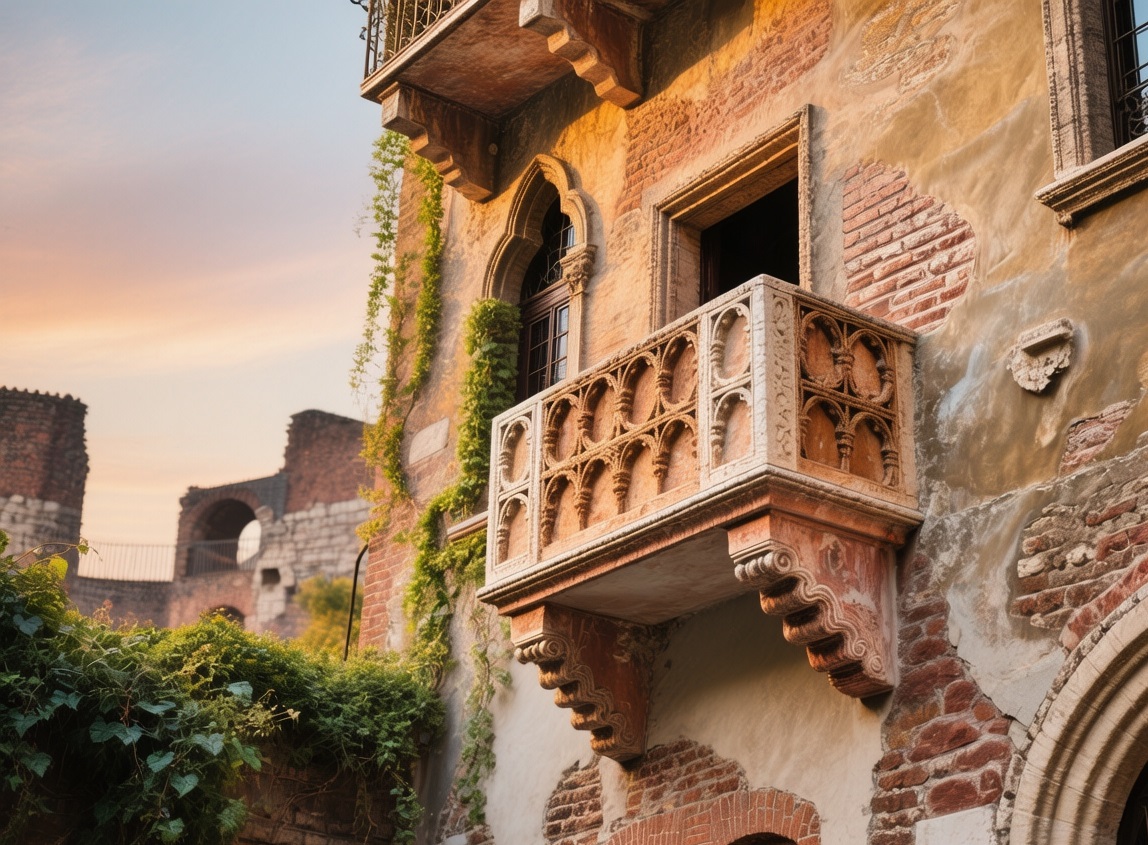
I step into the courtyard at Casa di Giulietta just before eight in the morning. The entry is free. A ticket to stand on the balcony costs six euros. Sunlight filters between narrow buildings. Only a few others linger here — reading letters left on the walls, touching the bronze statue’s worn surface. By nine, the lane will fill. Voices will echo off stone. For now, the space feels quiet, even though thousands have passed through over centuries. The balcony itself is plain, rebuilt long after the stories began. People come anyway. They come for what this place means, not just what it is.
Why Verona Matters
Verona sits on the Adige River, at a natural crossing point between the Alps and the Po Valley. The Romans built here in the 1st century AD, leaving an amphitheatre that still stands and still works. In the Middle Ages, the powerful Scaliger family ruled and shaped the city we see today — towers, bridges, castles, and palaces that mark their authority. Later it passed under Venetian, French, and Austrian control before joining modern Italy. Every layer remains visible. Roman streets follow the same paths modern shops occupy. Medieval towers rise beside neoclassical facades. The Arena hosts opera each summer, exactly as it once held games and gatherings nearly two thousand years ago.
It is not all well preserved, though. Side streets show peeling plaster and faded paint. Restoration moves slowly. Scaffolding wraps historic facades for months at a time. The most famous spots feel crowded and commercialised. You will find souvenir stalls and overpriced cafés in places that once held genuine local life. Look past the main squares and the city feels quieter, older, and less polished.
The Best Time to Experience Verona
Late April through early June offers ideal conditions. Days run 14°C to 23°C (57°F–73°F). Evenings stay pleasant. The Arena opera season begins mid-June. September through mid-October works equally well. Temperatures settle between 15°C and 24°C (59°F–75°F). Crowds thin after summer and light turns soft and golden.
July and August bring heat that climbs past 32°C (90°F). Humidity makes it feel heavier. Hotel prices rise sharply. Restaurants near Piazza Bra double their rates. The opera draws visitors in huge numbers. Winter stays quiet — 3°C to 10°C (37°F–50°F). Many small eateries close for holidays or short breaks. Days feel short and mist often lingers along the river. Plan visits between mid-morning and late afternoon then.
Approximate Budget for a 7-Day Trip
Prices are per person in euros. Shared accommodation and mid-week stays lower these figures noticeably.
- Accommodation: 50–95 per night. A clean room in a guesthouse outside the immediate centre sits near the lower end. Something central within walking distance of Piazza Bra runs higher. Lodging directly facing the main square costs nearly double what you find two streets away. The view changes very little. Walk five minutes and save significantly.
- Food & Drink: 30–50 daily. Lunch at a simple trattoria, dinner with one drink, coffee, and snacks included. Restaurants with tables on Piazza delle Erbe charge double average prices. Food quality often drops too. Walk two lanes inward and prices return to normal.
- Transport: 12–20 daily. Walking covers nearly everything. Buses run to outlying basilicas and the station. Taxis within the historic centre stay under ten euros. Parking inside the old city is restricted and expensive. Park outside the walls and walk in.
- Attractions: 35–65 total for the week. Arena entry, combined museum passes, Torre dei Lamberti climb. An opera ticket runs from 25 euros high up to well over 200 euros close to the stage.
- Miscellaneous: 15–25 daily. Market purchases, extra drinks, unexpected treats.
Total estimated 7-day cost: 650–1,225 euros per person
Essential Verona Experiences
- Visit the Arena di Verona — Built nearly 2,000 years ago. It remains one of the best-preserved Roman amphitheatres anywhere. The pink limestone glows as sun sets. Go early. Skip if you have limited mobility — steps are steep and uneven.
- Climb Torre dei Lamberti — The tallest viewpoint in the centre. It looks straight down onto Piazza delle Erbe and across tiled rooftops toward the river. The lift costs extra. Walking takes longer but costs less.
- Walk Piazza delle Erbe — Built over the old Roman forum. Market stalls run along one side. Statues mark corners. Sit on a step and watch people pass. The square has seen continuous use for 2,000 years.
- Explore Castelvecchio — A fortress turned museum. Medieval art and artefacts sit beside the original stone walls. The bridge over the Adige offers wide views up and down the river. Allow two hours minimum.
- Step inside San Zeno Maggiore — A short bus ride from the centre. The bronze doors show biblical scenes cast centuries ago. The interior feels quiet and solid. Most visitors stay in the main squares. This basilica stands worth the trip.
- Cross Ponte Pietra at sunset — A Roman bridge rebuilt after World War II. The stone glows warm as light fades. Walk across to the Teatro Romano side for the classic view back toward the city.
Hidden Gems Most Travelers Miss
- Giardino Giusti — A Renaissance garden tucked behind a palace. Terraced paths, hedges, and quiet corners sit minutes from the busiest streets. It feels private and calm even when the city crowds.
- Arche Scaligere — The tombs of the Scaliger lords. Perched high above a narrow lane. Gothic detail covers every surface. The entrance is easy to miss and few people stop to look closely.
- Teatro Romano hillside — Most visit the ancient theatre then leave. Walk higher up the slope to the small museum and viewing terrace. The perspective over rooftops and river bends feels different from any other spot.
- Casa di Giulietta balcony — The courtyard draws everyone. The actual house and museum upstairs hold frescos and furnishings that show how people lived here centuries ago. The balcony itself feels overrated — crowded, noisy, and heavily staged. You will wait in line just to step onto a rebuilt platform.
Cultural & Practical Tips
- Cover shoulders and knees when entering churches. You will be turned away otherwise. Carry a light scarf or shawl.
- Do not eat while walking through the main squares. Locals see it as disrespectful to shared public space.
- Validate bus tickets on board. Fines for non-compliance run high and inspectors appear often.
- Shops close between 1:30 PM and 3:30 PM. Plan errands and purchases around that gap. Only tourist-focused places stay open then.
- Wear comfortable, flat shoes. Stone streets slope unevenly and grow slippery when wet. Heels are impractical and dangerous here.
- Book Arena tickets months ahead for July and August. Popular performances sell out fast. Third-party sites charge extra fees — book directly.
- Keep bags closed in crowded lanes. Pickpockets work near Casa di Giulietta and Piazza Bra. Stay alert as you would anywhere popular.
Essential Visitor Information
Location & Access: Verona lies in northern Italy, roughly 120 km west of Venice and 160 km east of Milan. The main station is Porta Nuova, ten minutes’ walk from the historic centre. Trains run frequently to Venice, Milan, and Bologna. Valerio Catullo Airport sits 12 km southwest; buses connect directly to the city centre. Driving is possible but parking inside the Roman walls is restricted to residents only. Use paid parking zones outside and walk in.
Tickets & Booking: Arena entry costs roughly 10–12 euros. Combined museum passes offer savings across multiple sites. Opera tickets range from 25 euros to over 200 euros depending on location. Booking ahead is essential June through September. Casa di Giulietta courtyard access is free; balcony and museum entry runs about 6 euros.
Operating Hours: Streets and public squares stay open always. Main attractions open 9:00 AM to 7:00 PM April to September. Hours shorten to 10:00 AM to 4:00 PM October through March. Many sites close one weekday, usually Monday. Opera performances run June through early September, typically starting at 9:00 PM.
Visit Duration: Allow at least two full days to see the core sites without rushing. Three to four days lets you explore quieter quarters, visit San Zeno, and catch an evening performance.
Family Suitability: Children are welcome everywhere. Uneven stone and steep steps make stroller use difficult. Most families use carriers instead. Public restrooms sit near Piazza Bra and Porta Nuova; they grow scarce in narrow back lanes.
Timing: Best seasons are April–May and September–October. Arrive before 9:00 AM to see popular spots quietly. Late afternoon, after 5:00 PM, brings softer light and thinning crowds.
Highlights: Arena di Verona, Piazza delle Erbe, Torre dei Lamberti, Castelvecchio, San Zeno Maggiore, Ponte Pietra.
Nearby & Day Trip: Lake Garda sits 30 minutes by bus or car. Vicenza with its Palladian architecture takes 45 minutes by train. Venice runs 1 hour 30 minutes; Milan 1 hour 15 minutes. Valpolicella wine villages lie 20 minutes north and make a pleasant half-day outing.
Conclusion: Travel with Curiosity, Not Just a Script
Verona existed long before the stories arrived. Romans, medieval lords, merchants, and artists all shaped what you see. You can follow every famous lane and tick every landmark in two days. You will remember it far better if you wander without a map, sit where locals sit, and look beyond what everyone photographs. The real city lives in the quiet streets between the squares. What corner will you turn that does not appear in the guidebook?
Comments
Post a Comment