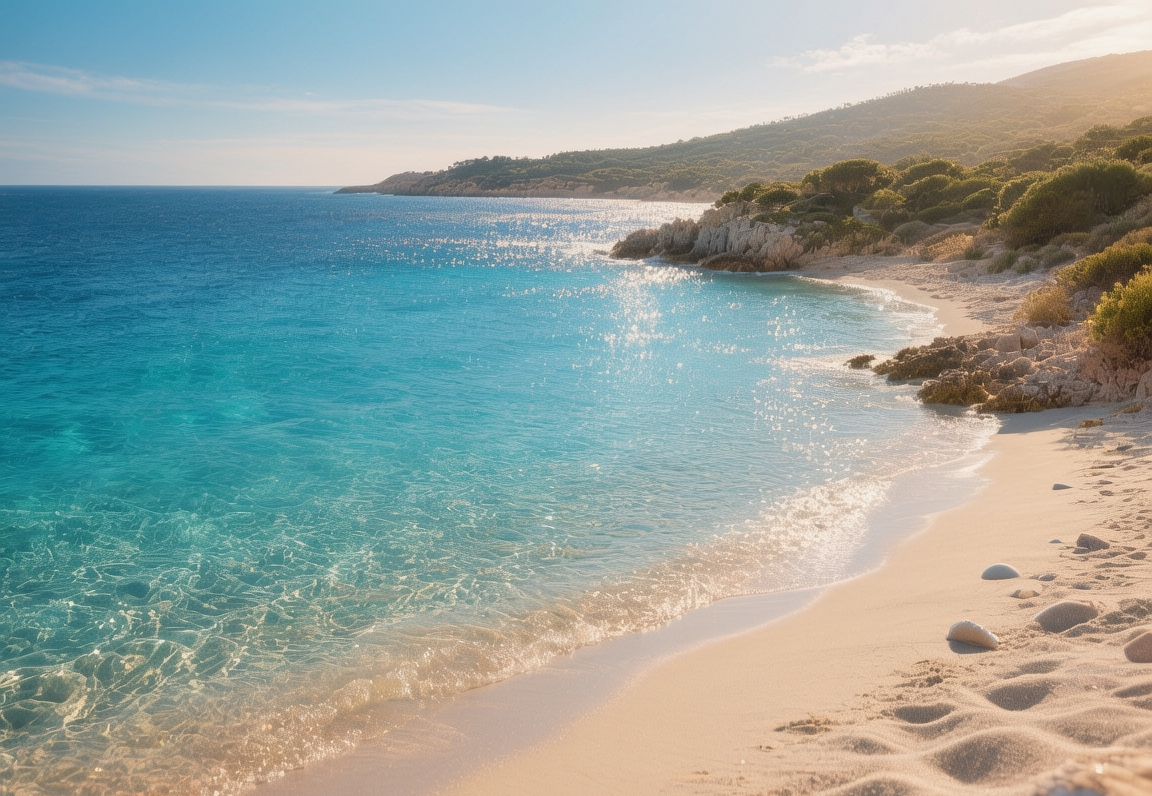
Crabonaxa: Where Unspoilt Shore Meets Southern Lowlands
I walk the quiet lane at 8:15 on a July morning. The air smells of wild thyme and dry grass. An espresso costs one euro forty at the small roadside bar just off the main junction. I look across the low, rolling landscape — dunes draped in grey-green scrub, shallow lagoons glinting silver, and the sea stretching clear and bright toward the horizon. Crabonaxa lies in the far south of Sardinia, between the better-known stretches of Chia and Pula. It is not a named resort. It is a scattered, quiet stretch of coast — unnamed coves, ancient paths, and wide open spaces where visitors rarely crowd. People pass through heading to more famous spots. They find a place that remains almost entirely itself.
Why Crabonaxa Matters
This coastline forms part of one of the most important ecological zones on the island — a continuous band of dunes, wetlands, and Mediterranean maquis that supports rare plants, migrating birds, and intact coastal ecosystems. Ancient fragments of human settlement have also been found here, evidence that people have lived alongside this land for thousands of years without overwhelming it. Today Crabonaxa remains quiet precisely because it is undeveloped. That brings real trade-offs. Signage is minimal. Paved paths end abruptly. There are almost no facilities — no cafés, no restrooms, no marked car parks. You will not find information boards or staff. This is part of its beauty, but it also means you must come prepared and take responsibility for your visit.
The Best Time to Experience Crabonaxa
Late April through June brings fresh green foliage, blooming wildflowers, and gentle breezes. Temperatures sit between 14°C and 24°C (57°F–75°F). The shoreline feels fresh and almost empty. July and August warm to 20°C and 31°C (68°F–88°F). Days feel hot and direct sun is intense — there is almost no shade. September offers golden light and calm seas — 17°C to 28°C (63°F–82°F). Crowds thin noticeably and the air stays warm. October remains mild — 15°C to 24°C (59°F–75°F) — and the shoreline feels peaceful. Winter holds cool, quiet days: 9°C to 17°C (48°F–63°F). Some unpaved lanes become muddy after rain. Visit before 9:00 AM any time of year to beat the heat and have the place to yourself.
Approximate Budget for a 7-Day Trip
Prices below are per person, in euros, based on staying in nearby Pula or southern Cagliari area.
- Accommodation: 7 nights in a guesthouse or apartment in Pula — €65–120 per night. Total: €455–840. Staying further inland costs 25–35% less; driving to Crabonaxa takes 15–20 minutes.
- Food & Drink: Breakfast, two meals daily — €28–48 daily. Total: €196–336. There are no restaurants in Crabonaxa itself — bring everything you need and eat in nearby towns.
- Transport & Access: Car rental €35–55 daily. Parking is free and informal — pull off the main road only where firm ground allows. Public transport does not serve this stretch.
- Activities: Nearby archaeological sites, boat trips, Cagliari day visit — €30–70.
- Miscellaneous: Water, food, sun protection, sturdy footwear — €15–25.
Total estimated 7-day cost: €690–1,395
Rooms with direct sea views in nearby developed areas carry a very large premium. Similar accommodation one street back or inland costs 35–45% less and the quietest shores of Crabonaxa are still a short drive away. The "Southern Coast Exclusive Private Tour" is overpriced; the same quiet coves and paths are free and open to everyone if you arrive early and explore gently.
Essential Crabonaxa Experiences
- Quiet Shoreline Walk — Follow the firm sand or packed earth along the water’s edge. The shore stretches wide and empty. You will pass fewer people in an hour than you would in five minutes at nearby beaches. Skip if you dislike unmarked ground; there are no signs and paths fade in places.
- Lagoon Edge & Birdlife — Walk the higher ground between the dunes and the shallow lagoon. Flamingos, herons, and waders feed in the pale water. The air feels still and quiet. Keep your distance — these are sensitive nesting and feeding grounds.
- Sunrise Over Open Water — Arrive before the sun clears the horizon. The sky turns soft gold and pink, reflecting across both sea and lagoon. No one else will be there. It is the most peaceful moment on the whole southern coast.
- Low Scrub Path Inland — Follow the faint trail back from the shore through dense, fragrant maquis. Wild lavender, juniper, and cistus fill the air with scent. Butterflies and small birds move through the bushes. The path loops gently — stay oriented so you can find your way back.
- Late Afternoon Light — Remain past 5:00 PM when day-trippers leave. The dunes glow deep amber and shadows stretch long across the sand. The wind softens and the water turns calm. This is when the landscape feels most alive.
- Connect to Nearby Heritage — Drive ten minutes to well-known ancient sites. The same people who settled those towns likely walked these shores too. Seeing the quiet coastline first gives the ruins context — this was their home ground, not just a monument.
Hidden Gems Most Travelers Miss
- The small cove tucked between two low headlands sits fifteen minutes’ walk east of the main access point. No road reaches it. The sand is fine and the water clear. You will likely have it entirely to yourself.
- The old stone boundary line running inland from the shore marks an ancient property edge. It winds through the scrub and offers quiet elevated views. Very few visitors notice it or follow it.
- The higher ground north of the lagoon gives a wide panorama — sea, dunes, water, and distant hills all in one frame. The light here at sunset is unmatched across the whole region.
- The "Secret Cove Guided Access" package is overpriced. There are no private beaches here. The quiet spots are free and open to anyone willing to walk gently and arrive early.
Cultural & Practical Tips
- Bring everything with you. There are no shops, fountains, or facilities. Water, food, first aid, and waste bags are essential. Pack more water than you think you need — there is no shade and dehydration comes fast.
- Take all rubbish away with you. There are no bins. What you leave behind stays here. Keep this place clean for the next visitor and the wildlife that lives here.
- Stay on firm ground. Some dune faces are actively eroding. Vegetation holds the sand together — stepping on it destroys decades of growth. Walk on established paths, rock, or bare sand only.
- Respect quiet. Voices carry far across open shoreline. Keep conversations low and move gently. This is not just your discovery — it is home to birds and wildlife easily disturbed.
- Do not drive onto the dunes or soft verges. Some ground looks firm but gives way under vehicles. Park only where the road is wide and the shoulder solid. If in doubt, walk further — the best spots are never far.
- Tell someone your plans. Phone signal is patchy in places. Let your accommodation know roughly where you are heading and when you expect back.
- Book accommodation 2–3 months ahead in July and August. The southern coast is popular and rooms sell out quickly.
Essential Visitor Information
Location & Access: Crabonaxa, Southern Coast, Metropolitan City of Cagliari, Sardinia, Italy. Coordinates roughly 38.9500° N, 8.9100° E — between Chia and Pula. Three ways to arrive: drive from Pula — 15 mins; drive from Cagliari — 40 mins; drive from Chia — 10 mins. No public transport serves this stretch directly.
Tickets & Booking: All shoreline and paths are free and open. No tickets or booking required. Reserve accommodation well ahead in summer.
Operating Hours: Always accessible, dawn to dusk. No gates or closing times — but respect wildlife and keep visits to daylight hours.
Visit Duration: Minimum half day. Recommended 1–2 full days to explore different stretches without rushing, plus combine with nearby heritage sites.
Family Suitability: Moderately family-friendly. Sand is soft and water calm near shore. No shade, no facilities, and uneven ground mean careful preparation and supervision are essential. Bring everything including extra water and first aid.
Timing: Best seasons are late April to June and September. Best time of day is before 9:00 AM or after 5:00 PM.
Highlights: Empty shoreline, lagoon birdwatching, sunrise panorama, fragrant scrub paths, late afternoon dune light, quiet cove walk.
Nearby & Day Trip: Chia — 10 mins. Pula & Nora Ruins — 15 mins. Cagliari — 40 mins. Sant'Antioco — 1 hour 15 mins.
Conclusion: Travel with Stewardship, Not Just Discovery
Crabonaxa gives you something increasingly rare — beauty that does not ask for your attention or your money. It simply is. You can take photos and leave quickly. Or you can walk softly, leave nothing behind, and remember that the best gift you can give this place is to keep it as you found it. What is the one quiet, unmarked place you would visit promising to tell only those who will care for it too?
Comments
Post a Comment