Wernigerode: Where Painted Gables Meet Mountain Green
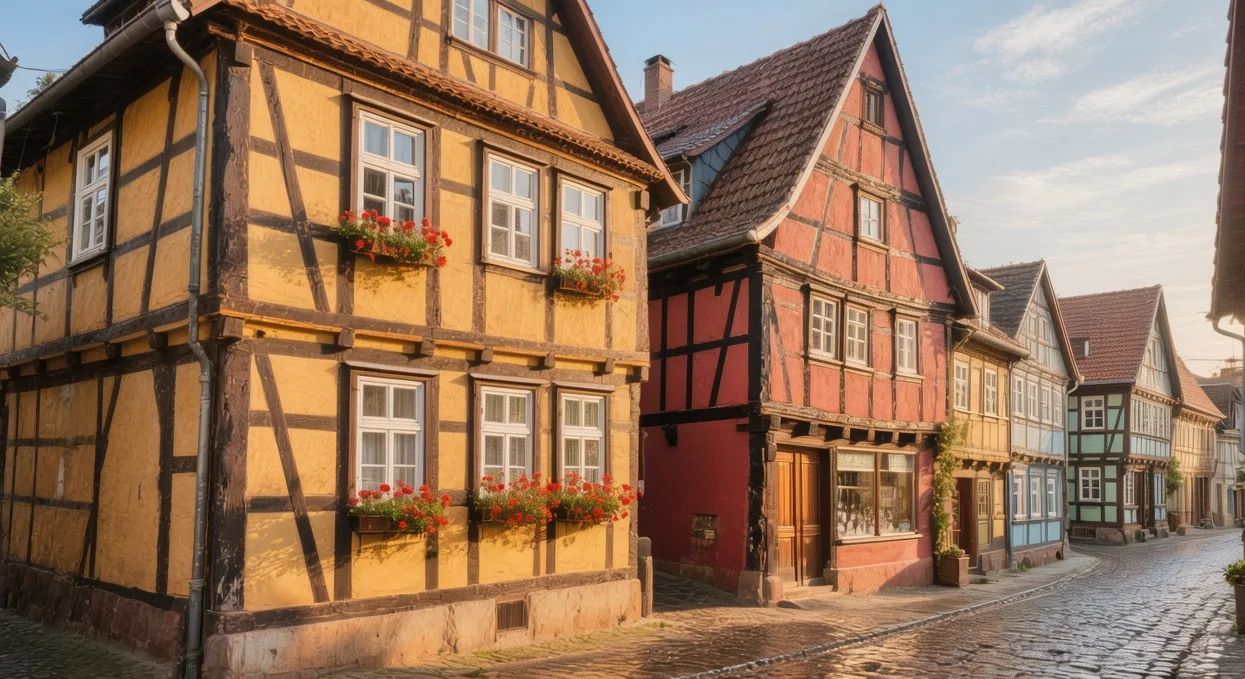
I walked across the market square at ten past nine on a Sunday morning. Sunlight slanted across gabled facades painted soft ochre, cream, and deep red. I paid nothing to wander the lanes. A baker carried warm loaves through a side door and the scent drifted slow and sweet. I expected a postcard town frozen for visitors. What I found feels genuinely lived-in — old cottages where families still live, workshops where hands still work, and a castle watching over it all from the wooded slope above. Not every street stays perfect. Some back lanes show chipped paint and worn stone. That patina feels right. This place has been used well, not just preserved.
Why Wernigerode Matters
This town grew wealthy from silver and copper mined in the Harz mountains nearby. Merchants and mine officials built grand half-timbered houses from the 16th century onward. The castle rose above the settlement, rebuilt in the 19th century into the romantic silhouette seen today. When the railway arrived in 1899, Wernigerode became the gateway to the high peaks. Through decades of change it kept its face intact — rows of steep roofs, carved beams, and narrow cobbled lanes. Today it stands as one of the most complete historic townscapes in northern Germany. One honest criticism: the central square fills rapidly with day-trippers after 11:00. Popular cafes run out of tables and queues form outside bakeries. Accommodation prices spike on weekends; midweek stays cost noticeably less.
The Best Time to Experience Wernigerode
May through June brings 8°C to 18°C / 46°F to 64°F. Window boxes fill with flowers and the castle woods turn fresh green. Arrive before 10:00; the lanes stay quiet and golden. July and August warm to 13°C to 22°C / 55°F to 72°F. Evenings stay long and outdoor seating stays open late. September holds 10°C to 17°C / 50°F to 63°F. Beech forests turn gold and light softens across the whole town. October through March the streets feel quiet and crisp. Christmas markets bring warmth and crowds in December; otherwise it is peaceful and slow. Mondays several small museums and shops close; the castle and railway run as normal.
Approximate Budget for a 7-Day Trip
Costs below are per person based on staying in the old town.
- Accommodation: 455 euros — Clean room in a historic guesthouse. Places directly on the market square charge 210 euros or more per night and feel overpriced; stay one lane back for half the cost and just as much charm.
- Food: 280 euros — Savoury Harz dumplings, fresh river fish, and warm apple strudel.
- Transport: 91 euros — Local bus pass plus narrow-gauge railway connections. Everything central is walkable; trains wait at the edge of the old town.
- Attractions: 84 euros — Castle entry, museum visits, and one steam railway trip.
- Miscellaneous: 63 euros — Drinks, snacks, and small purchases.
Total: 973 euros. Coffee and cake right on the main square carry a clear premium. Walk two minutes to the next lane; the same fresh pastry costs nearly 40 percent less.
Essential Wernigerode Experiences
- Market Square and Town Hall — The cobbled open space sits ringed with colourful houses. The slender town hall rises at one end, clock face bright against pale stone. Sit on a low wall and watch the town wake up. Skip if you dislike crowds; after 11:00 it feels packed and noisy.
- Winding Lane Walk — Narrow streets branch off the main square. Houses lean slightly toward each other, beams carved with dates and symbols. Every turn shows a different colour, a different roofline. Walk slowly; the best details appear at eye level.
- Wernigerode Castle — Perched on a wooded hill above the town, the building blends medieval foundations with 19th-century romance. Views stretch across rooftops and far into the mountains. The climb takes twenty minutes; a bus also runs. Allot an hour minimum inside.
- Narrow Railway Station — The steam line leaves from a grand stone station just below the old town. Watch trains arrive and depart; smoke drifts slow above the platforms. You can ride to the summit or just stand and watch. Both feel special.
- Colourful House Row — One long street displays the town's finest facades — deep red, soft yellow, pale blue, all with dark timber framing. Photographs work best in morning light when the sun hits the front faces. Visit early; later crowds block the view.
- Evening Lantern Walk — As shops close, warm light spills from doorways and windows. The town feels quieter and softer. No tickets needed; just wander until you find a quiet lane to stand still in.
Hidden Gems Most Travelers Miss
- Upper Back Lane — Above the main tourist stretch, a quiet lane runs parallel. Houses stand just as pretty but nearly empty. The so-called "famous photo street" nearby is often overrated; it stays full of people and tripods block the pavement.
- Castle Woodland Path — A gentler trail winds up through trees to the castle. It passes mossy stones and mature beech. You arrive at the back gate with no fanfare and a clear view down over the rooftops. Most people take the bus or the steeper road.
- Old Mill Stream Glimpse — Beside a narrow alley, water flows fast and clear beneath an ancient arch. It once powered the town mill. Almost no one notices it. Pause and listen; the running water sounds steady beneath everything else.
- Quiet Courtyard Bench — Tucked between two half-timbered buildings, a wooden bench sits in dappled shade. No sign points to it. You can sit and rest without being disturbed. It feels like a secret corner of the town.
Cultural & Practical Tips
- Respect privacy. Many houses are lived-in homes, not museum pieces. Keep voices low and do not linger in doorways or courtyards.
- Wear sturdy shoes. Cobblestones are uneven and slippery when wet. You will walk far more than you expect.
- Book castle and railway tickets early. Weekends sell out days ahead. Same-day castle tickets are rare in summer.
- Climb the hill before lunch. Go up to the castle first thing; light falls best on the town below and crowds are thinner on the way up.
- Try local specialities at family-run places. Dumplings, thick soups, and sweet treats taste best where locals eat. Tourist menus on the square often feel rushed.
- Check opening days. Small craft shops and galleries close Mondays or midweek. Plan accordingly so you do not find shutters down unexpectedly.
Essential Visitor Information
Location & Access: Wernigerode, Saxony-Anhalt, Germany. GPS 51.8389, 10.7858. Train from Hannover 2 hours. Leipzig 2.5 hours. Berlin 3 hours. Walk from main station to market square roughly 10 minutes.
Tickets & Booking: Castle entry roughly 10 euros adult. Narrow railway return from 28 euros. Combined tickets available. Booking recommended online weekends, holidays, and July–September.
Operating Hours: Town streets open always. Castle generally 10:00 to 17:00; shorter hours winter. Small shops typically 10:00 to 18:00; many close Mondays.
Visit Duration: Minimum one full day. Two days lets you explore the lanes, climb the castle, and ride the railway without rushing.
Family Suitability: Children welcome. Stroller access is possible but cobblestones make it bumpy. Restrooms at the market square and station. Hold hands near stream edges and steep slopes.
Timing: September offers best light and colour. Arrive before 10:00 for quietest streets.
Highlights: Market square, winding lanes, castle climb, steam railway station, colourful house row, evening lantern walk.
Nearby & Day Trip: Brocken Mountain via steam railway 40 minutes. Goslar Imperial Palace 45 minutes drive. Quedlinburg UNESCO town 1 hour. Hannover 2 hours by train; makes a rewarding full-day trip.
Conclusion: Travel with Presence, Not Just Pictures
Wernigerode will not look perfect everywhere. Paint fades, stones wear, and modern life hums beneath the old roofs. But that is its true beauty — it is not a stage set. It is a living place that has welcomed people for centuries. Great towns do not exist just to be photographed. They exist to be walked slowly, listened to, and respected. What will you notice when you slow down next?
Comments
Post a Comment