
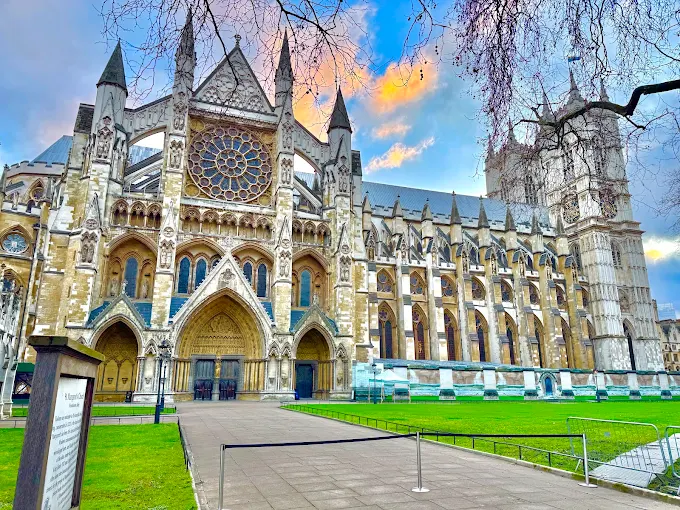
Westminster Abbey Gothic Grandeur Meets Royal Coronation History
The organ swells—a deep, resonant vibration that shakes the Purbeck marble columns—as late afternoon light filters through the 13th-century stained glass, casting ruby and sapphire pools across the stone floor. You stand in the nave of Westminster Abbey at 4:30 PM, watching dust motes dance in the beams while the scent of ancient wax and cold limestone fills the air. Since 1066, this sacred space has hosted 39 coronations, including Queen Elizabeth II in 1953 and King Charles III in 2023, binding the monarchy to the church in an unbroken chain of ceremony. The vaulted ceiling rises 31 meters above you, a masterpiece of English Gothic architecture commissioned by Henry III in 1245 to honor Edward the Confessor. Every chapel holds a story: poets buried in the floor, kings resting in effigy, and unknown warriors lying in solemn state. In 2026, as modern life accelerates around this historic nucleus, visiting Westminster Abbey means stepping into a sanctuary where time slows to the rhythm of chanting monks and ticking centuries. This place matters now because it remains the spiritual anchor of the nation, preserving memory in stone while continuing to serve as a living house of prayer.
Why Westminster Abbey Embodies Sacred Royal Tradition
Westminster Abbey solves the architectural need for a coronation church that balances royal grandeur with monastic humility—a duality achieved through centuries of modification. When Henry III ordered the reconstruction in 1245, he introduced the French Rayonnant Gothic style to England, utilizing pointed arches and flying buttresses to support the immense weight of the stone vaulting. The nave spans 156 meters in length, making it one of the longest in the United Kingdom, while the Chapter House features an octagonal design with no central pillar, a structural feat accomplished using wooden beams hidden within the roof trusses. The Abbey serves as the burial site for 17 monarchs, including Henry V and Elizabeth I, alongside literary giants like Charles Dickens and Geoffrey Chaucer in Poets' Corner. Engineering-wise, the West Towers were completed in 1745 by Nicholas Hawksmoor, adding a Baroque contrast to the medieval structure, while the North Transept rose window dates to 1250. Today, the Abbey Church of Saint Peter operates as a Royal Peculiar, meaning it falls under the direct jurisdiction of the monarch rather than a diocese. This unique status ensures Westminster Abbey remains not merely a tourist attraction but a working church where daily services continue alongside visitor tours, blending spiritual duty with historical preservation in a manner few institutions sustain.
The Best Time to Experience Westminster Abbey
For optimal lighting and reduced congestion, plan your visit between May 15–June 20 or September 10–October 15, when London's temperatures range from 15–22°C (59–72°F) and daylight extends until 8:30 PM. Arrive precisely at 9:30 AM when doors open to beat the tour groups that typically converge by 11:00 AM; the morning light illuminates the High Altar beautifully without the glare of midday sun. Evening visits during summer offer a serene atmosphere during Choral Evensong at 5:00 PM, though access is limited to worshippers rather than tourists. Avoid July 25–August 31 when school holidays bring peak crowds, pushing entry queues beyond 45 minutes despite timed tickets. Winter months (December–February) offer shorter lines but temperatures drop to 2–8°C (36–46°F), and the stone floor becomes uncomfortably cold underfoot. For special events, verify the liturgical calendar at westminster-abbey.org before booking, as state funerals or royal services can close the Abbey to tourists unexpectedly. Tuesday and Thursday mornings typically see the lowest visitor volume, allowing for quieter contemplation in the cloisters.
Approximate Budget for a 7-Day Trip (2026)
London remains a premium destination, but staying in Zone 1 near Westminster or Victoria provides immediate access to the Abbey without excessive transport costs. These 2026 estimates assume a moderate travel style, accounting for approximately 3-4% annual inflation in UK hospitality and attraction pricing.
- Accommodation: £120–£260 per night for a double room in Westminster, Victoria, or Pimlico; budget hostels from £40/night in nearby Earl's Court
- Food: £45–70 per day—breakfast £8–12 (full English or café pastry), lunch £13–19 (pub sandwich or market stall), dinner £24–39 (mid-range restaurant with wine); traditional afternoon tea £45
- Transportation: £8.10 daily cap for Zones 1-2 using contactless/Oyster; Heathrow Express £25 one-way or Elizabeth Line £12.80; Black Cab from Victoria £15 minimum
- Attractions: Westminster Abbey £33.00 adult, Queen's Diamond Jubilee Galleries £5.00, Houses of Parliament £29.50, London Eye £32.00, Thames cruise £18.00
- Miscellaneous: Souvenir guidebook £15, Abbey postcards £5, rain jacket (essential) £35, travel insurance £45 for week
Total for 7 days: £1,250–1,800 per person (excluding international flights)
7 Essential Westminster Abbey Experiences
- Coronation Chair Viewing: Stand before the 700-year-old oak chair commissioned by Edward I in 1296. Located in the nave near the High Altar, this is the oldest piece of furniture in the UK still used for its original purpose; look for the graffiti carved by Westminster schoolboys in the 18th century on the wooden base.
- Poets' Corner Exploration: Walk the south transept floor where literary giants like Dickens, Tennyson, and Hardy are buried. Look up to see memorial stones for those buried elsewhere, including Jane Austen and the Brontë sisters; the acoustics here amplify whispered readings of poetry beautifully.
- Queen's Diamond Jubilee Galleries: Climb to the triforium level 16 meters above the floor for panoramic views of the nave vaulting. Open 10:00 AM–4:00 PM (separate ticket), this space displays royal artifacts and abbey treasures; the narrow walkways offer a unique perspective on the Gothic architecture unseen from ground level.
- Chapter House Visit: Enter the octagonal room where the Dean and Chapter still meet daily. Built in 1250, the floor tiles are original medieval encaustic; listen for the echo of your footsteps on the stone, which demonstrates the room's perfect acoustic geometry designed for clear speech.
- Choral Evensong Attendance: Join the service at 5:00 PM (Monday–Friday) or 3:00 PM (Sunday) to hear the choir sing in the quire. Entry is free for worshippers; arrive by 4:30 PM to secure a seat in the wooden stalls, experiencing the Abbey as a living church rather than a museum.
- High Altar Reflection: Stand before the reredos designed by Sir George Gilbert Scott in 1867. The gold mosaic glimmers in the candlelight; take a moment of silence here to acknowledge the coronations and royal weddings that have occurred at this specific spot over nine centuries.
- Cloisters Garden Walk: Stroll the covered walkways surrounding the central garden where monks once meditated. The herbaceous borders bloom from May to September; sit on the benches beneath the arches to read your guidebook away from the main nave crowds.
3 Hidden Gems Most Travelers Miss
- Pyx Chamber: This 11th-century vaulted room beneath the Chapter House served as the royal treasury where tax money was stored in wooden boxes called pyxes. Access is limited to guided tours booked via Abbey Special Tours (tours@westminster-abbey.org) at least 4 weeks ahead; tours run monthly on select Saturdays, limited to 15 people, £40 per person. The thick Norman walls and iron-bound door offer a tangible sense of medieval security.
- College Garden: Known as the oldest garden in England, this enclosed space dates back to 1065 and is open to the public on Tuesdays 10:00 AM–4:00 PM (summer only). Enter through the Dean's Yard gate on Great Smith Street; look for the medieval mulberry tree planted in 1609. Most tourists walk past the gate unaware that this serene oasis exists behind the Abbey walls.
- Undercroft Museum: Located beneath the Chapter House, this space houses ancient artifacts including 13th-century wax effigies of monarchs. Access is included with the Abbey ticket but often overlooked; visit at 3:30 PM when crowds thin to examine the funeral effigy of Henry V without obstruction. The dim lighting preserves the delicate wax faces while creating an atmospheric connection to medieval mortality.
Cultural & Practical Tips
- Dress code: Shoulders and knees must be covered as this is a working church; avoid shorts, sleeveless tops, or revealing clothing. Security may deny entry to those dressed inappropriately, so carry a scarf or light jacket for coverage.
- Photography rules: Interior photography is strictly prohibited to protect the sanctity of worship and light-sensitive artifacts. Phones must be silenced and stored; professional cameras require prior written permission from the Abbey media office.
- Security screening: All visitors pass through airport-style security; prohibited items include large bags (nothing over 45×35×25cm), sharp objects, and food. Allow 20–30 minutes for security checks during peak summer hours (10:00 AM–1:00 PM).
- Local phrases: Learn "Mind the gap" (watch the step), "Cheers" (thanks), and "Queue here" (wait in line); Londoners appreciate visitors who respect pedestrian flow on the narrow cloister walkways.
- Weather preparedness: The stone floor retains cold even in summer; wear comfortable shoes with good grip as polished marble can be slippery. Carry a compact umbrella (£10 from Boots pharmacy) for the queue outside.
- Accessibility: The Abbey offers step-free access via ramps and lifts; wheelchair users receive priority entry—contact access@westminster-abbey.org 48 hours ahead to arrange assistance. The Jubilee Galleries involve stairs and are not wheelchair accessible.
- Respectful behavior: Keep voices lowered at all times; this is a place of prayer. Do not touch the monuments or lean on the tombs; many stones are centuries old and fragile beneath the wear of millions of visitors.
Conclusion: Travel with Reverence, Not Just Checklists
Westminster Abbey demands more than a snapshot beneath the vaulted ceiling—it invites you to contemplate the weight of history resting on those Gothic arches. When you walk the nave in 2026, tracing the same stones worn by coronation processions, you're not just ticking a sightseeing box; you're witnessing the delicate balance between preserving sanctity and sharing heritage. As overtourism pressures London's landmarks, visiting mindfully means respecting the spiritual nature of this institution, understanding that behind the tourist tickets, daily prayers rise toward the vaulting. Walk slowly across the stone floor, noticing how the light changes on the Purbeck marble; listen to the organ not as background music but as worship. Leave only footprints on the tiles, take only memories of stained glass light, and carry forward the understanding that places like this endure because each generation chooses to honor them—not as museums, but as living testaments to faith, monarchy, and the enduring human spirit.