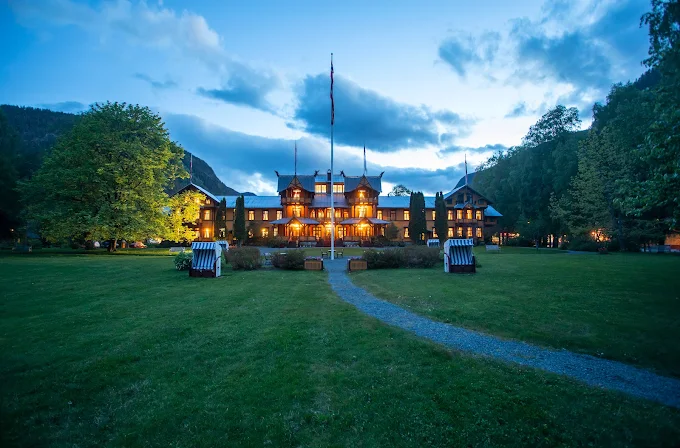
Dragondalen Telemark: Where Wild Valley Meets Local Legend
I step onto the trailhead at 10 a.m. on a Sunday in early September. Pine scent hangs thick in cool air. A stream runs clear beside the path. I pay nothing to enter and walk beneath the canopy. Sunlight filters through branches in shifting patches. This is Dragondalen—the Dragon Valley—deep in Telemark's interior. Local stories tell of a dragon that made its lair here long ago, guarding treasure and shaping the land itself. No one can prove the tale is true. Standing beneath these steep wooded slopes, you do not need proof. The valley feels old enough to hold secrets far older than any written record.
Why Dragondalen Matters
Dragondalen sits within a protected landscape where ancient woodland, wild streams, and narrow gorges remain largely untouched. The name has drawn visitors for generations, but the valley has resisted large-scale development. It stays a place where nature sets the pace and local folklore is still shared from one generation to the next. The dragon legend is more than a tourist hook—it reflects how people here have long understood and respected the wild land around them. That quiet integrity is fragile. Foot traffic is increasing, and some sections of trail show clear erosion. Signage remains sparse. You can easily lose your way if you wander off the main path.
The Best Time to Experience Dragondalen
Late June through mid-September offers the easiest walking and fullest access. Air sits between 10°C and 18°C (50°F–64°F). Days stay long and streams run clear. Mid-July brings wild berries along the path. May and early June see readings at 6°C–12°C (43°F–54°F). New growth freshens the forest, but higher ground can still hold slippery patches of lingering snow. Autumn arrives from mid-September onward; foliage turns gold and crimson, and the valley feels entirely yours. Winter brings -5°C to 1°C (23°F–34°F). Snow covers everything and access becomes difficult. Only experienced visitors with proper gear should attempt the valley then. For colour and quiet, visit late September. For berries and warmest weather, visit July on a weekday.
Approximate Budget for a 7-Day Trip
Prices are per person in Norwegian kroner.
- Accommodation: 800–1,250 per night in nearby cabins or Bø/Rjukan. 5,600–8,750 total. Simple wilderness lodge 350–500 per night.
- Food: Main meal 160–250. Breakfast 75–120. 1,050–1,450 cooking meals or packing lunches. 1,900–2,700 eating out mostly.
- Transport: Train from Oslo to Notodden or Bø 290–390 one way. Local bus or taxi to trailhead 150–250 one way. Car rental 450–700 daily. 600–900 for the week.
- Attractions & Extras: Valley entry free. Guided folklore walk 150–200. Coffee and waffles at nearby farm 45–85.
- Miscellaneous: 400 for unplanned costs.
Total: 7,800–13,500 kroner. The small roadside kiosk nearest the valley charges nearly double for snacks and water compared to shops in the nearest town. Pack everything you need and save significantly.
Essential Dragondalen Experiences
- Walk the Main Valley Trail. Follows the stream upward through forest and meadow. You pass small cascades, mossy rock faces, and stands of old pine. It takes 2–3 hours one way. Skip this after heavy rain; sections become slippery and unmarked side paths vanish under water.
- Listen to the Dragon Legend. Local guides share the full story—where the creature lived, what it guarded, and how the valley got its name. Details change with each teller. That is part of the tradition. Join a guided walk if you can; stories feel different when spoken aloud.
- Find the "Dragon's Lair" Overlook. A short but steep climb leaves the main path. Views extend down the entire length of the valley. On clear days you see far across Telemark toward distant peaks. Allow 30 minutes extra for the climb.
- Follow the Stream to the Upper Meadow. The path narrows and grows rougher beyond the waterfall. Fewer people continue this far. The valley opens into grassy ground ringed by trees. It feels quiet and remote. Go only if you are comfortable navigating faint trails.
- Pick Wild Berries in Late Summer. Blueberries and cloudberries ripen along sunlit edges. They taste sweeter than anything sold in shops. Know what you are picking; some berries are not edible. Leave plenty for wildlife and other visitors.
- Walk at Dawn or Dusk. Most people arrive mid-morning and leave by late afternoon. Early or late, the forest sounds change—birds, wind, running water. You will likely have the trail to yourself.
- Visit the Local Farm Kiosk. At the valley entrance, a family-run spot serves waffles and berry juice. They share stories freely. It feels like stepping into someone's kitchen. Arrive before 3 p.m.; they close early and keep short hours.
Hidden Gems Most Travelers Miss
- West Slope Side Trail. Halfway up the main path, an unmarked turn leads uphill through birch. No viewpoint sign exists. You see the valley from a quieter angle. Proceed carefully; the path fades in places.
- Old Stone Bridge and Clearing. Downstream from the trailhead, hidden by trees. It once served a farm long gone. Moss-covered stones and wildflowers mark the spot. Most people walk straight past without noticing.
- Evening Light Through the Gorge. Return after most visitors leave. Low sun slants through the narrow upper valley. Rock and tree glow warm. Photographs do not capture how peaceful it feels.
- The "Dragon's Lair" at Midday. Everyone visits in morning. The sun hits the rock face directly then and the view looks flat. Come late afternoon; shadows define the valley shape exactly as locals have described it for centuries.
Cultural & Practical Tips
- Stay on marked paths. Erosion is visible in several places. Shortcuts destroy fragile ground and make the trail harder for everyone. Follow the waymarks even if it seems longer.
- Carry a map and compass or downloaded offline route. Phone signal vanishes quickly deeper into the valley. Do not rely solely on your device.
- Tell someone your plans. Let accommodation hosts or family know which trail you take and when you expect to return. Few people pass this way, and help arrives slowly.
- Pack out everything you pack in. No bins exist inside the valley. Leave no trace. This place stays beautiful because people treat it with care.
- Respect private land near the entrance. The trail crosses working farm ground. Close gates behind you and keep dogs on lead.
- Wear sturdy waterproof boots. Ground stays damp even when it does not rain. Roots and stones become slippery when wet.
- Tipping is not expected. If a guide or host shares stories warmly, a small gift or extra kindness means more than money.
Essential Visitor Information
Location & Access: Telemark, between Bø and Rjukan. Exact directions from local visitor centres or accommodation. Drive 2 hours west from Oslo via E134. Train from Oslo to Bø or Notodden then bus or prearranged taxi onward. Public transport to the trailhead is limited; rental car offers most flexibility.
Tickets & Booking: Valley entry free. Guided folklore walks 150–200 kroner per person, book through local visitor centre or farm kiosk. No advance booking needed for independent walking.
Operating Hours: Open year-round, daylight hours only. No formal gates or closing times. Winter access for experienced visitors only; check locally before setting out.
Visit Duration: Minimum half day for lower valley. Full day for upper trail and overlook. Two days lets you explore slowly and visit nearby villages.
Family Suitability: Good for ages 6+. Main path is gentle but uneven. Upper sections and side climbs are steeper. No facilities exist; carry water and snacks.
Timing: Mid-September offers best colour and fewest people. Weekdays stay quietest; weekends draw local visitors.
Highlights: Main valley trail, stream and cascades, dragon legend, upper meadow, dawn or dusk walk, farm kiosk.
Nearby & Day Trip: Bø Sommerland 30 minutes. Heddal Stave Church 40 minutes. Gaustatoppen 45 minutes. Rjukan–Notodden heritage site 45 minutes. All make comfortable half-day or full-day visits.
Conclusion: Travel with Wonder, Not Just Footsteps
Dragondalen does not have polished signs or busy facilities. Some paths are rough. Some stories shift with every telling. That is exactly what makes it special. This is a place where nature and legend still weave together. Walk gently. Listen well. And remember—the dragon does not need to be real to be true. The valley itself is the real treasure, waiting quietly for those who come with respect.
Comments
Post a Comment