
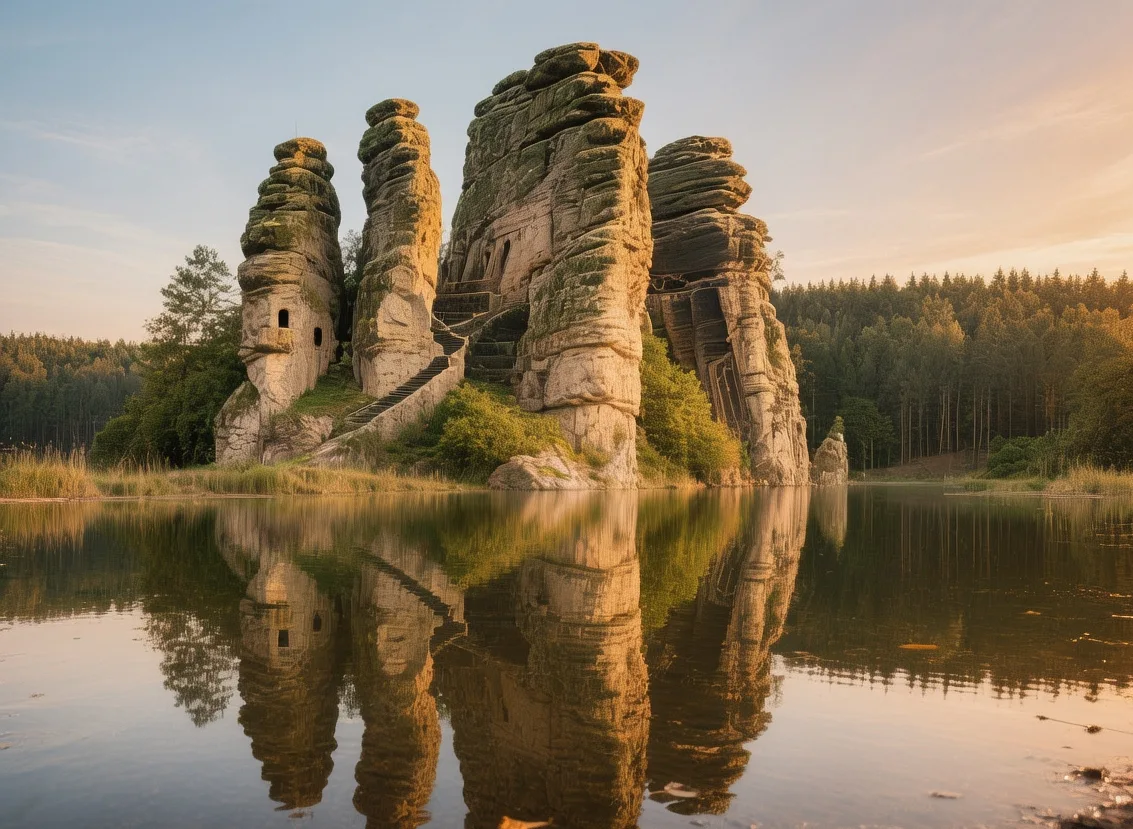
Externsteine Rock Formation Ancient Stone Meets Teutoburg Mysticism
5:00 AM breaks over the Teutoburg Forest—a dense woodland stretching 150 kilometers through North Rhine-Westphalia, hiding the towering pillars of the Externsteine rock formation directly beneath the canopy. The air bites at 7°C (45°F), sharp with the scent of damp pine needles, wet sandstone, and the earthy perfume of the forest waking from sleep. Dawn light spills over the jagged peaks, illuminating the geological monument that has stood sentinel over the region since the Cretaceous period. This is not merely a cluster of rocks; it is a spiritual landmark rising 137 feet (42 meters) above the forest floor, standing guard over the legacy of medieval hermits and pagan myths since the 12th century. You hear the distant call of a raven; the mist lifts 50 meters from the pond, exposing the pillars that have survived ice ages and ideological appropriation. In 2026, as natural sites face threats from overtourism, the Externsteine rock formation matters now more than ever. It remains a tactile connection to mystery—a place where you walk the same paths as pilgrims and poets, where the past isn't behind glass but carved in the stone, and where the rhythm of life follows the sun's arc rather than the clock. This is why you visit.
Why Externsteine Rock Formation Embodies Geological Mystery
The Externsteine rock formation isn't merely a tourist attraction—it's a testament to erosional forces and cultural layering spanning 120 million years. Formed during the Cretaceous period, these sandstone pillars were sculpted by weathering into their current dramatic shapes. The site solved a fundamental spiritual need in the Middle Ages: to provide a secluded hermitage for religious devotion, evidenced by the rock chapel carved directly into the stone in the 12th century. The engineering is remarkable: a spiral staircase cut into the rock leads to the upper chamber, featuring an oculus aligned with the summer solstice sunrise. In the 20th century, the site was misappropriated by Nazi ideology, adding a complex layer to its history that is now addressed through education. In 2026, the area welcomes over 500,000 visitors annually, making it one of the most visited natural monuments in Germany. The Externsteine-Stiftung manages the site, maintaining the structural integrity of the sandstone against erosion and climbing damage. When you walk these paths, you traverse a layered history: Geological formation in 100 million BC, Medieval chapel in 1150, and a contemporary commitment to preservation that defines the future of Externsteine rock formation heritage. The stone doesn't care about your schedule; it demands you respect its silence.
The Best Time to Experience Externsteine Rock Formation
The Externsteine rock formation reveals its true character during specific windows, though it is accessible year-round for determined travelers. The definitive experience occurs between May 18 and June 12. During this window, you'll experience average temperatures of 14–19°C (57–66°F), with daylight stretching until 9:00 PM—ample time for evening hikes after the day-trippers leave. The spring light filters beautifully through the pine canopy, creating dramatic contrasts between shadow and illumination on the sandstone. The summer tourist hordes haven't yet descended. For those seeking quieter contemplation, weekday mornings (7:00–8:30 AM) offer a more intimate atmosphere with significantly fewer crowds at the base of the pillars.
Autumn—specifically September 15–October 5—provides a second peak experience, with temperatures cooling to 9–14°C (48–57°F) and the forest leaves turning russet and gold. This is when you'll witness the dramatic mist rising from the pond. However, avoid June 20–22 unless you enjoy navigating crowds: this Summer Solstice period sees visitor numbers swell to 20,000 daily, with the paths congested and accommodation prices inflating by 100%. Winter (December–February) brings its own magic but limited services—the stairs can be icy, and daylight shrinks to 8:00 AM–4:30 PM. For real-time opening hours and event schedules, verify current information at www.externsteine.de before your visit. Always check the weather forecast; rain makes the sandstone slippery.
Approximate Budget for a 7-Day Trip (2026)
The region accommodates various budgets, though 2026 prices reflect post-pandemic tourism recovery and 3.5% German inflation. The following breakdown assumes mid-range travel with comfortable accommodations, local dining, and comprehensive exploration including public transport. Prices are listed in Euros (€), the local currency.
- Accommodation: €100–€160 per night for a double room in a traditional guesthouse or boutique hotel in Horn-Bad Meinberg or Detmold. Luxury properties command premium rates (€300–€500), while hostels offer better value (€40–€60 per bed).
- Food: €45–€70 per day. Breakfast (€12–€18) typically includes bread rolls, cold cuts, and local cheese. Lunch (€15–€25) at forest huts: Westphalian Ham, or a Schnitzel. Dinner (€30–€50) featuring regional specialties: Pumpernickel, fresh river fish, or Reibekuchen.
- Transportation: Hanover Airport train to Horn-Bad Meinberg: €45 single. VGM day pass (Zone 1): €11.50. Taxi from station to site: €30. Car rental recommended for flexibility: €50 per day.
- Attractions: Externsteine Entry: Free. Tower Climb: €6. Visitor Center: €8. Hermannsdenkmal: €5. Hiking Trail: Free.
- Miscellaneous: Hiking map: €8. Local wool scarf: €50–€100. Guidebook: €15. Travel insurance: €40–€60 for the week.
Total estimated cost for 7 days: €1,400–€2,000 per person (based on double occupancy)
Seven Essential Externsteine Rock Formation Experiences
- Climb the Spiral Staircase: Ascend the rock at 9:00 AM. The steps are narrow and stone. The view from the top is panoramic. The wind is strong on the platform; hold your camera steady. The light here is clear and bright. Allow 45 minutes for the climb. It is the definitive physical connection.
- Visit the Rock Chapel: Enter the chamber at 10:30 AM. The space is carved from sandstone. The temperature inside is constant. View the medieval relief. The acoustics amplify the guide's voice. Allow 30 minutes for observation. It contextualizes the site within religious history.
- Walk the Forest Trail: Stroll the path at 12:00 PM. The scent of pine is overwhelming. The view of the pillars is stunning. The trail is well-marked and wide. Wear sturdy boots; the roots are uneven. Allow 2 hours for the hike. It is a tangible connection to the landscape.
- See the Visitor Center: Explore the exhibits at 2:00 PM. The history is geological and cultural. The temperature inside is constant. View the archaeological finds. The displays are educational and clear. Allow 60 minutes to read the displays. It offers the definitive scientific connection.
- Visit the Hermannsdenkmal: Travel to the monument at 3:30 PM. The statue is 53 meters high. The view over the forest is panoramic. The wind is strong at the base. The history is nationalistic and complex. Allow 90 minutes for the visit. It is a tangible connection to the region.
- Dine at a Forest Hut: End your afternoon at a Hütte (open 10:00 AM–6:00 PM). Order a Schnitzel (€20) in the rustic room. The building dates to 1900 but blends with the historic style. Speak to the staff about the rocks. The terrace overlooks the forest. This is the traditional end to an Externsteine exploration.
- Watch the Sunset: Return to the pond at 7:00 PM (summer closing varies). The stone glows orange under the evening light. The shadows of the pillars stretch across the water. You can hear the distant traffic from the valley. The city noise diminishes. It is the best time for exterior photography. The formation frames the sky perfectly. Allow 30 minutes for a full circuit.
Three Hidden Gems Most Travelers Miss
- The Velmerstot: While most visitors focus on the rocks, this highest point sits nearby. Access: Hike 3 kilometers from the site (open dawn to dusk). It is overlooked because it requires effort, but the view is stunning. Best visited: Afternoon for the light. No facilities; bring food. It offers a perspective on the ridge.
- The Silberbachquelle: Located in the forest, this spring dates to ancient times. Access: Follow the signs from the parking lot. Open 24 hours. It's overlooked because it is small, but the water is beautiful. Insider tip: Bring a bottle to fill. Benches available for rest. It provides context for local resources.
- The Altenburg Ramparts: Beneath the shadow lies a hillfort from 1000 BC. Access: Walk 1 kilometer from the rocks. Open during daylight hours. It is overlooked because it is subtle. The earthworks are original. It's special because you see the prehistoric defense. Best visited: Morning for the quiet. A unique cultural heritage experience.
Cultural & Practical Tips
- Respect the Site: Do not climb on the rocks. This is not just etiquette; it is law. Leave no trace; take all litter home. Keep voices moderate in the chapel.
- Photography Guidelines: Photography is permitted on the trails. Tripods are allowed but cannot obstruct paths. Do not use flash inside the chapel. Respect other visitors; no photography during guided tours. Silence your phone completely.
- Booking Strategy: Hotel rooms sell out during Solstice. Book online at least 30 days in advance. Arrive 15 minutes before your tour slot. Late arrival may result in denied entry without refund. Print your ticket or save it to your phone wallet.
- Learn these Local Terms: "Hallo" (Hello), "Felsen" (Rocks), and "Wanderweg" (Hiking Trail). Locals appreciate the correct terminology. When greeting, say "Hallo" rather than "Hello." It shows respect for German heritage.
- Weather Preparation: The Teutoburg Forest is changeable. Even on sunny days, carry a rain jacket. The temperature drops 1°C for every 100 meters of elevation. Dress in layers. Check the forecast; rain is common.
- Accessibility Information: The visitor center is wheelchair accessible. However, the rock climb has stairs. Virtual tours are available online. Contact the visitor team at +49 5234 900 for specific access queries before traveling.
- Support Conservation: Consider donating to the "Externsteine Foundation" upon exit. Maintenance costs €2 million annually. Purchase souvenirs from the shop rather than online to support the local revenue stream. Membership offers discounts on tours.
Conclusion: Travel with Stewardship, Not Just Tourism
The Externsteine rock formation in 2026 asks something different of you than mere sightseeing. This landscape—stone, forest, resilient—has witnessed millennia of geological silence, human ritual, and ideological conflict. But it also sustains a living memory of mystery that keeps the region unique. To travel here responsibly means understanding that you're not just visiting a monument but entering a sanctuary maintained by strict preservation protocols. Walk softly on these paths; they've carried hermits, soldiers, tourists, and locals for generations. Choose the quiet morning visit over the crowded afternoon. Listen to the wind in the pines, not just the noise. Donate to the conservation fund, not just the gift shop. Let the Externsteine rock formation change you, not just entertain you. In an age of mass tourism and digital detachment, this is how we ensure that 2026's visitors don't become the generation that loved this place to death. The pillars will still be here in 2126—if we treat them not as a backdrop to consume but as a legacy to protect.