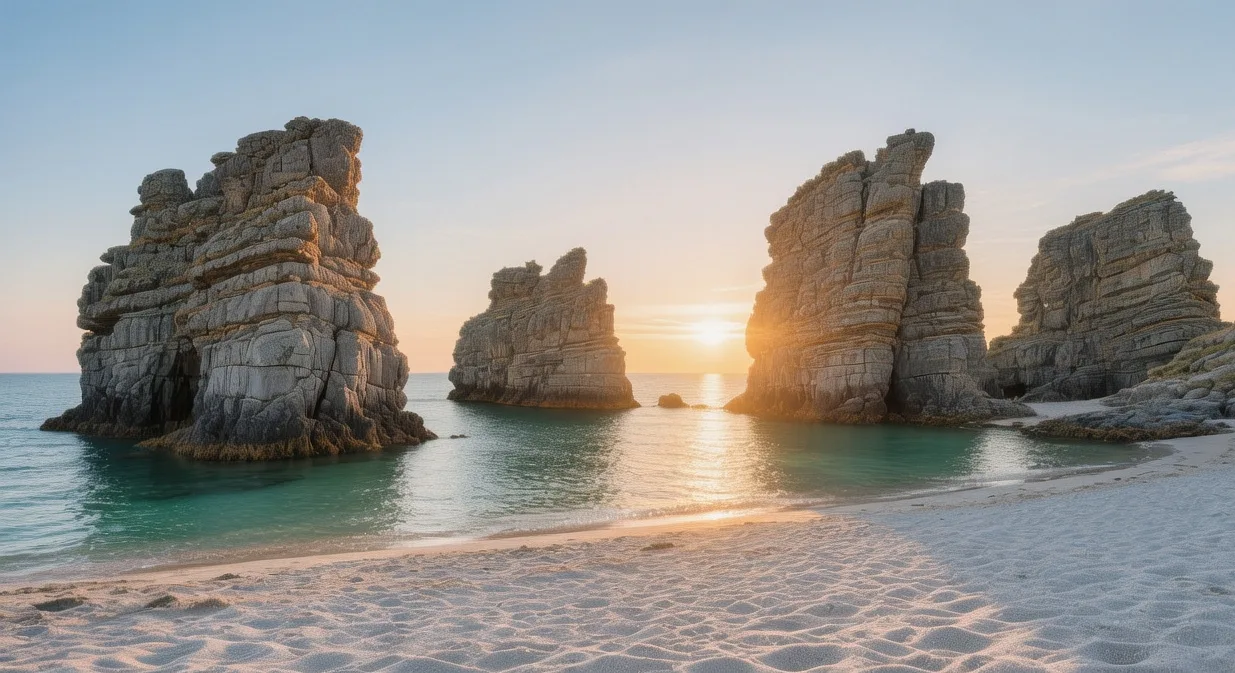
Fårö Island Beaches: Where Limestone Meets Shore
I walk the water’s edge at nine in the morning in mid-July. Limestone slabs lie flat and smooth beneath my feet. The water is shallow and clear, pale turquoise near the shore. I paid nothing to be here — all Fårö beaches are public and free. A few fishermen stand far out, casting lines. The air feels still and warm. By midday the sun reflects hard off the rock. There is almost no shade. Families spread towels on the narrow strips of sand. Voices carry across the water. Arrive early and you walk for miles without seeing another soul.
Why Fårö Island Beaches Matter
Fårö sits north of Gotland, separated by a narrow sound. The geology is distinct — ancient limestone rising from the sea, shaped by ice and wind into dramatic formations called raukar. These pillars stand along many shores, creating a landscape found nowhere else in Sweden. For centuries people lived from fishing and farming here. Ingmar Bergman chose the island as his home and filming location, drawing attention to its quiet power. Today visitors come for the beaches — golden sand, smooth rock, and calm shallow water. But fame brings pressure. Narrow roads fill with cars. Fragile limestone cracks under heavy footfall. Some beaches feel crowded in peak season. The beauty is real — but it is also delicate.
The Best Time to Experience Fårö Island Beaches
Mid-June through mid-August brings the warmest weather — 16°C to 21°C (61°F to 70°F). Water reaches 18°C — ideal for swimming. Days stretch long and light lingers late. Crowds gather between 11:00 and 15:00, especially weekends. Late August into September offers golden light and quieter shores — 12°C to 17°C (54°F to 63°F). The water stays pleasant and the light softens. This is the best all-around season. October through April the beaches stand exposed — -2°C to 4°C (28°F to 39°F). Ice forms along the edges. The landscape feels stark and entirely empty. May is fresh and green — 7°C to 13°C (45°F to 55°F). Wildflowers carpet the meadows leading down to the shore. Avoid Midsummer weekend. Every accessible beach fills. Weekdays before 10:00 give you the island at its most peaceful.
Approximate Budget for a 7-Day Trip
Most visitors base themselves on Fårö or travel daily from northern Gotland. Here is what one week costs for two people.
- Accommodation: 9,100 SEK — 7 nights cottage on Fårö at 1,300 SEK nightly. Staying in Fårösund on Gotland cuts this to roughly 6,650 SEK and adds daily ferry crossings.
- Food & Drink: 840 SEK per person daily. Groceries on Fårö cost more than on mainland Gotland. Packing supplies from Visby saves noticeably.
- Transport: Gotland–Fårö ferry free. Round-trip train Stockholm–Visby 1,400 SEK. Car rental on Gotland 550 SEK per day — essential for reaching remote beaches.
- Beaches & Sites: Free entry everywhere. Small museum 160 SEK total. Bergman exhibition 200 SEK total.
- Miscellaneous: 750 SEK for coffee, ice cream, and local crafts.
Total estimate: 12,240 SEK for two people. One warning: beachside café kiosks charge premium rates for drinks and snacks. Pack your own picnic and enjoy it at the water instead.
Essential Fårö Island Beaches Experiences
- Langhammars Shore and Rauk Field — Famous limestone pillars rising from water and sand. Golden beach stretches beside them. Walk between the formations at water level. Skip this at high tide; paths flood and rocks become slippery.
- Sudersand Long Beach — The widest stretch of sand on the island. Shallow calm water, gentle slope. Ideal for swimming and children. Arrive early — parking fills fast and space becomes scarce.
- Digerhuvud Northern Point — Rugged and exposed. Great stacks of weathered stone. The Baltic stretches endless ahead. No swimming here — deep water and strong currents. Go for sunrise and wide open views.
- Fannaråklint Sheltered Cove — Smaller, softer, protected. Warmest water on the island. Fine sand and smooth rock shelves. Best for quiet afternoons. Few visitors find it — the road is narrow and unsigned.
- Helgumannen Evening Light — Faces west. The sun sets directly over the water. Limestone glows gold. Stay until the last light fades. Most people leave before this moment.
- Bergman Film Locations by Shore — Several beaches served as backdrops. Recognize the wide horizon and pale light. No markers exist — you feel the atmosphere. Walk quietly and imagine.
- Winter Silence at the Water’s Edge — Snow covers the shore. Ice clings to the raukar. The sea looks grey and vast. Check road conditions before travelling; some tracks close. You may have the whole beach to yourself.
Hidden Gems Most Travelers Miss
- Askviken Quiet Bay — Short walk from the nearest road. No facilities, no crowds. Sand mixed with smooth stone. The water stays calm. Bring everything you need — there is nothing here.
- Between Langhammars and Digerhuvud — Unmarked paths follow the shoreline. Small coves, hidden rock pools, views across open water. You walk through low forest and meadow. Wear sturdy shoes.
- Lilla Karlsö View from the South Shore — On clear days the smaller island appears on the horizon. Few visitors face this direction. The light feels different — softer, warmer, slower.
- Main Roadside Cafés — Convenient but overpriced. Drive five minutes to the village centre. Same pastries and coffee for 25% less.
Cultural & Practical Tips
- Stay off fragile limestone crust. The surface takes thousands of years to form. One footprint damages it permanently. Walk on rock, sand, or designated paths only.
- Respect private land. Many beaches are bordered by working farms. Keep to the shoreline and do not enter fields or meadows.
- Pack water and shade. Most beaches have no trees or shelter. Sun reflects hard off pale rock and water. Heat builds fast even on mild days.
- Check tide times. Water rises quickly around raukar and narrow passages. You can get cut off from shore. Plan your return route before wandering far.
- Drive slowly. Roads are narrow, gravel-surfaced in places, and shared with cyclists and animals. Pull over to let others pass.
- Do not climb the raukar. They are unstable and protected. Falling stones have injured visitors. Admire and photograph from ground level.
- Visit more than one beach. Each has its own character — golden sand, rugged rock, sheltered cove, open horizon. The island reveals itself slowly.
Essential Visitor Information
Location & Access: Fårö Island, north of Gotland. Free ferry from Fårösund — 8 minutes crossing. Drive from Visby 1 hour 30 minutes. Fly to Visby then rent car or take bus.
Tickets & Booking: All beaches free. No entry fees anywhere. Ferry no ticket required — just drive on.
Operating Hours: Beaches open 24 hours daily all year. No closing time. Some remote roads unploughed in winter.
Visit Duration: Minimum 1 full day. Recommended 3–5 days to explore different shores at different times of day.
Family Suitability: Excellent. Shallow calm water, gentle slopes, sandy stretches. No shade means careful sun protection. Supervise near deep channels and currents.
Timing: Best season: late August to early September. Best time of day: 08:00–10:00 or 18:00 onward.
Highlights: Langhammars raukar, Sudersand beach, Digerhuvud sunrise, Fannaråklint cove, Helgumannen sunset, Askviken bay.
Nearby & Day Trip: Fårösund 15 km — northern Gotland port. Gotska Sandön National Park — ferry from Fårösund. Visby 90 km — medieval walled town. Lärbro 40 km — historic churches and stone formations.
Conclusion: Travel with Light Feet, Not Just Cameras
Fårö’s beaches are not endless golden sand. They are something rarer — pale rock, ancient stone pillars, and clear water shaped by ice and time. You will find exposed shores with no shade, narrow roads that fill fast, and prices higher than on mainland Gotland. You will also find a landscape that touches you quietly — where the light is softer and the horizon feels wider. Will you walk gently, so this place stays as beautiful for those who come after?
Comments
Post a Comment