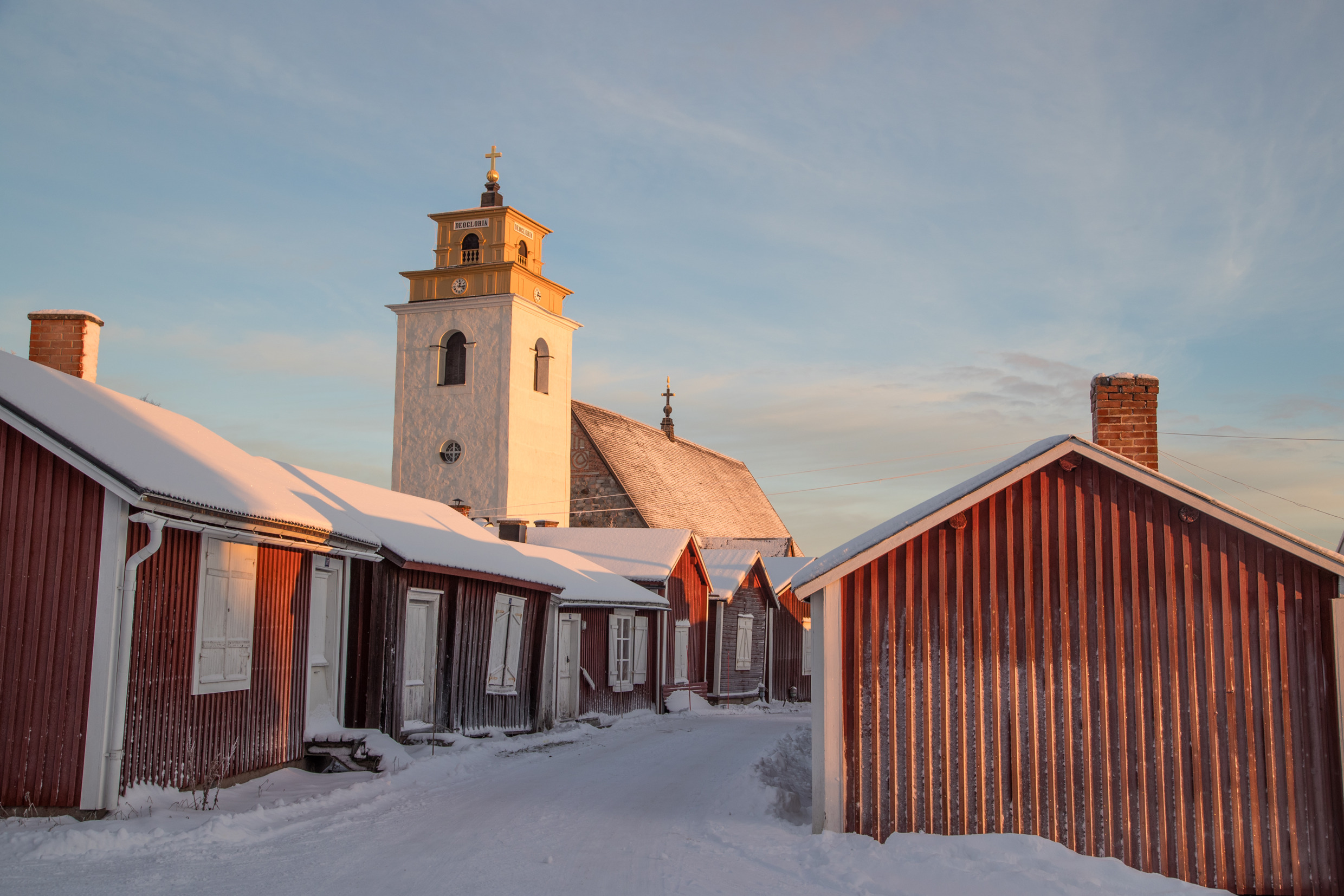
Gammelstad Church Town: Where Tradition Meets Timber
I walk the gravel lane behind the church at ten past ten on a crisp morning in late August. Sunlight filters through birch leaves. The air smells of dry earth and wood smoke from a cottage chimney. I paid 120 SEK for entry to the visitor center exhibition. Walking the lanes costs nothing at all. Red-painted cottages line every path — four hundred of them, small, simple, built to sleep worshippers who could not journey home the same day. The stone church rises at the center, unchanged since 1492. Yet many cottages sit empty most of the year. The tradition survives, but the rhythm has shifted. You see it in the quiet alleys. They wait for weekends and festivals, when life returns.
Why Gammelstad Matters
Gammelstad began as Luleå’s original center. The church stood complete by 1492, built of stone hauled great distances. When land rose after the ice age, the harbor became too shallow. In 1649, the town moved ten kilometers toward the coast. The church stayed. The cottages stayed. What remained became the best-preserved church village in Scandinavia, listed as a UNESCO World Heritage Site in 1996. These small houses were not homes. They were overnight lodging for people traveling thirty, fifty, more kilometers to attend services. Parish law once required presence. The journey took days. So they built rooms, gathered, traded, met, and built community. Today the cottages belong to families who use them as summer retreats. That continuity matters deeply. But some locals worry the site risks becoming a display rather than a living place. Newcomers buy cottages and renovate them beyond recognition. The look remains similar; the connection shifts.
The Best Time to Experience Gammelstad
Mid-June through mid-August brings the longest days — 12°C to 20°C (54°F to 68°F). Midnight sun means light past 22:00. Visitor center stays open late. Guided walks run daily. Late August and September offer 8°C to 15°C (46°F to 59°F), fewer crowds, and golden light on the red wood. October through April sees -15°C to -2°C (5°F to 28°F). Snow covers roofs and paths. The atmosphere turns quiet and stark. Days stay very short. Some cottages open for winter festivals, but visitor hours shorten. May feels transitional — melting snow, bare ground, unpredictable weather. Avoid mid-July weekends if you prefer calm. Day tours arrive between 11:00 and 13:00. Weekday mornings before 10:30 give you the lanes almost to yourself.
Approximate Budget for a 7-Day Trip
Most visitors base themselves in Luleå and travel the short distance to Gammelstad repeatedly or combine it with archipelago and coastal exploration. Here is what one week costs for two people.
- Accommodation: 950 SEK per night × 7 nights = 6,650 SEK. Staying in a rented cottage inside Gammelstad costs roughly 1,200 SEK nightly but books months ahead.
- Food & Drink: 380 SEK per person daily. Eating at the visitor center café pushes this up. Packing a picnic from Luleå saves noticeably.
- Transport: Round-trip flight Stockholm–Luleå approx 1,900 SEK. Bus from Luleå to Gammelstad 40 SEK per ride. Car rental 700 SEK per day including insurance.
- Attractions: Free entry to church town lanes. Visitor center exhibition 240 SEK total. Guided walking tour 300 SEK total.
- Miscellaneous: 600 SEK for coffee, snacks, and handcrafts.
Total estimate: 11,800 SEK for two people. One warning: souvenir items at the visitor center carry premium pricing. Walk to the small craft shop in nearby Gammelstad village for similar work at fairer rates.
Essential Gammelstad Experiences
- Walk the Church Town Lanes — Narrow gravel paths wind between cottages. Each house bears its owner’s name and dates. The layout has stayed consistent for centuries. Skip this if you cannot manage uneven ground; cobblestones and loose gravel appear everywhere.
- Step Inside Nederluleå Church — Built 1492, largest medieval stone church in northern Sweden. Wood altarpiece and carved pulpit feel intimate despite the scale. Services happen regularly; access may be limited during mass.
- Visitor Center Intro & Film — Explains how and why this place existed. The short film sets the scene perfectly. Do this first; the lanes make far more sense afterward.
- Hägnan Open-Air Museum — Traditional farmsteads and workshops moved here from surrounding countryside. You see how people lived beyond the church weekends. It sits five minutes away and feels quieter than the main site.
- Hilltop Overlook at Sunset — A gentle climb behind the church gives full view of the layout. Rows of cottages radiate outward from the stone spire. This is the classic photograph perspective.
- Summer Evening Guided Tour — Local guides share family stories and history beyond the facts. You learn which cottages belong to which lineages and how gatherings work today.
- Winter Lantern Walk — December or January, snow deep, lantern light along the lanes. The church glows against dark sky. Dress extremely warmly; wind cuts through the open space fast.
Hidden Gems Most Travelers Miss
- The Northern Stables — Six original wooden buildings where horses once stayed. They sit slightly apart and see far fewer visitors. The smell of old timber and hay lingers still.
- Bagargränd Lane — One of the narrowest and most photographed alleys. Most people glance and move on. Stop and look at the door hinges and locks — many date to the 1800s.
- Old Harbor Site — Walk ten minutes down the slope toward the vanished inlet. Markers explain why the town moved. Quiet and almost entirely empty.
- Main Visitor Center Café — Convenient but overpriced. Bring a blanket and sit on the church lawn with your own food. The experience improves and costs less.
Cultural & Practical Tips
- Respect privacy. Many cottages remain private property. Do not open doors, peek through windows, or step onto porches.
- Check church hours before planning. Services, weddings, and funerals close the nave to visitors without warning. Schedule flexibility helps.
- Arrive before 10:30 on weekdays. By mid-morning tour buses fill the parking lot and quiet vanishes.
- Wear sturdy flat-soled shoes. Gravel and uneven ground make heels impractical and dangerous. Winter paths ice over fast; gripping soles matter.
- Do not expect shops or cafes inside the lanes themselves. Everything sits at the edge. Buy water and snacks in Luleå or at the center before walking.
- Visit in late afternoon if you can. Day groups leave by 15:00. The light softens and the cottages turn warm red in the sun.
- Winter daylight is short. Plan your visit between 10:00 and 14:00 December through February. Outside those hours, darkness is total.
Essential Visitor Information
Location & Access: Kyrktorget 1, 954 33 Gammelstad. 10 km northwest of Luleå city center. Drive 12 minutes via road 973. Bus number 9 from Luleå Smedjegatan runs every 15–20 minutes, ride takes 15 minutes. Train to Luleå from Stockholm takes roughly 14 hours; flight takes 1 hour 20 minutes.
Tickets & Booking: Free access to church town lanes and exterior paths. Visitor center exhibition 120 SEK adults. Guided tours 150 SEK per person. Booking recommended for winter lantern walks.
Operating Hours: Church town site always accessible. Visitor center: June 11–August 16 daily 10:00–18:00; August 17–31 10:00–16:00; rest of year daily 12:00–16:00. Church hours vary — generally 11:00–15:00 outside service times.
Visit Duration: Minimum 2 hours. Recommended half-day including Hägnan museum and overlook.
Family Suitability: Excellent for all ages. Mostly flat ground. Strollers work but gravel slows them. Restrooms and changing facilities at visitor center.
Timing: Best season: June–September. Best time of day: before 10:30 or after 15:00.
Highlights: Nederluleå Church, church town cottages, visitor center film, hilltop overlook, Hägnan open-air museum.
Nearby & Day Trip: Luleå city center 10 km. Luleå archipelago boat tours 15 minutes drive. Jokkmokk and the Sami region 2 hours north. Haparanda-Tornio border town 1 hour 30 minutes east.
Conclusion: Travel with Respect, Not Just Cameras
Gammelstad is not a stage set. It is an ancient gathering place that still functions. You will find empty lanes in midwinter, higher prices at the center café, and occasional limited access to the church. You will also find a place that preserves something rare — a pattern of living built on distance, faith, and community. The cottages wait. They do not demand your attention. They simply endure. Will you walk slowly enough to feel the quiet between the walls?
Comments
Post a Comment