Geirangerfjord: Where Deep Waters Meet Mountain Peaks
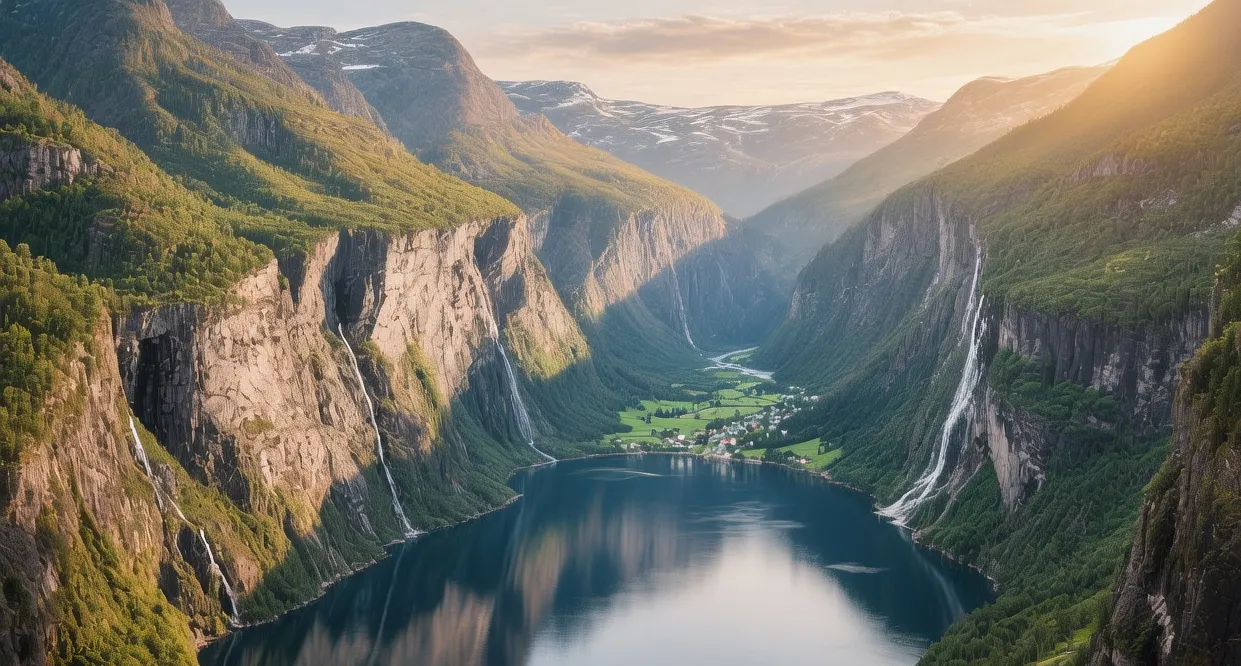
I stand on the upper deck of the ferry at 10:15 in the morning. The village of Geiranger slips astern and the fjord narrows. Mountains rise more than 1,500 meters straight from the water, their slopes streaked with white ribbons of falling water. The surface below runs so deep it looks almost black in shadowed reaches. Seven distinct streams plunge down one wall; across the way, a single tall cascade drops toward the surface. The boat glides forward quietly. Its wake spreads soft and wide behind us. I lean against the railing. The air feels still and held between high rock faces. No photograph captures the enclosure. You have to stand in the channel to feel how close the world rises on every side.
Why Geirangerfjord Matters
Geirangerfjord is a protected arm of the western Norwegian fjord system and listed as a UNESCO World Heritage Site. It represents one of the most complete and untouched examples of glacial landscape anywhere — carved by ice over millions of years and largely unchanged since the last ice retreated. Remote mountain farms once clung to ledges and valleys visible only from the water; families lived here for generations, cut off from roads and connected only by boat. Today, those same steep slopes draw visitors from every continent. That fame brings real pressure. Summer days see multiple cruise ships anchored at once, their tenders shuttling crowds ashore. Some travelers spend just hours here before moving on. They leave with a snapshot but no sense of the isolation that shaped this place for centuries.
The Best Time to Experience Geirangerfjord
Late May through mid-September offers the most reliable conditions. Daytime temperatures sit between 12°C and 18°C, or 54°F and 64°F. Nights drop to 7°C or 45°F. June brings fullest flow to every waterfall as mountain snow melts; the streams run wide and white. July and August have the longest days but also the heaviest crowds. September sees fewer people and clearer air; distant peaks stand sharp and the light turns soft and golden. October through April, daylight shortens dramatically. Some ferry services reduce or pause entirely. Temperatures hover around 2°C to 6°C or 36°F to 43°F. Winter has quiet beauty, but fewer hours to explore. Go on the earliest morning departure if you want calm water and empty decks. By midday, cruise ships arrive and the water fills with vessels.
Approximate Budget for a 7-Day Trip
Prices below are per person, in euros, based on staying in Geiranger or nearby Hellesylt.
- Accommodation: 640 – Guesthouse or cabin in Geiranger or Stranda. Staying right on the waterfront costs significantly more.
- Food: 370 – Breakfast included, packed lunches, and casual dinners. Eating every meal at the ferry terminal or cruise area restaurants pushes this higher.
- Transport: 240 – Ferry tickets, local buses, and connecting rides. Rental car starts around 385 for the week and gives flexibility to reach high viewpoints like Dalsnibba.
- Attractions & Access: 145 – Fjord cruise, Dalsnibba road access, and short walks. The scenic ferry crossing itself is the main expense here.
- Miscellaneous: 140 – Waterproof outerwear, warm layers, snacks, and water.
Total: Around 1,535 euros
The dedicated luxury cruise is heavily overpriced. Take the regular ferry between Geiranger and Hellesylt instead — it passes every major waterfall and viewpoint along the same route for roughly 40 percent less. The souvenir shops near the terminal also charge steep premiums. Buy postcards and wool goods in Stranda or Ålesund before traveling into the fjord.
Essential Geirangerfjord Experiences
- Cross the full fjord by ferry – The journey from Geiranger to Hellesylt takes roughly one hour and passes every landmark. Stand on the correct side going out; the opposite view opens on the return. Skip this if you dislike confined water spaces; Dalsnibba and Flydalsjuvet offer sweeping perspectives from high ground.
- See the Seven Sisters and Suitor waterfalls – Seven distinct streams plunge down one wall; across the water stands a single tall cascade. Local stories name him the Suitor, courting the sisters from across the channel. The boat slows to let you watch them fall.
- Visit Flydalsjuvet viewpoint – A short drive or walk from Geiranger leads to this stone platform. It looks directly down the fjord with the village and entrance framed below. Early morning light catches the water and turns it deep blue.
- Drive or travel up to Dalsnibba – The mountain road climbs 1,500 meters above sea level. From the top, you look straight down the full length of the fjord. It feels vast and distant, a thin ribbon winding between peaks.
- Walk the historic farm trails – Paths lead up from the village toward abandoned mountain farms. Ruins and stone terraces remain where families lived until the slopes became too isolated. The views back down open slowly as you climb.
- Watch light change late in the day – Most visitors leave by late afternoon. If you stay, the sun angles low and one side glows amber while the other falls into shadow. The water shifts color with every passing minute.
Hidden Gems Most Travelers Miss
- Knivsflå farm ruins – Perched on a ledge behind the Seven Sisters, this settlement was inhabited until the early 20th century. You see stone walls and house foundations from the water; a small boat landing offers closer access to very few visitors.
- Storsæterfossen pull-off – A quiet roadside stop partway up the Dalsnibba road. A broad waterfall drops beside the path and few people pause here. The water spreads wide and mist drifts across the trail.
- Sunset from the south shore – A narrow road follows the opposite side of the fjord from Geiranger. One gravel pull-off faces directly west. The main waterfront viewpoint in Geiranger is overrated. Walk five minutes past the ferry terminal and you have unobstructed sunset views with almost no one else around.
Cultural & Practical Tips
- Book ferry and accommodation early. July and August sell out weeks ahead. Same-day rooms or tickets are rarely available.
- Wear fully waterproof gear. Spray from waterfalls and sudden rain showers soak decks and paths fast. Wind accompanies nearly every change in weather.
- Do not lean over railings. The water is deep and cold; currents run stronger than they look. Stay behind barriers and hold on when taking photos.
- Keep voices low. Sound carries exceptionally far across still water. You will hear the falls roar more clearly when everyone stays quiet.
- Check weather and road status before setting out. Fog can cover the fjord completely within minutes; mountain roads may close temporarily in sudden storms.
- Carry water and snacks. Options in Geiranger are limited and expensive. Pack enough for your time on the water and on trails.
- Respect abandoned farm sites. Remains are fragile and part of the area’s heritage. Do not move stones or walk on old foundations.
Essential Visitor Information
Location & Access: Geirangerfjord, Møre og Romsdal. Reach Geiranger by road from Stranda or Ålesund, or by ferry from Hellesylt. Rental car gives the most freedom to visit viewpoints and quieter stops. Express bus and tour buses serve the area daily in summer; these are convenient but follow fixed schedules.
Tickets & Booking: Geiranger–Hellesylt ferry one-way approximately 420 NOK. Round-trip approximately 700 NOK. Dalsnibba road access is free. Booking ahead recommended June through August. You can also buy tickets at terminal counters subject to availability.
Operating Hours: The fjord stays accessible year-round. Ferry service runs daily May through September with reduced schedule October through April. Mountain roads including Dalsnibba close in winter due to snow.
Visit Duration: Minimum 3 hours for the ferry crossing and quick viewpoint stop. 5 to 7 hours lets you drive up to Dalsnibba, walk a trail, and stay through sunset.
Family Suitability: Excellent for children of all ages. Open decks and changing scenery hold attention well. Restrooms available on board and in Geiranger. Strollers work on paved paths but not on steep mountain trails.
Timing: May through July offers fullest waterfall flow and longest daylight. Take the earliest ferry for calm water and empty decks.
Highlights: The full fjord ferry crossing, Seven Sisters and Suitor waterfalls, Flydalsjuvet framed view, Dalsnibba mountain panorama, and sunset color shifts across the water.
Nearby & Day Trip: Trollstigen scenic mountain road is roughly 1.5 hours’ drive away. Ålesund with its Art Nouveau waterfront is roughly 2.5 hours by road and ferry. Valldal with fruit farms and quiet valleys makes a relaxed half-day stop. Stranda offers ski and hiking terrain with panoramic views toward the fjord.
Conclusion: Travel with Respect, Not Just Sightseeing
Geirangerfjord is not a backdrop. It is a living, working landscape where people lived in isolation for centuries. The best moments here come when you slow down — standing quietly on deck, watching light move across rock faces, or imagining life on those remote ledges. Respect the quiet. Arrive early. Look past the postcard. When you leave, ask yourself what you remember. Is it just a list of falls, or a deeper sense of how small we stand in places time has barely touched?
Comments
Post a Comment