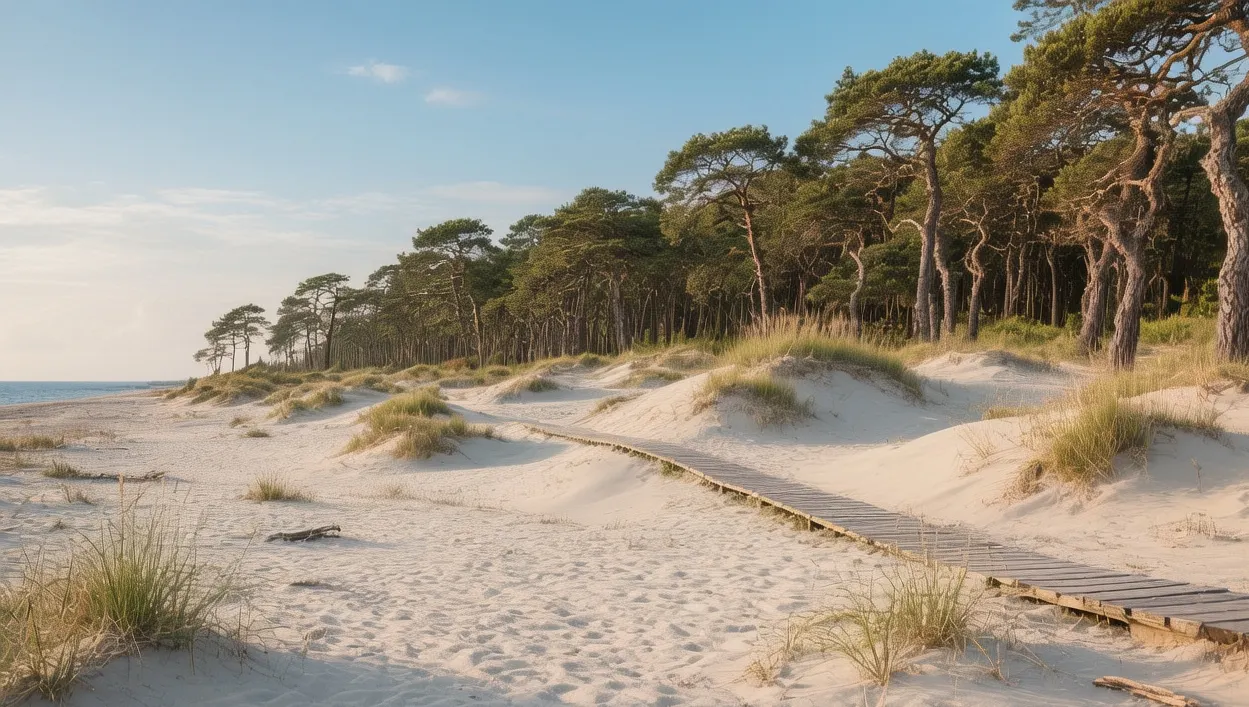
Gotska Sandön: Where Sand Forest Meets Open Sea
I step off the ferry at quarter past ten on a bright July morning. The air feels different — sharper, saltier, lighter. I paid 160 SEK for the return boat fare from Fårösund. The island rises ahead — low, pale, covered in pine and dune grass. No cars meet the dock. No shops line the path. Just a sign and a quiet trail leading into trees. The beach stretches endless to the east — fine white sand, shallow clear water, almost empty. By midday the sun burns strong and the exposed shore offers no shade. Come early or stay late. That is how you find the real peace here.
Why Gotska Sandön Matters
Gotska Sandön sits isolated in the Baltic Sea, roughly forty kilometres northeast of mainland Gotland. It covers barely thirty-six square kilometres — mostly sand, dunes, ancient pine forest, and bog. For centuries people lived here — fishermen, seal hunters, farmers — leaving traces that still show. In 1909 it became one of Sweden’s first national parks, set aside to protect its unique landscape. The sand has drifted and shaped the forest over thousands of years. Trees grow twisted and sparse. The shoreline shifts constantly. This place is not static; it moves. Yet that remoteness brings strain. Fresh water is scarce. No large-scale settlement survives. Some visitors expect facilities and find none. The island offers wildness, not comfort.
The Best Time to Experience Gotska Sandön
Mid-June through mid-August brings the warmest weather and longest days — 16°C to 21°C (61°F to 70°F). Water warms to 18°C — perfect for swimming. Ferry services run most frequently. Crowds are largest on sunny weekends. Late August into September offers golden light and quieter shores — 12°C to 17°C (54°F to 63°F). Seaweed washes ashore in places; the water stays pleasant. October through April the island feels entirely alone — -1°C to 5°C (30°F to 41°F). Ferries run rarely or not at all. Winter visits need careful planning and permission. May is fresh and green — 8°C to 13°C (46°F to 55°F). Birds return; wildflowers bloom. Avoid Midsummer weekend. The small island feels full. Weekdays give you miles of sand to yourself.
Approximate Budget for a 7-Day Trip
Most visitors base themselves in Fårösund on northern Gotland or camp on the island. Here is what one week costs for two people.
- Accommodation: 4,200 SEK — 3 nights hostel in Fårösund plus 4 nights camping on Gotska Sandön. Staying entirely on Gotland cuts this to roughly 5,600 SEK and means daily travel.
- Food & Drink: 770 SEK per person daily. No restaurant exists on the island. You must pack everything in and carry waste out. Buying supplies in Fårösund costs more than larger towns.
- Transport: Return ferry 320 SEK total. Bus across Gotland from Visby 360 SEK round-trip. Car rental on Gotland 500 SEK per day — recommended for reaching the departure port.
- Park & Facilities: Free entry. Camping fee 100 SEK per night. Guided nature walk 150 SEK per person.
- Miscellaneous: 600 SEK for fuel, extra supplies, and contingency.
Total estimate: 8,350 SEK for two people. One warning: last-minute ferry tickets cost double. Book weeks ahead in summer. The limited seats vanish fast.
Essential Gotska Sandön Experiences
- Walk the Eastern Shore at Dawn — Miles of white sand stretching north and south. No buildings, no roads, no noise. Just waves and wind. The sun rises straight out of the sea. Skip this if you dislike open exposed ground; there is nowhere to hide.
- Wander the Ancient Pine Forest — Inland, trees grow from deep sand. Trunks twist, branches spread low. Moss and lichen carpet the floor. The air feels still and quiet. Stay on marked paths; fragile ground erodes easily.
- Climb the Highest Dune — Barely thirty metres above sea level, yet the view spans nearly the whole island and out to open water. Sunset from here feels endless. Sand shifts underfoot; the climb is gentle but tiring.
- Swim the Sheltered Northern Cove — Calmer than the east shore. Shallower water, soft sand, some wind protection. Ideal for children and cooler days. Check tides; the water recedes far and leaves wide flats.
- Follow the Old Settlement Trail — Ruins of cottages, wells, and fields from when people lived here year-round. Foundations, stone walls, apple trees still blooming. Quietly moving history. Few visitors walk this far.
- Night Sky Watch — Almost no light pollution. Stars spread thick and clear. Milky Way stretches bright overhead. Bring warm clothes; nights feel cool even in July.
- Leave No Trace — Not a separate activity but the most important rule. Carry everything out. Nothing stays behind. The island survives only because people respect it. Skip any habit that would disturb the ground or wildlife.
Hidden Gems Most Travelers Miss
- Western Shoreline Path — Rockier, wilder, facing the open sea. Fewer people walk here. Views toward distant Gotland on clear days. Wind blows stronger here than anywhere else.
- Inland Bog Boardwalk — Crosses open wetland. Sundew, butterwort, dragonflies, and birds. The quietest part of the island. Short but worth every step.
- Old Fisherman’s Lookout — Small cleared rise near the north tip. Weathered marker post. No sign. Local people watched for boats from here. Almost no one visits now.
- Main Beach Café — Does not exist. Packing your own food means you eat well and save money. Eating out in Fårösund before you leave costs far less than expected prices on the island — which do not exist.
Cultural & Practical Tips
- Book the ferry early. Seats are limited. Summer weekends sell out six weeks ahead. Last-minute travellers often cannot go at all.
- Carry all your own water. No reliable fresh source exists on the island. Bring more than you think you need. Heat and wind dehydrate faster than you expect.
- Carry everything out. No waste collection exists. What you pack in must come out. Leave nothing behind. This rule protects the park.
- Check weather before you travel. The ferry can be cancelled in high wind. The forecast can change fast. Be ready to adjust plans.
- Stay on marked trails. The sand and topsoil are thin and fragile. Footprints last for years. Cutting paths causes lasting damage.
- Respect wildlife. Seals rest on rocks and sand. Nesting birds keep low profiles. Keep your distance. Do not approach or try to feed them.
- Wear sturdy shoes. Sand gets everywhere. Paths mix soft ground, roots, and loose stones. Flip-flops work on the beach but fail everywhere else.
Essential Visitor Information
Location & Access: Gotska Sandön National Park, Baltic Sea. 40 km northeast of Fårösund, northern Gotland. Ferry from Fårösund — 1 hour 15 minutes. Bus from Visby to Fårösund — 1 hour 30 minutes. Fly to Visby then connect. Private boat access permitted only at designated harbour.
Tickets & Booking: Park entry free. Return ferry approx 160 SEK adult. Camping 100 SEK per night. Booking essential for ferry; no walk-on seats guaranteed.
Operating Hours: Park open all year. Ferry service mid-May to mid-September most frequent. Winter service limited or suspended. Day visitors must depart on last ferry.
Visit Duration: Minimum half-day round-trip. Recommended 2–3 days to explore fully and experience sunrise and sunset.
Family Suitability: Excellent for older children. Flat terrain, safe water, open space. Limited shelter and no facilities mean extra preparation needed. Supervise near water and dune edges.
Timing: Best season: late August to early September. Best time of day: sunrise 04:00–06:00 or evening 19:00–21:00.
Highlights: Eastern shore dawn, pine forest walk, highest dune sunset, old settlement trail, night sky, western shore path.
Nearby & Day Trip: Fårösund 40 km — northern Gotland port. Fårö Island 25 km — film locations and unique limestone. Visby 90 km — medieval walled town. Gotland northern coast — fishing villages and sea stacks.
Conclusion: Travel Light, Leave Nothing
Gotska Sandön does not give you comfort. It gives you space — wide, open, unhurried, and fragile. You will find no shops, no restaurants, no paved roads, and limited shelter. You will find crowds on sunny weekends and ferry cancellations when the wind picks up. You will also find a place that has remained largely unchanged for centuries — where sand and forest meet and time moves slowly. Will you treat it gently, so others may find the same peace?
Comments
Post a Comment