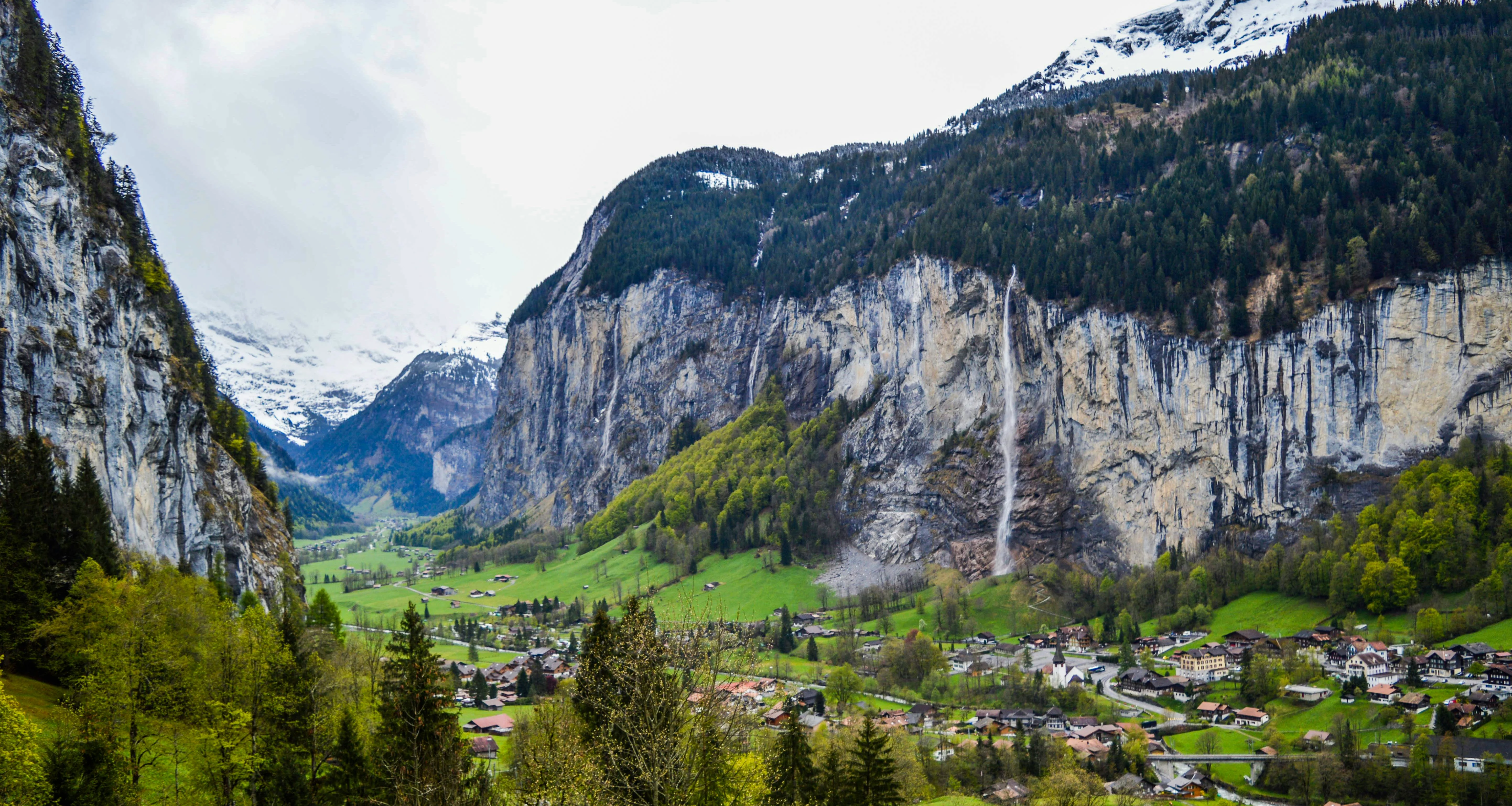
Grindelwald: Where Alpine Village Meets Mountain Giants
I walked the main lane just after eight in the morning. Wood smoke curled from chalet chimneys. The air smelled of pine and damp earth. Above the rooftops, the Eiger north face rose sheer and grey, catching the first sun. The Wetterhorn and Mättenberg stood guard at the valley head, snow glowing pale gold. A wooden signpost pointed uphill toward First and down toward the railway station. No tour groups had arrived yet. The only sound came from a cowbell ringing somewhere high on the slope.
Why Grindelwald Matters
Settled for at least seven hundred years, Grindelwald grew from scattered farmsteads into one of the Alps' earliest tourist destinations. By the 19th century, mountaineers and writers travelled here to confront the peaks that tower above the valley floor — the Eiger, Mönch, and Jungfrau system to the south, the Wetterhorn and Schreckhorn to the east. Cables cars and railways opened access to high meadows and glaciers, turning the village into a gateway to some of Europe's most dramatic terrain. Today it balances working alpine community with busy resort. That tension shows. New large hotels sit beside traditional wood chalets. The main road fills with traffic by mid-morning. And while the surrounding mountains remain spectacular, the village centre itself feels increasingly built-up — some streets look indistinguishable from any busy ski town, losing the quiet charm that first drew visitors here.
The Best Time to Experience Grindelwald
The village stays accessible year-round. June through September brings green meadows, wildflowers, and longest days. Valley temperatures 12°C to 22°C (54°F to 72°F). July and August feel warmest but busiest. September through mid-October delivers golden light, thinner crowds, and clear sharp views — 8°C to 18°C (46°F to 64°F). This is often the best window. December through March offers snowy silence and crisp air, -4°C to 4°C (25°F to 39°F). The village feels festive but crowded at peak holiday times. April and May hold quieter days, occasional fresh snow on upper slopes, and blooming valleys below. Arrive before 9:00 a.m. to walk the lanes without crowds. Evening after 6:00 p.m. brings back the quiet.
Approximate Budget for a 7-Day Trip
- Accommodation: 980 CHF — Chalet-style guesthouse or mid-range hotel
- Food: 490 CHF — Mountain hut meals, cheese fondue, bakery stops
- Transport: 280 CHF — Local buses, cable cars, train connection from Interlaken
- Activities: 210 CHF — First summit gondola, glacier walk, small guided hike
- Miscellaneous: 140 CHF — Hiking map, rain jacket, souvenirs
Total: 2,100 CHF
Premium guided packages cost nearly double what you pay independently. Cable car tickets bought individually work out cheaper than bundled passes unless you ride every day. Walk the lower trails and village paths — they are free — and save your budget for the high mountain journeys.
Essential Grindelwald Experiences
- Ride the gondola to First — The cabin climbs above treeline to open meadows with views straight down the valley and across to the Eiger. The walk from the station to the lake takes twenty minutes. Skip this if you fear heights; sections of the cliffside trail feel exposed.
- Walk the glacier gorge trail — A narrow path follows the stream carved by retreating ice. High rock walls close in above you. The water runs milky turquoise. It shows the raw force that shaped this valley.
- View the Eiger north face from the upper village — Walk uphill past the church. The full face dominates the skyline. It looks impossibly steep and still, silent and immense. You see why it has drawn and defeated climbers for more than a century.
- Explore the lower village lanes — Side streets branch off the main road. Wooden chalets carry flower boxes and carved eaves. They feel quiet and unchanged. Most visitors never walk these lanes.
- Take the train to Kleine Scheidegg — The narrow-gauge railway climbs from the valley floor between meadows and rock outcrops. You see the village shrink behind you and the peaks draw closer. It is a slow, gentle journey that reveals the valley's scale.
- Watch sunset from the west meadows — The sun dips behind the ridge and the peaks turn pink then deep rose. The village lights flicker on one by one. It feels peaceful and entirely timeless.
Hidden Gems Most Travelers Miss
- The footpath from the church uphill toward Bussalp runs through forest and meadows. It opens to a viewpoint looking down over the whole village and across to the Eiger. It takes forty-five minutes and almost no one walks it.
- Behind the old schoolhouse, a small bench shaded by pine trees faces the Wetterhorn. It catches morning sun and stays completely quiet. You can sit and watch the light move across the peak for an hour undisturbed.
- The lower path along the river runs parallel to the main road but hidden by trees. You hear the water more than the traffic. It connects neighbourhoods and gives a different, softer perspective of the valley.
- The main high street is overrated. It feels busy and lined with identical souvenir shops. The lanes uphill from the church hold the real character — quieter, greener, and far more authentic.
Cultural & Practical Tips
- Respect property boundaries. Many chalets have private gardens and balconies. Keep to public paths and do not photograph people's homes without permission.
- Wear sturdy walking shoes. Paved lanes turn to gravel higher up. Trails can be uneven and slippery after rain or morning dew.
- Check cable car closing times carefully. Last descents can be surprisingly early, especially in autumn and winter. Missing one means an hour-long walk downhill.
- Keep voices low after 10:00 p.m. The village sleeps early. Loud talking or music from balconies draws immediate complaints.
- Do not feed wildlife. Marmots and deer are common but should remain wild. Feeding them harms their health and alters their natural behaviour.
- Carry cash. Some small cafés and family-run guesthouses do not accept cards, especially outside peak season.
Essential Visitor Information
Location & Access: Grindelwald, 3818 Bernese Oberland, Switzerland. GPS coordinates 46.6247° N, 8.0484° E. Train from Interlaken Ost takes roughly 55 minutes direct. Bus services also connect. By road from Interlaken follow the valley road; parking available at village edges.
Tickets & Booking: Village access: free. Gondola to First: approx 64 CHF adult round-trip. Glacier gorge: 12 CHF. Train to Kleine Scheidegg: from 34 CHF one-way. Swiss Travel Pass covers local trains and some discounts. Booking recommended for peak season.
Operating Hours: Village always accessible. Shops Monday–Saturday 9:00 a.m.–6:00 p.m., closed Sunday. Cable cars run roughly 8:00 a.m.–5:00 p.m. with seasonal variations.
Visit Duration: Minimum 1 full day. Allow 3 to 4 days to explore village, high meadows, gorge, and nearby passes without rushing.
Family Suitability: Very family-friendly. Gentle riverside paths, open meadows, and short hikes suit all ages. Restrooms at stations and central locations. Keep children close near fast-flowing river and steep trail edges.
Timing: Visit September for perfect weather, golden light, and thinner crowds. Arrive early or stay late to experience the village without day-trip crowds.
Highlights: Eiger north face views, First gondola and high meadows, glacier gorge trail, traditional chalet lanes, sunset from west meadows, railway to Kleine Scheidegg.
Nearby & Day Trip: 30 minutes by train to Lauterbrunnen. 45 minutes to Interlaken. 1 hour to Jungfraujoch. 1.5 hours to Schilthorn. 2 hours to Bern Old Town.
Conclusion: Travel with Presence, Not Just a Camera
Grindelwald has stood beneath these peaks for centuries. It has seen mountain guides and poets, farmers and families, generations who lived with the mountains rather than just visiting them. You can rush through in a day and leave with photos. Or you can slow down. Notice how the light changes on the Eiger face. Listen to the cowbells drifting down from the slopes. Think about the people who built these chalets and walked these paths long before tourists arrived. What will you remember — the sights you saw, or the quiet feeling of being small beneath something immense?
Comments
Post a Comment