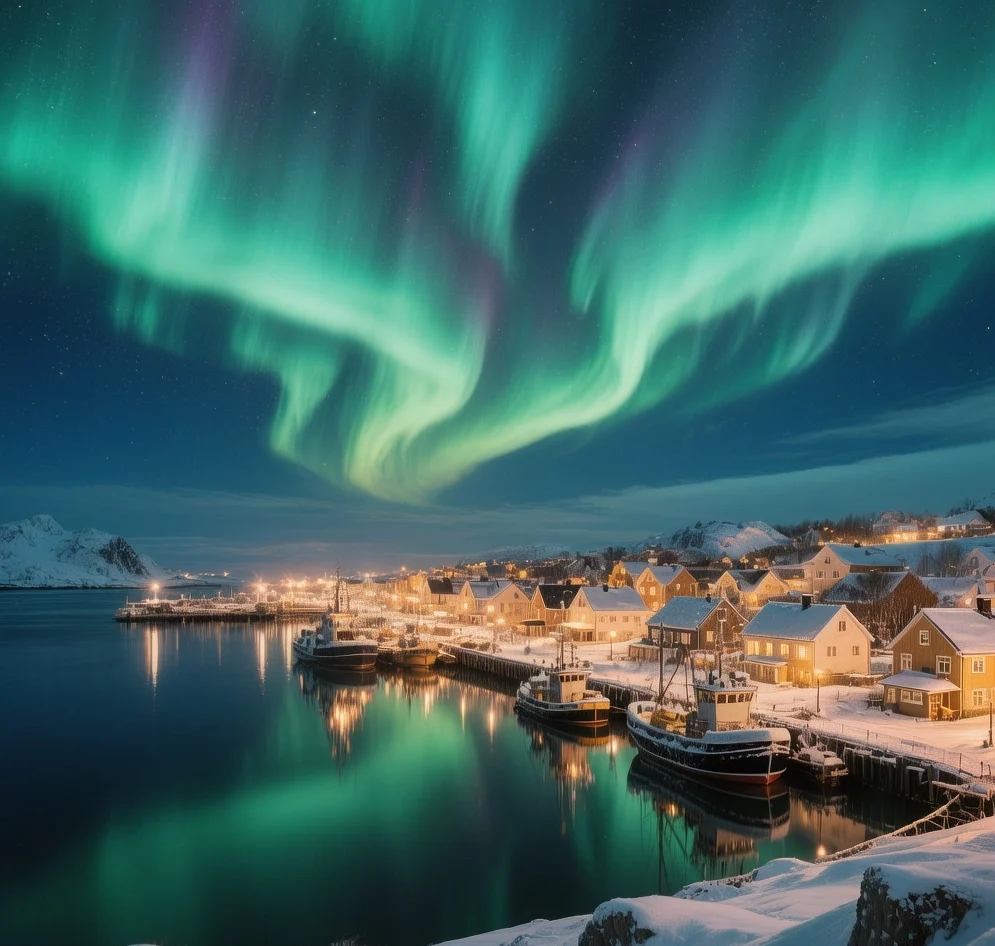
Hammerfest Northern: Where Island Life Meets the Edge of Europe
I walk along the harbour at 11 a.m. in mid-July. The sun sits high but the air stays cool. A fishing boat unloads crates of cod. Seagulls circle low. I paid one hundred and ten kroner for coffee and a fresh waffle at a waterfront cafe. The town spreads across a rocky island, connected to the mainland by a single bridge. Bare slopes rise behind every street. No trees grow tall here. The wind shapes everything — the buildings, the ground, the way people live. You feel how far north you stand with every step.
Why Hammerfest Northern Matters
Hammerfest claims title as the northernmost town with more than ten thousand inhabitants on mainland Europe. Settlement here stretches back through centuries of coastal fishing and trade. Official town status came in 1789. For generations, this was a gateway to the Barents Sea — cod, herring, and whale products sailed south to Europe. World War II brought destruction. German forces retreated and burned most buildings in 1944. The town was rebuilt stone by stone afterward. Today gas and energy projects sit alongside fishing and tourism. The town faces real limits. Space runs short. The island is small. Housing is scarce and expensive. Some visitors find the rebuilt architecture plain. It is not old stone you see everywhere else. It is functional, practical, built fast under hard conditions. That is part of the story, not a flaw.
The Best Time to Experience Hammerfest Northern
Midnight sun runs May 15 through July 31. Daytime temperatures sit between 7°C and 14°C (45°F–57°F). Nights stay bright. Sea breeze keeps things cool. Rain falls regularly. August brings fading light and autumn colours on the low tundra. Temperatures drop to 8°C–12°C (46°F–54°F). Northern Lights become visible toward month-end. Polar night runs roughly November 21 through January 21. The sun never rises. Twilight lingers briefly around midday. Northern Lights appear on clear nights. Temperatures fall to -4°C to -11°C (25°F–12°F), sometimes colder. February through mid-April, light returns gradually. Snow stays deep and stable. This is prime season for dog sledding, snowmobiling, and coastal ice watching. Temperatures range from -6°C to -1°C (21°F–30°F). Waterproof and windproof outer layers are essential year-round. Even July brings sudden gales.
Approximate Budget for a 7-Day Trip
All prices in Norwegian Kroner per person:
- Accommodation — Guesthouse or hostel: 2,600. Private cabin: 4,400. Mid-range hotel: 6,100.
- Food — Groceries plus occasional cafe meal: 1,800. Mixed market and restaurant meals: 3,400. Eating out regularly: 5,300.
- Transport — Flights from Oslo: 3,100–4,500 round trip. Local bus: 45 per ride. Rental car shared between two: 2,500 total.
- Activities — Museum entry: 280 total. Northern Lights boat: 1,950. King crab safari: 2,100. Dog sledding: 2,200.
- Miscellaneous — Thermal layers, gloves, travel insurance: 900.
Total on a modest summer budget: NOK 10,200. Total with winter activities and private cabin: NOK 15,600. Premium "VIP Northern Lights" tours charging nearly double standard rates are overpriced. You watch the same sky from the same coast on standard departures. Book directly with local operators rather than through hotel desks to save 25–30 percent.
Essential Hammerfest Northern Experiences
- The Northernmost Town Marker — Stand beside the official monument at the harbour. It marks the latitude and lists distances to other cities. Skip if you dislike crowds — arrive before 9 a.m. for quiet photos.
- Museum of Reconstruction and Local History — Exhibits on pre-war life, wartime destruction, and the massive post-1944 rebuilding effort. Clear, honest displays about loss and resilience. Allocate 1.5 hours.
- Saltskarøyni Coastal Walk — Paved loop along the shoreline. Low rock formations, open sea views, and old fishing foundations. Easy terrain. 1–2 hours round trip.
- Northern Lights Evening Boat — September through March. Cruise away from town lights. Guides share local stories while you wait. There is never a guarantee of sightings — manage expectations.
- Dog Sledding on the Mainland — Winter only. Cross the bridge to snow-covered valleys. Help harness dogs and ride across open ground. Minimum age 12; weight limits apply.
- Arctic Cathedral Hammerfest — Modern white structure rising above the town. Clean lines, simple light-filled interior. Visit at midday when the sun (or twilight) shines through the glass.
Hidden Gems Most Travelers Miss
- Old Graveyard and Shore Path — Beyond the town centre, a quiet burial ground overlooks the strait. Weathered markers tell stories of fishing families. Very few visitors walk this way.
- Hill View Above the Stadium — Short steep climb past the sports field. Panorama across the whole island and bridge to the mainland. No ticket, no sign — just open ground.
- Strandgata Back Street — Parallel to the main harbour road. Older wooden buildings sit quiet and unrenovated. The main harbour promenade has grown crowded and commercialised. It feels overrated — walk one street inland for real atmosphere.
- Kvaløya Short Excursion — Small settlements and fishing huts across the bridge. Fewer facilities but far fewer people. Drive slowly and stop where views open.
Cultural & Practical Tips
- Do not expect forest. The landscape is open tundra and bare rock. It feels stark and exposed. That is the point — it is not a flaw.
- Pack windproof outerwear. Wind speeds above 50 km/h are common year-round. It cuts through warm layers fast. Bring a hood that fastens tight.
- Book accommodation early. Rooms fill fast in winter for Northern Lights season and summer for fishing visitors. Last-minute choices are expensive or gone.
- Respect fishing gear on shore. Nets and ropes left on the docks are working equipment. Do not step over or move them.
- Carry a headlamp in winter. Even when the sun is gone, twilight is bright enough for most walks, but some paths stay unlit. A small light adds safety.
- Do not assume everything stays open on Sundays. Most shops and some cafes close. Plan meals and supplies ahead.
- Check ferry schedules if visiting outer islands. Services run infrequently. Miss one and you wait half a day or more.
Essential Visitor Information
Location & Access: Hammerfest sits on Sørøya island at 70°39'N, 23°41'E, connected to mainland Finnmark by bridge. By air: Hammerfest Airport — flights from Oslo via Tromsø (total travel roughly 3 hours). By road: 3.5 hours north of Alta via E6 and local roads. By sea: Hurtigruten coastal calls daily — northbound and southbound stops.
Tickets & Booking: Museum entry: NOK 140. Northern Lights boat: NOK 1,700–2,100. King crab safari: NOK 1,900–2,300. Dog sledding: NOK 2,000–2,400. Booking essential for all activities — reserve 3–5 months ahead for winter.
Operating Hours: Shops Monday–Friday 10:00–17:00, Saturday 10:00–15:00, Sunday closed. Museums 11:00–16:00 summer, shorter hours winter. Boat departures vary by daylight and season.
Visit Duration: Minimum 3 full days. Recommended 5–6 days. Weather delays and cancelled transport happen — extra time gives flexibility.
Family Suitability: Good for older children. Stroller access limited to main streets and paved paths. No dedicated children's medical facility — serious cases are flown south. Pack extra warm clothes for kids.
Timing: Best season: June–July for midnight sun and hiking; December–March for Northern Lights and winter activities. Best time of day: early morning — quietest and softest light.
Highlights: Northernmost town marker, Museum of Reconstruction, Saltskarøyni coastal walk, Arctic Cathedral, Northern Lights boat.
Nearby & Day Trip: Alta — 2.5 hours by road and ferry, rock art and airport. North Cape — 3 hours by road, Europe's northernmost point. Sørøya Island — ferry access, remote fishing villages. Kvalsund — 45 minutes, historic suspension bridge and Sami heritage.
Conclusion: Travel with Honesty, Not Just Distance
Hammerfest sits far north, but it is not a postcard fantasy. It is a working town rebuilt from ash. Some things cost more. Some views feel bare. Some days the wind keeps you indoors. That is real Arctic life. You do not need to chase every tour to appreciate this place. Walk the shore. Talk to people. Stand where the wind meets the sea. What matters most to you here — the latitude, the resilience, or simply standing at one of Europe's edges?
Comments
Post a Comment