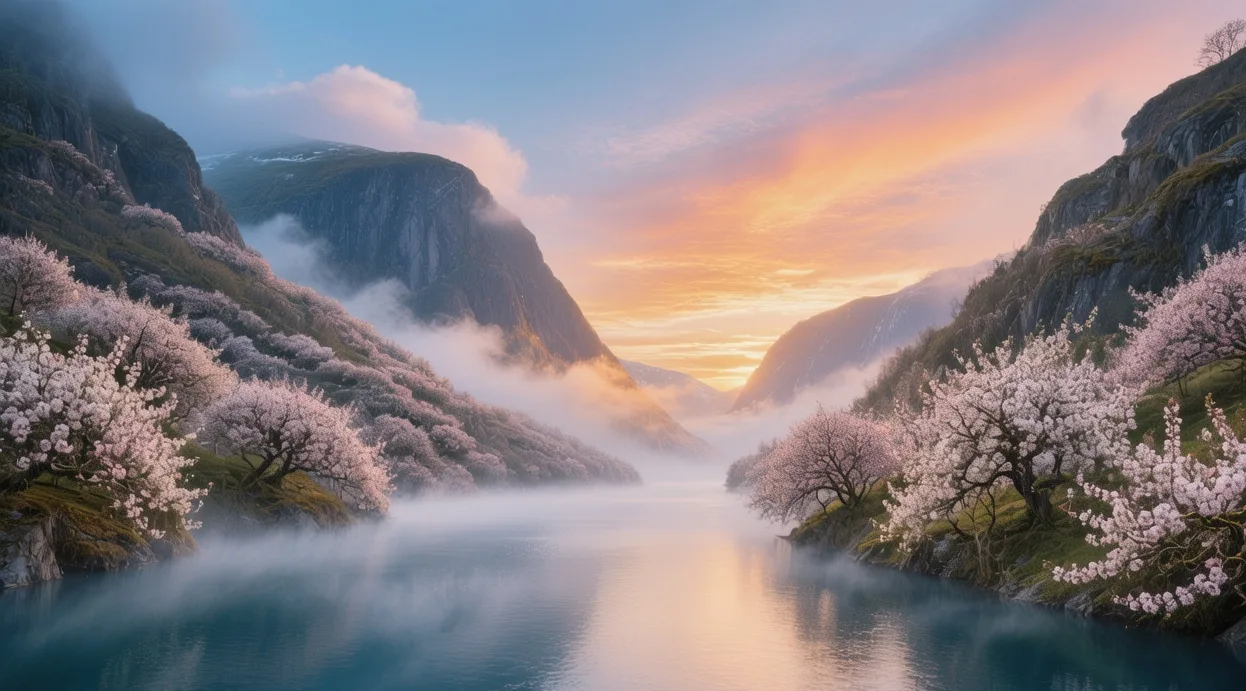
Hardangerfjord Glacial: Where Ice Water Meets Orchard Country
I sit on a rock above the fjord at 7 a.m. The water is pale blue, almost turquoise in the early light. A light wind carries the smell of apple blossoms from the slopes below. I paid thirty-five kroner for a small apple juice at a roadside stand. The man who sold it grows fruit on the same land his family has tended for generations. Glacial melt feeds this fjord. It carries sediment from Folgefonna and Hardangervidda into the main channel. That is why the water holds its bright colour, even on grey days.
Why Hardangerfjord Glacial Matters
Hardangerfjord is one of Norway's longest fjords, stretching more than 170 kilometres from the coastal town of Bergen into the interior. The glacial sections lie closer to the inland plateaus, where meltwater from Folgefonna and Hardangervidda rivers enters the fjord. This water carries fine rock flour, which colours the water and supports a rich marine environment. The surrounding valleys have been farmed for centuries. Apples, cherries, and berries grow on the sheltered slopes. The region also supplies much of Norway's fruit each year. Climate change is visible here. Glacial retreat reduces the volume of meltwater in late summer. Some watercolour variations have become less predictable. Roads and ferry routes also close in winter after heavy snow. You may find your preferred route blocked without warning. Always carry an alternative plan.
The Best Time to Experience Hardangerfjord Glacial
June through mid-July offers the most reliable glacial blue water. Snowmelt runs high and the fjord colour stays intense. Daytime temperatures sit between 10°C and 18°C (50°F–64°F). Nights drop to 6°C–10°C (43°F–50°F). Late July and August bring warmer air — 14°C–22°C (57°F–72°F) — but meltwater volume decreases. The fjord may look deeper blue in some sections and greener in others. September brings harvest season in the orchards. Temperatures fall to 8°C–14°C (46°F–57°F). Rain becomes more frequent. October through May, the glacial colour weakens. Days are short and roads may close. If you visit in winter, arrive prepared for cold, ice, and limited opening hours.
Approximate Budget for a 7-Day Trip
All prices in Norwegian Kroner per person:
- Accommodation — Guesthouse or cabin: 2,100. Mid-range hotel: 3,900. Fjord resort: 5,200.
- Food — Groceries plus local fruit stops: 1,600. Mixed cafe and restaurant meals: 3,200. Eating out daily: 5,100.
- Transport — Rental car shared between two: 2,400 total. Ferries and local buses: 1,300. Guided fjord cruise: 1,600.
- Activities — Glacier walk day trip: 1,200. Orchard visit and tasting: 250. Kayak rental: 400 per day.
- Miscellaneous — Rain gear, snacks, coffee, emergency supplies: 700.
Total on a modest budget: NOK 5,950. Total with private cabin and regular activities: NOK 10,400. Full-day guided cruises are heavily promoted but overpriced. Many follow the same route as the local ferries, which cost a fraction. Rent a kayak or take a regional ferry instead. You will see the fjord up close without the premium price tag.
Essential Hardangerfjord Glacial Experiences
- Glacial Water Kayaking — Paddle near the shoreline where meltwater enters the fjord. The colour changes noticeably where river water mixes with saltwater. Skip if you have no kayaking experience; cold water and wind can make conditions difficult.
- Folgefonna Day Trip — Drive or take a bus to the glacier edge. Walk the approach trail and see ice feeding the glacial rivers. Wear sturdy boots and warm layers.
- Hardangerfjord Ferry — Take one of the regular ferries between coastal villages. They cross sections of intensely coloured water. Sit outside for the best view.
- Apple Orchard Visit — Stop at a small family orchard in Ullensvang. Taste fresh apples and juice. Many orchards are only open during harvest season.
- Glacial River Walk — Follow a meltwater stream from the mountains down to the fjord. You can see how sediment colours the water as it flows.
- Stegastein Viewpoint — Perched above the fjord, it offers a wide view of the glacial water below. Arrive early to avoid crowds.
Hidden Gems Most Travelers Miss
- Bondhusvatnet Lake — Near Rosendal, this glacial lake sits close to Folgefonna. The water is bright blue and reflects the surrounding mountains. Few tourists walk the full shoreline.
- Ullensvang Backroads — Small roads wind through orchards and past old farmhouses. You can drive slowly and stop at viewpoints without crowds.
- Låtefossen Waterfall — Twin falls near Odda that flow directly into the fjord. The spray creates rainbows on sunny mornings. The main parking area is overrated; walk a short distance down the road for quieter views.
- Kinsarvik Waterfront — A quiet village with old timber buildings and a small beach. Sit and watch the light change across the glacial water.
Cultural & Practical Tips
- Respect private orchards. Do not pick apples or berries without asking. Many farmers rely on this income for the whole year.
- Do not rely on phone data in remote sections. Signal drops out quickly in the fjord arms. Download offline maps before you leave.
- Check ferry schedules carefully. Some ferries run only a few times a day, and delays are common in bad weather.
- Do not swim in the glacial sections unless you know the area. The water is extremely cold, and currents can be strong near river mouths.
- Bring waterproof clothing even if the forecast says sun. Rain and wind can arrive suddenly along the fjord.
- Book accommodation early in June and July. The best cabins and guesthouses sell out weeks ahead.
- Do not feed wildlife near the shore. It can make animals dependent on human food and disrupt the natural ecosystem.
Essential Visitor Information
Location & Access: Hardangerfjord glacial sections lie in Vestland county, between Bergen, Odda, and Rosendal. Coordinates 60.137°N, 6.409°E. By car: follow E16 from Bergen to Voss, then take local roads toward the fjord. By ferry: regular services connect Bergen, Rosendal, and Kinsarvik. By bus: regional buses run from Bergen to Odda and Rosendal, with limited service on weekends.
Tickets & Booking: Ferry fares: NOK 150–300 per adult. Kayak rental: NOK 400 per day. Guided glacier walk: NOK 950–1,200 per adult. Booking recommended for accommodation and activities; not always needed for ferries but advisable in peak season.
Operating Hours: The fjord is accessible all day, every day. Visitor centres and orchards generally open 10:00–18:00 in summer, with shorter hours in winter. Ferries run from early morning to late evening, with fewer services on Sundays.
Visit Duration: Minimum 2 full days. Recommended 4–5 days. This allows time to explore the glacial water, visit orchards, and take a day trip to Folgefonna.
Family Suitability: Good for children. Many guesthouses and cabins welcome families. Stroller access is limited in rural areas. Some paths are uneven. Restrooms are available at main ferry terminals and visitor centres.
Timing: Best season: June to mid-July for intense glacial blue water. Best time of day: early morning before 9 a.m. The light is soft and crowds are small.
Highlights: Glacial water kayaking, Folgefonna day trip, Hardangerfjord ferry, apple orchard visit, Stegastein viewpoint.
Nearby & Day Trip: Folgefonna Glacier — 1–2 hours by car. Vøringsfossen Waterfall — 1.5 hours. Bergen — 2.5–3 hours by car and ferry. Rosendal Barony — 45 minutes.
Conclusion: Travel with Curiosity, Not Just Photos
Hardangerfjord glacial water looks striking, but it is also part of a living system. The meltwater feeds farms, rivers, and marine life. It changes with the seasons and with the climate. You can enjoy the views without leaving a mark. Stay on paths, respect farmland, and avoid the most crowded spots. Take time to sit and watch the water. What matters most to you here — the colour, the local food, or the quiet of the fjord?
Comments
Post a Comment