Heddal Stave Church: Where Ancient Timber Meets Mountain Valley
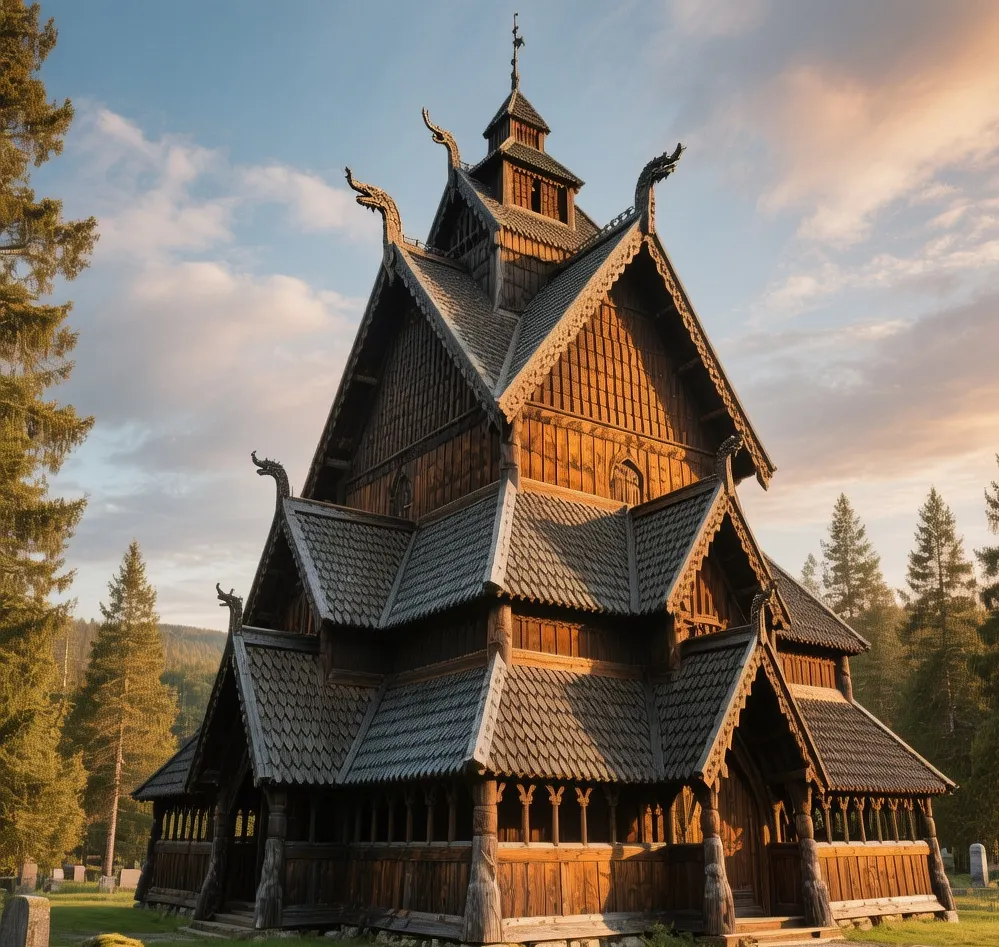
I walk from the car park at 10 a.m. on a Friday in late August. Mist still clings to the treetops. The church rises ahead—dark wood, tiered roofs, dragon heads, all seeming to grow from the ground rather than stand upon it. I pay 110 kroner and step inside. Light filters through narrow slits. The air smells of old timber and damp stone. This is the largest preserved stave church in Norway. Built entirely from wood around 1242, it has stood here through nearly eight centuries. Kings have visited. Fires have raged nearby. Restoration has come and gone. Yet the building remains, quiet and unshaken, in the heart of Telemark.
Why Heddal Stave Church Matters
Stave churches represent one of Europe's great medieval building traditions. Heddal is the biggest and among the best preserved of those still standing on their original site. Its timber frame rests on sturdy posts—staves—giving the structure its name. Carvings on doorways and pillars weave Christian motifs alongside older Nordic symbols, showing how beliefs merged during the conversion era. The church has been altered over time. A major 19th-century restoration changed its appearance significantly, and later repairs introduced materials that do not match the original work. Purists will notice these inconsistencies. The site also grows crowded in peak summer, and the small museum nearby can feel cramped when full.
The Best Time to Experience Heddal Stave Church
Late June through mid-August offers longest opening hours and full access to the grounds and museum. Air sits between 12°C and 20°C (54°F–68°F). The valley stays green and roads are clear. Saturdays fill with tour buses; early mornings and late afternoons stay quieter. May and September bring readings at 7°C–14°C (45°F–57°F). Fewer visitors travel then, and light feels softer. Some facilities reduce hours. Winter brings -5°C to 1°C (23°F–34°F). The church grounds remain open and snow-covered, deeply atmospheric. Interior visits are limited to pre-booked groups only. Spring clears from mid-May onward. For quiet plus full access, visit June or September on a weekday.
Approximate Budget for a 7-Day Trip
Prices are per person in Norwegian kroner.
- Accommodation: 900–1,350 per night in Notodden or nearby cabins. 6,300–9,450 total. Budget rooms start around 400.
- Food: Main meal 170–260. Breakfast 85–125. 1,150–1,550 cooking some meals. 2,100–2,900 eating out mostly.
- Transport: Train from Oslo to Notodden 290–390 one way. Local bus to Heddal 55 per ride. Car rental 450–700 daily. 600–900 for the week.
- Attractions & Extras: Church entry 110 adults, 55 children. Guided tour 60. Museum included. Coffee and cake 50–90.
- Miscellaneous: 450 for unplanned costs.
Total: 8,400–14,200 kroner. The on-site gift shop marks up books and souvenirs heavily. Notodden town centre carries identical titles at 30 percent less.
Essential Heddal Stave Church Experiences
- Walk Around the Full Exterior. View every side. Notice doorways, carved details, and how the roof tiers step upward. The church changes appearance as you move. Allow 20 minutes. Skip this in heavy thunder; lightning risk means you must stay clear of tall timber structures.
- Step Inside the Nave. The interior feels dark and intimate. Old timber, medieval paint, and simple furnishings create powerful stillness. Speak softly; sound carries far. Allow 15–20 minutes.
- Join a Guided Tour. Guides explain construction, symbolism, and 800 years of changes. You learn details invisible from the doorway. Tours run hourly in summer. Arrive early; groups fill fast.
- Explore the Museum and Graveyard. Small exhibits show building techniques and restoration history. The sloped graveyard surrounds the church. Weathered headstones add quiet weight. Allow one hour combined.
- Walk the Surrounding Woodland. Paths lead uphill and into the forest. Views open back across the valley. Most visitors stay near the building. The trail feels peaceful and entirely separate.
- Visit the Old Rectory and Barn. Traditional timber buildings beside the church show how people lived and worked here centuries ago. Simple displays and gardens complete the scene.
- Return at Golden Hour. Late afternoon light warms the dark wood. Tour buses have departed. The church stands almost alone. It looks entirely different than it did at midday.
Hidden Gems Most Travelers Miss
- Northern Entrance Carvings. Most visitors only see the main west door. The smaller north portal holds equally fine work and fewer people stop to look closely.
- Upper Graveyard and Bench. Follow the path uphill past the oldest graves. A wooden bench faces the church across the slope. No crowds sit here.
- Roadside Viewpoint. Five hundred metres toward Notodden, a pull-off gives the classic full-valley perspective. Most people photograph from the car park; this spot frames the church perfectly against forest and hills.
- Main West Door at Midday. Everyone photographs it straight on. Stand to the side and let light catch the carving edges instead. The detail shows far better and no one blocks your view.
Cultural & Practical Tips
- Do not touch walls, pillars, or carvings. Oils from hands darken and damage ancient timber. Signs mark boundaries; stay behind them.
- Photography inside is restricted. Flashes harm medieval paint. Check notices at the door before raising your camera.
- Arrive before 11 a.m. or after 3 p.m. Between those hours, tour buses arrive and the church fills. Silence vanishes and queues form.
- Wear sturdy shoes. The graveyard and paths slope unevenly. Grass can stay damp even on sunny days.
- Do not attempt winter visits without checking ahead. The church interior is not open to drop-in visitors November through March. Grounds remain accessible but cold and dark.
- Respect ongoing services. Weddings and community events happen year-round. If a notice says closed, return later or view from outside.
- Tipping is not expected. Round up if you wish, but no extra is required.
Essential Visitor Information
Location & Access: Heddal, Notodden municipality, Telemark. 7 km west of Notodden town centre. Drive 2 hours 15 minutes west from Oslo via E134. Train from Oslo S to Notodden in 2 hours 15 minutes. Local bus from Notodden to Heddal 15 minutes. Fly to Oslo Gardermoen then train or drive onward in 3 hours.
Tickets & Booking: Adults 110 kroner, children 6–17 55 kroner, under 6 free. Family ticket 270 kroner. Guided tour included in summer. Booking recommended for groups; walk-up works fine for individuals.
Operating Hours: Mid-May to mid-September 10 a.m.–5 p.m. daily. September–May grounds open daylight hours; interior by appointment only. Closed some public holidays.
Visit Duration: Minimum one hour. Two hours lets you explore church, museum, graveyard, and nearby buildings without rushing.
Family Suitability: Good for all ages. Dim interior may unsettle very young children. Gravel paths and uneven ground limit stroller movement; carry-all works best.
Timing: Mid-June to mid-August. Early morning before 11 a.m. or late afternoon after 3 p.m. offers quietest conditions and best light.
Highlights: Exterior timber architecture, carved doorways, medieval interior, museum, woodland viewpoint, golden hour return visit.
Nearby & Day Trip: Notodden town centre and railway museum 15 minutes. Lake Tinn and heavy water history 30 minutes. Gaustatoppen mountain 45 minutes. Oslo 2 hours 15 minutes. All make comfortable half-day or full-day visits.
Conclusion: Travel with Reverence, Not Just Snapshot
Heddal Stave Church has stood here longer than most nations have existed. It has been altered, restored, and photographed millions of times. Some changes feel unnecessary. Crowds can feel overwhelming. But the building holds its own dignity. It does not demand your attention; it simply waits. Stand quiet for a moment. Look at the wood, the carvings, the way light falls. Something ancient and strong still lives here. You will feel it long after you drive away.
Comments
Post a Comment