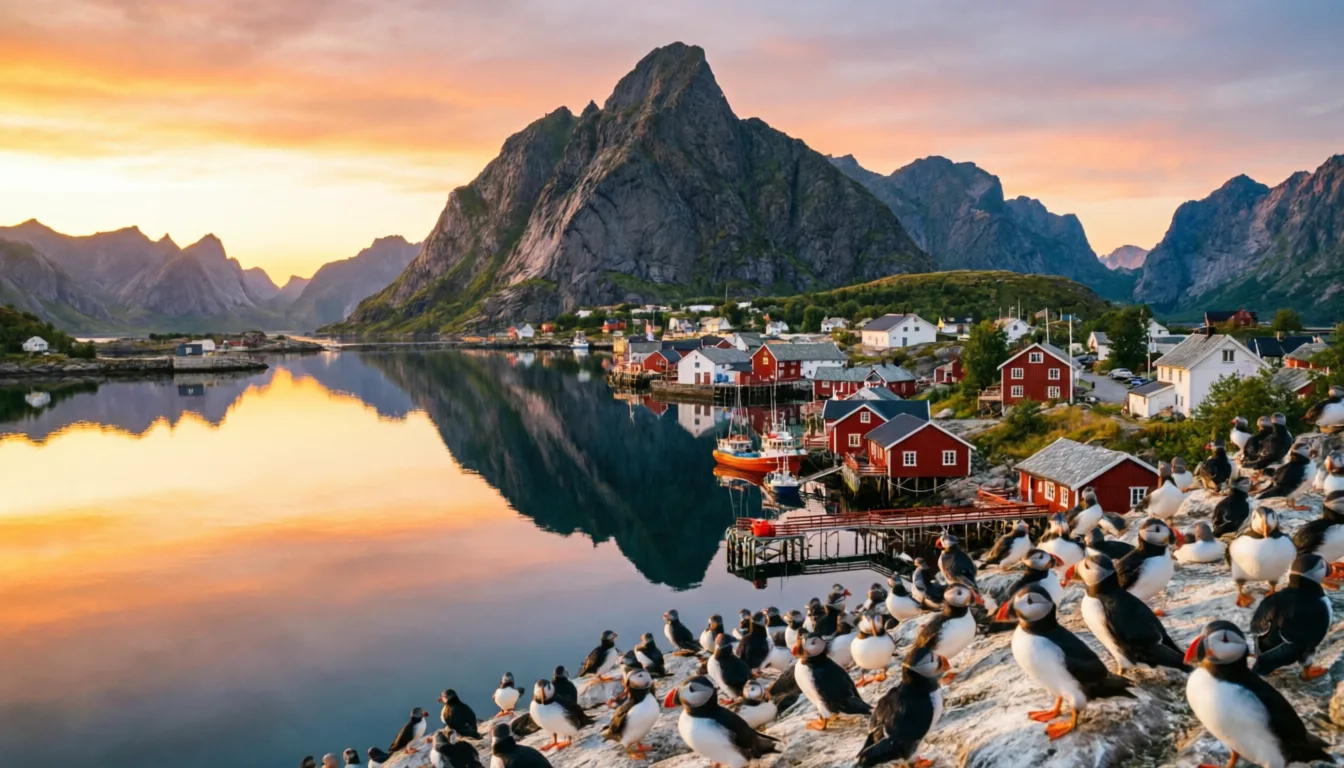
Havfisketurer med MS Kveldsol: Where Traditional Sea Journeys Meet Arctic Waters
I step aboard at 10 a.m. in early August. The deck smells of salt, tar, and seasoned timber. The captain checks lines and nods to each passenger. I paid one thousand one hundred kroner for a five-hour trip. Warm coffee and freshly baked waffles are included. The engine starts steady and low. We glide away from the harbour. No loud speakers play music. The boat moves quiet enough to hear water against the hull. This feels different from modern aluminium vessels. It moves with the sea, not just through it.
Why MS Kveldsol Matters
MS Kveldsol is a traditional wooden fishing vessel restored for passenger journeys. Boats like this worked these waters for generations — carrying cod, herring, and people between remote settlements. As larger ships took over, most wooden boats were scrapped or left to rot. Kveldsol was saved and rebuilt to share that living maritime heritage. Today it sails from a northern Norwegian port, taking small groups out to fish and explore. The experience is authentic by design — no fancy stabilisers, no over-the-top entertainment. You feel every swell. That is part of the journey. Some passengers find the motion uncomfortable. If you get seasick easily, come prepared. The boat sails slowly and stays close to sheltered coast, but the Arctic sea remains unpredictable.
The Best Time to Experience MS Kveldsol
Mid-June through mid-August offers the longest days and calmest seas. Daytime temperatures sit between 10°C and 16°C (50°F–61°F). Midnight sun means evening trips return in full light. July brings the warmest weather — 12°C–18°C (54°F–64°F) — but also the busiest schedule. Late August and September bring thinner crowds and excellent fishing. Northern Lights become visible on evening trips toward month-end. Temperatures drop to 8°C–12°C (46°F–54°F). October through April, trips run on selected days. Weather and daylight restrict departures. Northern Lights season peaks December through March. Temperatures fall to -2°C to -8°C (28°F–18°F). Hands get cold fast — bring waterproof gloves even if the air feels mild. Trips may be cancelled due to wind or heavy seas at any time of year.
Approximate Budget for a 7-Day Trip
All prices in Norwegian Kroner per person:
- Accommodation — Guesthouse or rorbu: 2,600. Private cabin: 4,900. Mid-range hotel: 6,100.
- Food — Groceries plus cafe meals: 1,850. Mixed market and restaurant meals: 3,500. Eating out regularly: 5,300.
- Transport — Flights to nearest airport: 3,200–4,600 round trip. Local bus to harbour: 60 one-way. Rental car shared between two: 2,500 total.
- Activities — MS Kveldsol half-day trip: 1,100. Full-day fishing: 1,950. Evening Northern Lights sail: 1,700. Other local tours: 1,400.
- Miscellaneous — Waterproof jacket, gloves, travel insurance: 800.
Total on a modest budget with one half-day trip: NOK 10,400. Total with full-day sail and private cabin: NOK 15,700. Premium "private charter" trips charging double standard rates are overpriced. You sail the same boat and fish the same waters on a shared departure. Book directly through the operator to save 25 percent.
Essential MS Kveldsol Experiences
- Coastal Fishing Half-Day — Sail to sheltered banks. Rods and bait provided. Catch cod, coalfish, or haddock depending on season. The crew cleans your catch on board. Skip if you dislike waiting — bites come and go in quiet spells.
- Full-Day Extended Sail — Travel further along the fjord or out to open banks. Longer time on the water, more varied scenery. Fresh fish meal cooked on board. Worth the extra cost if you have the time.
- Evening Northern Lights Sail — Late August through March. Away from town lights, the sky stays dark. You watch the aurora from the open deck. There is never a guarantee — clear skies do not always mean activity.
- On-Board Fish Meal Experience — Your catch is prepared simply with potatoes and vegetables. Served hot on deck or in the cabin. It tastes better than any restaurant meal — you caught it yourself.
- Historic Harbour Tour — Shorter daytime sail past old fishing villages and landing spots. The captain shares stories of how people lived and worked along this coast. Good for those who do not fish.
- Spring Midnight Sun Sail — Late May through early July. Depart late afternoon, return after midnight. The sun dips low and colours the water gold. Very few other boats are out.
Hidden Gems Most Travelers Miss
- Stern Deck Quiet Corner — Most passengers gather forward. Sit at the back instead. The wake trails white behind you. The view stretches wide and empty. No one blocks your line of sight.
- Quiet Moments Between Stops — When lines are down and no one is catching, just sit and watch. The boat rocks gently. Seabirds follow in the distance. The main fishing deck has grown crowded and noisy. Step away for a few minutes.
- Pre-Departure Boarding — Arrive fifteen minutes early. Watch the crew ready the boat. They handle lines, check the engine, and point out features of the hull. You learn far more than from any brochure.
- Return at Golden Hour — If the schedule allows, pick an afternoon trip returning as day fades. The harbour lights come on one by one. The boat glides in under soft light. It feels like coming home.
Cultural & Practical Tips
- Dress warmer than you think necessary. Wind over water drops temperature by 5–10 degrees. Wear three layers plus waterproof outerwear. Gloves and a hat are essential year-round.
- Take seasickness precautions if you are sensitive. The boat stays close to shore but swells build fast. Take medication beforehand — it does not work once you feel unwell.
- Respect the crew's instructions. They know these waters. When they say move or hold on, do it immediately. Safety comes before photos.
- Do not drop lines or gear. Hooks and weights are dangerous. Follow their example — handle equipment carefully and return it properly.
- Keep voices low when fishing. Loud noise travels through water and can disturb fish. It also spoils the quiet atmosphere for everyone else.
- Bring a thermos if you want extra hot drink. Coffee is served once at the start. Refills are limited. Pack your own water too — none is provided on most trips.
- Tip modestly if you wish. It is not expected, but appreciated if the crew goes out of their way. Cash handed directly to the captain is the usual custom.
Essential Visitor Information
Location & Access: Departs from harbour in northern Norway — exact location confirmed on booking. By air: nearest airport 1–2 hours away. By road: follow signed coastal route; parking available nearby. By bus: local service stops 5 minutes from the dock.
Tickets & Booking: Half-day fishing: NOK 950–1,100. Full-day: NOK 1,700–1,950. Northern Lights evening: NOK 1,500–1,700. Child discount available. Booking essential — reserve 2–3 months ahead in summer. Cancellations due to weather are fully refunded or rebooked.
Operating Hours: Summer departures 10:00 and 14:00; evening sails 18:00–22:00. Winter schedule reduced — usually 1–2 departures weekly. Times shift with daylight.
Visit Duration: Half-day: 4–5 hours. Full-day: 7–8 hours. Evening: 3–4 hours. Arrive 15 minutes before departure.
Family Suitability: Good for children aged 6+. Life jackets provided in all sizes. Movement on deck requires care — handrails are present but not everywhere. Younger children may find the trip long.
Timing: Best season: June–July for midnight sun and long days; September–March for Northern Lights. Best time of day: early morning — seas are calmest and light clearest.
Highlights: Coastal fishing, fresh catch meal, evening Northern Lights sail, historic coastal villages, golden hour return.
Nearby & Day Trip: Local fishing village — 10 minutes, wooden quay and traditional buildings. Coastal viewpoint — 20 minutes, panorama across the fjord. Island ferry — 30 minutes, remote beaches and bird cliffs. Regional museum — 45 minutes, maritime heritage exhibits.
Conclusion: Travel with the Sea, Not Just Across It
MS Kveldsol is not a thrill ride. It is a working boat sharing a way of life. Some days the catch is small. Some days the wind keeps you close to shore. Some days nothing appears on the line. That is real fishing. That is the real Arctic coast. Come dressed warm. Come patient. Come ready to listen. What matters most to you here — the fish you catch, the quiet hours on the water, or sailing on a boat that carries the past forward?
Comments
Post a Comment