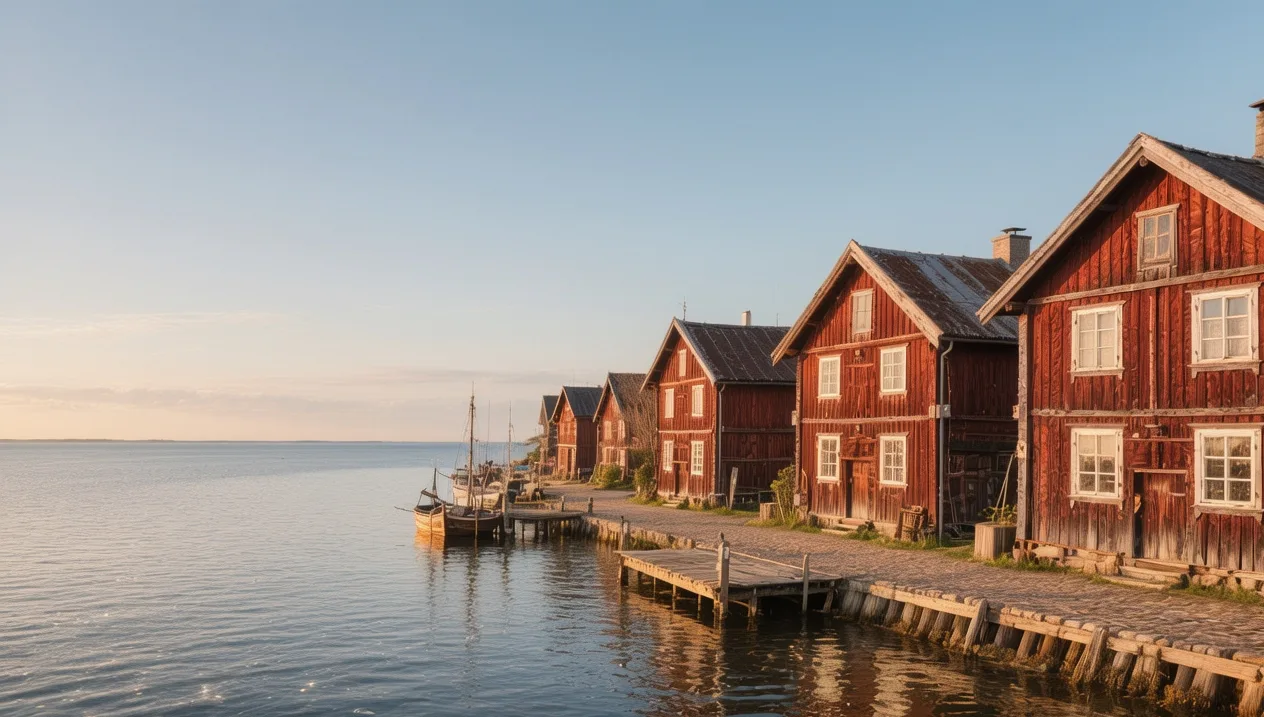
Hudiksvall Wood Town: Where Timber Meets Coast
I walk along the canal at half past ten on a bright morning in early July. Sunlight catches the water between rows of red-painted storehouses. The wood smells fresh, treated with tar that holds up through every season. I paid 40 SEK for a warm cinnamon bun at a bakery near the square. The same pastry costs 28 SEK at the grocery store two blocks away. Everything here connects to wood — the houses, the boats, the museum walls, the centuries of trade that built this place. Fires have come and gone ten times. Each time they rebuilt in wood again. That choice says more than any guidebook can.
Why Hudiksvall Matters
Hudiksvall received town status in 1582, making it the oldest surviving town in Norrland. It grew from timber and tar, shipped south and across the Baltic from forests that stretch endlessly inland. Wood built the wealth, and wood defined the look. Fishermen’s cottages, boat sheds, grander homes — all timber, all shaped by the same forests. The Hälsingland farmhouses nearby, UNESCO listed, carry that same tradition into the countryside. Yet this is not a museum frozen in time. The town has had to adapt. Some newer construction uses less wood, and locals debate whether the modern additions fit. The old waterfront remains intact, but quiet corners vanish to development every few years. The fires also taught hard lessons — after the 1721 blaze, only the church stood. They chose wood again anyway. That stubborn, affectionate attachment to the material is what gives Hudiksvall its character.
The Best Time to Experience Hudiksvall
Mid-June through mid-August gives the warmest weather — 18°C to 22°C (64°F to 72°F). Days stretch long; darkness barely falls. This is when the waterfront feels most alive, when boat sheds open and cafes set tables outside. Late May and early September see 12°C to 16°C (54°F to 61°F). Fewer visitors, lower prices, and forest paths stay quiet. Winter brings -5°C to -2°C (23°F to 28°F), snow covering rooftops and canal. The town functions but attractions run shorter hours. Many waterfront spots close entirely. Avoid mid-summer weekends if you prefer calm. Storgatan fills up fast. Rain can come suddenly in July — always carry a jacket.
Approximate Budget for a 7-Day Trip
Here is what one week in Hudiksvall looks like for two people, based on staying centrally and exploring nearby countryside.
- Accommodation: 1,050 SEK per night × 7 nights = 7,350 SEK. Staying in a timber cottage outside town lowers this to roughly 650 SEK nightly.
- Food and Drink: 400 SEK per person daily. Eating all meals at restaurants pushes this higher. Breakfast from a bakery plus picnic lunches keeps costs reasonable.
- Transport: 620 SEK round-trip train from Stockholm (per person; 1,240 SEK for two). Local buses cost roughly 40 SEK per ride. Car rental runs 750 SEK per day including insurance.
- Attractions: 520 SEK total for museum entry and guided farmhouse visits. Many waterfront and street areas stay free.
- Miscellaneous: 550 SEK for coffee, snacks, and small items.
Total estimate: approximately 15,460 SEK for two people (7,350 accommodation + 5,600 food + 1,440 transport + 520 attractions + 550 miscellaneous). One warning: waterfront restaurants charge premium prices. Walk one street back for meals that taste just as good for significantly less.
Essential Hudiksvall Experiences
- Walk the Sjöbodarna Waterfront — Red wooden boat sheds line the sound. Some still hold fishing gear. Others now house galleries and craft shops. This is the town’s most recognizable face. Skip this if you dislike crowds; Saturday afternoons feel busy here in July.
- Explore Fiskarstaden Quarter — One of the few areas that survived the 1879 fire. Low wooden homes, cobbled lanes, quiet courtyards. You see how people lived generations ago, not just how they posed for photos.
- Visit Hälsingland Museum — Displays trace timber trade, tar burning, and the decorated farmhouse tradition. Exhibits feel genuine, not overly polished. Allow at least ninety minutes.
- Stroll Around Lillfjärden Lake — Right in town, surrounded by trees and walking paths. The canal connects it to the sea. It makes a peaceful morning loop before day trips begin.
- Tour a UNESCO Listed Farmhouse — Several timber estates sit within thirty minutes’ drive. Hand-painted interiors and massive timber frames show what wealth and craft looked like here. Book ahead in summer.
- Climb to Blacksås Viewpoint — Short forest hike leads to open rock overlooking the Bothnian Sea. The view stretches far. Bring water; there is nothing at the top.
- Attend a Summer Evening Concert — Occasional performances happen in park and square settings. Music ranges from folk to jazz. Atmosphere stays relaxed and local-focused.
Hidden Gems Most Travelers Miss
- St. Jacob’s Church Interior — Built in 1672 and one of the few structures from that era. The woodwork and old paintings deserve slow attention. Most visitors glance at the tower and walk on.
- Strömmingssundet Eastern Shore — Cross the small bridge and walk the far side. The perspective back toward the boat sheds makes better photos and stays nearly empty.
- Ystegårn Farmhouse — A working traditional estate close to town. It feels lived-in rather than staged. Open limited hours through summer.
- Storgatan Souvenir Shops — Convenient but marked up. Buy local crafts directly from museum shops or farm stalls for better quality and fairer pricing.
Cultural and Practical Tips
- Do not assume everything opens on Monday. Many museums and farmhouse sites close for the start of the week. Plan accordingly.
- Respect privacy in residential wooden quarters. Fiskarstaden is not an open-air museum; people live there. Keep voices low and stay off private paths.
- Book farmhouse visits in advance. These sites run on limited staff and small capacities. You might arrive and find full groups already.
- Do not limit yourself to the main waterfront alone. Walk two blocks inward. The wooden architecture continues, quieter and just as beautiful.
- Wear sturdy walking shoes. Cobblestones and uneven ground appear throughout the historic center. Heels are impractical here.
- Expect shorter hours outside June–August. Some attractions operate only on weekends in spring and autumn. Check schedules before traveling far.
- Carry rain gear. Coastal weather shifts fast. You can walk out in sunshine and return in steady drizzle an hour later.
Essential Visitor Information
Location and Access: Hudiksvall, Hälsingland. 286 km north of Stockholm via E4 highway. Train from Stockholm Central takes roughly 2 hours 40 minutes. Bus from Sundsvall takes 1 hour. Drive from Uppsala takes 2 hours 15 minutes.
Tickets and Booking: Free access to waterfront and town streets. Museum entry approx 120 SEK adults. UNESCO farmhouse visits range 80–150 SEK per person. Booking recommended for guided tours.
Operating Hours: Town always accessible. Museum 10:00–17:00 mid-June to mid-August; shorter hours rest of year. Farmhouses generally 11:00–16:00 July–August; weekends only spring and autumn.
Visit Duration: Minimum 4 hours for town center. Recommended 2–3 days including nearby countryside and farmhouses.
Family Suitability: Excellent for all ages. Mostly flat ground. Stroller access good on main paths but bumpier in older quarters. Restrooms and cafes distributed throughout.
Timing: Best season: June–August. Best time of day: early morning before 10:00 for quietest photos and light on wooden buildings.
Highlights: Sjöbodarna boat sheds, Fiskarstaden quarter, Hälsingland Museum, Lillfjärden Lake, nearby UNESCO farmhouses.
Nearby and Day Trip: Söderhamn 45 minutes south. Sundsvall 1 hour north. The High Coast World Heritage area 90 minutes north. Bollnäs and inland farmland 1 hour west — makes a pleasant half-day drive.
Conclusion: Travel with Eyes Open, Not Just Camera Ready
Hudiksvall does not shout. It sits quiet, built of wood that has weathered centuries. Fires came, trade shifted, modern times arrived — yet the timber stays. You will find high prices at harborside restaurants and shorter hours than you expect. You will also find buildings that breathe history, forest air that feels clean, and a rhythm that slows you down. This place matters not because it is perfect, but because it keeps rebuilding what it loves. Will you give yourself time to walk the quieter side of the canal?
Comments
Post a Comment