
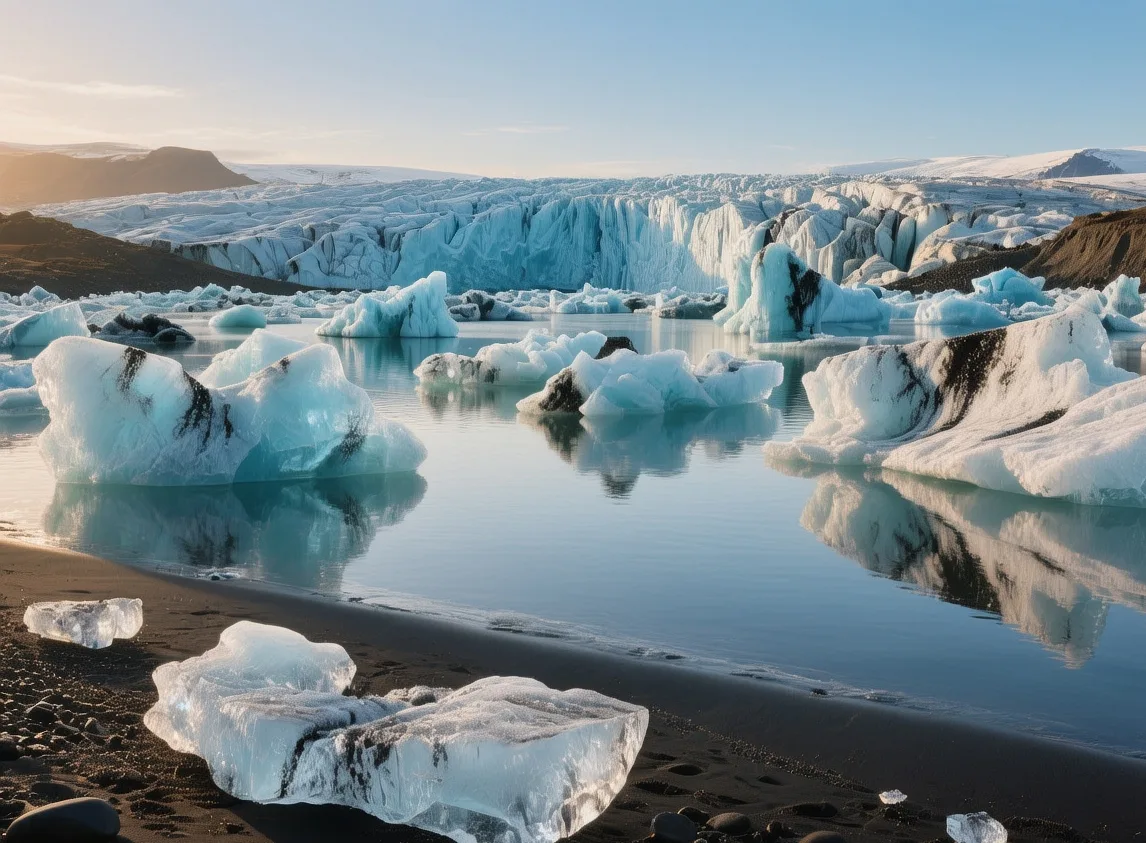
Jökulsárlón Glacier Lagoon Floating Ice Meets Atlantic Ocean
The air bites at your cheeks—sharp, clean, and carrying the scent of ancient ice and salt. You stand on the black sand shore, watching as a cathedral-blue iceberg drifts silently toward the sea, grounded momentarily on the shallow shelf before surging forward with the tide. This is the Jökulsárlón glacier lagoon, a expanding body of water born in 1934 when the Breiðamerkurjökull outlet glacier began retreating rapidly. The water is glacial milk, opaque and turquoise, hiding depths of 250 meters (820 feet) beneath the surface. Seals pop their heads above the waterline, curious and sleek, while the distant crack of calving ice echoes like thunder across the 18 square kilometers of the lagoon. This isn't just a scenic stop; it's a frontline observatory for climate change, where icebergs the size of buildings melt before your eyes. In 2026, as global temperatures rise and glaciers retreat worldwide, the Jökulsárlón glacier lagoon matters now more than ever—a fleeting masterpiece that demands witness before it transforms into history.
Why Jökulsárlón Glacier Lagoon Embodies Icelandic Change
The Jökulsárlón glacier lagoon represents far more than a photographic backdrop—it is Iceland's most visible indicator of geological and climatic transformation. Formed in 1934, the lagoon did not exist on maps prior to the 20th century. As the Breiðamerkurjökull glacier retreated due to rising temperatures, meltwater pooled in the depression left behind, connecting to the Atlantic Ocean in 1975. Today, the lagoon covers 18 square kilometers (7 square miles) and continues to expand by approximately 1 square kilometer every decade. This growth solves a hydrological need: draining meltwater from the Vatnajökull ice cap, the largest glacier in Europe by volume.
Technical specifications highlight the scale of this natural phenomenon. The lagoon is the deepest lake in Iceland, reaching depths of 250 meters (820 feet). Icebergs floating here range from small chunks to massive structures weighing 10,000 tons. The ice is typically 1,000–1,500 years old, compressed snow that has trapped air bubbles, giving it the signature blue hue. The outlet glacier moves at a rate of 1–2 meters per day, continuously feeding new ice into the lagoon. Designated part of Vatnajökull National Park in 2008, the site draws 500,000+ visitors annually. The Jökulsárlón glacier lagoon fulfills a human need for connection to deep time, offering a tangible link to the last Ice Age while demonstrating the fragility of frozen landscapes in a warming world.
The Best Time to Experience Jökulsárlón Glacier Lagoon
Timing your visit to the Jökulsárlón glacier lagoon requires balancing accessibility, wildlife activity, and photographic conditions. For boat tours and maximum iceberg density, target May 1–September 30. During these months, temperatures range from 5–15°C (41–59°F), and amphibious boat tours operate daily between 9:00 AM–5:00 PM. The midnight sun in June provides extended lighting for photography, with sunset occurring after 12:00 AM. Crowds are manageable if you arrive before 10:00 AM or after 6:00 PM.
For ice cave exploration and seal watching, visit between November 1 and March 31. Temperatures drop to -5–5°C (23–41°F), but the icebergs freeze onto the black sand beach, creating surreal landscapes. Boat tours do not operate in winter, but guided ice cave tours depart from nearby bases. Plan your visit between 11:00 AM–3:00 PM for maximum daylight. However, avoid December 20–January 10 unless prepared for extreme weather; storms can close Route 1 temporarily, and daylight shrinks to 4–5 hours. Also skip July 10–August 10 if you dislike congestion; this peak window brings 3,000+ daily visitors. For real-time road conditions and weather.
Approximate Budget for a 7-Day Trip (2026)
Exploring the Jökulsárlón glacier lagoon anchors a week-long Southeast Iceland adventure. This budget assumes a 7-day trip based in Höfn or Skaftafell with day trips to the lagoon. Prices reflect 2026 rates, accounting for Iceland's average 3.8% annual inflation from 2024–2026 (source: Statistics Iceland). All amounts shown in euros; multiply by 1.08 for USD equivalents. Note that Iceland uses ISK, but € is provided for international comparison.
Accommodation: €160–€340 per night
• Budget guesthouse in Höfn (near lagoon): €160–€210
• Mid-range hotel (Skaftafell area): €240–€300
• Luxury (Hotel Fossmóti or similar): €400–€550
• Camping (seasonal, Skaftafell): €30 per person
Food: €60–€100 per day
• Breakfast: €15–€20 (hotel buffet or bakery pastry + coffee)
• Lunch: €20–€30 (lobster soup, fish of the day, or hot dog)
• Dinner: €35–€50 (pan-fried Arctic char or traditional lamb)
• Groceries (self-catering): €40/day
Transportation:
• Keflavík Airport to Reykjavík Flybus: €35 round-trip
• Rental car (4x4 SUV, 7 days): €450 + €180 fuel
• Southeast Iceland day tour: €110
• Reykjavík city bus (Strætó): €3.50 per ride
• Lagoon parking: Free
Attractions:
• Amphibian boat tour: €65
• Zodiac boat tour: €75
• Ice cave tour: €120
• Skaftafell National Park: Free
• Perlan Museum: €30
• Blue Lagoon day trip: €110
• Golden Circle tour: €95
Miscellaneous:
• Icelandic wool sweater (lopapeysa): €120–€190
• Thermal base layers: €90
• Travel insurance: €60
• Souvenirs (ice jewelry, handicrafts): €50
• Tips (not expected but appreciated): €30
Total for 7 days (mid-range): €2,500–€2,850 per person
Total (budget-conscious): €1,650–€1,900 per person
6 Essential Jökulsárlón Glacier Lagoon Experiences
1. Take an Amphibian Boat Tour: Board a yellow amphibious vehicle from the shore base. The tour lasts 40 minutes and takes you among the icebergs. Visit at 10:00–11:00 AM when water is calmest. The guides explain iceberg formation and point out seals. Wear the provided life jacket and warm overalls. This is the safest way to get close to the floating ice without a kayak.
2. Walk Diamond Beach: Located across Route 1 from the lagoon. Ice chunks wash ashore on black volcanic sand, sparkling like diamonds. Visit at 7:00–9:00 AM before crowds arrive. The contrast between white ice and black sand is striking. Do not climb on large icebergs; they can roll unexpectedly. This beach offers the best photography opportunities in Southeast Iceland.
3. Watch for Seals: Harbor seals frequent the lagoon year-round. Bring binoculars to observe them from the shore. Visit at 2:00–4:00 PM when seals are most active feeding. They often pop their heads up near the boat tour departure point. Never attempt to touch or feed them; maintain a 50-meter distance. This experience highlights the lagoon's ecological importance.
4. Photograph the Blue Ice: Position yourself on the eastern shore for the best light. The ice glows blue from compressed air bubbles absorbing red light. Visit at 8:00–10:00 PM in summer for midnight sun lighting. Use a polarizing filter to reduce glare from water. Bring a tripod for long exposures. This is the iconic shot that defines the South Coast.
5. Visit the Visitor Center: Located at the parking lot, this center offers exhibits on glacial formation. Open 9:00 AM–6:00 PM (summer), 10:00 AM–4:00 PM (winter). Entry: Free. Use the restrooms and buy snacks here. The staff provide updates on ice conditions and safety. This context transforms the visit from tourism to education.
6. Join a Zodiac Boat Tour: For a faster, wetter experience, book the Zodiac tour. It goes further into the lagoon than the amphibian boats. Visit at 1:00–3:00 PM when wind is typically lower. You will get closer to the glacier face. Wear waterproof gear provided by the operator. This experience offers a more adventurous perspective of the Jökulsárlón glacier lagoon.
3 Hidden Gems Most Travelers Miss
• Fjallsárlón Glacier Lagoon: Located 10 kilometers west on Route 1. This smaller lagoon offers icebergs closer to the shore without the crowds. Access is via a small parking lot (€5 fee). Open 9:00 AM–6:00 PM (summer). Why overlooked: Tour buses prioritize Jökulsárlón; Fjallsárlón is quieter. Insider tip: Walk to the water's edge for intimate photography without crowds.
• Heinabergsjökull Ice Cave: Located 20 kilometers east of Höfn. This cave is less visited than Skaftafell options. Access requires a guided tour (contact: +354 478 1111). Why overlooked: Remote location; requires specific booking. Insider tip: Visit in February when ice clarity is highest. The blue color is more intense here than at popular sites.
• Höfn Lobster Festival: Held annually in early July in Höfn village. This cultural event celebrates the local fishing industry. Open 12:00 PM–10:00 PM during festival dates. Entry: Free (food costs extra). Why overlooked: Timing dependent; many visitors miss the dates. Insider tip: Try the grilled langoustine skewers; they are the festival highlight.
Cultural & Practical Tips
• Never climb on icebergs: Icebergs can roll without warning, even on land. Multiple accidents have occurred when visitors climbed on beached ice. Stay on the sand and view from a distance. This rule is non-negotiable for safety. The ice is unstable and slippery.
• Weather preparation: Southeast Iceland experiences rapid weather changes. Even in summer, bring waterproof layers and windproof jackets. Temperatures at the lagoon average 3–5°C cooler than lowlands. Check www.vedur.is for forecasts before visiting.
• Learn these Icelandic phrases:
— Takk (tahk): Thank you
— Góðan daginn (go-than dy-in): Good day
— Jökulsárlón (yoh-kul-sar-lone): The lagoon's name
— Ís (eese): Ice
Icelanders appreciate effort; pronunciation matters less than attempting the language.
• Photography guidelines: Tripods permitted on the beach but cannot block paths. Drone use requires special permit from the Icelandic Transport Authority (apply 4 weeks ahead). Best light: Sunrise (5:00–7:00 AM summer); golden hour (8:00–10:00 PM). Use a polarizing filter to reduce glare from ice.
• Respect closure signs: Areas close due to instability or high water. Icelandic authorities post clear signage when zones are dangerous. Ignoring these warnings risks your life. Check the National Park website for current closures before visiting.
• Gear requirements: Wear sturdy hiking boots with ankle support. Avoid sneakers or flip-flops. Tour operators provide crampons and helmets for ice caves, but bring warm gloves and hats. The sand is wet; waterproof boots are recommended for Diamond Beach.
Conclusion: Travel with Reverence, Not Just Photography
The Jökulsárlón glacier lagoon demands more than a perfect Instagram shot—it asks for reverence. As you stand before those floating blue giants, recognizing that you're not just visiting a landmark; you're entering a zone where climate change is visibly rewriting the landscape. In 2026, as glaciers retreat globally, Jökulsárlón offers both wonder and warning: that nature's beauty is finite, that respect outweighs curiosity, and that future generations deserve to experience this ice safely. Slow down. Listen to the crack of shifting ice. Feel the cold that preserves history. Understand that this lagoon exists as both masterpiece and victim. When you visit the Jökulsárlón glacier lagoon in 2026, don't just capture the blue for social media—contemplate the forces that created it. Don't just check a box—honor the fragility of this ecosystem. Iceland preserves this site not as a playground, but as a teacher. Learn. Reflect. Carry this reverence home. The world needs more guardians of wild places, not just conquerors of views.