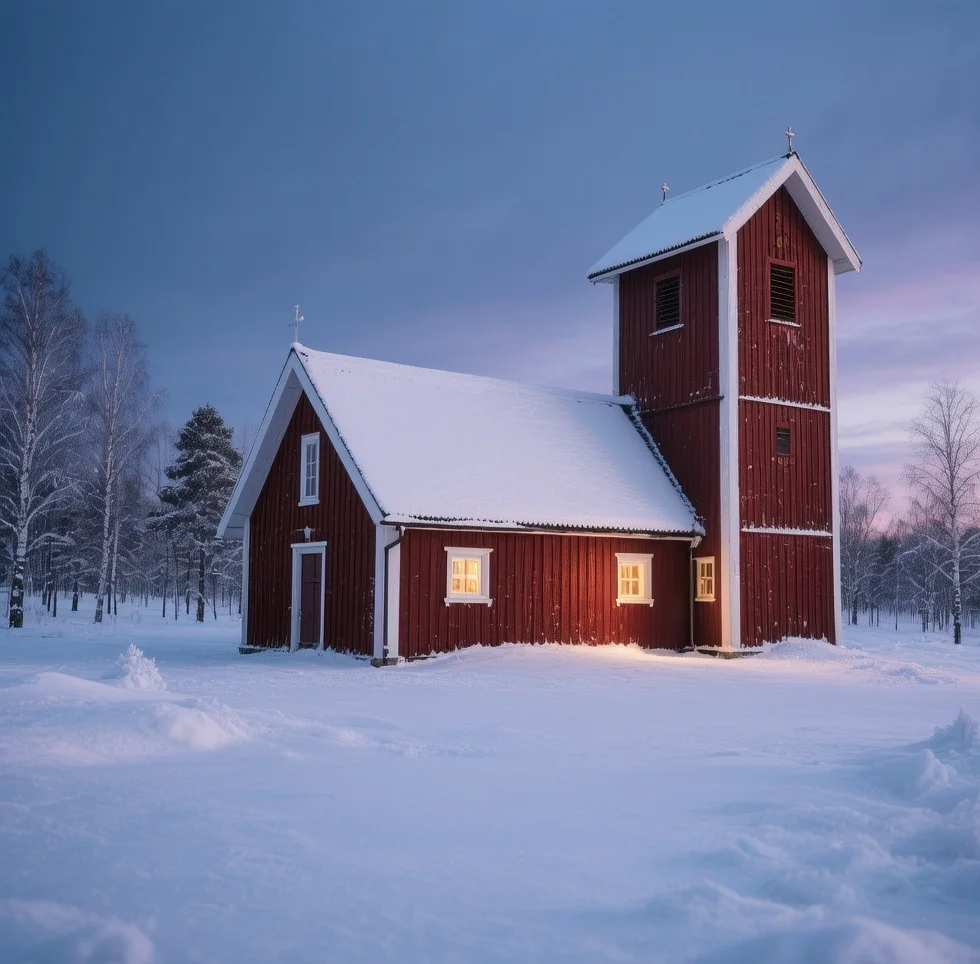
Jukkasjärvi Church: Where Timber Meets Arctic Faith
I walk through the churchyard at half past ten on a December morning. Snow crunches under every step. The red timber walls stand vivid against white ground. I paid nothing to enter — no admission fee applies. The door feels heavy when I pull it open. Inside, warm air smells of wood, candle wax, and old wool. Rows of simple pews face an altarpiece painted in 1905. Light filters through narrow windows, dim and soft. Outside, daylight is thin and pale. The sun barely clears the treeline. This building has stood here since 1672. It has seen centuries of short dark days and long bright summers. It does not dazzle. It endures. Yet it sits beside a world-famous ice hotel, and most visitors walk past without stopping.
Why Jukkasjärvi Church Matters
Jukkasjärvi Church is the oldest building in Swedish Lapland, completed in 1672 after three years of work. The timber was carried by hand and river from forests far away. For generations it served as the spiritual and practical center of life here — a gathering place, a landmark, a shelter. It stood long before the town became known for ice art or northern lights. The structure itself is simple: red-painted wood, steep roof, slender spire, no elaborate decoration. That plainness is its strength. It reflects the values of the people who built it — modesty, endurance, community. But the church faces quiet challenges. Rising damp affects the foundations. Tourism creates pressure — crowds come and go fast, treating it like a photo backdrop rather than a living space. The congregation remains small and aging. Keeping the building warm, maintained, and open costs more than visitors realize.
The Best Time to Experience Jukkasjärvi Church
December through March brings deep winter — -15°C to -5°C (5°F to 23°F). Snow covers everything. Daylight lasts just two to four hours. The church interior feels warm and welcome. Northern Lights appear overhead most nights. This is also peak tourist season — crowds arrive between 11:00 and 14:00. April and May see longer days and melting snow — -2°C to 5°C (28°F to 41°F). Fewer people visit. June through August offers midnight sun and 10°C to 18°C (50°F to 64°F). The church stays open late, and the surrounding birch forest turns green. September brings autumn gold and returning darkness — 3°C to 9°C (37°F to 48°F). Ruska colors make the churchyard beautiful. Avoid midday in winter. Bus tours arrive then. Come before 10:00 or after 15:00 and you will likely sit alone inside.
Approximate Budget for a 7-Day Trip
Most visitors base themselves in Jukkasjärvi or nearby Kiruna. Here is what one week costs for two people, including the church and surrounding sights.
- Accommodation: 11,200 SEK — 6 nights at standard Jukkasjärvi guesthouse, 1,865 SEK nightly. Staying at the Ice Hotel itself costs 3,000+ SEK per night; booking nearby cuts this nearly in half.
- Food & Drink: 480 SEK per person daily. Hotel restaurants charge premium prices. Eating in Kiruna or cooking your own meals saves noticeably.
- Transport: Round-trip flight Stockholm–Kiruna 1,950 SEK. Bus Kiruna–Jukkasjärvi 160 SEK round-trip per person. Car rental 750 SEK per day including winter tires.
- Attractions: Free entry to Jukkasjärvi Church. Ice Hotel admission 600 SEK total. Northern Lights tour 1,700 SEK total.
- Miscellaneous: 700 SEK for coffee, handcrafts, and donations to the church.
Total estimate: 16,600 SEK for two people. One warning: accommodation directly connected to the Ice Hotel carries a massive price premium. Stay in the village or Kiruna instead and visit the Ice Hotel as a day guest.
Essential Jukkasjärvi Church Experiences
- Sit in Quiet Afternoons — Most groups leave by 14:00. The space empties. Sunlight slants low through the windows. You hear the wood settle. No one hurries you. Skip this if you want guided facts; no one approaches you with information.
- Attend a Sunday Service — Held in Swedish and occasionally Sámi. The congregation includes locals and visitors. Hymns echo beautifully. You feel how the building still lives. Check the schedule; times change seasonally.
- Walk the Churchyard in Snow — Rows of simple wooden markers stand evenly spaced. The spire rises above them. It feels peaceful and timeless. Be respectful; people rest here. Do not step on graves or pose for photos on memorials.
- See the Altarpiece Up Close — Painted in 1905 by a local artist. It depicts Christ in a Lapland setting — birch trees, reindeer, low horizon. Not European palm or olive. This place, this land. It feels deeply rooted.
- Compare with the Ice Hotel Church — The modern ice structure melts every spring. The wooden one has stood for centuries. Visit both and think about what lasts. The contrast stays with you.
- Light a Candle — Simple holders stand near the entrance. Small donations support building upkeep. No pressure, no fixed cost. It is the quietest, most meaningful act you can do here.
- Visit at Midnight in Summer — The door stays open. Pale golden light wraps the building. The air hums softly. No crowds, no noise. Skip this if you need company; you will likely be entirely alone.
Hidden Gems Most Travelers Miss
- The Old Bell Tower — Separate from the main building, weathered timber, quiet and unphotographed. It stands slightly apart and sees almost no one. Walk around it slowly.
- Wooden Plaques Near Entrance — Names and dates carved into the frame. They record gifts and service across generations. Look closely; some go back two hundred years.
- Path Behind the Church — Leads toward the river. Birch trees line it. The Ice Hotel appears framed through branches. Better photos than from the main road, and far fewer people.
- Ice Hotel Souvenir Shops — Beautiful items but priced far above what you would pay elsewhere. Buy your gifts in Kiruna or at the village craft cooperative instead.
Cultural & Practical Tips
- Remove your shoes or boots when entering. This is customary. It also keeps the wooden floors clean and dry. Follow what others do.
- Keep voices low. This is an active place of worship, not an empty museum. People pray and reflect here every day.
- Do not climb on the exterior walls or railings. The wood is old and fragile. Every footstep causes damage.
- Check opening times before walking over. Services or private events close the doors without notice. The schedule changes weekly.
- Do not treat the churchyard like a photo set. People are buried here. Walk gently, speak softly, stay on paths.
- Winter days are short. Plan your visit before 15:00. After that, light fades fast and the church may close early.
- Leave a small donation if you can. Free entry does not mean free upkeep. Heating, snow removal, and repairs cost money every month.
Essential Visitor Information
Location & Access: Jukkasjärvi Kyrka, Marknadsvägen, 981 91 Jukkasjärvi. 15 km east of Kiruna. Bus from Kiruna center takes 20 minutes. Drive via E45 then local road — 15 minutes. No train serves Jukkasjärvi directly.
Tickets & Booking: Free entry. No ticket required. No booking needed. Guided tours rare and by arrangement only. Donation box near entrance.
Operating Hours: Daily 10:00–18:00 mid-June to mid-August. Winter roughly 10:00–16:00. Closed during services and private events. Sunday service usually 11:00.
Visit Duration: Minimum 15 minutes. Recommended 45–60 minutes including churchyard and quiet sitting.
Family Suitability: Fully suitable. Flat ground inside and out. Stroller access good. Restrooms nearby in village center.
Timing: Best season: December–March for snow atmosphere; June–August for midnight sun. Best time of day: before 10:00 or after 15:00.
Highlights: Altarpiece by local artist, separate bell tower, peaceful churchyard, midnight summer light, winter warmth.
Nearby & Day Trip: Ice Hotel 300 meters away. Kiruna 15 km — new city center and old mine area. Esrange Space Center 45 km east. Abisko National Park 90 km northwest — possible half-day drive.
Conclusion: Travel with Respect, Not Just Cameras
Jukkasjärvi Church does not compete with the ice palace down the road. It does not melt and rebuild every year. It simply stands — solid, quiet, unchanged. You will find crowds rushing through at midday, short hours in deep winter, and no grand displays inside. You will also find a space that has held joy and grief for more than three centuries. It asks nothing of you except quiet. This place matters because it does not chase attention. Will you give it the time it deserves?
Comments
Post a Comment