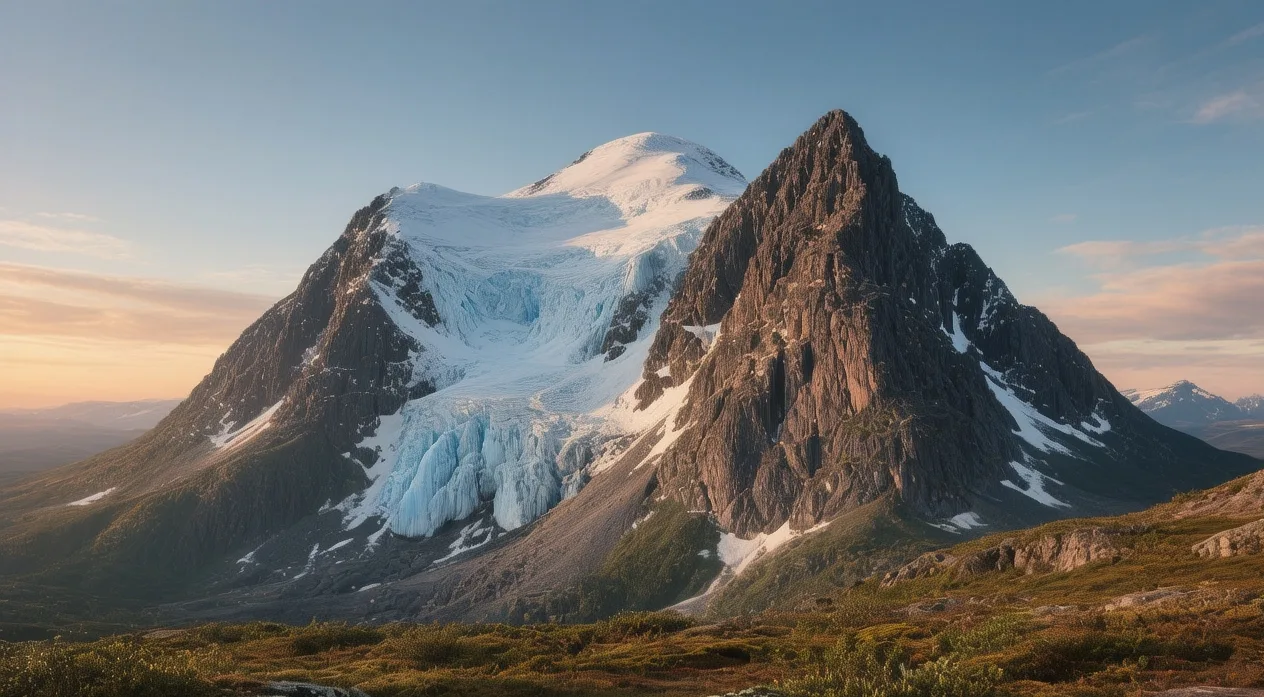
Kebnekaise: Where Sweden’s Highest Summit Meets Changing Ice
I stand at the Kebnekaise Mountain Station at seven in the morning in mid-August. The air feels crisp and thin. I paid 395 SEK for the guided summit departure time slot. The same trip without a guide costs nothing extra, but you must book the route space in advance. Clouds drift across the upper slopes. The glacier looks whiter than I expected, creases running deep where ice moves over stone. Local staff tell me the summit shrinks year by year. The ice cap that defines the peak loses thickness steadily. That reality sits alongside every view. You see grandeur, and you see change. The climb demands stamina. Weather can shift in minutes. The glacier carries hidden hazards even when the sun shines.
Why Kebnekaise Matters
Kebnekaise rises 2,097 meters above sea level — the highest point in Sweden and the highest in the Scandinavian Alps outside Norway. Two main peaks form the massif: the southern one capped by a permanent glacier, and the northern one, slightly lower, of bare rock. For centuries this stood as a remote landmark deep in Sámi territory. The first recorded ascent happened in 1883. Today it draws thousands who come to stand at the country’s roof. What makes it distinct is the glacier itself — the defining feature that also threatens its title. The ice has lost more than twenty meters of thickness since measurements began. It melts faster than it replenishes. Some scientists estimate the glacier could vanish entirely within decades. That reality divides opinion. Some say the peak will always be Kebnekaise regardless of height. Others point out that without ice, it may fall below nearby peaks. Either way, the mountain remains — but the face it shows the world is changing fast.
The Best Time to Experience Kebnekaise
Late June through mid-July brings long days and lingering snowfields — 5°C to 12°C (41°F to 54°F). The route stays firm underfoot, but fog and sudden storms happen often. Mid-July through mid-August offers the most stable conditions — 8°C to 15°C (46°F to 59°F). Melting exposes more rock, making sections steeper and looser. This is peak season; book accommodation and route slots months ahead. Late August into September sees cooler air — 4°C to 10°C (39°F to 50°F) — fewer crowds, and golden birch slopes below the treeline. October through May brings deep winter and avalanche risk. Only experienced ski tourers should attempt the mountain then; temperatures drop to -15°C (5°F) or lower. Avoid weekends in July — lines form at narrow sections and the summit feels crowded. Early mornings on weekdays give you the clearest views and quietest ascent.
Approximate Budget for a 7-Day Trip
Most visitors base themselves at Kebnekaise Mountain Station, with side trips to the summit and surrounding valleys. Here is what one week costs for two people.
- Accommodation: 6,300 SEK — 6 nights shared cabin at 1,050 SEK nightly. Camping near the station costs roughly half that but carries no roof or facilities.
- Food & Fuel: 1,700 SEK. Station restaurant meals run 350–450 SEK per person. Cooking your own from the supply shop cuts this by nearly half.
- Transport: Round-trip flight Stockholm–Kiruna 1,900 SEK. Bus Kiruna–Nikkaluokta 560 SEK round-trip. Boat across the lake to trailhead 380 SEK round-trip for two.
- Guided Summit & Gear: 790 SEK per person for guided ascent. Private guide costs 2,400 SEK per day. Crampon and pole rental 250 SEK per person.
- Miscellaneous: 750 SEK for coffee, maps, and emergency supplies.
Total estimate: 11,680 SEK for two people. One warning: guided summit trips sell out weeks ahead and cost far more than going independently. If you have glacier experience, book the unguided slot and save significantly.
Essential Kebnekaise Experiences
- Summit the South Peak — The classic route: four to five hours up, three hours down. Steep snow, glacier surface, panoramic views across hundreds of kilometers of wilderness. Skip this if you fear heights or lack basic fitness; the pace is steady but unrelenting.
- Sunrise Start from the Station — Leave at 03:00. You climb in twilight, reach the top as light floods the valleys. No crowds, no glare. The experience changes entirely. Dress extra warmly; early morning air feels sharpest.
- North Peak & Tarfala Valley Day — A different route past alpine lakes and rock formations. No glacier crossing required. The view back toward the south peak shows the ice cap from outside. Easier and quieter than the main ascent.
- Glacial Lake Below the Summit — Turquoise meltwater trapped in a basin beneath the ice. Few people stop here; most hurry upward. The water stays bitterly cold. Swimming is not recommended.
- Kebnekaise Mountain Station Evening — Wood stove warmth, shared meals, stories from other hikers. This community atmosphere forms an underrated part of the trip. Book early — the station fills completely in summer.
- Winter Ski Tour Approach — Three days from Nikkaluokta across frozen lakes and snowbound valleys. The mountain appears gradually. Only for those with solid winter mountain skills; conditions demand respect.
- Watch the Summit Change — It sounds unusual, but look closely at the ice edge. You see where melt happens. Guides point out markers from earlier years. This awareness stays with you longer than any photograph.
Hidden Gems Most Travelers Miss
- Laddjujåhkå Valley Trail — East of the main path. Gentle walking through willow scrub and past small tarns. Views open toward the massif without climbing high. Almost no one takes this turn.
- The Old Summit Route — Partially abandoned now, steeper and rockier. It branches off near the lower glacier. Ask a guide for directions; it offers a quieter, more rugged line back down.
- Tarfala Research Station Viewpoint — An easy climb above the valley where scientists monitor the ice. Informal displays explain what is happening. The perspective across to the glacier feels different and more honest.
- Summit Restaurant Souvenirs — Convenient but marked up. Buy your keepsakes at the station shop or in Kiruna instead. You find the same items for less.
Cultural & Practical Tips
- Book everything in advance — station bed, summit route slot, bus, boat. All sell out in peak season. Arriving without plans means missing out.
- Respect the glacier. Crevasses exist even where unseen. Stay on the marked route. Do not wander off alone. Every year people require rescue here.
- Check the morning weather briefing before leaving. The station posts updates daily. If wind or fog is forecast, turn back early. The mountain will still be there tomorrow.
- Carry enough water. The climb generates thirst. Only drink from streams above the treeline; lower down, animal waste makes water unsafe.
- Wear layers that breathe. You heat up fast on the ascent but freeze instantly if you stop. Windproof outer shell is non-negotiable.
- Do not assume you are fit enough. The altitude and thin air slow everyone. Train walking uphill with a loaded backpack before you come.
- Respect Sámi heritage. Reindeer graze across these slopes. Do not disturb animals or follow them. Keep noise low and leave no trace.
Essential Visitor Information
Location & Access: Kebnekaise, 981 07 Nikkaluokta. 65 km west of Kiruna. Drive/bus to Nikkaluokta trailhead. Boat across Lake Ladtjojaure 15 min, then 6 km walk to Kebnekaise Mountain Station. Train from Stockholm to Kiruna takes 16+ hours; flight takes 1 hour 20 min.
Tickets & Booking: No entry fee. Summit route slot 150 SEK. Guided ascent 790 SEK per person. Station accommodation 900–1,200 SEK per night. Booking essential June–September.
Operating Hours: Mountain station open mid-June to mid-September. Summit route open daylight hours; no fixed closing time. Winter access for experienced groups only; check avalanche forecasts daily.
Visit Duration: Minimum 2 days — one up, one down with rest. Recommended 3–5 days to explore surrounding valleys.
Family Suitability: Not for young children. No stroller access. Summit route unsuitable for anyone under 12 or without hiking experience. Station area and nearby trails work well for older kids.
Timing: Best season: late July to early September. Best time of day: 03:00–04:00 start for sunrise and empty summit.
Highlights: South peak glacier summit, sunrise ascent, north peak & Tarfala, mountain station evenings, glacial lake views.
Nearby & Day Trip: Nikkaluokta village 6 km walk. Kungsleden trail section toward Abisko. Sarek National Park boundary 20 km west. Kiruna city and mine tour 1 hour drive.
Conclusion: Travel with Eyes Open, Not Just Upward
Kebnekaise gives you Sweden’s highest view, but it also shows you something harder to see — change. You will find steep slopes, crowded July weekends, and ice that melts a little more every season. You will also stand where the sky feels close, where valleys stretch silent and unbroken, and where you understand how small and temporary human presence really is. This mountain matters not just because it is the highest, but because it teaches you to look beyond the peak. Will you take time to see the valleys, or only the top?
Comments
Post a Comment