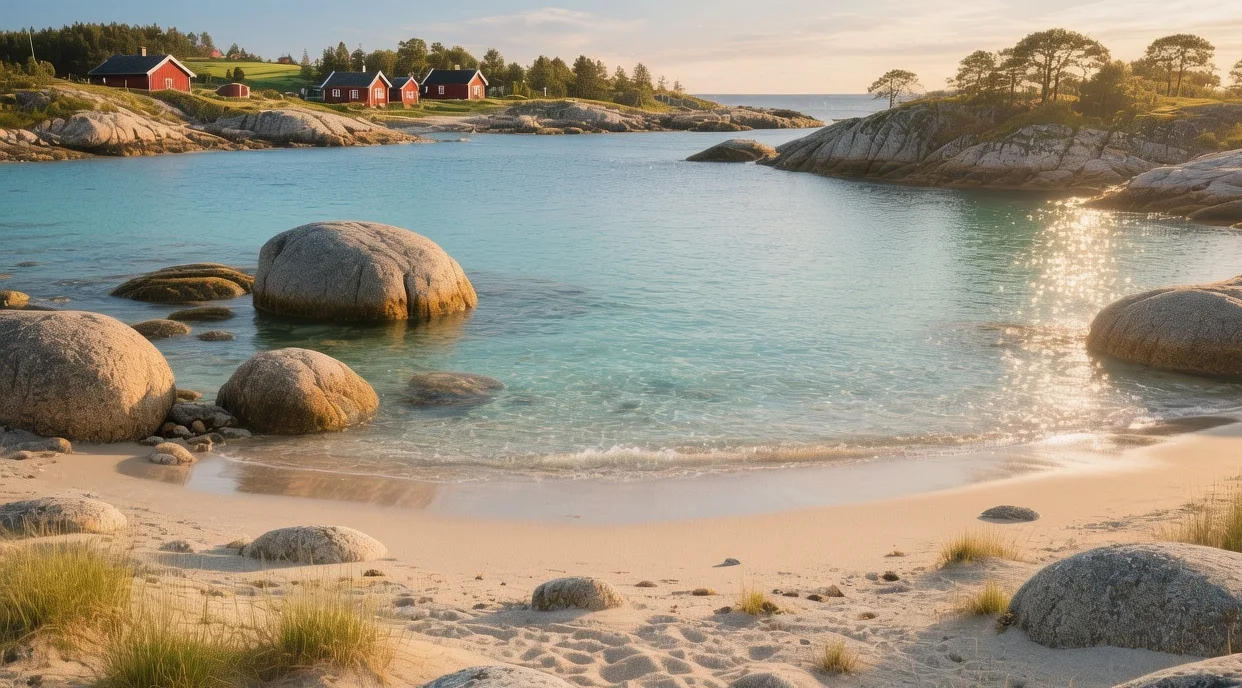
Kristiansand Beaches: Where White Sand Meets Southern Archipelago
I step onto the sand at Bystranda at 11 a.m. on a Saturday in mid-July. The water shimmers pale blue and still. I pay 50 kroner for an ice cream and sit watching children chase waves along the shore. Kristiansand sits on Norway's south coast, where wide sandy bays meet thousands of rocky islets. Beaches stretch east and west from the city centre—some easy to reach, others hidden down winding lanes. This is where the country enjoys its warmest summers. You do not need to travel far to find a quiet stretch of shore. It waits just around the headland.
Why Kristiansand Beaches Matter
These shores have drawn visitors for generations. Bystranda was the first public beach, laid out in the early 1900s so everyone could enjoy the water, not just those with private land. Søgne and Flekkerøy further out show how communities have lived with the sea for centuries—fishing, sailing, and building along the shore. Today the beaches form one of Norway's most accessible coastal networks, linked by paths, ferries, and quiet roads. Popularity brings pressure. Bystranda fills completely on warm weekends, and summer parking grows scarce. Some shoreline areas feel overdeveloped, and litter accumulates where crowds gather most.
The Best Time to Experience Kristiansand Beaches
Late June through mid-August offers warmest water and longest days. Air sits between 15°C and 22°C (59°F–72°F). Sea temperature reaches 17°C–19°C (63°F–66°F)—comfortable for swimming. July is busiest; weekdays stay quieter. May and September bring readings at 10°C–17°C (50°F–63°F). The sea feels cooler but beaches empty out. Some seasonal cafes close. Winter brings -1°C to 4°C (30°F–39°F). The shore stays beautiful and wild, but swimming suits only the brave. For warm water plus space, visit early July on a weekday. For sunset and silence, visit late August or early September.
Approximate Budget for a 7-Day Trip
Prices are per person in Norwegian kroner.
- Accommodation: 850–1,350 per night mid-range. 5,950–9,450 total. Beach camping 150–280 per night. Budget guesthouse 400–600 per night.
- Food: Main meal 165–265. Breakfast 80–130. 1,100–1,500 packing picnics. 2,000–2,900 eating out mostly.
- Transport: Train from Oslo 4 hours 30 minutes; 390–490 one way. Local bus 38 per ride. City ferry 50. Bike rental 180 daily. 650–950 for the week.
- Attractions & Extras: Most beaches free. Ferry to islands 80–120 return. Equipment rental 100–200. Coffee and cake 45–90.
- Miscellaneous: 450 for unplanned costs.
Total: 8,000–14,200 kroner. Beachfront kiosks charge nearly double for drinks and snacks compared to supermarkets in town. Pack a cooler and save significantly.
Essential Kristiansand Beaches Experiences
- Spend a Day at Bystranda. Golden sand right beside the city. Shallow calm water suits families. Facilities stay close. Arrive before 11 a.m. to claim a spot. Skip this on sunny weekends; it becomes packed and noisy.
- Take the Ferry to Flekkerøy. A short ride carries you to an island with wide beaches, coastal paths, and old fishing cottages. Views stretch across open sea. Walk the loop trail to see the shore from all angles. Allow half a day.
- Visit Søgne and Hidden Bays. West of the city, scattered coves nestle between skerries. Sand mixes with smooth rock. Each feels like your own discovery. Drive or cycle between them; some require short walks.
- Swim at Hamresanden. East of centre, long shallow beach where the river meets the sea. Water warms fast and stays calm. Birdwatching happens nearby. It feels quieter than Bystranda even in peak season.
- Walk the Coastal Path at Odderøya. Right in town, the old peninsula offers rocky coves and sheltered spots. You swim among trees and old fortifications. It feels wild yet minutes from cafes.
- Watch Sunset at Møvik. Wide west-facing beach catches evening light perfectly. The sun dips directly into the sea. People gather quietly. Arrive 30 minutes early; parking fills fast.
- Ride the Electric City Ferry. Glides silently across the harbour. Connects beaches, islands, and viewpoints. Sit outside and feel the breeze. It runs late in summer, so you return after dark.
Hidden Gems Most Travelers Miss
- Stranda Beach. Beyond the main crowd area at Bystranda. Walk east past the headland. Sand stretches on and far fewer people go that far. It stays quiet all day.
- Herøya Coves. Small rocky beaches tucked between trees on the industrial peninsula. Surprising and peaceful. Locals swim here; visitors rarely find their way.
- Justøy Island. Further out, connected by bridge. Quiet lanes, old boathouses, and a gentle shoreline. No crowds and almost no facilities. Bring everything you need.
- Bystranda at Dawn. Everyone visits after lunch. Come at 6 a.m. and you will have the whole beach to yourself. The water looks like glass.
Cultural & Practical Tips
- Do not leave towels or bags unattended to reserve spots. This is not accepted here. Arrive and claim your place when you arrive.
- Check ferry times carefully. Services reduce after 6 p.m. and run less frequently on Sundays. Do not get stranded on an island.
- Take all rubbish with you. Bins are limited outside the main beaches. Keep the shore clean for everyone, including wildlife.
- Respect private property. Some coves sit beside homes. Keep noise low and do not walk through gardens to reach the water.
- Wear non-slip shoes on rocky shores. Skerries can be slippery even when dry. Flip-flops offer little grip and hurt your feet over long walks.
- Book island accommodation months ahead in July. Rooms are few and vanish fast. Camping spots also fill early.
- Tipping is not expected. Round up if service pleased you, but no extra is required.
Essential Visitor Information
Location & Access: Kristiansand, Vest-Agder. South coast Norway. Train from Oslo S in 4 hours 30 minutes. Fly to Kristiansand Kjevik then bus 20 minutes to centre. E18/E39 runs directly. Bystranda 10 minutes walk from city centre. Other beaches 15–45 minutes by bus, car, or ferry.
Tickets & Booking: Most beaches free. Island ferry return 80–120 kroner. Guided coastal kayak tours 350–500 kroner. Booking recommended for tours July and August.
Operating Hours: Beaches open year-round daylight hours. Facilities and seasonal cafes 10 a.m.–6 p.m. June–August; shorter hours rest of year. Ferries run 7 a.m.–10 p.m. peak season.
Visit Duration: Minimum two days. Four to five days lets you explore east, west, and islands without rushing.
Family Suitability: Excellent. Shallow water, lifeguards in summer, good changing facilities. Stroller access good on main beaches; rocky spots need care.
Timing: Early July offers warmest water. Weekdays stay quietest. Late afternoon brings golden light and thinner crowds.
Highlights: Bystranda, Flekkerøy island, Søgne coves, Hamresanden, Odderøya coastal path, Møvik sunset.
Nearby & Day Trip: Mandal 45 minutes south. Lindesnes lighthouse 1 hour. Setesdal valley 1 hour north. Arendal 1 hour 30 minutes east. All make comfortable half-day or full-day visits.
Conclusion: Travel with Care, Not Just Sun
Kristiansand's beaches offer the warmest and most accessible shore in Norway. Crowds gather where the sand is widest. Prices rise in peak season. But turn any corner and you find quiet—rock, pine, and water meeting gently. These shores belong to everyone. Treat them well. Leave nothing behind but footprints. And remember: the best beach is not always the most famous one. It is the one you find for yourself.
Comments
Post a Comment