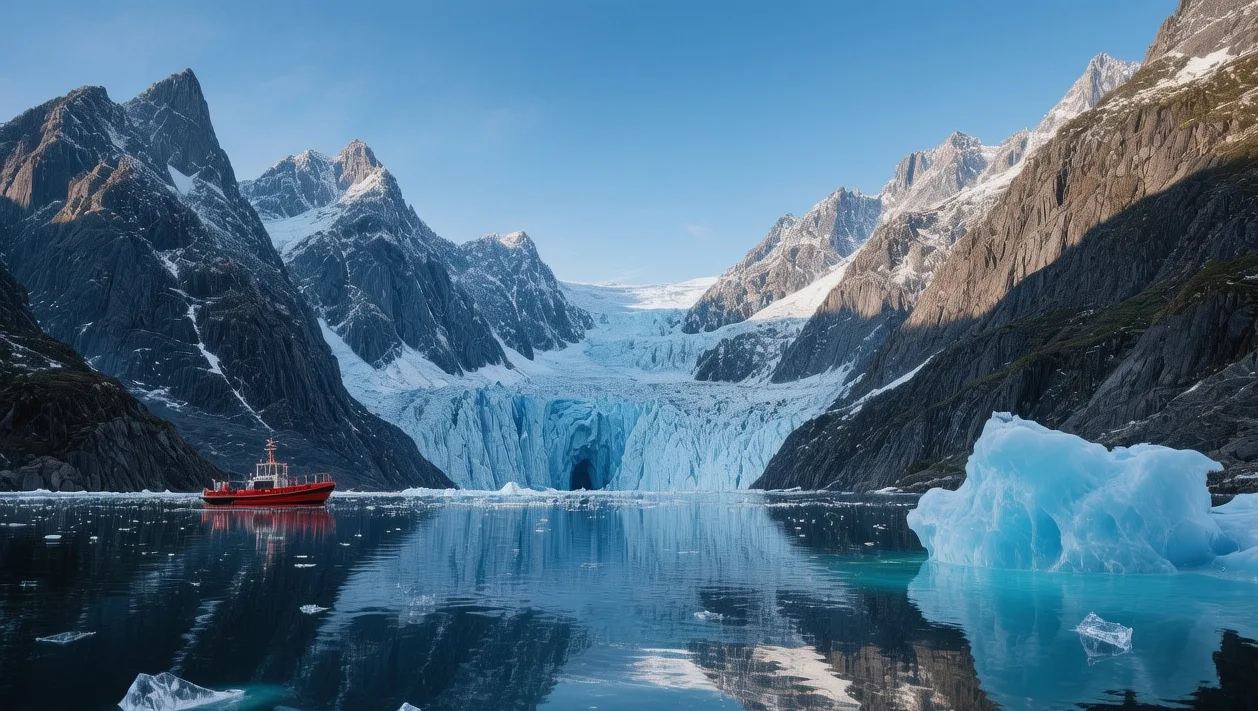
Magdalenefjorden: Where Arctic Ice Meets Whaling History
I stand on the gravel shore at Gravneset at 10 a.m. The water lies perfectly still. Waggonway Glacier reflects whole and unbroken on the surface. The air feels close to freezing even in July. I paid no entry fee. No ticket booth exists here. No cafe stands nearby. I carry all my own water and extra layers. A guide explains we stay on marked paths. We do not wander. Polar bears hunt along these coasts. The danger is real and never far from mind.
Why Magdalenefjorden Matters
This fjord cuts eight kilometres into Spitsbergen's northwest coast. Dutch and English whaling fleets arrived in the 1600s. They killed thousands of bowhead whales until the population collapsed within a single century. Gravneset holds roughly 130 graves from that era. The oldest markers date to the 1640s. Today the fjord sits inside Nordvest-Spitsbergen National Park. Heavy fuel oil is banned here, which keeps large cruise ships away. That protects the environment but also limits how many people can visit. Access is strictly controlled. Some visitors find the rules frustrating. Landing times are short, often just two hours. You cannot hike freely. You must stay with your group. These restrictions feel inconvenient until you understand why they exist. This place remains fragile. The ecosystem recovers slowly, if at all.
The Best Time to Experience Magdalenefjorden
Access runs mid-June through late August. That is when expedition cruises operate and sea ice clears from the entrance. July brings the most stable conditions. Daytime temperatures sit between 3°C and 7°C (37°F–45°F). Nights stay above freezing but only just. Midnight sun means light never truly fades. Late July and early August offer the calmest seas and lowest chance of ice blocking entry. June and late August carry more variable weather. Fog can roll in and strand ships offshore for hours. Temperatures drop to 1°C–4°C (34°F–39°F). September through May, the fjord closes to visitors. Sea ice, darkness, and extreme cold make travel unsafe. Even dedicated Arctic expeditions rarely attempt it.
Approximate Budget for a 7-Day Trip
All prices in Norwegian Kroner per person:
- Expedition Cruise — Shared cabin: 32,000. Private cabin: 58,000. Luxury expedition: 95,000+.
- Pre/Post Accommodation — Longyearbyen guesthouse: 2,400. Hotel: 4,200.
- Food & Supplies — Included on most cruises. Extra snacks and gear: 1,200.
- Equipment & Fees — Thermal layer rental: 900. Park landing fees: usually included. Guide and safety gear: included.
- Miscellaneous — Travel insurance, extra warm socks, waterproof gloves: 1,500.
Total on a shared-cabin budget: NOK 38,000. Total with private cabin: NOK 65,000. Premium luxury cruises cost double or more. Highly advertised "expedition" cruises from Longyearbyen that promise full days ashore are often overpriced. They rarely deliver on extra time — landing limits apply to every operator. Choose a standard 7–10 day northwest Spitsbergen itinerary instead. You see more sites for less money.
Essential Magdalenefjorden Experiences
- Gravneset Historic Landing — Zodiac ashore to the whalers' cemetery. Low mounds and weathered markers mark three centuries of Arctic hardship. Skip if you have limited mobility — the beach landing requires stepping from boat to rock in cold surf.
- Waggonway Glacier View — Cruise slowly toward the ice face. Floating ice chunks drift past. Calving happens occasionally but cannot be guaranteed. Keep binoculars ready.
- Midtre Raudfjordbre Panorama — Second glacier visible from the fjord mouth. Smaller than Waggonway but equally striking. Best viewed from the ship's deck before landing.
- Arctic Wildlife Watch — Seals on ice floes, seabirds diving, reindeer on distant slopes. Walruses appear occasionally but not reliably. Polar bear sightings are rare and never guaranteed.
- Zodiac Cruise Along Shoreline — Slow loop near the water's edge. You see crevasses, bird cliffs, and patterns in the glacial moraine. Dress warmly — wind cuts through heavy layers.
- Silence on Still Water — Turn off engines and drift. No photos, no talking. Just listen to the fjord. Guides rarely schedule this, so ask early.
Hidden Gems Most Travelers Miss
- Gravneset Outer Spit — Walk the marked path to the narrow tip. Fewer people make the full ten-minute trek. Views open across the entire fjord.
- Glacial Melt Streams — Tiny waterfalls trickling down mountain faces. They appear only on warmer days. Look closely from the ship deck.
- The "Other" Beach — A second gravel strip near the fjord head. Ships rarely land there. If your captain anchors within sight, watch how light shifts across its golden sand. The main Gravneset landing has become very crowded in recent years. It feels overrated — the best moments happen away from the group, at the spit or watching from deck.
- Bird Cliffs Above the Glacier — Thin dark lines on rock faces mark nesting spots. Bring binoculars. You will see black guillemots and little auks darting below the ridgeline.
Cultural & Practical Tips
- Never step outside marked paths. Permafrost takes decades to recover from footprints. One shortcut can scar the tundra for forty years.
- Do not touch anything. Whalers' grave markers, driftwood, bones, and rocks all stay where you find them. Taking even a small stone counts as theft and carries heavy fines.
- Keep your gear secured. Wind gusts can reach 80 km/h without warning. Hats, gloves, and loose items blow overboard easily and become marine debris.
- Respect silence ashore. The wildlife here has no fear of humans. Loud voices drive birds and reindeer away. Speak softly or not at all.
- Do not expect long ashore. National park rules limit most landings to two hours. Plan your photos quickly. You will not get extra time.
- Pack waterproof and windproof outer layers. The forecast changes hourly. Sunny and calm can turn to sleet and gale in thirty minutes.
- Do not travel independently. No road leads here. Kayaking or boating in unescorted is illegal and dangerous. Polar bear risk is high.
Essential Visitor Information
Location & Access: Magdalenefjorden cuts into northwest Spitsbergen at 79°34'N, 10°53'E, inside Nordvest-Spitsbergen National Park. No roads or settlements exist nearby. Access only by ship. Expedition cruise from Longyearbyen — standard 7–12 day itinerary. Charter vessel — significantly more expensive. Private boat — restricted and heavily regulated. Large cruise ships are banned due to fuel rules.
Tickets & Booking: Included in expedition cruise fare. No separate entry ticket. Landing permit is arranged by the operator. Booking essential — reserve 6–12 months ahead for July departures.
Operating Hours: No set hours. Visits happen during daylight (which never fully ends June–August) as part of cruise schedules. Season runs approximately June 15 through August 31. Outside these dates, ice and darkness prevent access.
Visit Duration: Shore landing 1.5–2 hours. Fjord transit by ship 1–2 hours. Total experience 3–4 hours. You do not stay overnight.
Family Suitability: Limited. Minimum age usually 6–10 depending on operator. Landing requires stepping from Zodiac onto uneven rock. No restrooms, shelters, or facilities exist ashore. Not suitable for strollers or those with walking difficulties.
Timing: Best season: late July to early August — calmest seas and highest chance of clear views. Best time of day: morning landings when light is soft and wind is usually calmest.
Highlights: Gravneset whalers' graves, Waggonway Glacier face, still-water reflections, Arctic wildlife watching, Zodiac shoreline cruise.
Nearby & Day Trip: Danskøya — historic whaling sites 3 hours north by ship. Amsterdamøya — beach and ruins 2 hours away. Liefdefjorden — glacier and bird cliffs 4 hours east. Longyearbyen — departure point; no day trip possible, only as part of multi-day voyage.
Conclusion: Travel with Humility, Not Just Wonder
Magdalenefjorden delivers powerful beauty. It also carries heavy history — graves of men who died young, whales hunted nearly to disappearance, an environment still recovering from centuries of harm. You do not conquer this place. You visit it briefly and leave it as you found it. Stay on the path. Take only photos. Leave quietly. What matters most to you here — the glacier, the history, or the chance to stand somewhere almost untouched?
Comments
Post a Comment