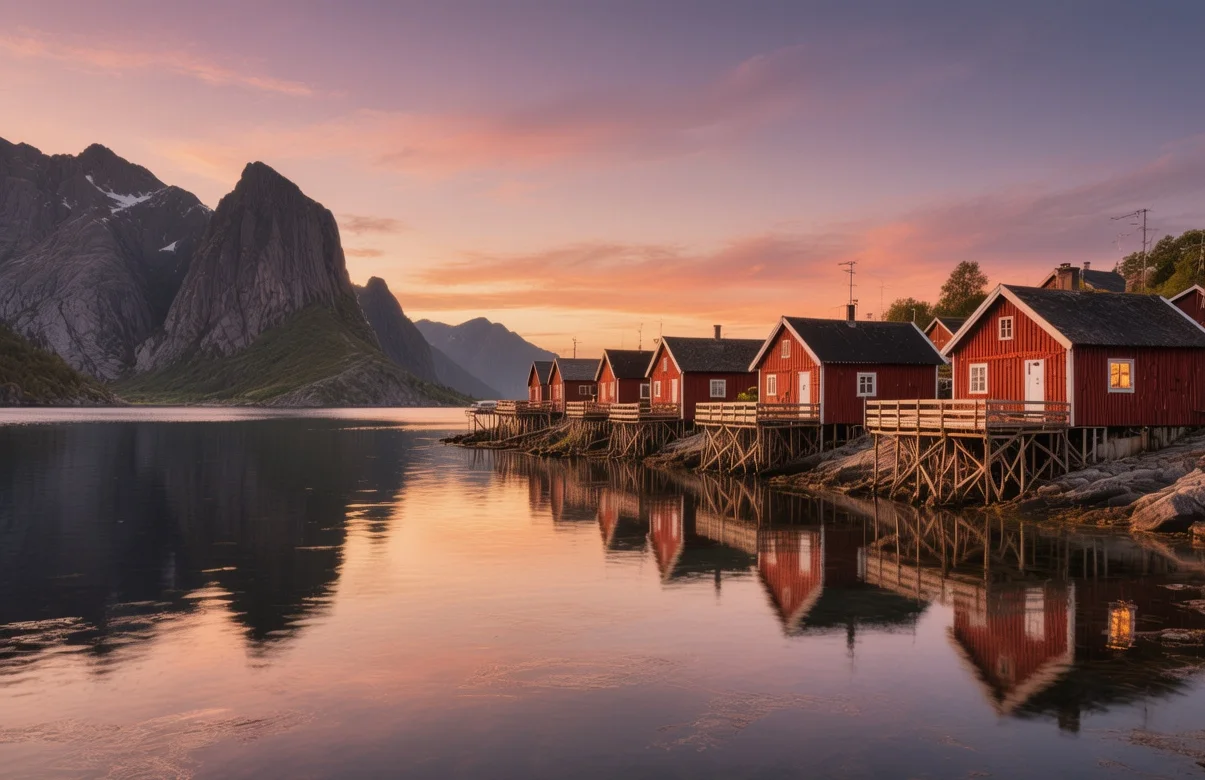
Nusfjord: Where Historic Fishing Roots Meet Lofoten Waters
I walk the wooden quay at 9 a.m. in late June. Rows of red rorbu houses stand shoulder to shoulder along the water. Their reflections stretch across the still surface. I paid no fee to enter the village. A fisherman unloads crates of fresh cod near the dock. He nods as I pass. Most buildings date back a century or more. Weathered timber, pitched roofs, and narrow lanes feel unchanged by time. Yet people live and work here still. This is no museum frozen in glass. It breathes and functions. That makes all the difference.
Why Nusfjord Matters
Nusfjord sits on the southern shore of Flakstadøya in the Lofoten archipelago. Settlement here stretches back at least one thousand years. For centuries, this was one of the busiest fishing stations along the coast — seasonal workers arrived each winter to catch and dry cod for export across Europe. The compact layout — rorbues, docks, storage lofts, and a small church — represents the traditional way of life that shaped Lofoten. By the mid-20th century, the village declined. Many seasonal stations closed. Nusfjord faced demolition. Local people fought to preserve it. Restoration began in the 1990s. Today it stands as one of the best-preserved traditional fishing villages in Norway. That success brings pressure. Parking fills fast. Day visitors wander through yards and private lanes. The village balances heritage and living community. That tension is real. Be respectful — stay on public paths and treat this as someone's home.
The Best Time to Experience Nusfjord
Mid-June through mid-July brings midnight sun and the longest days. Daytime temperatures sit between 10°C and 16°C (50°F–61°F). Nights stay bright. Crowds are largest — arrive before 9 a.m. or after 6 p.m. to see the village quiet. Late July and August offer warmer weather — 12°C–18°C (54°F–64°F) — plus thinner crowds and longer evenings. September brings golden light, autumn colours, and first Northern Lights sightings. Temperatures drop to 8°C–12°C (46°F–54°F). October through April, the village quiets deeply. Winter fishing season runs January through March — the most authentic time to visit, though days are short and weather can be harsh. Temperatures fall to -2°C to -7°C (28°F–19°F). Snow softens the red timber buildings beautifully. Many facilities close or operate reduced hours. Check ahead before travelling.
Approximate Budget for a 7-Day Trip
All prices in Norwegian Kroner per person:
- Accommodation — Restored rorbu in Nusfjord: 3,200. Guesthouse in nearby Ramberg: 2,400. Private cabin: 4,900.
- Food — Groceries plus local fish meals: 1,900. Mixed market and restaurant meals: 3,600. Eating out regularly: 5,500.
- Transport — Flights to Leknes or Svolvær: 3,100–4,500 round trip. Rental car shared between two: 2,600 total. Local bus: 90 round trip.
- Activities — Harbour and museum entry: 120. Guided fishing trip: 1,950. Cod drying area tour: included. Kayak rental: 1,400.
- Miscellaneous — Warm layers, waterproof gear, travel insurance: 850.
Total on a modest summer budget: NOK 10,500. Total with overnight rorbu and guided activities: NOK 16,200. Premium "heritage lodging" packages charging double standard rates are overpriced. You experience the same village and harbour from a standard rorbu. Book directly through local operators to save 25–30 percent.
Essential Nusfjord Experiences
- Harbour Quay Walk — Stroll the full length of the wooden dock. Historic buildings line both sides. Fishing boats bob at mooring. Arrive early to catch light across the water without crowds. Skip if you want total isolation — this is a working harbour.
- Cod Drying Racks Visit — See how stockfish has been prepared here for centuries. Racks line the shore. Cold dry air preserves the fish without salt. The smell is strong — that is part of the process, not something to avoid.
- Small Village Museum — Displays on fishing seasons, rorbu life, and the village's restoration. Old tools, photographs, and everyday objects. Allocate one hour. It is compact but packed with stories.
- Stay Overnight in a Rorbu — Sleep in a traditional fisherman's cottage. Waking here before day-trippers arrive feels special. The village belongs to you in the early morning. Book months ahead — rooms are few.
- Short Coastal Hike — A marked trail climbs gently behind the village. Views across the fjord and surrounding peaks. 1.5 hours round trip. Easy terrain suitable for most abilities.
- Traditional Fish Meal — Dried or fresh cod served simply. Local restaurant uses daily catch. Prices are high but portions are generous. Book ahead in summer.
Hidden Gems Most Travelers Miss
- Old Lane Behind Rorbues — A narrow path runs parallel to the main quay. Fewer people walk here. You see the backs of the buildings, small gardens, and quiet doorways. Respect privacy — keep voices low.
- Evening Harbour Reflection — Stay past sunset in summer. The village lights glow on the water. Most buses leave by early evening. You may have the quay almost to yourself.
- Spring and Autumn Light — May or September offer soft golden hours. The main summer viewpoint has grown crowded and overrated. Visit in shoulder season for real atmosphere.
- Short Walk to Nearby Bays — A paved path leads along the shoreline away from the village. Quiet coves and old boat foundations sit hidden around the headland. Bring binoculars — seabirds gather here.
Cultural & Practical Tips
- Respect private property. Many buildings are lived in. Do not enter yards, lean on fences, or photograph people without asking.
- Park only in designated areas. The village is small. Illegally parked cars block access for residents and emergency vehicles. Walk five minutes from the main lot if needed.
- Accept the smell. Drying cod creates a strong, distinctive scent. It is not dirty or rotting — it is preserved fish, the lifeblood of this place. You get used to it fast.
- Wear sturdy non-slip shoes. Wooden quays stay damp and slippery. Watch your step near the water's edge.
- Book accommodation early. Only a handful of rooms exist. They sell out 4–6 months ahead in summer. Last-minute options are expensive or gone entirely.
- Do not expect nightlife or shops. Nusfjord is quiet. Facilities are basic. Buy supplies in nearby Ramberg or Leknes before arriving.
- Support local businesses. Eat at the village restaurant. Buy postcards and gifts from the small shop. Your money directly supports the community maintaining this place.
Essential Visitor Information
Location & Access: Nusfjord sits on Flakstadøya, Lofoten, at 68°02'N, 13°12'E. 10 km off E10 highway. Nearest town: Ramberg — 15 minutes by car. By air: Leknes Airport — 30 minutes. Svolvær Airport — 45 minutes. By bus: local service to nearest junction then short taxi or walk.
Tickets & Booking: Village access: free. Museum entry: NOK 120. Guided fishing trip: NOK 1,800–2,100. Rorbu accommodation: NOK 2,800–3,800 per night. Booking essential for accommodation and meals — reserve 4–6 months ahead.
Operating Hours: Outdoors accessible all day. Museum and shop: May–Sept daily 10:00–16:00. Oct–Apr reduced hours or closed — check locally. Restaurant service seasonal.
Visit Duration: Minimum 2 hours. Recommended half day or overnight. Staying the night lets you experience the village without crowds.
Family Suitability: Good for children. Flat ground and safe quaysides — keep close watch near water. No stroller access on wooden planks. Restrooms available at main car park.
Timing: Best season: late June to early July for midnight sun; September for golden light and fewer crowds. Best time of day: before 9 a.m. — quietest and best light on the harbour.
Highlights: Historic harbour quay, cod drying racks, village museum, overnight rorbu stay, coastal viewpoint hike.
Nearby & Day Trip: Ramberg — 15 minutes, white sand beach and services. Reine — 30 minutes, scenic fjord village. Haukland Beach — 25 minutes, wide golden shore. Å — 40 minutes, southernmost Lofoten village.
Conclusion: Travel with Respect, Not Just Nostalgia
Nusfjord preserves the past but does not belong to it. People live, work, and carry on here. Some days the crowds feel overwhelming. Some modern touches sit beside old timber. That is how preservation works — alive, changing, imperfect. Come early. Stay quietly. Leave gently. What matters most to you here — the photographs, the history, or knowing you helped keep a living community strong?
Comments
Post a Comment