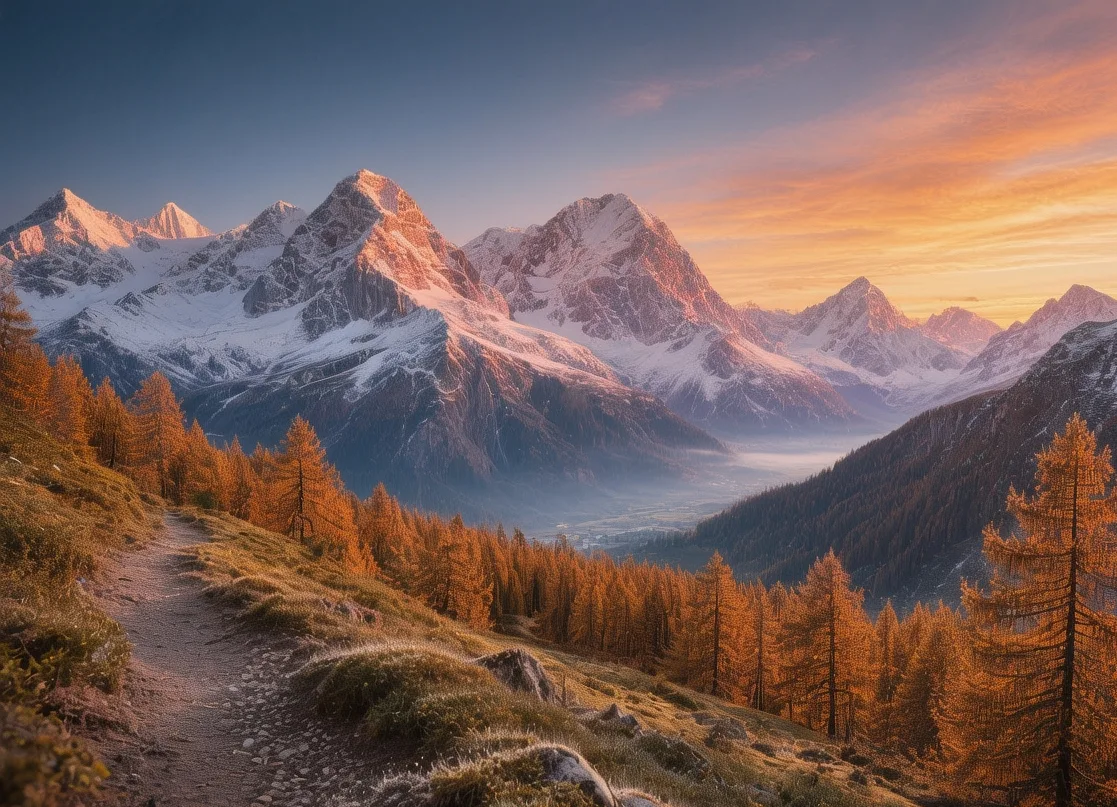
Pontresina: Where Glacier Meets Village Heart
I walk along the main lane at 10:05 on a bright August morning. The air feels cool and sharp at 1,805 metres. I buy a warm honey nut tart from a bakery beside the stream. It costs four francs. Tall stone hotels stand beside timber houses, their balconies heavy with flowers. The Bernina range rises directly above — jagged, snow-dusted, crowned by glaciers that glow pale blue in sunlight. Pontresina sits where three valleys meet. It has welcomed visitors for more than 150 years. Yet it never turned into a playground. The mountains remain the real attraction here. The village simply gives you the best seat in the house.
Why Pontresina Matters
By the 1860s, artists and mountaineers were coming here to paint and climb. The Rhaetian Railway arrived in 1908, bringing steady visitors ever since. Today Pontresina balances old charm with practical access. It sits closer to glaciers than St. Moritz, quieter than the lakeside resorts. You can walk from the station to a glacier trail in 45 minutes without taking a second vehicle. That proximity comes with trade-offs. The main street fills with day trippers between 11 AM and 3 PM. Parking is scarce and expensive. Some historic guesthouses have not updated facilities — rooms feel small and bathrooms compact. That is part of the character, but it surprises travellers expecting modern luxury.
The Best Time to Experience Pontresina
Late June through mid-September offers the warmest conditions. Daytime temperatures sit between 13°C and 21°C, or 55°F and 70°F. Nights drop to 6°C to 10°C, or 43°F to 50°F. July and August see the most visitors. September brings golden larch colour, thinner crowds, and readings of 10°C to 17°C, or 50°F to 63°F. This is widely considered the best month. Winter from December through March delivers dependable snow and clear crisp days. Averages sit between -5°C and 2°C, or 23°F and 36°F. The valley catches sun but also holds cold air — mornings can feel bitter. Spring thaw closes higher trails until mid-June. Some mountain huts open only July through September. Check opening dates before booking.
Approximate Budget for a 7-Day Trip
Prices are in Swiss francs per person.
- Accommodation: 150–300 francs per night. Historic hotels with breakfast included sit at the upper end. Family-run guesthouses offer simpler rooms at 130–200 francs. Staying in nearby Celerina saves 30 to 60 francs nightly.
- Food: 65–100 francs daily. Mountain restaurant lunch averages 24–42 francs. Village bakeries and casual cafés serve meals for 14–22 francs. Coffee costs roughly 5 francs.
- Transport & Lift Pass: 40–65 francs daily. Rhaetian Railway connects to St. Moritz and Chur. Local buses run within the valley. 6-day Bernina lift pass approximately 385 francs.
- Attractions: 25–55 francs total. Morteratsch Glacier trail is free. Diavolezza cable car one-way roughly 32 francs. Roseg Valley horse carriage ride costs extra.
- Miscellaneous: 25–45 francs daily. This covers drinks, snacks, and small purchases.
Total estimated 7-day cost: 1,750–2,850 francs per person.
Organised glacier tours from St. Moritz charge 95–130 francs per person. Independent travel costs less than 12 francs round trip by train. You stay longer and set your own pace. The hotel restaurants on the main street add a clear premium. Walk one lane back and similar meals cost 12 to 18 francs less.
Essential Pontresina Experiences
- Walk the Morteratsch Glacier trail — The wide path climbs gently toward the ice tongue. Stone markers show how far the glacier has retreated since 1900. The numbers are striking. Round trip takes roughly three hours. Skip if you have difficulty walking over uneven ground.
- Ride the Bernina Railway to Diavolezza — The line climbs through alpine meadows and past small lakes. At Diavolezza the cable car lifts you to 2,973 metres. The panorama opens across glaciers and peaks. Sit on the right side going up. Start early; wind often rises after 11 AM.
- Explore the Roseg Valley — The valley branches south from Pontresina. A flat trail follows the stream beneath forested slopes. At the head sits a glacier tongue. Walk or take the horse carriage. Allow half a day. The carriage costs extra but feels worth it once you see the valley ahead.
- Climb the Muottas Muragl viewpoint — The funicular climbs from the valley floor to a terrace at 2,454 metres. The view looks straight down the Upper Engadin chain of lakes. Sunrise visits are special — book ahead; spaces fill fast.
- Stroll the historic centre — 19th-century hotels stand beside painted Engadin houses. Carved wooden balconies and stone facades show the village’s transition from farming settlement to mountain resort. Plaques explain building history. Most people walk past without noticing.
- Hike the Bernina Pass high trail — From Ospizio Bernina the path runs above the lake toward Diavolezza. It stays above the tree line with constant glacier views. Allow four hours. Carry windproof clothing — this stretch is fully exposed.
Hidden Gems Most Travelers Miss
- The trail to Champlönch branches off the Roseg path. It climbs gently through larch forest to a quiet meadow. A tiny chapel sits at the edge. Almost no one walks this far. The silence feels complete.
- The old footpath from Pontresina to Morteratsch runs through the forest parallel to the road. It sees far fewer people than the main glacier approach. You hear the stream more than voices. It adds 30 minutes to the walk but feels entirely different.
- Lake Lej da Segl sits just below the Roseg trailhead. The far shore stays quiet even in summer. The water reflects the peaks perfectly early morning. Bring a seat pad and sit — no crowds gather here.
- The main terrace at Diavolezza charges premium prices. The small self-service hall inside serves the same food at lower cost. The windows frame the same view. Most people walk straight past to pay extra outside.
Cultural & Practical Tips
- Book glacier and high-altitude trips early. Spaces on guided walks and sunrise visits fill weeks ahead. Weekends sell out fastest.
- Carry layers and windproof outerwear. Muottas Muragl and Diavolezza sit fully exposed. Temperatures can feel 6 to 8 degrees colder than the village. Wind chill drops further.
- Respect quiet zones. Pontresina has been a health resort since the 19th century. Afternoon rest periods are observed. Keep voices low and music off between 12 PM and 2 PM.
- Check bus and train times carefully. Services run hourly but connections thin out in the evening. Missing the last train means an expensive taxi ride back to your accommodation.
- Stay on marked paths. The glacier is retreating and the ground remains unstable. Hidden crevasses exist off-trail. Do not explore alone or without local guidance.
- Bring cash. Smaller cafés, bakeries, and mountain huts do not always take cards. Signal drops out in side valleys. Plan before you leave the village centre.
Essential Visitor Information
Location & Access: Pontresina, Canton Graubünden. Approximately 185 kilometres or 115 miles southeast of Zurich. By Rhaetian Railway via Chur and St. Moritz — total journey roughly 3 hours. The train station sits 5 minutes’ walk from the main lane. By car, take A13 then follow signs to St. Moritz and Pontresina. Parking fills before 10 AM on weekends; use public transport if you can.
Tickets & Booking: Local day pass approximately 28 francs. 6-day Bernina lift pass approximately 385 francs. Children 6–16 receive half price. Book Diavolezza and Muottas Muragl sunrise slots online in advance.
Operating Hours: Village stays accessible year-round. Lifts run mid-December to mid-April and late June to late September. Some mountain huts open July–September only. Shops open 9 AM to 6 PM weekdays, close earlier Saturdays, stay closed Sundays.
Visit Duration: Allow at least three full days. Five to seven days lets you explore Morteratsch, Roseg, Bernina Pass, and Muottas Muragl without rushing. Two days suffices if you focus on the glacier and one high viewpoint.
Family Suitability: Families welcome. Roseg and Morteratsch lower trails are flat and stroller-friendly. Shallow streams exist — keep children close to the water. Restrooms sit near major trailheads. Higher lifts require sturdy shoes and warm layers for children.
Timing: Mid-September balances warm days, golden larch colour, thinner crowds, and fair prices. Arrive before 9:30 AM to have glacier trails nearly to yourself. Weekends draw day trippers from across the border.
Highlights: Morteratsch Glacier trail, Diavolezza panorama, Roseg Valley, Muottas Muragl sunrise, Bernina Pass high walk, historic village centre.
Nearby & Day Trip: St. Moritz sits 10 minutes by train. Lake Silvaplana and Lake Sils are 20 minutes. Engadin’s Lower Valley villages and Scuol spa are 45 minutes. Swiss National Park takes 1 hour by train. Returning here each evening gives quieter streets and clearer skies.
Conclusion: Travel with Perspective, Not Just View
Pontresina draws you with its backdrop — glaciers and peaks that have drawn artists and climbers for generations. But the village itself holds quiet charm: carved balconies, narrow lanes, the stream rushing through centre. The mountains do not change for visitors. They remain grand and indifferent. When you stand somewhere beneath peaks older than all human memory, will you also respect the small place that hosts you?
Comments
Post a Comment