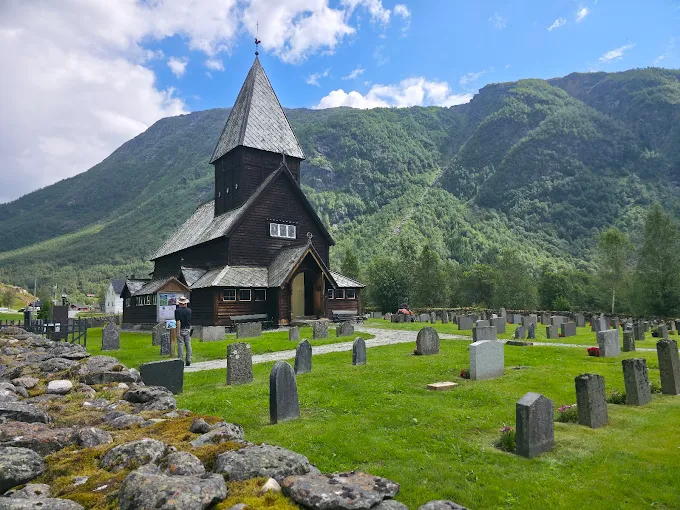
Røldal Stave Church: Where Ancient Timber Meets Mountain Silence
I step through the low wooden doorway just after ten in the morning. The air inside smells of pine resin, old wood, and damp earth. Sunlight filters through narrow slits in the walls, casting thin golden streaks across the rough-hewn floor. A single candle burns near the altar. It is quiet enough to hear the wind moving through the trees outside. This structure has stood here since the thirteenth century. It has survived storms, fires, and shifting borders. It is not the grandest church in Norway. It does not draw the largest crowds. But it holds a kind of quiet weight few places can match.
Why Røldal Stave Church Matters
Built sometime around 1250, this wooden church sits in a valley where trade routes once connected east and west Norway. It served as both a spiritual center and a landmark for travelers crossing the mountains. The construction uses traditional stave techniques—vertical posts supporting the roof, no nails holding the main framework together—carried down from earlier medieval times. Much of the interior woodwork remains original, including carved details that blend Christian motifs with older local traditions. Over the centuries, the building has been repaired and altered, most notably in the 19th century when parts were taken down and rebuilt. Some of that later work lacks the care of the original builders; certain panels fit poorly and show rougher craftsmanship. Still, the core structure remains largely as it was when first raised. It stands as one of the best-preserved medieval wooden buildings in the country, and it offers a direct connection to the lives of people who lived here eight hundred years ago.
The Best Time to Experience Røldal Stave Church
The church opens primarily from May through September. Early May brings fresh green to the valley, though mountain roads may still hold patches of snow. Temperatures sit around 8°C to 12°C (46°F to 54°F). June through August is the warmest period, with highs reaching 16°C to 20°C (61°F to 68°F) and long daylight hours. This is also when the area sees the most visitors. September offers crisp air and autumn color, with temperatures dropping to 10°C to 14°C (50°F to 57°F). The site closes for winter, as snow covers the valley and staff are not present. Even when closed, you can walk the grounds, but you will not see the interior. Arrive before 11 a.m. if you want space to look around without groups moving through constantly.
Approximate Budget for a 7-Day Trip
These figures cover one person staying in the Røldal area and visiting the church plus nearby sites.
- Accommodation: 700–950 NOK per night; 4,900–6,650 NOK total. Basic guesthouses and cabins are standard here. The closest large resort charges nearly double for rooms that are not significantly better. Book a small family-run place instead.
- Food: 350–500 NOK daily; 2,450–3,500 NOK total. Simple meals at local cafes are reliable. The restaurant right next to the church is overpriced for what you get; walk five minutes to the village grocery store for supplies and eat at one of the casual dining spots down the road.
- Transport: 400–600 NOK daily if renting a car; 2,800–4,200 NOK total. Public buses cost less but run infrequently.
- Attractions & Entry: 1,200–1,600 NOK total, including church entry and nearby hiking trails.
- Miscellaneous: 700–1,000 NOK for water, snacks, and small purchases.
Total estimated 7-day cost: 12,050–16,950 NOK
Essential Røldal Stave Church Experiences
- Walk the perimeter before entering. Notice how the wood changes color from dark brown to silver where sun and wind have touched it. You will see faint tool marks on the exterior planks.
- Stand quietly in the main nave for a few minutes. Do not rush. The scale is smaller than most modern churches, and the space feels intimate rather than imposing.
- Look closely at the altar and front interior panels. Some figures have been repainted many times; the oldest layers show through in places where paint has worn thin.
- Visit the small adjacent museum building. It holds old photographs and local artifacts. Skip it if you are short on time—it is modest and covers ground you may already know.
- Walk the short path to the old graveyard nearby. Stone markers date back centuries. Some are weathered beyond reading. Respect the space and keep your voice low.
- Stop at the viewpoint just above the church. It offers a clear look at how the building sits within the valley, and you can see the pattern of roof timbers from above.
Hidden Gems Most Travelers Miss
- The old road running north from the church follows the original medieval path. It is easy to walk and passes through meadows that stay green well into summer.
- A small stream runs behind the building. It is not marked on most maps, but it makes a peaceful spot to sit and rest after your visit.
- The restored 17th-century barn on the nearby farmstead is often overlooked. It uses similar building methods to the church and shows how ordinary people lived in the same era. The so-called "historic farm exhibit" down the valley is overrated—it is mostly rebuilt and feels designed for tour groups rather than authenticity.
- Early on summer mornings, you may see sheep grazing near the church walls. They have roamed these slopes for as long as the building has stood.
Cultural & Practical Tips
- Remove your shoes before stepping inside. This is expected and has been the custom here for generations.
- Do not touch the wooden walls or carvings. Oils from hands speed decay, and the wood is fragile after all these years.
- Buying a souvenir from the desk supports maintenance of the site. Do not treat the gift shop as a quick stop for cheap trinkets; most items are priced fairly, but a few imported goods are marked up well above what you would pay elsewhere.
- Check opening hours the day before you go. Staffing is thin in shoulder season, and the site may close early without warning if someone is sick or weather turns bad.
- Do not lean against the support posts inside. They bear the weight of the roof, and repeated pressure from visitors causes real damage over time.
- Keep voices low. Sound carries in this space, and other people may be there to reflect or pray.
- Bring a light jacket even in July. The stone floor and thick walls keep the interior cool, and you may feel a chill after standing still for a while.
Essential Visitor Information
Location & Access: Røldal is in the Vestland region. The church sits at the center of the village, about 60 kilometers east of Odda and 190 kilometers northwest of Bergen. You can drive, take a regional bus, or join an organized tour. Driving gives the most flexibility, as buses run only a few times each day.
Tickets & Booking: Entry costs around 100 NOK per adult, less for seniors and children. Groups over ten people should book ahead. Individuals can usually buy tickets on arrival without waiting.
Operating Hours: 10 a.m. to 4 p.m. daily from June through August. Shorter hours in May and September. Fully closed from October through April, though the grounds remain accessible.
Visit Duration: Give yourself at least 45 minutes. One and a half hours lets you see everything at a relaxed pace.
Family Suitability: Children are welcome. The floor is uneven in spots, and strollers can be hard to maneuver inside. Restrooms are available near the entrance.
Timing: June to early August gives the best weather and longest days. Midweek mornings see the smallest crowds.
Highlights: The main nave and roof structure, the altar and front interior panels, the exterior timber framework, the surrounding graveyard, and the mountain view from the slope above.
Nearby & Day Trip: Langfoss Waterfall lies about 30 minutes away by car. The town of Odda and the fjord are an hour’s drive. Hardangervidda National Park starts less than an hour east. All make feasible day trips, though returning to Røldal each evening keeps travel time low.
Conclusion: Travel with Presence, Not Just Photos
Places like this do not need dramatic descriptions to matter. They simply need you to show up and pay attention. You will see wood chosen with care, set in place by hands that knew the forest and the seasons. You will feel the quiet that has wrapped this valley for centuries. Do not leave with only images. Leave with the memory of how it felt to stand inside a space that has outlasted so much. When you plan your next trip, ask yourself what you want to remember most when you look back.
Comments
Post a Comment