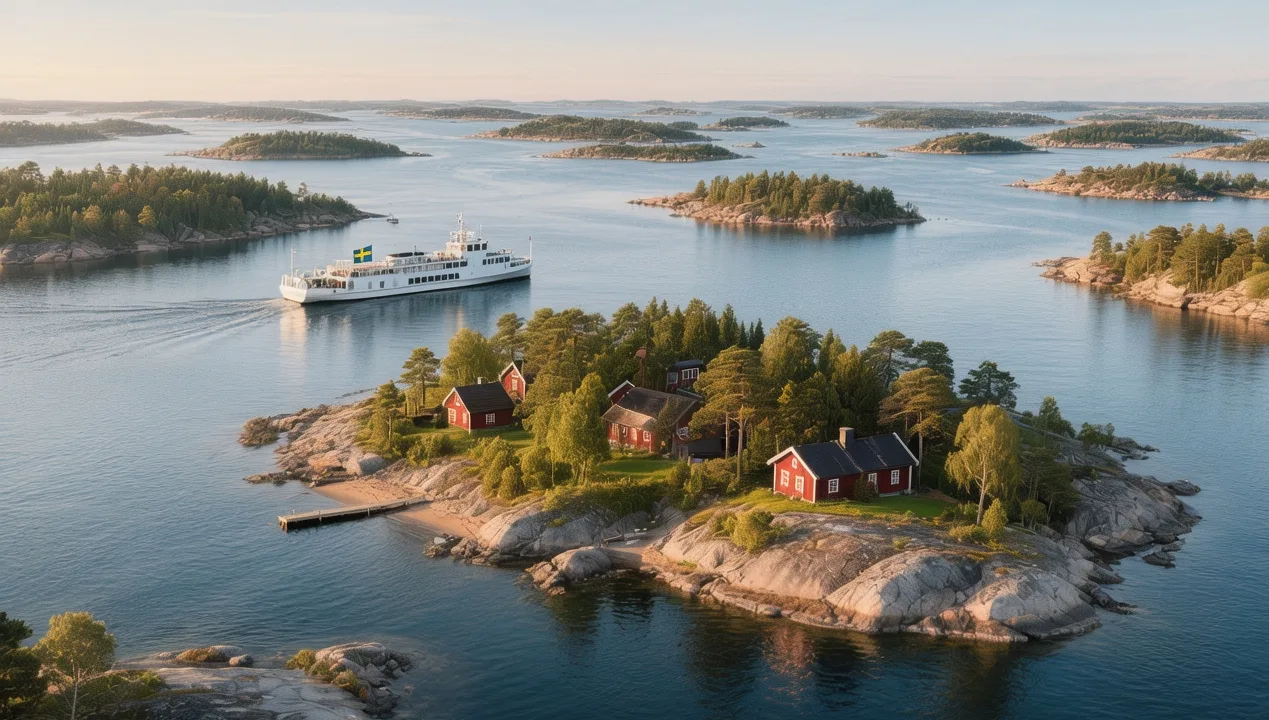
Stockholm Archipelago: Where City Meets Endless Islands
I board the ferry at Strömkajen at ten past nine on a bright June morning. The ticket cost 115 SEK one-way. The boat glides past the city waterfront, under bridges, and out into wider water. Buildings give way to tree-lined shores, then scattered islets, then thousands of islands stretching toward the horizon. Smooth granite rocks slope into clear water. Red wooden cottages stand in sheltered coves. No road connects most places. Life moves by boat and wind. By midday ferries run full. Voices carry across the decks. Come early and the archipelago feels quiet and vast.
Why Stockholm Archipelago Matters
Over thirty thousand islands and skerries spread east and south from the city — bedrock ground down by ice then left scattered when glaciers melted. People have lived here for five thousand years — fishing, farming, sailing, defending the coastline. In the 19th century wealthy families built summer houses, and the islands became a place where city and wilderness meet. Today ferries connect permanent communities and holiday spots alike. Yet change presses. Winter ice grows thinner. Some traditional trades vanish. Housing prices rise beyond local reach. The islands remain beautiful — but fewer people can afford to stay year-round.
The Best Time to Experience Stockholm Archipelago
Mid-June through mid-August brings longest days and warmest weather — 15°C to 21°C (59°F to 70°F). Water reaches 18°C — ideal for swimming. Ferries run full schedule. Crowds gather weekends and midday. Late August into September offers golden light and thinning visitors — 11°C to 16°C (52°F to 61°F). Berry and mushroom season begins. This is the finest time. October through April the archipelago transforms — -2°C to 5°C (28°F to 41°F). Ice forms in sheltered bays; outer islands stay open. Ferries run but fewer routes. Days grow very short. May blooms fresh — 7°C to 13°C (45°F to 55°F). Trees turn green and wildflowers carpet rocks. Avoid Midsummer weekend. Every ferry and beach fills. Weekdays before 10:00 give you the islands at their most peaceful.
Approximate Budget for a 7-Day Trip
Most visitors base themselves in central Stockholm and take day trips. Here is what one week costs for two people.
- Accommodation: 10,500 SEK — 7 nights central guesthouse at 1,500 SEK nightly. Staying overnight on a remote island costs roughly 2,000 SEK+ per night — limited and far pricier.
- Food & Drink: 980 SEK per person daily. Island restaurants charge premium rates. Packing food from the city cuts this noticeably.
- Transport: Round-trip train from Gothenburg 1,800 SEK. Archipelago ferry pass 720 SEK per person — covers most routes for 7 days.
- Activities & Gear: 900 SEK total — kayak rental, guided walk, museum entry.
- Miscellaneous: 850 SEK for coffee, ice cream, and local crafts.
Total estimate: 14,830 SEK for two people. One warning: dining at the most popular island harbours costs nearly double city prices. Bring your own picnic and eat by the water — better view, fairer cost.
Essential Stockholm Archipelago Experiences
- Ferry Ride Eastward — Sit on the open deck. Watch the city fade, shoreline thin, islands multiply. The scale unfolds slowly. Skip this if you dislike open water; the outer sea can be choppy.
- Rocky Shore Morning — Find a smooth granite slope facing east. Sun warms the stone. Water laps quiet and clear. You can swim, sit, or simply watch. Arrive before 11:00 to claim a spot.
- Historic Harbour Village — Clustered red buildings, wooden docks, narrow lanes. Some communities have stood here since medieval times. Walk gently — people still live and work here year-round.
- Sunset from an Outer Island — The sun dips low over open water. Rock glows deep gold. Most visitors take earlier ferries back. Stay late — the last boat returns after dark.
- Kayak Between Islets — Paddle close to coves and skerries unreachable by ferry. You see the archipelago from water level. Check wind and weather — conditions shift fast here.
- Nature Reserve Walk — Marked trails wind through ancient forest and open rock. No cars, no noise, just wind and birds. Wear sturdy shoes — ground is uneven and root-covered.
- Winter White Visit — Ice edges form in bays. Frost colours the rock. The islands feel vast and empty. Check ferry schedules carefully — service reduces or pauses in cold spells.
Hidden Gems Most Travelers Miss
- Inland Forest Trail — Away from the shore, paths wind through pine woodland. Moss, lichen, silence. Almost no one walks here. The true quiet of the archipelago lives here.
- Small Island Short Stop — One of the lesser-known ferry stops. Just a few houses, a single beach, wide views. No shops, no crowds. Bring everything you need.
- North-Facing Shore — Quieter and wilder than south side. Rockier, fewer beaches, deeper water. Great for sunset. The wind feels stronger — bring a jacket.
- Harbour Front Restaurants — Famous but overpriced. Step one street back or eat at the café further from the dock. Same food for 30% less.
Cultural & Practical Tips
- Buy a ferry pass. Single tickets add up fast. The weekly pass pays for itself in two or three trips and gives you freedom to explore.
- Pack more than you think. Many islands have no shops. Water, food, extra layers, and first aid basics should always come with you.
- Respect private land. Cottages and gardens are often marked. Keep paths and public shorelines. Knock before entering if unsure.
- Watch the last ferry time. Missing it means overnight stay or expensive rescue. Note the time clearly — phones do not always work everywhere.
- Stay on marked paths. Thin soil and slow-growing vegetation take decades to recover. Shortcuts scar the landscape permanently.
- Check weather and wind. Open sea means waves and sudden changes. Small boats and kayaks are affected fast. Do not set out if conditions look poor.
- Leave no trace. Waste collection is limited. Everything you bring in must leave with you. Protect the islands for everyone.
Essential Visitor Information
Location & Access: Stockholm archipelago stretches east and south from city centre. Ferries depart Strömkajen, Slussen, and Nynäshamn. Departure terminal depends on destination — check before travelling.
Tickets & Booking: Single ferry ticket approx 115 SEK adult. 7-day pass approx 720 SEK adult. Most ferries do not require booking — just board. Popular routes fill fast in summer.
Operating Hours: Ferries run year-round. Summer schedule mid-June to mid-August — most frequent. Winter schedule reduced — fewer routes, longer waits. Islands always open but facilities close off-season.
Visit Duration: Minimum 1 full day. Recommended 2–3 days to experience different zones — inner, middle, outer archipelago — at relaxed pace.
Family Suitability: Excellent. Shallow sheltered water, easy paths, safe open spaces. Supervise near rock edges — surfaces slope steeply into deep water.
Timing: Best season: late August to September. Best time of day: 08:30–10:30 or after 17:00.
Highlights: Ferry journey, rocky shore swimming, historic harbour, outer island sunset, quiet forest trail, winter silence.
Nearby & Day Trip: Stockholm city centre — departure point. Uppsala — 1 hour train. Drottningholm Palace — 30 minutes by boat. Finland or Åland ferries — overnight from city.
Conclusion: Travel Far, Travel Light
The Stockholm archipelago is not a single place. It is thousands of them — scattered, separate, connected only by water. You will find crowded ferries in July, higher prices on popular islands, and fewer working boats than before. You will also find a landscape that stretches forever — where rock meets sea and time slows down. Will you treat it gently, so it stays wild and beautiful for those who live here?
Comments
Post a Comment