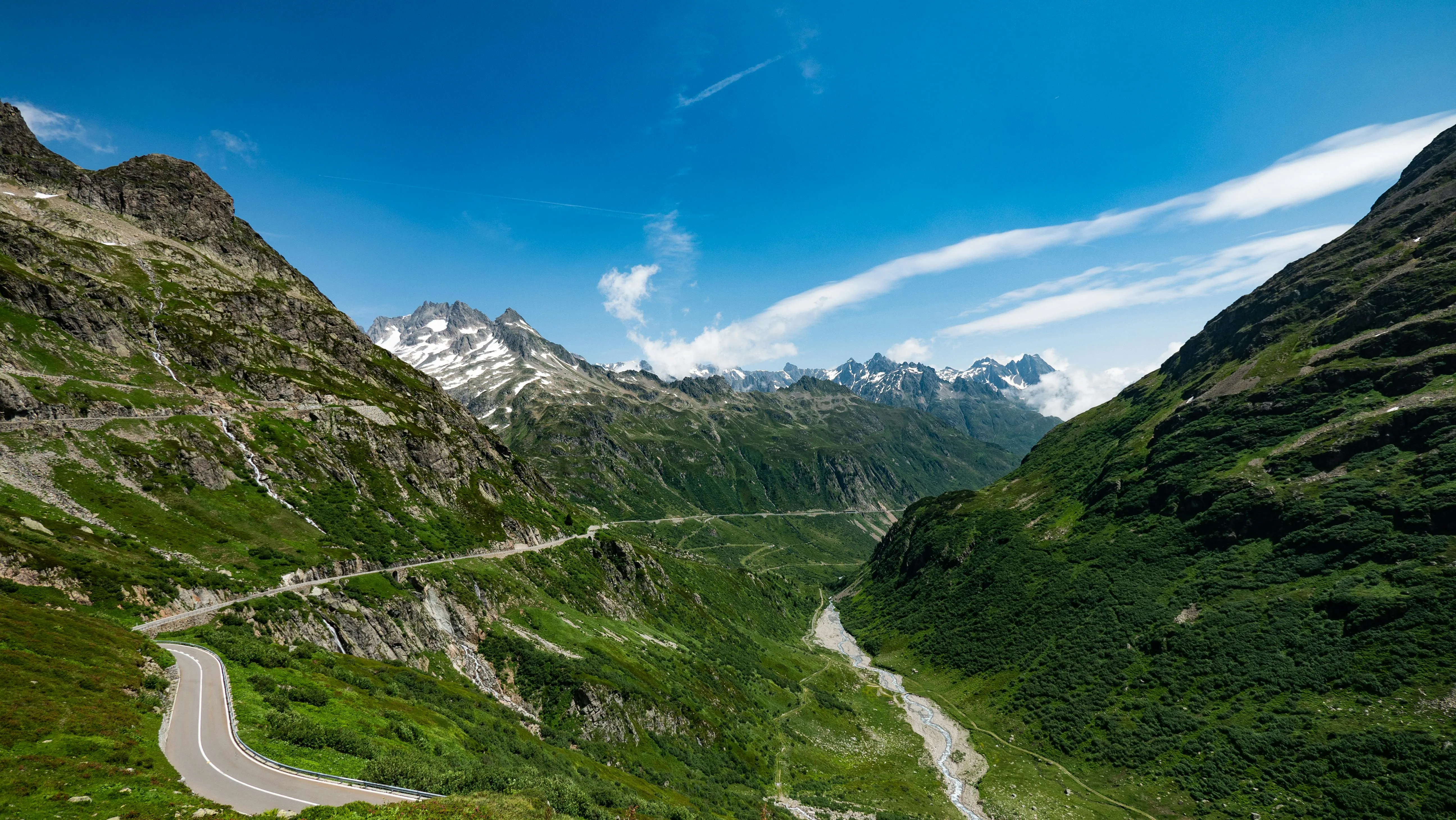
Susten Pass: Where Mountain Road Meets Wild Valley
I pull over at the highest viewpoint at 10:20 on a cloudless August morning. The air feels thin and sharp at 2,224 metres. I buy a cold apple spritzer from the small kiosk beside the car park. It costs four francs. The road curves away below — smooth, grey, clinging to rock, disappearing into a short tunnel then reappearing further down. Susten Pass connects the canton of Uri with the Haslital in Bernese Oberland. It does not serve famous resorts. It does not carry international trains. It simply takes you high into the mountains, where the valleys remain wild and the peaks still hold ice.
Why Susten Pass Matters
The road opened fully in 1946, built to link remote alpine communities rather than draw tourists. It climbs steadily from both sides, through forest then above the tree line, where views open across glaciers and rocky summits. Unlike nearby passes, Susten feels quieter. Fewer tour buses make the journey. That peace comes with trade-offs. The road is narrow in sections. Guardrails do not run the full length. Car parks at popular spots fill before 10 AM in summer. Some visitors find the exposure unsettling. Others come specifically for that feeling — the sense of travelling close to the mountain, not separated from it by wide barriers.
The Best Time to Experience Susten Pass
Late June through mid-October is the only open season. Daytime temperatures sit between 12°C and 20°C, or 54°F and 68°F. Nights drop to 4°C to 9°C, or 39°F to 48°F. July and August stay warmest but busiest. September brings golden larch colour, thinner crowds, and readings of 9°C to 16°C, or 48°F to 61°F. This is widely considered the best month. The pass closes completely from November through May. Snow can block sections as early as mid-October and linger into June. Always check the live road status before setting out — storms can close the route within hours.
Approximate Budget for a 7-Day Trip
Prices are in Swiss francs per person.
- Accommodation: 130–240 francs per night. Andermatt, Wassen, or Meiringen make practical bases. Staying in smaller villages like Göschenen or Innertkirchen saves 35 to 60 francs nightly.
- Food: 55–90 francs daily. Mountain restaurants along the pass average 22–38 francs per main dish. Village bakeries and cafés serve meals for 12–20 francs. Coffee at pass viewpoints costs roughly 5 francs.
- Transport: 25–55 francs daily if using public buses. Private vehicle fuel and parking costs vary — car parks charge 3 to 5 francs per hour.
- Attractions: 20–45 francs total. Stein Glacier viewpoint is free. Reichenbach Falls entry ~13 francs. Local museums cost nothing or very little.
- Miscellaneous: 25–45 francs daily. This covers drinks, snacks, and supplies.
Total estimated 7-day cost: 1,450–2,350 francs per person.
Organised coach tours from Interlaken or Lucerne charge 110–150 francs per person for a half-day run. Independent travel costs a fraction of that. The premium terrace café at the summit charges 4 francs extra per drink. The small kiosk 200 metres away serves identical coffee at normal prices.
Essential Susten Pass Experiences
- Drive or ride the full pass route — From Wassen the road climbs through forest then bursts open above the tree line. Curves unfold with constant views of the Stein Glacier and surrounding peaks. The highest stretch feels exposed and wide open. Take your time — speed limits are low for good reason. Skip if you feel uneasy on narrow mountain roads without barriers.
- Stop at Stein Glacier viewpoint — A short paved walk leads to a terrace directly facing the ice tongue. Signs show how far the glacier has retreated since the road opened. The numbers are striking. Allow 45 minutes. Bring a jacket — wind picks up here constantly.
- Hike to Lake Steinsee — From the highest car park a trail climbs gently through alpine meadow to a dark blue lake backed by rock faces. The walk takes one hour one way. No facilities exist — carry water and food. Return before late afternoon; storms build quickly.
- Visit the Reichenbach Falls approach — On the Haslital side the road descends past the famous cascade. The upper viewpoint sees water crash through a narrow gorge. It feels powerful and wild. The walk up takes 20 minutes. Skip if you dislike steep uneven steps.
- Stop at the village of Göschenen — Stone houses line cobbled lanes beside the river. This was once a key staging point on the old trade route over the pass. The atmosphere feels timeless. Most people drive straight through without pausing.
- Walk the old mule trail near the summit — Sections of the original route remain as footpaths. They run gentler and quieter than the modern road. You see the pass as travellers did before asphalt. Allow two hours round trip.
Hidden Gems Most Travelers Miss
- The small chapel just below the summit on the Uri side sits beside a spring. It dates to the 17th century. The door stands open during daylight. Inside, sunlight falls on simple wooden pews. Almost no one stops here.
- The trail to the left of the summit car park leads toward a smaller unnamed lake. It takes 40 minutes and sees barely anyone. The water reflects peaks without crowds. Bring binoculars — ibex appear on the slopes above.
- The restaurant at the midway hamlet of St. Gotthardstrasse serves hearty local dishes at fair prices. Portions are generous. The terrace looks across the valley. Most visitors rush past to reach the summit cafés.
- The viewpoint on the Haslital side, three kilometres below the top, faces directly into morning light. It stays quiet even at peak season. The valley unfolds far below. Stop here on your way down — you will likely have it to yourself.
Cultural & Practical Tips
- Check road status before leaving. Sudden storms can close the pass entirely. The route is not ploughed in winter — do not attempt it between November and May.
- Drive slowly and courteously. The road is narrow. Buses and cyclists share it. Pull over to let faster traffic pass — it is safe and expected.
- Arrive early. Summit car parks fill by 10:30 AM in July and August. Afternoon arrivals often find no space. You can park downhill and walk up, but that adds an hour each way.
- Respect quiet zones. Alpine meadows take decades to recover from damage. Stay on marked paths. Do not pick flowers — many are protected species.
- Carry layers and water. The summit can feel 8 to 10 degrees colder than the valley below. Wind chill drops further. No shops exist on the Haslital side above the tree line.
- Watch for cyclists. The pass is legendary among riders. They move slowly and occupy the lane. Pass only where visible and safe.
Essential Visitor Information
Location & Access: Susten Pass connects Wassen (Uri) with Innertkirchen / Meiringen (Bernese Oberland). Approximately 90 kilometres or 56 miles southeast of Zurich. By car via Andermatt or Meiringen. Postbus operates daily in both directions — journey roughly 1 hour 15 minutes. No railway crosses the pass.
Tickets & Booking: Road access is free. Postbus one-way fare ~24 francs. Lake Steinsee hike and glacier viewpoint cost nothing. Reichenbach Falls entry ~13 francs. No reservations needed for road travel.
Operating Hours: Open late June to mid-October, daylight hours only. No overnight parking at summit. Closed November–May and during winter storms.
Visit Duration: Minimum 3 hours one-way with stops. One full day lets you drive both sides, hike to the lake, and explore valleys at either end. Two days gives time to walk the old trails and stay overnight in a mountain village.
Family Suitability: Families welcome. Lower sections are wide and accessible. The summit stretch feels exposed — keep children close to the edge. Restrooms exist at main car parks only.
Timing: Mid-September balances warm days, golden larch colour, thinner crowds, and clear skies. Arrive before 10 AM any day. Weekends draw regional visitors.
Highlights: Summit road panorama, Stein Glacier viewpoint, Lake Steinsee hike, Reichenbach Falls descent, Göschenen historic village, old mule trail.
Nearby & Day Trip: Andermatt 30 minutes. Furka Pass 40 minutes. Grimsel Pass 45 minutes. Lucerne 1 hour 30 minutes. Interlaken 1 hour 45 minutes. Returning here each evening gives quiet lanes and clear mountain air.
Conclusion: Travel with Caution, Not Just Speed
Susten Pass does not shout. It does not have famous hotels or grand events. It simply takes you high, where the air stays crisp and the mountains remain themselves. The road is narrow, the edges unguarded, the weather changeable. That is not a flaw — it is how you know you are truly in the mountains. When you drive somewhere built to connect communities, not entertain crowds, will you slow down enough to respect it?
Comments
Post a Comment