
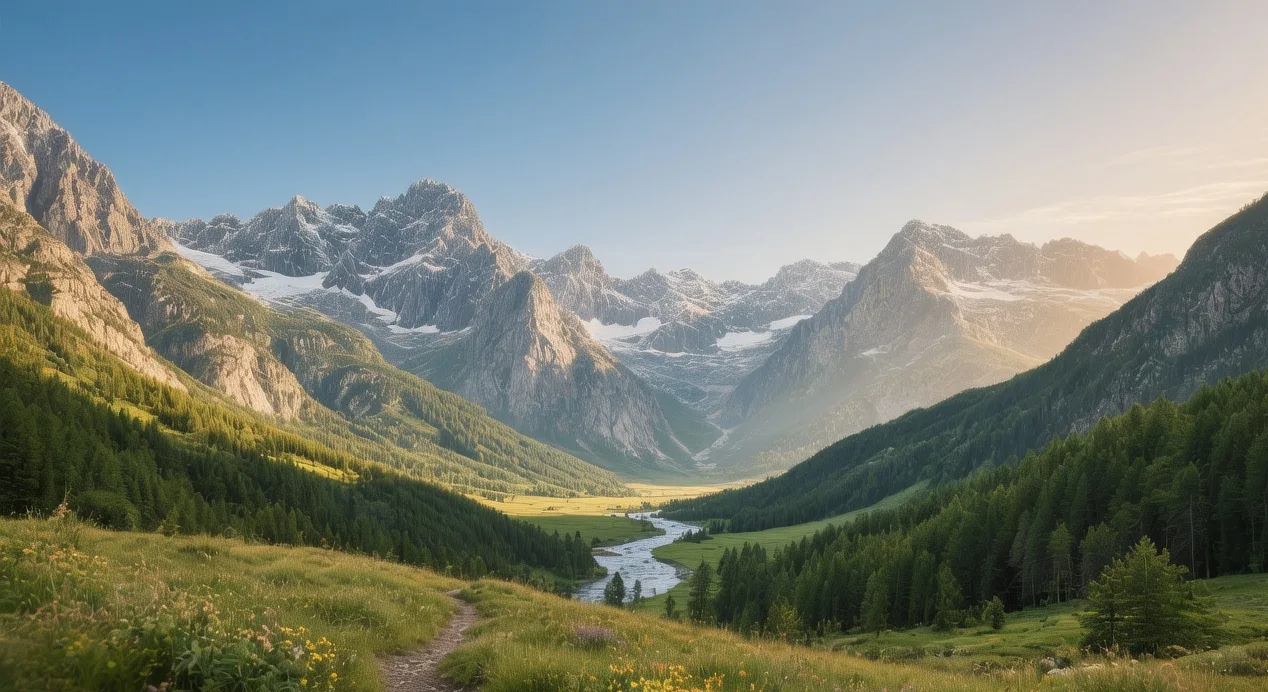
Swiss National Park Wilderness Preservation Meets Alpine Majesty
The first light breaks at 6:47 AM over the Swiss National Park, painting the granite face of Piz Quattervals in shades of rose and amber. You hear it before you see anything—the sharp crack of a marmot's alarm call echoing across the valley, the whisper of wind through 150-year-old Swiss stone pines, the distant bugle of a red deer stag during autumn rut. This is Switzerland's oldest national park, established August 1, 1914—coinciding with the outbreak of World War I, a deliberate act of hope in dark times. The park encompasses 174.2 square kilometers of pristine wilderness in the Engadin valley, where nature follows its own rules: fallen trees remain where they crash, predators hunt without interference, and you—the visitor—walk as a guest on marked trails only. In 2026, as climate change accelerates glacier melt across the Alps and biodiversity loss reaches crisis levels, the Swiss National Park matters more than ever: it stands as Europe's strictest nature reserve, a living laboratory where ecological processes unfold undisturbed, proving that preservation isn't passive neglect but active restraint, a radical act of trust in nature's wisdom.
Why Swiss National Park Embodies Absolute Wilderness Protection
The Swiss National Park solves a fundamental problem: how to protect nature without managing it. When founders Dr. Paul Sarasin and Professor Dr. Carl Schröter established the park in 1914, they rejected the prevailing conservation model of active game management. Instead, they implemented Totalreservat—total protection—a revolutionary concept that remains controversial today. The park's founding principle: "Let nature be nature." This means no intervention whatsoever: no culling of overpopulated species, no replanting after storms, no feeding wildlife, no pest control. The 1914 legislation designated 10,754 hectares; today's 17,420 hectares (expanded in 1979) represent Switzerland's commitment to uncompromising preservation.
The park's strict regulations address a deeper need: the human impulse to control. Within boundaries marked by 150 granite pillars, you cannot leave designated trails—80 kilometers winding through valleys and across alpine meadows. You cannot camp, light fires, pick flowers, or bring dogs. These rules, enforced by park wardens who patrol year-round, create a sanctuary where ecological processes unfold across decades, not tourist seasons. The results speak through data: red deer populations have grown from 150 in 1914 to over 1,500 today; ibex, extinct in Switzerland by 1850, were reintroduced in 1920 and now number 400+; the bearded vulture, extinct since 1912, returned through reintroduction programs starting in 1991.
Technically, the park functions as a controlled experiment in wilderness. Elevation ranges from 1,400 meters in valley bottoms to 3,174 meters at Piz Quattervals' summit, creating distinct ecological zones: montane forest (1,400-1,800m), subalpine zone (1,800-2,200m), and alpine zone (2,200m+). The geology tells its own story—Dolomite limestone in the east, crystalline schists in the west, glacial moraines deposited during the Little Ice Age (1300-1850). This diversity supports 6,000 documented species: 65 mammal species, 120 breeding birds, 450 vascular plants. The park's UNESCO Biosphere Reserve designation (1979) and IUCN Category Ia status (strict nature reserve) recognize its global significance as a baseline for measuring human impact elsewhere in the Alps.
The Best Time to Experience Swiss National Park
The park opens May 1—October 31 annually, closing November 1 through April 30 to protect wildlife during critical winter survival months. For optimal wildlife viewing: June 15–July 15 offers marmot activity at peak levels (they emerge from hibernation in late April) and ibex descending to lower meadows. Daytime temperatures range 15–22°C (59–72°F) at 1,800m elevation; nights drop to 4–8°C (39–46°F). For autumn colors and red deer rut: September 20–October 15 delivers golden larch forests and the dramatic bugling of stags—arrive at Val Trupchun viewpoint by 7:00–8:30 AM when deer are most active.
Avoid May 1–June 10 if you dislike mud and snow patches—trails above 2,000m remain snow-covered until mid-June, and afternoon thunderstorms develop rapidly. Also avoid August 1–20 if you seek solitude: this peak tourist period brings 2,000+ daily visitors, overwhelming parking at Zernez and Chamanna Cluozza.
For photography: golden hour runs 6:30–8:00 AM and 7:00–8:30 PM in July. The park's east-west orientation means morning light illuminates north-facing slopes best. Wildlife is most active dawn (5:30–8:00 AM) and dusk (7:30–9:30 PM in summer). Check current conditions at nationalpark.ch or call the visitor center at +41 81 851 61 60. The park's weather station at 2,200m provides real-time data; temperatures drop 6°C per 1,000m elevation gain—pack accordingly.
Approximate Budget for a 7-Day Trip (2026)
Pricing methodology: Costs reflect mid-range travel (3-star hotels or mountain huts, mix of restaurant dining and self-catering, public transportation) during peak summer season (July 2026). All prices include Switzerland's 7.7% VAT. Winter visits aren't possible—park closes November–April. Prices assume base in Zernez or nearby Engadin villages.
Accommodation: €140–€240 per night for double room in 3-star hotel in Zernez/Samedan; €80–€130 per person in mountain huts (Chamanna Cluozza, Chamanna d'Es-cha) with half-board. Budget options limited—no camping allowed in park.
Food: €55–€85 per day per person
- Breakfast: €12–€18 (hotel buffet or self-catering with local bread, cheese)
- Lunch: €18–€28 (mountain hut simple meal: rösti €16, soup and bread €14)
- Dinner: €28–€45 (restaurant in Zernez: Bündnerfleisch platter €32, pasta €24, main course)
Transportation:
- Train Zurich to Zernez: €89 one-way (4.5 hours, change in Landquart)
- Swiss Travel Pass (8 days): €418 for unlimited trains/buses
- PostBus within Engadin: free with Swiss Travel Pass or Engadin Card
- Parking at Zernez visitor center: CHF 15/day (€14)
Attractions:
- Swiss National Park Visitor Center: €12 adults, €6 children
- Guided wildlife tour (3 hours): €45 per person
- Audio guide rental: €8
- Park entry: FREE (donations welcome)
Miscellaneous:
- Hiking map (1:25,000): €22
- Binoculars rental: €12/day
- Souvenir: park guidebook €28, postcard set €8
- Travel insurance (7 days): €45–€75
- Reusable water bottle (required—no facilities on trails): €18
Total for 7 days (mid-range): €1,420–€1,980 per person (excluding international flights)
7 Essential Swiss National Park Experiences
- Hike Val Trupchun at dawn for wildlife: Start at 6:00 AM from the Chamanna Cluozza parking area (accessible by PostBus 852 from Zernez). This 12-kilometer round-trip valley offers Switzerland's highest concentration of red deer, chamois, and ibex. Walk slowly—the first 2 kilometers ascend gently through larch forest where you'll hear marmots whistling. Bring 10x42 binoculars; deer often graze 300–500 meters from the trail. The valley floor sits at 1,900m; expect temperatures 8–10°C cooler than Zernez. Allow 4–5 hours; return by 11:00 AM when wildlife retreats to shade.
- Climb Piz Quattervals for panoramic views: Switzerland's highest national park summit (3,165m) demands fitness but rewards with 360° views across 100+ peaks. Begin at 7:00 AM from the Fuorn Pass parking (2,149m). The 6-kilometer ascent gains 1,016 meters over rocky trails—use trekking poles for stability on scree sections. You'll pass the former Swiss Army observation bunker (built 1940, now abandoned) at 2,800m. Summit push requires scrambling (T2 difficulty); turn back if weather deteriorates. Total time: 5–6 hours. Carry 2 liters water, windproof jacket, and sun protection—UV index exceeds 12 at this altitude.
- Explore the Visitor Center in Zernez: Spend 2–3 hours at the award-winning building (opened 2009, designed by Herzog & de Meuron). The interactive exhibits explain the park's 110-year history through multimedia displays in German, Romansh, Italian, and English. Don't miss the "Wilderness Laboratory" film (screens hourly, 20 minutes) and the taxidermy collection showing all 65 mammal species. The children's discovery room opens 9:00 AM–4:00 PM. Entry: €12 adults, includes temporary exhibitions. The center's restaurant serves local Engadine specialties—try the barley soup (CHF 14).
- Walk the Lai da Rims trail: This easy 4-kilometer loop (1.5 hours) circles a glacial tarn at 2,200m elevation, accessible from the Fuorn Pass. The trail is stroller-friendly and offers constant wildlife viewing opportunities—marmots colonize the rocky slopes surrounding the lake. Interpretive panels (in four languages) explain glacial geology and climate change impacts. Best visited 10:00 AM–2:00 PM when light reflects off the turquoise water. The trail remains snow-free June–October; wildflowers peak July 10–25. Combine with a picnic (pack out all waste—no trash bins in park).
- Join a guided wildlife tour: Book the "Deer Rut Experience" (September 20–October 10) with park rangers. The 3-hour evening tour (6:30–9:30 PM, €45) takes you to hidden viewpoints where you hear red deer stags bugling and sparring. Rangers carry spotting scopes and share decades of behavioral observations. Groups limited to 15 people; book 3 weeks ahead via nationalpark.ch or +41 81 851 61 60. Wear warm layers—temperatures drop to 2–5°C after sunset even in September. Tours run in German; English available on request for groups of 6+.
- Stay overnight at Chamanna Cluozza: This mountain hut (1,945m) offers half-board accommodation (€95–€130 per person) with dinner and breakfast included. The 45-bed facility operates June 15–October 15; book 2–3 months ahead. Dinner features hearty mountain fare: cheese soup, pasta, rösti with dried meat. Wake at 6:00 AM for sunrise views over Val Trupchun from the terrace. The hut has no shower facilities (typical for Swiss mountain huts) but offers blankets and mattresses. Access: 2-hour hike from Sparsels parking or PostBus to Chamanna stop (seasonal). No day visitors allowed during peak season (July–August)—overnight guests only.
- Photograph the Spöl River canyon: This dramatic gorge, carved by glacial meltwater, runs along the park's northern boundary. The 8-kilometer trail from Zernez to Susch follows the river through narrow limestone walls. Best light: 4:00–6:00 PM when sun illuminates the canyon's eastern face. Look for dippers (white-throated songbirds that walk underwater) and white-throated dippers nesting in rock crevices. The trail descends 200 meters gradually; return via PostBus line 853 from Susch (hourly service). Wildflowers line the path in June; autumn colors peak September 25–October 5.
3 Hidden Gems Most Travelers Miss
- Val S-chastaign: While 90% of visitors crowd Val Trupchun, this parallel valley remains nearly empty. Access from the Fuorn Pass (2,149m) via an unmarked but well-trodden path heading south from the parking area. The 3-kilometer hike reaches a remote alpine meadow at 2,300m where golden eagles nest on the cliffs above. You'll need excellent binoculars (20x60 minimum) to spot the nest—park wardens monitor it but don't publicize exact location to protect breeding pairs. Best visited Tuesday–Thursday when visitor numbers drop. No facilities; carry all water and food. The valley's name means "valley of chestnuts" in Romansh, though no chestnuts grow here—the name references medieval transhumance routes.
- The Il Fuorn weather station: At 2,200m on the Fuorn Pass stands a meteorological station operating since 1923, recording Switzerland's longest high-altitude climate dataset. While not open for tours, you can visit the adjacent "Climate Trail" (Sentier del Clima), a 2-kilometer loop with 12 interpretive panels explaining how the park's weather patterns have shifted over 100 years. Start at the pass parking; the trail takes 45 minutes. Look for the original 1923 Stevenson screen—still housing thermometers. The trail reveals that average temperatures here have risen 2.1°C since 1923, exceeding the global average. Visit 11:00 AM–1:00 PM when mountain weather is most stable. Combine with lunch at the Fuorn Pass restaurant (open year-round).
- Chamanna d'Es-cha's secret viewpoint: Most hikers stop at this mountain hut (2,220m) for refreshments, missing the 10-minute trail continuing upward to a rocky outcrop overlooking the Es-cha glacier. The path isn't marked on standard maps but starts behind the hut's east side—ask the hut keeper for directions (they'll point you toward "Piz d'Es-cha Blick"). The viewpoint sits at 2,350m and offers unobstructed views of the receding Vadret d'Es-cha glacier, which has lost 40% of its volume since 1900. Best visited late afternoon (3:00–5:00 PM) when light hits the icefall. Bring a telephoto lens (200mm+) to photograph ice seracs calving. The glacier's retreat exposes archaeological artifacts—Roman coins and medieval tools—occasionally visible in meltwater streams.
Cultural & Practical Tips
- Strict trail discipline: You must stay on marked trails—this isn't a suggestion but a legal requirement enforced by park wardens who issue CHF 200 fines for violations. The rule protects fragile alpine vegetation that takes 50–100 years to recover from trampling. Trails are marked with white-red-white paint blazes; if you lose the path, turn back immediately. GPS devices help but don't replace map reading skills—mobile coverage is spotty above 2,000m.
- Wildlife distance requirements: Maintain minimum 100 meters from large mammals (deer, ibex, chamois) and 300 meters from birds of prey. Use binoculars or telephoto lenses—never approach for photos. If an animal changes behavior because of your presence (stops feeding, watches you, moves away), you're too close. Rangers carry spotting scopes and can help you observe safely.
- Language basics: The park sits in Romansh-speaking territory, though German dominates. Learn: "Allegra" (ah-LAY-grah) = hello; "Graziella" (grah-tsi-EL-lah) = thank you; "Bun di" (boon DEE) = good day. Park signage appears in all four Swiss national languages (German, Romansh, Italian, French). Staff at the visitor center speak English fluently.
- Weather preparedness: Alpine weather changes within minutes—carry rain gear even on sunny mornings. Afternoon thunderstorms develop June–August; start hikes before 8:00 AM and descend below treeline by 2:00 PM. Temperatures drop 6°C per 1,000m elevation gain. At 2,500m, even July nights reach 0–3°C. Pack layers: moisture-wicking base, fleece mid-layer, windproof shell.
- No facilities on trails: The park has zero restaurants, shops, or water sources on trails. Carry 2–3 liters water per person, all food, and pack out all waste—including biodegradable items like apple cores (they attract wildlife to trails). Use toilets at visitor center, parking areas, and mountain huts only. Bring toilet paper and hand sanitizer for emergencies; bury human waste 200m from trails and water sources if absolutely necessary.
- Photography ethics: Drones are strictly prohibited—apply for special research permits 6 months ahead (rarely granted to tourists). Never use flash photography near wildlife. The park's light quality peaks during golden hour, but this coincides with peak wildlife activity—prioritize observation over photography. Tripods allowed but don't block trails. Respect other visitors' experience by keeping shutter noise minimal.
- Physical fitness requirements: Trails range from easy (Val da Rims, 4km, 50m elevation) to difficult (Piz Quattervals, 12km, 1,016m elevation). Assess honestly—rescue operations cost CHF 2,000–5,000 and aren't covered by standard travel insurance. The park's elevation (1,400–3,174m) causes altitude sickness in 15% of visitors; spend 24 hours acclimatizing in Zernez (1,474m) before attempting high trails.
Conclusion: Travel with Restraint, Not Just Reservations
The Swiss National Park doesn't need more visitors—it needs better visitors. Those who understand that staying on the trail isn't inconvenience but participation in a 110-year experiment in non-intervention. Those who recognize that seeing nothing but empty meadows isn't disappointment but success: it means wildlife moves freely, unhabituated to human presence. Those who accept that this park offers no zip lines, no feeding stations, no guaranteed wildlife encounters—only the privilege of witnessing nature operating on its own terms, across timescales that dwarf a tourist's week.
In 2026, as protected areas worldwide face pressure to monetize access and manufacture experiences, the Swiss National Park stands firm in its radical simplicity: entry is free, facilities are minimal, rules are non-negotiable. Your €12 visitor center fee funds research, not entertainment. Your adherence to trail markers protects vegetation that outlives you by centuries. Your willingness to wake at dawn, hike in silence, and observe without disturbing—this is the currency of meaningful travel.
So when you stand in Val Trupchun watching an ibex navigate a cliff face with impossible grace, remember: you're not consuming an experience but entering a covenant. The park gives you glimpses of wilderness; you give it your restraint, your respect, your commitment to leave nothing but footprints on paths that have existed since before Switzerland itself. This is travel as humility, not entitlement—the Engadin's greatest gift to those patient enough to receive it.