Vasa Museum: Where Doomed Ship Meets Enduring Story
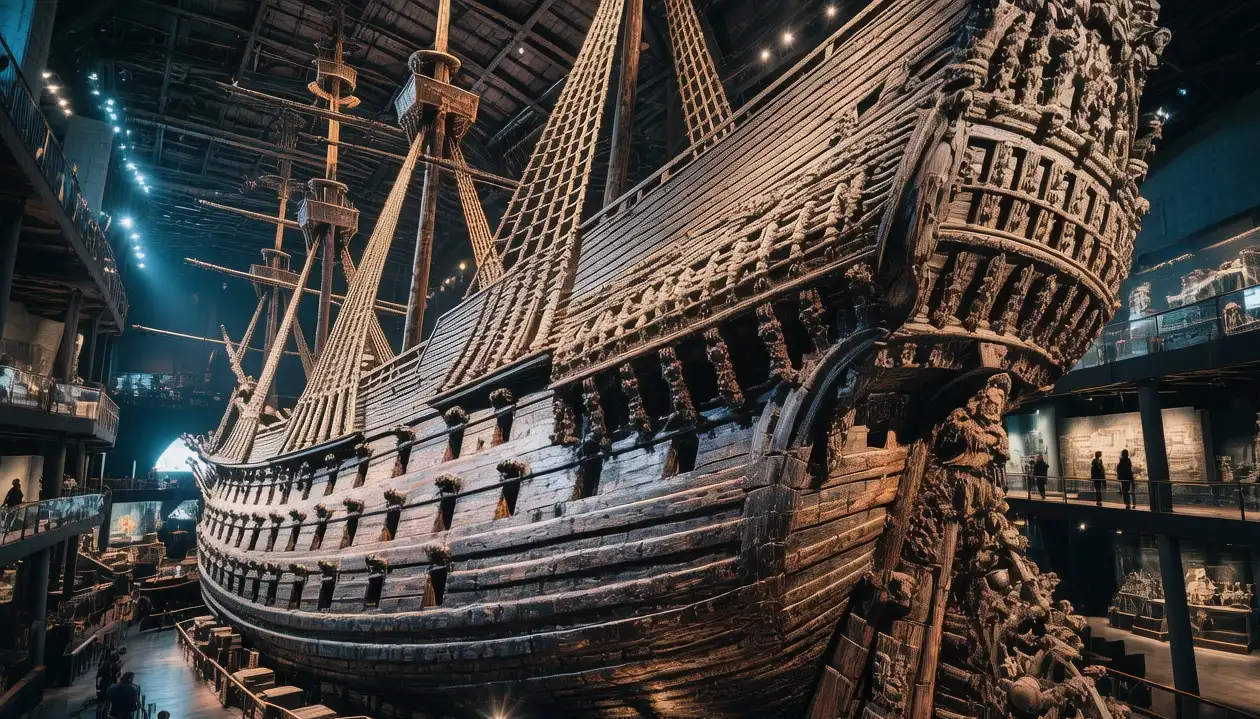
I step through the doors at ten past ten on a bright May morning. The Vasa fills the hall — dark oak hull rising six storeys high, bow carved with figures, stern towering at the far end. I paid 170 SEK for adult entry. That covers every exhibit inside — no extra fees. Sunlight slants through high windows onto the weathered timber. The ship looks smaller than you expect from photos, yet overwhelmingly real. By midday groups gather thick along the viewing galleries. Voices echo softly. Come early and you feel the silence of three hundred years beneath the timbers.
Why Vasa Museum Matters
The Vasa sank on her maiden voyage in 1628, barely 1,300 metres from the quay. Built to be one of the most powerful warships of her time, she was top-heavy and unstable — a gust of wind and a squall sent her to the bottom. She lay on the seabed for 333 years, preserved in cold, dark water. Raised in 1961, she became the best-preserved 17th-century warship in the world. The museum opened in 1990 on Djurgården to house her and the thousands of objects recovered with her. Yet the building feels cramped. Viewing galleries are narrow. In peak season you wait just to step forward. The ship is extraordinary — but the space around her struggles to keep pace.
The Best Time to Experience Vasa Museum
Mid-June through mid-August brings longest days and fullest crowds — 16°C to 21°C (61°F to 70°F). The museum stays open late — often until 20:00. Every gallery fills. Late August into September offers thinner groups and golden weather outside — 12°C to 17°C (54°F to 63°F). This is the finest season. October through April the museum feels quiet and sheltered — 1°C to 6°C (34°F to 43°F). Weekdays are calmest. May blooms fresh — 7°C to 13°C (45°F to 55°F). The island setting looks green and welcoming. Avoid Saturday afternoons. Every floor feels crowded. Weekdays between 09:00 and 10:00 give you the most relaxed visit.
Approximate Budget for a 7-Day Trip
Most visitors base themselves in central Stockholm and walk or take transit to the museum. Here is what one week costs for two people.
- Accommodation: 10,500 SEK — 7 nights central guesthouse at 1,500 SEK nightly. Staying across the water in Södermalm cuts this to roughly 8,000 SEK and adds 10 minutes travel.
- Food & Drink: 980 SEK per person daily. The museum café charges premium rates. Packing a picnic and eating on the waterfront saves noticeably.
- Transport: Round-trip train from Gothenburg 1,800 SEK. Local transit pass 360 SEK per person. Walk from city centre 20 minutes — pleasant route across Djurgården bridge.
- Entry & Exhibits: 340 SEK total — two adult tickets. No extra fees inside.
- Miscellaneous: 850 SEK for souvenirs, coffee, and treats.
Total estimate: 14,830 SEK for two people. One warning: the gift shop inside marks prices up heavily. Buy books and prints at city centre bookstores — same items for 25–30% less.
Essential Vasa Museum Experiences
- Ground Floor Full View — Stand at the stern and look the whole length of the ship. The scale, the carvings, the sheer weight of oak becomes clear. No photo captures it. Stand still and let the detail sink in. Skip this if you rush; the ship rewards slow looking.
- Climb the Viewing Galleries — Five levels look down onto decks, rigging, and interior spaces. Each floor reveals something new — gun ports, carved beams, preserved rope. Start at the bottom and work upward. Skip this if you dislike heights or confined spaces; stairs are steep and narrow.
- Watch the Recovery Film — Black-and-white footage from 1961 shows the ship breaking surface. Divers, cables, crowds on shore. It grounds the story in real people and effort. Sit through it — it changes how you see the timbers.
- Study the Carvings Close-Up — Figures, masks, and ornaments line the stern and bow. Faces, symbols, stories — all preserved in wood. Labels explain what they meant. Most visitors glance and move on. Pause here — this is where the ship’s soul shows.
- See the Recovered Objects — Chests, tools, clothing, food, and personal items found inside. Ordinary things from 1628 — buttons, coins, tankards. They make the past feel human. Walk slowly through these rooms.
- Waterfront Exterior View — Step outside after your visit. The museum building curves dark and distinctive against the sky. The ship cannot be seen from here, but the setting feels complete. Stay late — the sun sets across the water.
- Skip July Altogether — Every gallery fills. Queues form just to move forward. Visit June or September — you see far more and breathe easier.
Hidden Gems Most Travelers Miss
- Lower Level Quiet Corner — Beneath the main galleries. Fewer people come this far. You stand close to the hull timbers and see how the ship was built. The wood feels ancient and solid.
- Side Exhibit Rooms — Smaller galleries off the main hall. Shipbuilding methods, life on board, the salvage process. Almost no one pauses here. They hold the most detailed information.
- Shaded Path Behind Museum — Runs along the water edge. Views back toward the building and across the bay. Benches, quiet, almost empty. Perfect spot to sit and think after your visit.
- On-Site Café — Convenient but overpriced. Walk five minutes toward Skansen. Same coffee and pastries for less money and quieter seating.
Cultural & Practical Tips
- Arrive early. The museum opens at 10:00 — be there when doors unlock. Later means lines and crowds that never thin out.
- Allow 2–3 hours minimum. Five galleries, films, and exhibits need time. Rushing means missing half the story.
- Wear comfortable shoes. Stairs between levels are uneven and often slippery. You will climb far more than you expect.
- Respect photography rules. Some areas allow photos without flash; others do not. Signs are clear — please follow them.
- Check schedule for guided talks. Short free presentations happen daily. They explain why she sank and how she was raised — context you will not get from signs alone.
- Visit more than once. The Vasa reveals new details every time you come. One visit barely covers what is here.
- See the ship from outside too. The museum sits on the water — approach by ferry if you can. The building appears across the bay and sets the right tone before you enter.
Essential Visitor Information
Location & Access: Vasa Museum, Galärvarvsvägen 14, Djurgården, Stockholm. Walk from city centre 20 minutes. Tram 7 from Central Station 10 minutes. Bus 67 stops directly outside. Ferry from Slussen seasonal — 15 minutes.
Tickets & Booking: Adult approx 170 SEK. Child under 19 free. Booking recommended summer weekends — reduces wait time.
Operating Hours: Summer generally 10:00–18:00 daily. Winter generally 10:00–17:00 daily, closed Mondays. Extended evening hours some summer weeks.
Visit Duration: Minimum 2 hours. Recommended 2.5–3 hours including galleries, film, and exhibits.
Family Suitability: Excellent. All ages engage with the ship. Stroller access possible but narrow galleries feel tight when busy. Lift available between floors.
Timing: Best season: late August to September. Best time of day: 09:30–11:00 or late afternoon.
Highlights: Full ship view, five viewing galleries, recovery film, stern carvings, everyday objects, waterfront exterior.
Nearby & Day Trip: Skansen — 5 minutes walk. ABBA Museum — 5 minutes walk. Nordiska museet — 10 minutes walk. Gamla Stan — 20 minutes walk or short ferry.
Conclusion: Remember the Failure, Celebrate the Survival
The Vasa is not a monument to success. She sank on her first day — a costly, embarrassing mistake. Yet she survived centuries at the bottom of the sea to teach us. You will find crowded galleries in summer, higher prices inside, and narrow spaces that feel full. You will also find something extraordinary — a ship built by hands, lost by error, and saved by care. Will you remember the people who made her, and the ones who brought her home?
Comments
Post a Comment