
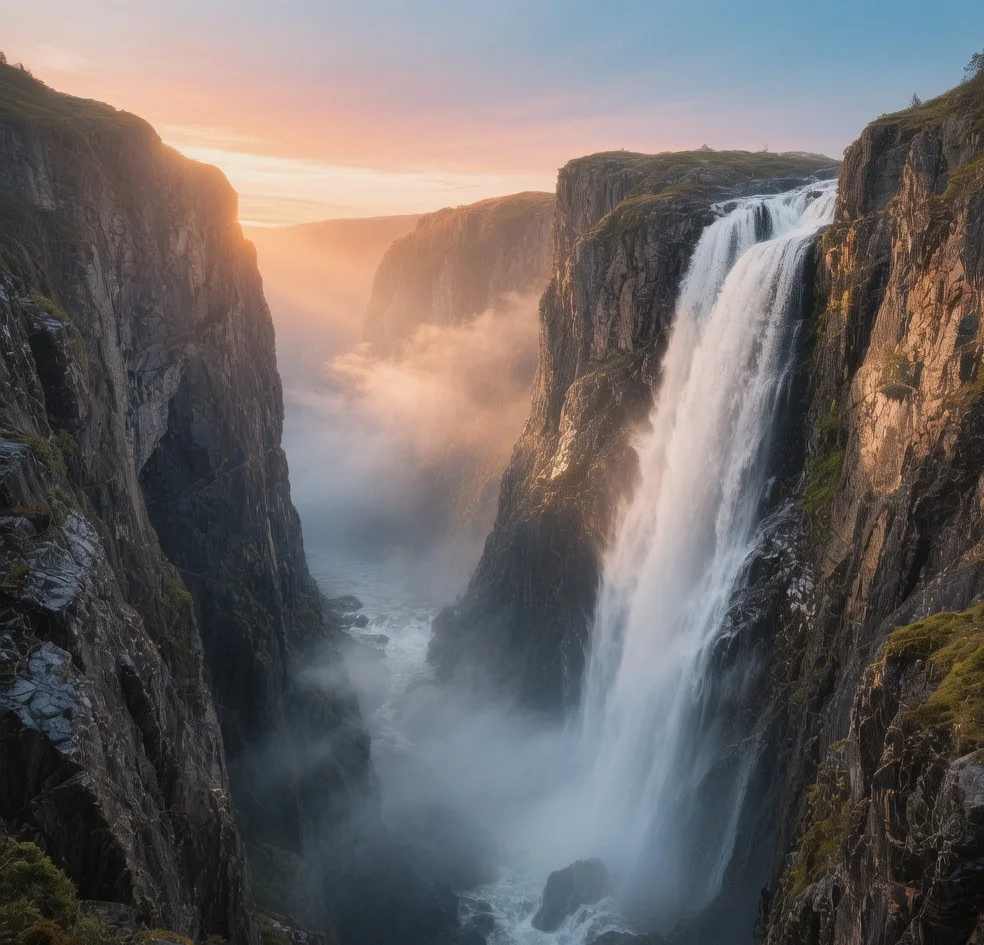
Vøringsfossen Waterfall Cascading Power Meets Hardanger Plateau
The roar hits you first—a deep, vibrating thunder that resonates in your chest—as you step onto the cantilevered viewing platform at 7:15 AM. It is mid-June 2026, and the mist from the 182-meter drop clings to your skin, cold and damp against the morning warmth. You hear the crash of water against the bedrock of Måbødalen, the distant hum of the visitor center, and the silence of the surrounding Hardanger plateau waiting to be explored. This is the Vøringsfossen waterfall, Norway's most visited natural attraction, where 14 million liters of water plummet every hour during peak melt season. The iconic viewing platform, designed by Snøhetta and opened in 2020, extends 30 meters out over the abyss, offering a vertigo-inducing perspective of the gorge below. It is 2026, and the Vøringsfossen waterfall stands at a critical juncture. Climate change alters snowmelt patterns; tourism numbers surge beyond capacity; yet the raw power of the falls remains undiminished. You are not just observing a spectacle; you are witnessing a geological force that has carved this valley for millennia—and where your presence must be mindful to ensure this natural cathedral endures.
Why Vøringsfossen Waterfall Embodies Norwegian Nature
The Vøringsfossen waterfall is not merely a scenic viewpoint; it is a symbol of Norway's relationship with wilderness and engineering. Historically, this location solved a critical cultural need: it became the birthplace of Norwegian nature tourism in 1821, when poet Henrik Wergeland visited and immortalized the site. The waterfall consists of two main drops: the main cascade falling 182 meters and the total drop of the Bjoreio river measuring 240 meters. The engineering required to access this landscape is equally significant: the Rv7 road, upgraded continuously since 1904, winds through the valley, while the new National Tourist Route infrastructure blends concrete and steel into the rock face. The Snøhetta viewing platform, constructed from weathered steel and glass, cantilevers over the edge without touching the ground below, minimizing environmental impact.
What distinguishes this site is the balance between accessibility and preservation. Unlike remote waterfalls requiring multi-day treks, Vøringsfossen waterfall is accessible year-round, just a two-hour drive from Bergen. In 2026, the management faces the challenge of balancing visitor flow with ecological stability. The gorge is prone to rockfalls, and the vegetation on the steep slopes recovers slowly from erosion. Visitor numbers are monitored during peak season to prevent congestion on the narrow pathways. The hydroelectric history is also palpable; the water flow is regulated by upstream dams, ensuring a dramatic display even in drier months. This interplay between natural power and human intervention creates a unique narrative. You walk through a landscape where romantic poets once wept at the beauty; now, engineers and ecologists work to keep it safe. Preservation here is not passive; it requires active stewardship from every visitor who respects the barriers.
The Best Time to Experience Vøringsfossen Waterfall
For the optimal water flow experience, plan your visit between June 15 and August 20—the peak summer window when snowmelt is maximal, temperatures range from 12–18°C (54–64°F), and all hiking trails are open. During this period, the best photography light occurs between 6:00 AM and 8:00 AM, when the morning sun illuminates the mist, creating frequent rainbows. For winter photographers, the optimal window shifts to January 15 to March 10, when the falls partially freeze, temperatures hover around -5–5°C (23–41°F), and the landscape is draped in snow. The icy formations are visible on approximately 80% of days during this window.
Avoid traveling between May 1 and May 20 unless you seek specific avalanche conditions: this is the transition period where snow is unstable, temperatures fluctuate wildly, and many hiking trails remain closed due to rockfall risk. Road conditions on Route 7 can become hazardous due to sliding gravel. For current road status.
Approximate Budget for a 7-Day Trip (2026)
Visiting the Vøringsfossen waterfall requires a base in the Hardanger region, making this budget reflective of a 7-day regional trip centered around Eidfjord. The following estimates assume a mid-range travel style: staying in local hotels or cabins, eating a mix of self-catered meals and local seafood, renting a car for essential mobility, and participating in guided activities. Prices reflect 2026 estimates with a 3.5% inflation adjustment based on 2025 Statistics Norway (SSB) data for Vestland county.
- Accommodation: €170–€270 per night for a double room in Eidfjord Sentrum; budget hostels start at €85/night; camping cabins €110/night
- Food: €80–€100 per day: breakfast €16 (included at most lodgings), lunch €24 (fish soup or open-faced sandwiches), dinner €50–€60 (fresh lamb or cod with local beer)
- Transportation: €360 total: rental car €80/day (5 days, essential for Route 7), fuel €115 (450 km total driving), ferry Bruravik–Brimnes €45 round-trip with car, local bus route 900 (€15 day pass, limited frequency)
- Attractions: €160 total: Vøringsfossen visitor center €25, guided canyon hike €90, museum entries €35, fjord cruise €60, cultural workshop €20
- Miscellaneous: €110: souvenirs (wool sweater €65, local cider €25, artisan jewelry €20), rain gear rental €10, emergency buffer €10
Total for 7 days: €1,580–€1,880 per person (based on double occupancy)
6 Essential Vøringsfossen Waterfall Experiences
- Walk the Viewing Platform: Begin at 8:00 AM from the visitor center. The cantilevered path extends 30 meters over the edge. Spend 30 minutes absorbing the view of the 182-meter drop. The light at 9:00 AM renders the mist surreal—rainbows appear frequently. Bring windproof layers; temperatures on the platform are 3°C cooler than the parking lot. This experience immerses you in the architectural heart of the site.
- Visit the Visitor Center: Located at the top of the falls, open 9:00 AM–6:00 PM daily (June–August). Spend 60 minutes exploring exhibits on geology and tourism history. The guided tour departs at 11:00 AM and 3:00 PM (€25). Don't miss the panoramic cinema showing the valley's formation. The facility focuses on conservation and education. The building itself dates to 2020, preserving the industrial heritage of the region.
- Hike Down to Måbødalen: Position yourself at the trailhead at 10:00 AM. The 3-kilometer descent takes 1.5 hours each way over rocky terrain. A guide is recommended for safety (mandatory in winter). From the bottom, you see the falls from below. The light at 2:00 PM is bright enough to see the rock details. Bring sturdy boots; the path is uneven. Carry a headlamp with red light mode to preserve night vision.
- Explore Fossli Hotel: Located near the falls, open 24 hours for exterior viewing. Spend 30 minutes photographing the historic building from 1888. The architecture contrasts beautifully with the modern platform. The light at 11:00 PM in June renders the scene surreal—shadows disappear, and the white walls glow. Bring windproof layers; temperatures on the fjord are 3°C cooler than the valley. This experience immerses you in the cultural heart of Hardanger.
- Fjord Cruise on the Electric Ferry: Book a 3-hour tour departing at 1:00 PM from Eidfjord (€60). Wear provided thermal suits if on deck. You'll glide past waterfalls and glaciers without engine noise. The silence of the electric motor allows you to hear the water and wildlife without disturbance. Tours operate May–September, weather permitting. No prior experience needed. This moment—standing on a glacier at midnight, bathed in golden light—defines the experience.
- Watch the Midnight Sun from the Quay: Arrive at 11:30 PM in late June. The main harbor, backed by mountains, offers one of the best vantage points for the sun dipping toward the horizon without setting. Bring a thermos of coffee and a warm blanket. The stone retains heat from the day, making it comfortable to sit even at night. Swim if you dare—the water temperature averages 14°C (57°F) in summer. This moment—standing on an Arctic quay at midnight, bathed in golden light—defines the experience.
3 Hidden Gems Most Travelers Miss
- Sysen Dam Viewpoint: While everyone visits the main falls, the Sysen Dam offers equally iconic views. Located 15 kilometers east, this spot offers a glimpse into hydroelectric engineering. Access is via Route 7 (open 24 hours). Best visited at 8:00 PM when light is soft. Why it's overlooked: most visitors drive straight into Eidfjord without exploring the upstream lakes. Insider tip: Use a telephoto lens (70-200mm) to capture the dam against the mountains. Watch for trail markers; do not wander off path.
- Trolla Waterfall: Just 10 kilometers south lies the historic waterfall, hosting unique views of the lights reflecting off glaciated peaks. This spot hosts unique marine life adapted to brackish water. Open daily 24 hours. The wooden cabins contrast beautifully with the snowy landscape. Why it's missed: most tourists stop at Vøringsfossen and skip the southern valley. Insider tip: Visit the coffee shop on the waterfront for homemade waffles (€8). The view back toward the glacier from here is unique and less crowded.
- Eidfjord Old Church: Accessible only by foot or car, this historic stone church near the village requires a 15-minute drive from the E105 (look for the signpost near the harbor). The church features white stone and vertical cliffs that amplify sound. Service times matter: visit outside Sunday 11:00 AM for quiet reflection. Check opening times at kirken.no. Why it's overlooked: no signage and requires moderate fitness. Insider tip: Bring a waterproof bag for your phone; waves can splash high during incoming tide. No facilities exist here—pack out all trash.
Cultural & Practical Tips
- Respect Safety Barriers: The Vøringsfossen waterfall edges are unstable. Do not climb over railings. Rockfalls are common. Use red light mode to preserve night vision for yourself and others.
- Learn three Norwegian phrases: Takk (tahk—thank you), Unnskyld (oon-shuld—excuse me), and Ha det bra (hah deh bra—goodbye). Locals appreciate the effort, though 95% speak fluent English.
- Photography guidelines: Drone flights require permission from the Norwegian Civil Aviation Authority (apply at luftfartstilsynet.no). Drones are prohibited near populated areas without special permit. Respect privacy—do not photograph tourists without consent. Tripods are permitted in public areas.
- Weather preparedness: Weather changes rapidly; pack layers (wool base, fleece mid, waterproof outer). Even in July, temperatures can drop to 10°C (50°F) with wind chill. Rain occurs on 200 days annually. Waterproof boots are essential for walking.
- Driving etiquette: Speed limits are strictly enforced (80 km/h on open roads, 50 km/h in villages). Use pull-outs to let faster local traffic pass. Watch for sheep, especially at dawn and dusk. Winter tires are mandatory November–April.
- Accessibility note: Major villages (Eidfjord, Vik) have wheelchair-accessible paths, but hiking trails are generally steep and uneven. The Visitor Center has ramp access. Request the accessible travel guide at visitnorway.com.
- Emergency contacts: Medical emergencies: 113. Police: 112. Tourist information: +47 53 64 20 00. Nearest hospital: Odda Sjukehus (50 km), 24-hour emergency. Coastguard: 120. Mobile coverage is good on E75 but spotty on hikes.
Conclusion: Travel with Reverence, Not Just Sightseeing
The Vøringsfossen waterfall demands more than your admiration; it requires your stewardship. This landscape—carved by ice, sustained by water, and inhabited by resilient communities—is not a theme park but a living ecosystem where every footprint matters. When you visit in 2026, remember that the cliffs are unstable, the trails are fragile, and the roads are lifelines for residents who endure winter darkness so you can enjoy summer light. The water that feeds the falls is vulnerable; the tundra that recovers slowly from erosion is fragile. So travel slowly. Buy local cider from the farm, not imported drinks. Stay on marked trails to protect the vegetation. Listen to the stories of the guides who still read the weather like maps.
In an era of instant gratification and checklist tourism, Hardanger asks you to pause—to watch the light change on the mist for an hour without lifting your camera, to feel the cold wind without rushing indoors, to understand that you are a guest in a place that has survived millennia without you. Travel with reverence, and you ensure that the Vøringsfossen waterfall heritage remains not just a photograph in your portfolio, but a thriving sanctuary where Arctic wilderness and human heritage continue to coexist. The water will flow long after we are gone; let us ensure it remains pure enough to deserve its fame.